

Data centres are not automatically as bad for the environment as headlines sometimes suggest. However, their impacts are real and can become significant without careful planning. Electricity sources, cooling systems, water availability, location, efficiency, and community protections all matter. Modern data centres can support renewable energy and grid stability. Poorly planned facilities can increase emissions, strain electricity and water infrastructure, and create persistent noise for nearby residents.
What studies reveal about data centre impacts
Research into data centres commonly focuses on three key impacts: electricity consumption, water use, and noise pollution.
Electricity consumption is rising quickly
Data centres operate around the clock. Their servers, networking equipment, cooling systems, security systems, and backup infrastructure all require electricity.
The International Energy Agency estimates data centres consumed about 1.5% of global electricity during 2024. It forecasts that consumption could more than double to around 945 terawatt hours by 2030. That would represent just under 3% of global electricity use.1
Artificial intelligence represents the largest source of expected growth. However, streaming, cloud storage, banking, social media, and ordinary business computing also contribute.




Australia faces similar pressure. Research prepared for the Australian Energy Market Operator estimated Australian data centres consumed 3.9 terawatt hours during the 2025 financial year. Under AEMO’s Step Change scenario, consumption could reach 12 terawatt hours by 2030. This would equal approximately 6% of electricity supplied through the National Electricity Market.2
Energy efficiency varies considerably between facilities. One important measure is Power Usage Effectiveness, commonly called PUE. It compares the facility’s total energy use with the energy delivered directly to computing equipment.
A PUE of 1.4 means the facility uses another 0.4 units for cooling and supporting infrastructure. A result closer to 1.0 indicates greater efficiency. Australia’s NABERS program uses PUE to assess operational data centre performance.3
Water use depends heavily on location and technology
Data centre water figures often cause confusion because researchers measure two different types of consumption.
Direct water use includes water consumed onsite for cooling and humidification. Indirect water use includes water consumed while producing the electricity that powers the facility.
A Lawrence Berkeley National Laboratory report estimated United States data centres directly consumed approximately 66 billion litres during 2023. Their indirect water footprint from electricity generation approached 800 billion litres.4
A separate Berkeley Lab study found that water consumption per computing workload can vary by more than 10,000 times. Server efficiency, electricity sources, cooling technology, local climate, server utilisation, and equipment age all affect the result.5
This means there is no universal figure for how much water an AI request, search, or cloud transaction consumes.
Australian data centres used an estimated seven gigalitres of water for cooling during 2024 to 2025.6 That remains relatively small nationally. However, national totals can hide serious local challenges.
A water-intensive data centre may present little risk in a water-secure region. The same development could become problematic in a drought-prone community with constrained infrastructure.
Air cooling, evaporative cooling, and direct liquid-to-chip cooling each involve trade-offs. Water-based cooling can reduce electricity consumption but increase evaporation. Dry cooling can reduce onsite water use while demanding more electricity during hot conditions.
Noise pollution is a genuine local concern
Data centres do not produce the same noise everywhere. Their acoustic impacts depend on equipment, operating schedules, building design, distance from homes, and surrounding land uses.
An Australian Acoustical Society case study examined noise from a large data centre in New South Wales. It identified diesel generators, cooling towers, generator radiators, chillers, pumps, air intakes, and exhaust outlets as important noise sources.7

Unlike many commercial buildings, data centres operate continuously. Backup generators also require routine testing. This can produce tonal, mechanical, and low-frequency noise, which may remain noticeable even when average sound levels meet broad limits.
A 2024 acoustic assessment for the proposed Marsden Park Data Centre Campus considered background noise, sensitive receivers, weather conditions, backup power testing, worst-case equipment operation, and sleep disturbance.8
The available research does not prove that every data centre creates harmful noise. It demonstrates why detailed acoustic modelling must occur before development approval. Retrofitting noise controls later can become expensive, difficult, and about as welcome as a server outage on deadline day.
Is Australia facing a data centre power crisis?
A crisis is not inevitable, but poorly coordinated growth could create serious pressure.
Australia’s data centre pipeline is heavily concentrated around Sydney and Melbourne. This means demand may strain particular transmission and distribution networks, even when sufficient electricity exists elsewhere.
The New South Wales development pipeline reportedly includes 44 projects seeking around 11 gigawatts of connection capacity. Not every proposal will proceed. However, the scale illustrates why governments and electricity networks cannot treat data centres like ordinary commercial buildings.
The greatest risk occurs when new facilities connect faster than renewable generation, storage, and network infrastructure can expand. This could tighten electricity supply, increase infrastructure costs, and place upward pressure on consumer bills.
How Australia plans to manage rising demand
In March 2026, the Australian Government released national expectations for data centre and AI infrastructure developers.9
Under these expectations, new or expanded facilities should:
- secure additional clean energy generation or storage
- cover their share of transmission and distribution costs
- use leading energy-efficiency technologies
- improve demand flexibility and peak-load management
- minimise water consumption
- use non-potable or circular water where possible
- report transparently on water use and efficiency
- minimise adverse effects on local communities.
These expectations do not replace state planning laws or create an automatic national electricity cap. Instead, the government will prioritise proposals that align closely with them during Commonwealth assessments.[9]
Australia’s broader electricity response sits within AEMO’s 2026 Integrated System Plan. It identifies renewable generation, transmission, storage, consumer energy resources, and limited gas backup as the lowest-cost pathway as coal-fired generation retires.10
Data centre planning must therefore become part of electricity system planning. Otherwise, Australia risks approving the digital equivalent of several new cities without checking whether the powerlines can handle them.
How renewable energy fits into the picture
Renewable energy will play a major role in reducing the environmental impact of data centres.
The IEA expects renewables to supply nearly half of the additional global electricity required by data centres to 2030. However, gas and coal generation may also expand where clean generation and network investment cannot keep pace.11

Large data centres can support new wind and solar farms through long-term power purchase agreements. These contracts give renewable developers greater revenue certainty and can help projects reach financial close.
However, buying enough renewable energy annually does not mean a facility runs on renewables every hour. Solar output falls overnight, while wind generation varies.
Battery storage, geographically diverse renewable generation, transmission upgrades, and flexible workloads can bridge these gaps.
AEMO-commissioned research found that some non-urgent computing tasks could move to periods with abundant renewable electricity. Data centre batteries and uninterruptible power supplies could also reduce grid demand or discharge during peak periods. Customer agreements and reliability requirements may limit this flexibility.12
Data centre sustainability case studies
Australian and international projects show how operators are reducing energy, water, and grid impacts.
NEXTDC combines reporting with liquid cooling
NEXTDC reported a portfolio PUE of 1.44 for the 2025 financial year. It also reported 773.31 megalitres of potable water consumption across its portfolio.13
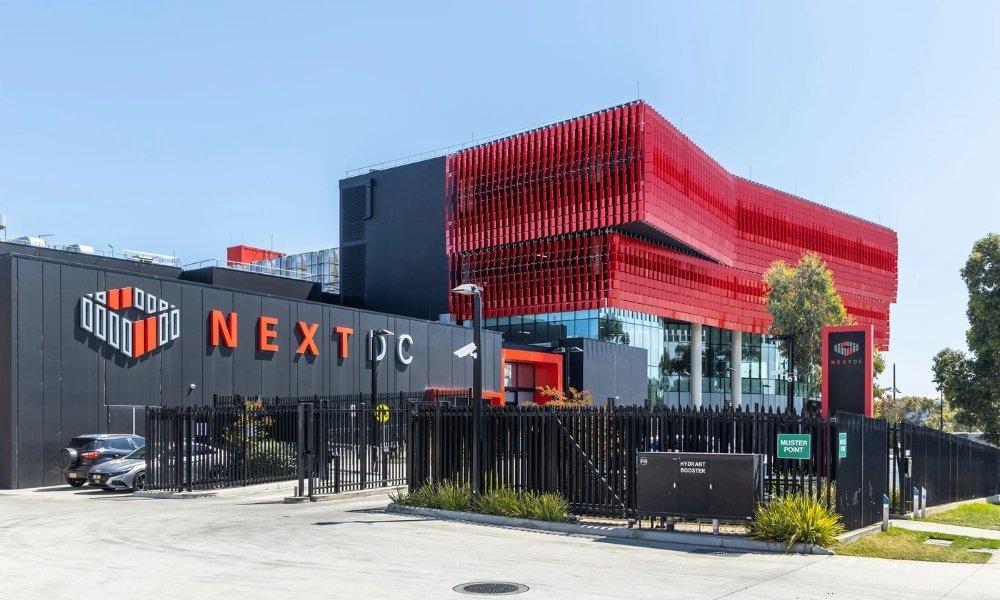
The company deployed direct liquid-to-chip cooling for 50 megawatts of IT load. This approach transfers heat directly from processors, reducing reliance on traditional room cooling and refrigerants.
The case demonstrates why energy and water performance must be reported together. Improving one environmental measure can sometimes affect another.
Microsoft turns backup batteries into grid assets
Microsoft connected lithium-ion backup batteries at its Dublin data centre to Ireland’s electricity system.
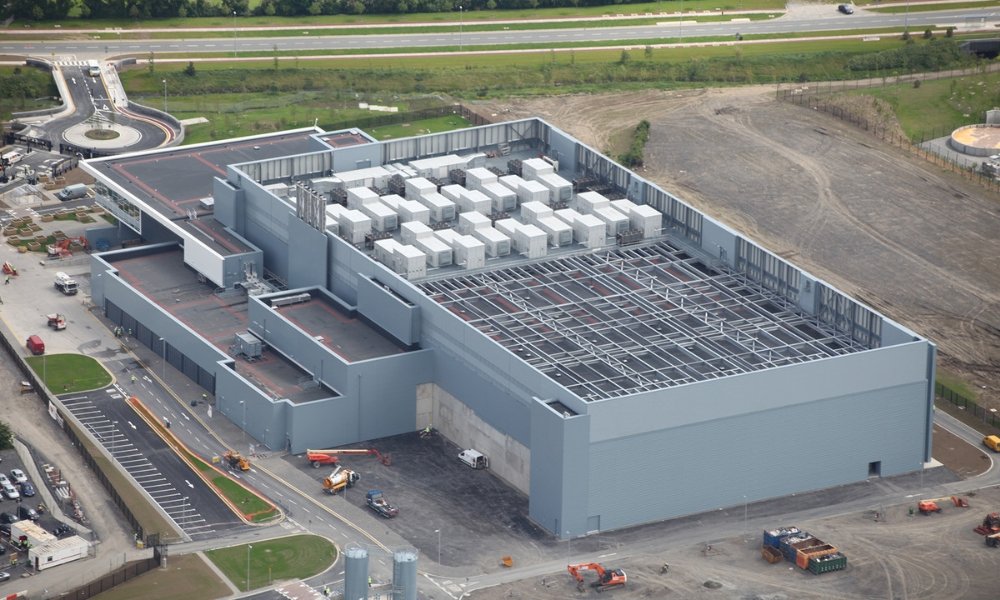
The batteries continue protecting the data centre during outages. They can also provide grid frequency services and reduce reliance on fossil fuel generators used for grid balancing.14
This model could help Australian data centres support renewable integration. It would require suitable market rules, technical controls, and customer agreements.
Google recovers heat in Finland
Google’s Hamina data centre uses seawater from the Gulf of Finland for cooling. An offsite heat recovery project also captures waste heat for the local district heating network.15
Australia may not replicate this exact model in every location. However, it shows how site-specific design can reduce resource use and turn waste heat into a community asset.
Expert tips for responsible data centre development
Governments, developers, networks, and corporate customers should require:
- independent reporting of energy, water, emissions, and operational efficiency
- additional renewable generation and storage for major new loads
- transparent responsibility for required network upgrades
- water assessments based on local conditions and drought projections
- acoustic modelling for continuous, tonal, and low-frequency noise
- noise monitoring after facilities begin operating
- demand-response capability where workloads and contracts allow it
- plans for refrigerants, diesel use, electronic waste, and embodied carbon
- meaningful community consultation before designs become difficult to change.
NABERS ratings provide an established Australian framework for comparing actual operational energy performance. Independent measurement matters because sustainability claims should reflect real-world results, not simply a shiny brochure and a strategically placed gumleaf.
So, are data centres bad for the environment?
Data centres can create substantial environmental impacts, but those impacts are not fixed.
Facilities powered by fossil-heavy electricity, using scarce drinking water, or operating close to homes can create genuine problems. Efficient facilities supported by additional renewables, storage, responsible cooling, and strong planning controls can operate with a much lower footprint.
Australia does not need to choose between digital infrastructure and environmental responsibility. It needs firm rules ensuring data centres pay for the infrastructure they require and minimise their effects on communities.
Done properly, data centres could help finance renewable generation and support the electricity grid. Done poorly, they may become one very expensive download.
- International Energy Agency, Energy and AI: Energy demand from AI, 2025.
 ︎
︎ - Oxford Economics Australia, Data Centre Energy Demand, prepared for the Australian Energy Market Operator, 2025. ︎
- NABERS, Data Centres and its operational energy rating methodology. ︎
- Lawrence Berkeley National Laboratory, 2024 United States Data Center Energy Usage Report. Indirect water figures are also summarised by Reuters. ︎
- Lawrence Berkeley National Laboratory, The Water Use of Data Center Workloads: A Review and Assessment of Key Determinants, 2025. ︎
- The Hon Dr Andrew Charlton MP, Data Centres: An Honest Accounting, Sydney Institute speech, 2026. ︎
- Australian Acoustical Society, The Noise of Cloud Computing, 2013. ︎
- Northrop Consulting Engineers, Marsden Park Data Centre Campus Acoustics Report, 2024. ︎
- Australian Government Department of Industry, Science and Resources, Expectations of Data Centres and AI Infrastructure Developers, 2026. ︎
- Australian Energy Market Operator, 2026 Integrated System Plan. ︎
- International Energy Agency, Energy and AI: Energy Supply for AI, 2025. ︎
- Oxford Economics Australia, demand flexibility analysis within Data Centre Energy Demand. ︎
- NEXTDC, FY25 Environmental, Social and Governance Report. ︎
- Microsoft, Microsoft Datacenter Batteries to Support Growth of Renewables on the Power Grid, 2022. ︎
- Google, Hamina, Finland Data Centre. ︎
The post Are Data Centres Really as Bad for the Environment as People Think? appeared first on Energy Matters.


