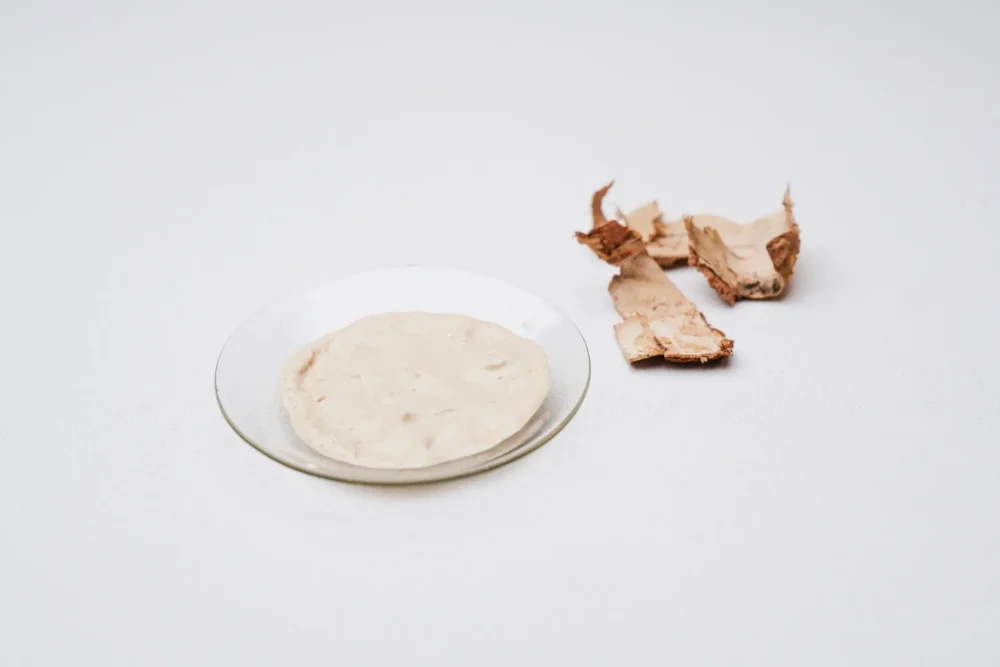
Innomost, a Finnish biomaterials company, has developed a barrier coating derived from upcycled birch bark. The material, called Suberinno Suberin, targets food packaging, dried goods and non-food applications.
The coating offers moisture and oxygen barrier performance, positioning it as an alternative to conventional fossil-based coatings. Sami Selkälä, founder and chief technical officer at Innomost, said replacing fossil-based materials takes more than renewable feedstock. The coating must also deliver functionality and work across different substrates and formulations.
Suberin is a naturally occurring material found in plant cell walls. In birch bark, it protects the tree from moisture, oils and environmental stress. Innomost’s version offers grease resistance, hydrophobic properties, strong adhesion and coating durability. It can be used alone or blended with other materials.
Niko Mellanen, chief science officer at Innomost, said the coating can deliver moisture, grease and oxygen barrier properties within a single material. That versatility lets converters and manufacturers tailor film formation and processing properties for specific applications.
Innomost currently produces the material at its Kokkola facility. The company plans to build an industrial-scale plant within two to three years.
The launch adds to a wider wave of bio-based packaging innovation. The Circular Bio-based Europe Joint Undertaking expects several of its funded projects to reach widespread market adoption in coming years. Other recent developments include Henkel’s partnership with Sekab on bio-based adhesive raw materials, and Notpla’s seaweed-based coating collaboration with Kwalitaria.
The post Birch bark waste becomes bio-based barrier material appeared first on World Bio Market Insights.