
Canada’s beef farming culture has a legendary independent streak.
In today’s initiatives of cow-calf production cost-tracking, that psychological starting point can conflict interestingly with the cold, hard numbers.
The Canadian Cow-Calf Cost of Production Network is an ongoing benchmarking exercise. In 2020, it began tracking participating beef farms’ costs to provide insight into how different forage sources and practices compare.
Its recent findings raise an interesting question: does it make more sense for cow-calf producers to feed their herds with hay they’ve grown themselves or buy from someone else?
To buy or to grow?
Cattle producers have largely spurned the modern push toward homogenization in livestock production, making the sector one of agriculture’s last bastions of genetic diversity.
Producers favour various breeds and genetics, typically selecting replacement heifers from within. That makes each herd uniquely tailored to the ranch’s environment and management.
The same applies to feed.
There are countless combinations of feed and forage management on cattle operations. Producers adapt to annual variations in availability in tandem with their overall goals, but most still prefer to do it themselves rather than count on outside suppliers.
When the network examined annual feed costs, it found that it cost nearly half the study group producers more to grow their own hay than the going market price.
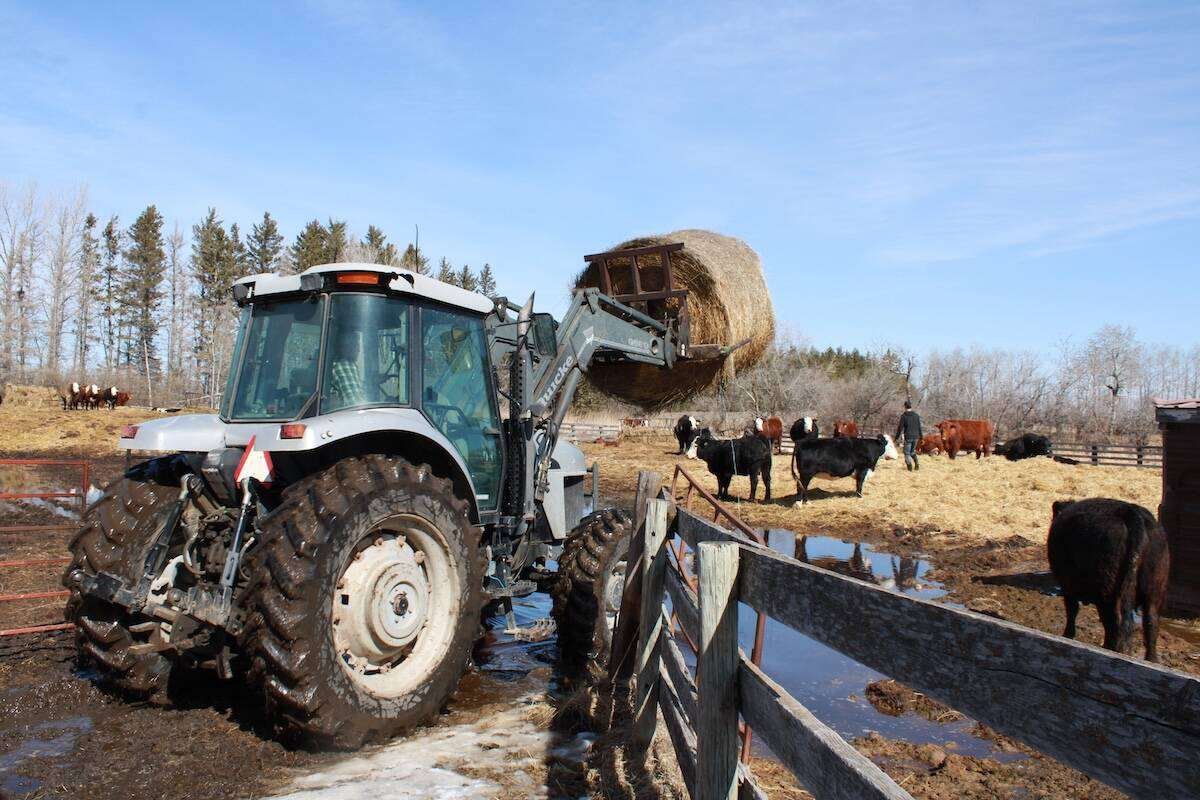
The costs of growing your own forage may not be as obvious as buying, but cost is cost to your bottom line. Photo: Melissa Jeffers-Bezan
The network analyzed production costs for other sources of feed as well, such as corn silage and corn for grazing. They found that, although these options are the most cost-efficient source of feed for ranchers, they require more by way of cash outlays.
Hay lands are typically sown to perennial forages, whereas corn is planted annually, which means more seed, fuel and fertilizer purchases.
Seventy per cent of the production costs for corn silage are cash, compared to slightly more than 50 per cent for hay, says a summary of the report produced by Canfax.
“This means silage can be more demanding on working capital, even though the total cost per tonne is lower.”
Does economic mean practical?
However, while the data suggests that on many farms, buying hay is the more economical choice, the question becomes whether that is the most practical long-term.
That’s a well-studied dilemma for businesses, and there is growing evidence that the right answer might change with the times.
A policy note released earlier this year by Al Mussell, an agricultural economist with AgriFood Economic Systems based in Guelph, Ont., says many corporate leaders in the 1980s and 1990s concluded that the way to efficiency and profits lay in outsourcing components of their production process that could readily be made by someone else.
For example, cars are now manufactured in a central plant using components sourced from a host of suppliers from multiple countries.
In an era in which liberalized trade was the mantra, the notion that every country or every business needed to be standalone was tossed aside in the name of letting the most efficient producers supply goods and services.
As farmers well know, food and agribusiness companies have consolidated to the point where the top four companies now dominate processing in dairy (63 per cent) and beef (89 per cent), commercial grain storage (68 per cent) and supermarket food sales (87 per cent).
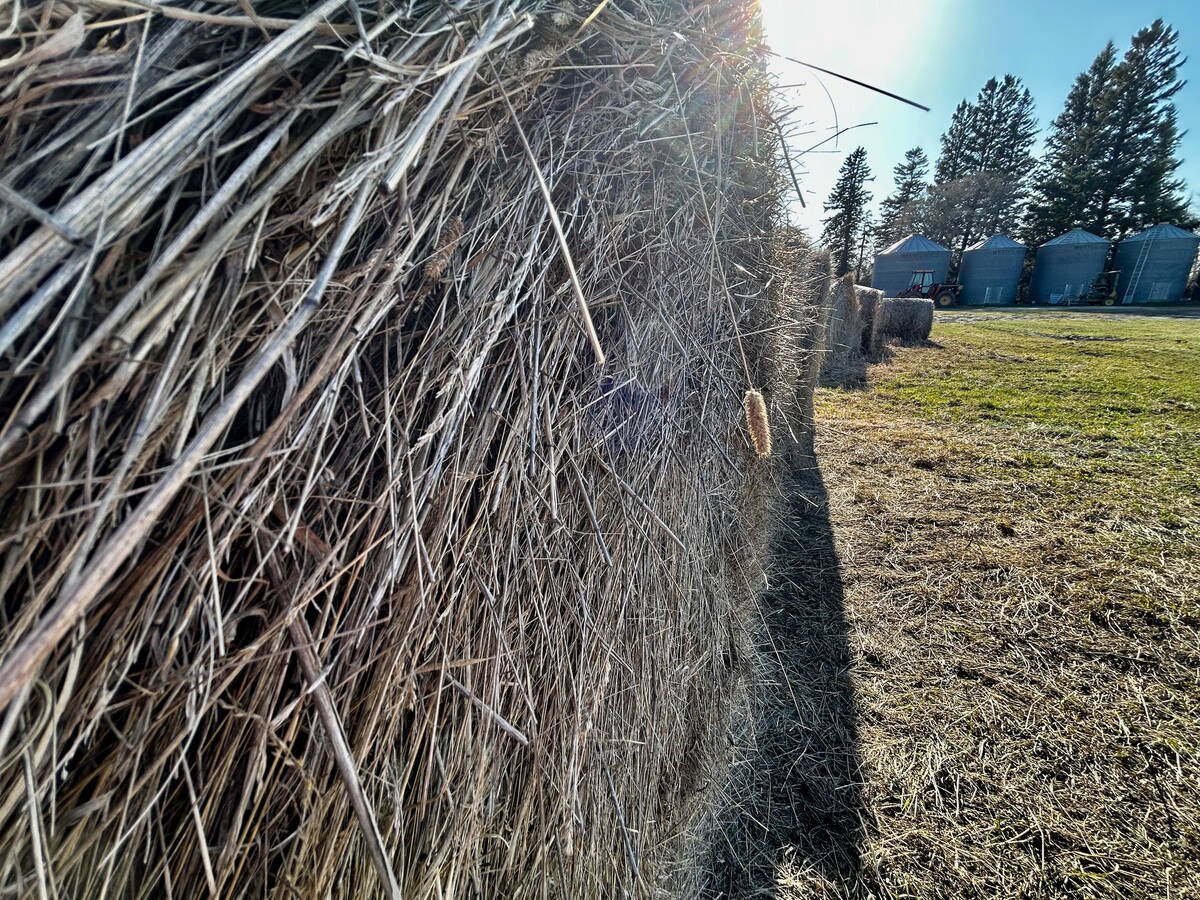
The meeting point of practical and economic feed sourcing strategy likely changes with the times and farm circumstance. Photo: Alexis Stockford
“In a relatively low-risk environment, companies structured toward ‘making’ and retaining divisions of dubious or inconsistent profitability as hedges against risk are probably penalized in competition for financial capital,” Mussell wrote.
He says the corporate outsourcing model worked well when the world was trading more freely, markets were less volatile and the global traders were more interested in following the rules.
But those days are gone.
One of the biggest risks companies face in the current operating environment is a supply chain that is disrupted by war or broken by tariffs.
While outsourcing and consolidation in agribusiness won’t come to a “screeching halt,” companies may have to rethink their strategy in light of the current context, according to Mussell.
There has never been a better time in farming to have a firm grip on the real costs of production, making initiatives such as the cow-calf benchmarking exercise invaluable.
Deciding when it makes the most sense — and cents — to internalize those costs or outsource them could be pivotal in how well producers weather these difficult times.


