
The Canadian Alliance for Net-Zero Agri-Food’s Million Acre Challenge is seeing 36,000 acres added across 60 Ontario farms.
The Weston family is contributing $10.5 million for Phase 2, building on their original $7 million donation that helped launch the Million Acre Challenge in 2025.
WHY IT MATTERS: Phase 2 recruitment for the challenge begins in December 2026, giving participating farmers access to cost-sharing and agronomic support to test practices to see what fits in their operations.
“The first group of farmers gave us something incredibly valuable ─ the chance to see how this model works on real farms and where we need to make it better,” said Ashley Honsberger, interim executive director of CANZA. “Phase 2 takes that experience and puts it to work.”
Phase 1 results
Phase 1 saw 32 farms and 15,105 acres across 175 Southwestern Ontario fields participate, with each farm adopting at least one new regenerative practice.
Honsberger said Phase 1 revealed farmers tend to invest in practices with faster results, highlighting the need for different practice options and levels of support.
“We’re supporting more farmers, but we’re also strengthening what sits around them ─ trusted advice, practical support and better measurement, so we can understand what it really takes to scale,” said Honsberger.
Offsetting risk
Regenerative practices that improve productivity and long-term resilience are costly, but the Million Acre Challenge helps offset investment and provides additional resource support.
Introducing a cover crop, or a nutrient management or tillage system change, includes assessing agronomy, equipment, labour, time and yield expectations, impacts and uncertainty.
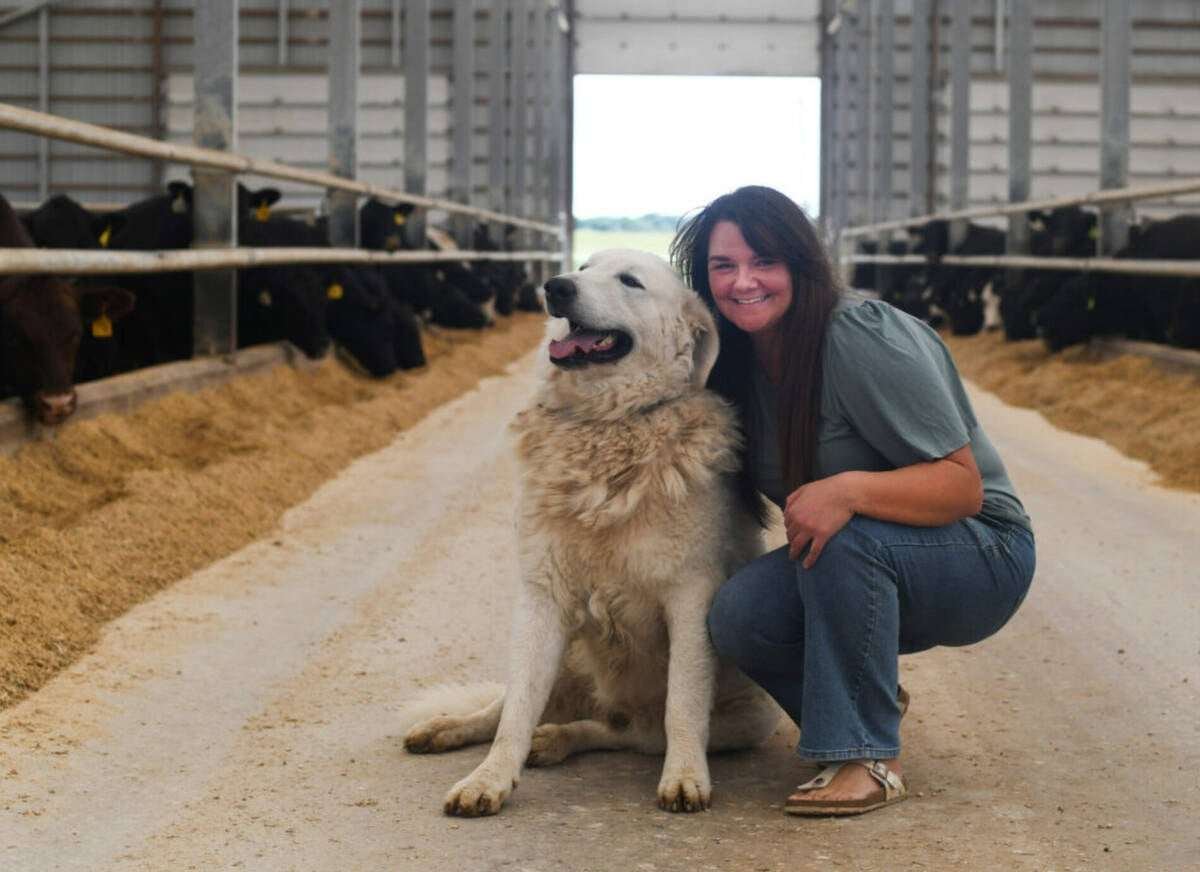
Lexi Soudant, livestock manager at Dave Gardiner Farms in Kirkton, Ont., and a participating farmer, said that for family farms, new practices often require significant investment with no guarantees.
“And the setback, if it fails, can be quite damaging for a family farm such as ours,” Soudant shared. “Being part of the Million Acre Challenge changed the level of risk our farm felt in trying no-till.”
Marketplace expansion
This includes CANZA’s Marketplace, where Ontario farmers can explore, save and compare programs that support sustainable farming practices, which will nearly triple from 55 to at least 160 programs across Canada.
David Hughes, president and CEO of Generate Canada, said expanding CANZA’s impact is necessary, but insufficient on its own.
“Our aspiration in this next phase of work is to generate and share better evidence on the most effective approaches to adopt regenerative farming,” Hughes explained. “And to use this knowledge to develop and scale the tools, systems and infrastructure needed to make climate-smart agriculture more ubiquitous and profitable over time.”
Phase 2’s expansion across crop rotations will allow more farmers to access trusted agronomic advice and implementation support with a streamlined system for data collection and reporting, including further development in measurement approaches for carbon, water and biodiversity outcomes.
“Farming and sustainability really go hand in hand, and the challenge is helping put practical tools and support behind that reality,” said Sarah Alton, Kenruth Farms’ farm manager near Lucknow, Ont., and a participating farmer. “And if we do that, I would say it’s a big benefit.”


