

Two of Australia’s newest and most affordable electric cars have scored five-star ANCAP safety ratings under the significantly expanded testing regime introduced in 2026.
The $26,490 plus on-road costs Geely EX2 and $35,990 drive-away Leapmotor B05 have become only the second and third vehicles currently on-sale in Australia assessed under ANCAP’s new 2026-2028 “Stages of Safety” protocols.
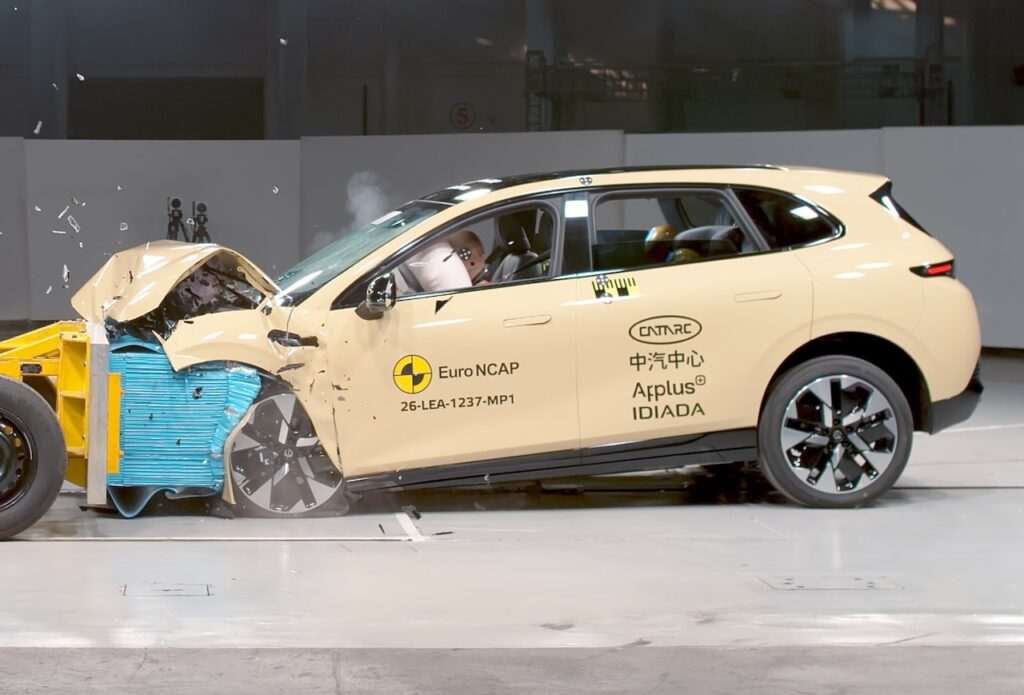
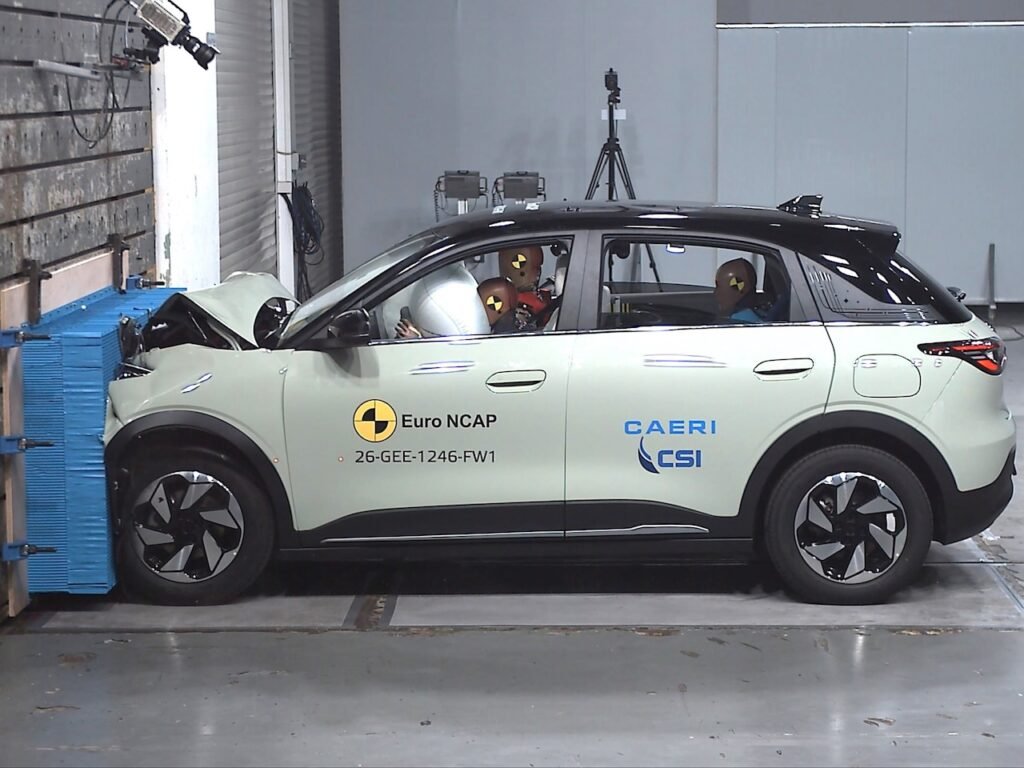
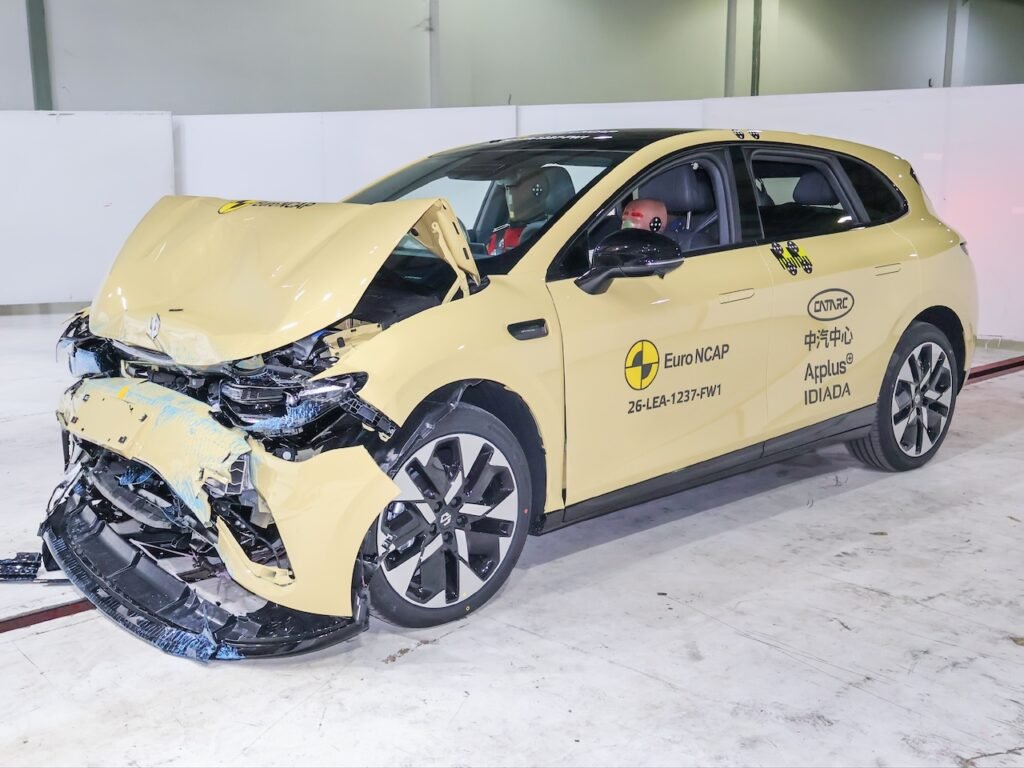
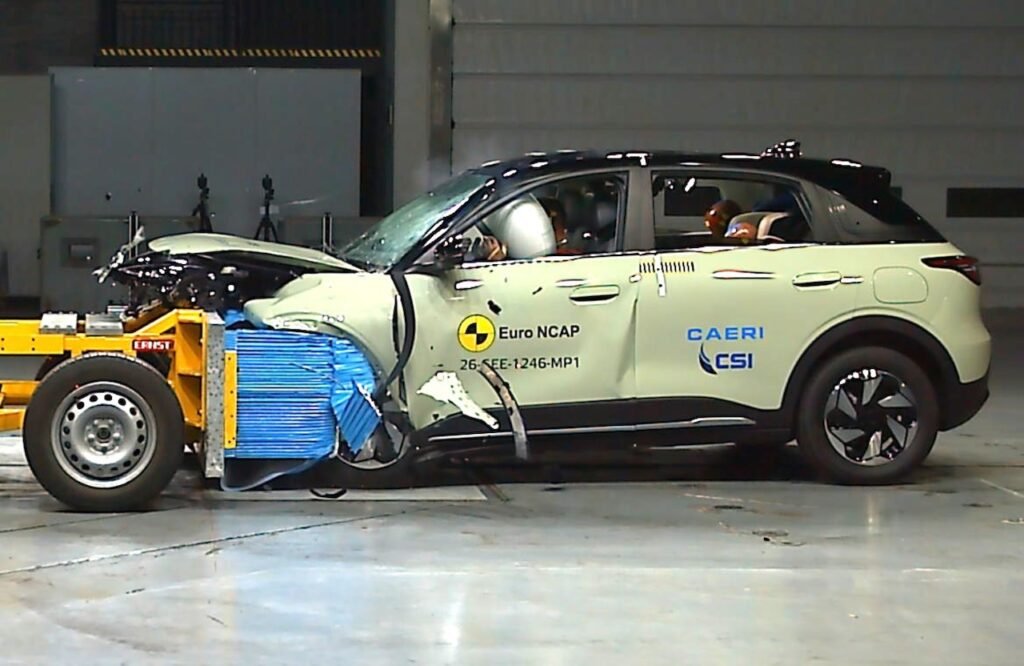
Both cars achieved their five-star ANCAP ratings based on Euro NCAP testing conducted in Europe, with the physical crash-test vehicles being left-hand drive. Euro NCAP tested a Geely E2 Ultra and Leapmotor B05 67.1kWh Design, with the results subsequently deemed applicable to the right-hand-drive versions sold in Australia.
READ MORE: Mazda 6e and Mercedes-Benz CLA score five stars: So why isn’t ANCAP making a bigger deal about it?
READ MORE: Toyota HiLux BEV stars in safety tests: Maximum ANCAP rating confirmed as Subaru Trailseeker and Uncharted EVs also score highly
READ MORE: Australia’s safest? New BMW iX3 and Zeekr 7GT EVs become first vehicles to earn five stars under toughest-ever NCAP tests
In Europe, the GAC Aion UT has also been announced as a five star performer, but that result has not as yet been confirmed for Australia. ANCAP says it has yet to access a RHD UT for local examination and study. It expects to start the process mid-September.
The latest results are significant because the new testing system substantially changes the way ANCAP assesses vehicles, dividing their performance into four areas: Safe Driving, Crash Avoidance, Crash Protection and Post Crash.
It also places greater scrutiny on increasingly sophisticated safety technology, including driver monitoring, occupant monitoring, physical access to commonly used controls, speed-limit recognition, low-speed collision avoidance and how vehicles and their occupants are managed after a crash.
That makes comparisons with vehicles carrying five-star ratings achieved under earlier ANCAP protocols less straightforward.
The two Chinese-built electric hatchbacks took quite different routes to their five-star results.
The Geely EX2 scored 79 per cent for Safe Driving, 72 per cent for Crash Avoidance, 86 per cent for Crash Protection and an impressive 95 per cent for Post Crash.
The larger and more expensive Leapmotor B05 managed 66 per cent for Safe Driving, 77 per cent for Crash Avoidance, 92 per cent for Crash Protection and 89 per cent for Post Crash.
The B05’s standout performance was its crash protection. ANCAP recorded maximum scores for adult and child occupants in the side-impact test and for the driver in the oblique pole test, while virtual and sled testing showed good protection for occupants of different sizes across different crash severities.
Its lane-departure collision avoidance system also scored 99 per cent.
But the new protocols exposed some weaknesses that would have been less visible under the previous rating system.
The B05 scored only 66 per cent for Safe Driving. ANCAP found its ability to identify posted speed limits was limited, while several commonly used functions require interaction with the central infotainment screen. It also cannot identify the stature of front occupants or recognise when a passenger is sitting out of position, such as with their feet on the dashboard.
Its low-speed collision avoidance performance was mixed too. The B05 failed to intervene when turning towards another vehicle or motorcycle in ANCAP’s new low-speed tests and does not prevent forward movement caused by pedal misapplication towards a pedestrian.
The cheaper EX2 performed better in the new Safe Driving category, including recognising some incorrect seatbelt use and adjusting its restraints according to the stature of front-seat occupants.
Its driver monitoring system also performed well at detecting common forms of distraction, although ANCAP found its ability to detect fatigue or an unresponsive driver was less comprehensive.
The EX2 correctly identified 65 per cent of speed-change events during ANCAP’s real-world metropolitan and regional road assessment, equivalent to 94 per cent of the distance travelled.
But there were shortcomings here as well.
Its AEB system performed well in many situations involving vehicles, motorcycles, pedestrians and cyclists, but was less effective at higher speeds. It also failed to intervene when turning across the path of another vehicle or motorcycle in low-speed testing, cannot react to pedal misapplication and was unable to detect a stationary pedestrian while reversing.
ANCAP also identified an elevated risk of leg injury and pedal intrusion for the EX2 driver in its frontal offset crash test, while protection of the front passenger’s chest was rated marginal in the full-width frontal test.
Both EVs scored strongly in the new Post Crash assessment, which examines areas including rescue information, accessibility following a collision and, importantly for electric vehicles, high-voltage battery isolation and fire risk.
The EX2 achieved the higher 95 per cent Post Crash score and ANCAP reported effective battery voltage isolation and post-crash fire-risk management. Its doors, seatbelt buckles and tailgate also remained operable following the crash tests.
Both cars are fitted with eCall hardware, although the emergency calling functionality is not yet operational. Leapmotor says it is expected to activate the B05 system in coming months, while Geely is expected to do the same for existing and new EX2s within 12 months.
The five-star results apply to all Australian variants of both vehicles.
The Geely EX2 is currently one of Australia’s cheapest EVs, priced from $26,490 plus on-road costs for the Complete and $30,990 plus ORCs for the Inspire.
The Leapmotor B05 starts at $35,990 drive-away for the Style, rising to $39,990 drive-away for the longer-range Design LR.
ANCAP CEO Carla Hoorweg said the results demonstrated affordable EVs could meet the tougher requirements.
“These results show that choosing a more affordable electric vehicle doesn’t have to mean compromising on safety,” she said.
The results follow the BMW iX3 becoming the first vehicle assessed by ANCAP under the new 2026 protocols, which divide vehicle performance into four “Stages of Safety”: Safe Driving, Crash Avoidance, Crash Protection and Post Crash.
The Zeekr 7GT has also achived five stars under the new system, but that result has not been officially announced.


