
We reached out cold to Joey, the founder of Longview Restoration. What else are a couple of investors to do after catching a viral post on LinkedIn about realizing $3m in revenue six months after formation? When we met, he started by laying out all the reasons we shouldn’t invest. First, we needed to believe the market for post-disaster restoration would keep growing. Luckily, this was, in fact, kind of our whole thing. Second, Longview had to find enough good operators who could expand the network of rebuilding experts. As luck would have it, that was kind of their whole thing. And, with software engineering getting cheaper to build by the month, we also had to align with Joey’s thesis that the durable way to win adoption wasn’t to sell the digital operating system to other people but to own the businesses themselves.
Suffice to say we got to conviction, and every update since his seed round has reinforced our belief in Joey. Over the past 18 months, he’s pushed into five locations, grown revenue 5x while staying profitable, and waded knee-deep into what it takes to tear out drywall for a living while the billing, the estimates, and adjuster calls handle themselves.
All Rows Lead to Nashville.
During our first in-person deep dive, Joey explained how he’d come to live in Nashville, based on a detailed Excel spreadsheet mapping the cost of living, neighborhoods, and drivability across ten metropolitan areas pre-screened for taxes and weather. He is an unapologetic, relentless optimizer. He insisted on meeting each of us together, then separately, then together again. He communicated through a series of texts, emails, and wildly detailed Looms he recommends watching at 2.5x speed. By the end, we were both two feet in on backing Joey, an extraordinary founder who bridges the gap between real-world operators and true frontier tech. We’ve seen him be just as comfortable at construction team networking events in Chicago as he is sitting across the table and explaining a billion-dollar vision to a bunch of vested VCs. We’ve ridden a bright orange van clad in branded polos to a homeowner’s house, and watched him talk through customer service concerns and insurance distress. Joey, like his business, is hard to put in a box.
Joey chalks up that versatility to moving to small-town Indiana from small-town South Korea at the age of eight, unable to speak a word of English. His first contact with American kids came at a basketball camp, where he also first saw a hoop and a backboard. If he struggled early on, you wouldn’t know it from a resume with bullets for Harvard and McKinsey, where he collected the stickers of pedigree before striking out on his own construction-focused investment fund. Longview is the mosaic formed from each of those experiences, something only he could make.
The Days of Overhead Are Over.
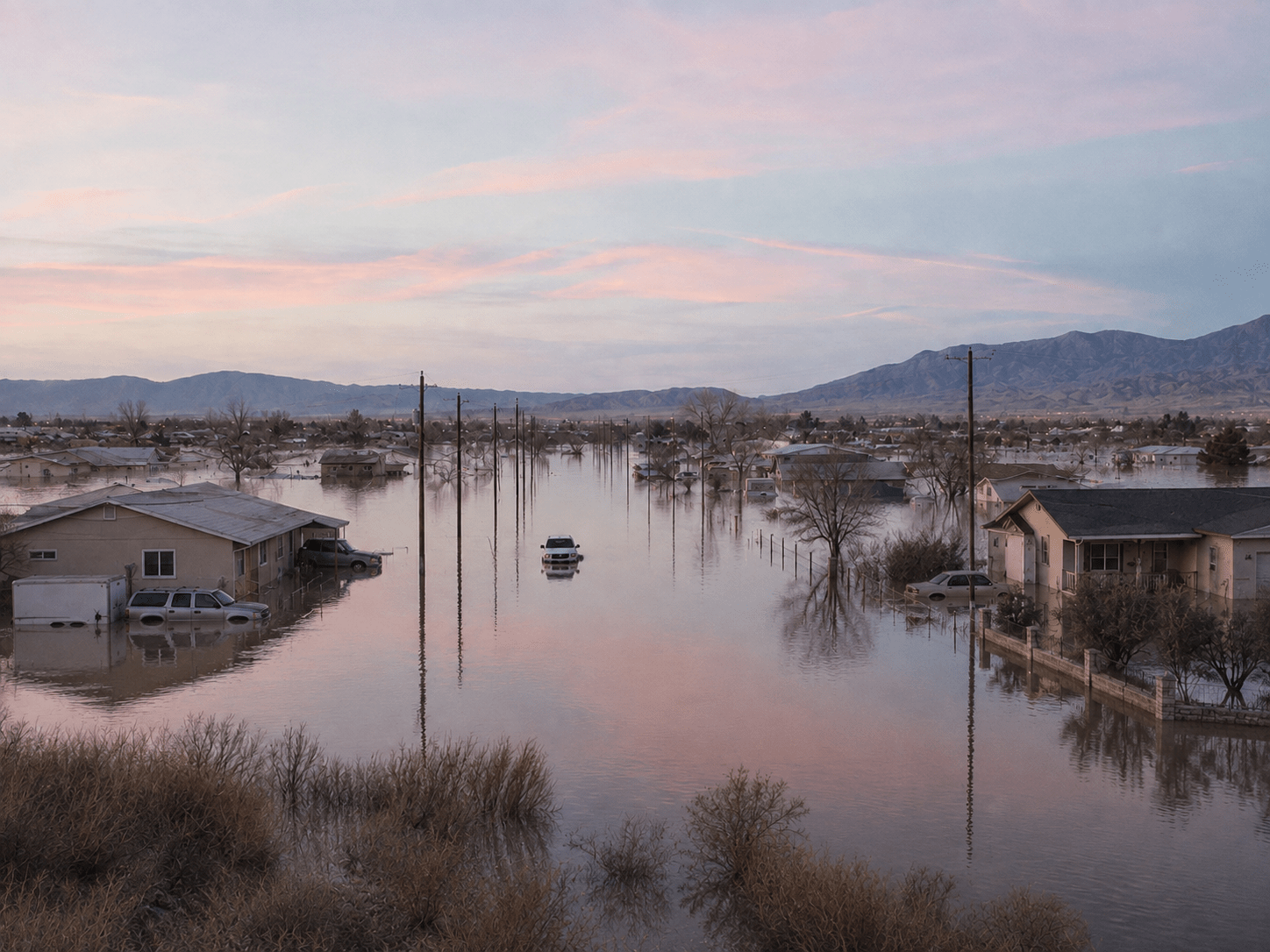
Restoration contractors drain your flooded basement, clear fire debris, remediate mold and smoke, and stand up drywall. Most people learn the industry exists the day they Google, “wall soaking wet help near me what to do.” It is an $80 billion market getting larger every year. A plumber gets paid by the person standing in the kitchen, while a restoration contractor gets paid by that person’s insurer, so every job drags through months of paperwork before a dollar shows up.
Call it a roll-up, a restoration incubator, a “neo-franchise” for the AI era. We are not sure how to label it either. Longview finds people who want to own something real and hands them a working company on day one, which means the training, technology, capital, insurance relationships, operating playbooks, recruiting, and brand homeowners can trust.
The platform runs intake, scheduling, estimates, code compliance, billing, and collections. It has taken virtual inspections from 90 minutes down to nine. An AI tool the team calls Phil watches job site video, checks it against IICRC S500 standards and Longview’s own procedures, and writes the scope of work. OMNI is the data layer underneath that swallows call recordings, check-in video, inspections, and financials from every location, so an agent answering a question in Nashville draws on what happened in Baltimore and Dallas.
That covers four of the five jobs. Running a restoration company asks one human being to be a marketer, a salesperson, a general contractor, an accountant, and a collections manager at the same time. Founders who are good at all five are hard to come by. Through a systemized, technology-enabled, truly better way to build, Longview operators have an easier mandate; they just have to be really good at the job that requires drying and drywalling a stranger’s flooded house. Conveniently, it is also a job AI cannot take.
Ctrl + Alt + Incorporate.
Joey gets lots of questions about how this is different from the existing billion-dollar restoration companies. The private equity playbook buys existing businesses, centralizes what it can, and turns entrepreneurs into branch managers. It’s an exercise that rests on the assumption you can buy low, sell high. But, as AI has minted a new category of rollup funds, the “buy low” part of the equation gets trickier every day.
Longview takes a different tack, building the machinery to start new businesses from scratch. That machinery draws on insights from productizing and factory-izing other industries, shipping brand new restoration locations month after month, run by local operators recruited to own what they run. While PE firms bid up the same finite pool of businesses, Longview creates new ones.
Every company Longview launches makes the next one cheaper to operate, faster to scale, and harder to screw up. Nineteen months after founding, the business factory is humming. Longview has locations active in five markets: Dallas, Baltimore, New Hampshire, Minneapolis, and Nashville, with dozens more on the way. Those locations have restored thousands of homes. Trailing revenue sits at $15 million, and the company has been profitable from day one.
We Know a Guy.
Anyone who has lived through a disaster will tell you the year after is its own kind of hell. You spend weeks digging up photographs of everything you owned to give the insurance carrier line-item proof. You learn what your policy pays, which is much less than you thought. And you spend your days on hold from a Motel 6.
While we love to watch AI agents burn trillions of tokens in infinite loops behind a computer screen to make imaginary numbers go up just as much as the next guy, we believe that the most exciting AI companies will be the ones that enable humans to turn AI into real-world outcomes for the billions of other humans on this planet. We think at least one will own trucks, train operators, tear down damaged drywall, and answer the phone when a family’s home is underwater.
We have spent five years funding the companies that price this risk, insure it, and guide families through the claim. Longview is the one that swings the hammer. If you are a founder pointing AI at the physical world, and you would rather own the business than sell software to it, we want to hear from you. We are always looking for our next Joey.
The post Cleanup, Inc. appeared first on Lowercarbon Capital.


