

-
- Climeworks has signed a carbon credit agreement with a major Canadian financial services company, TD Bank Group. The deal gives TD Bank access to carbon removal credits generated through Climeworks’ direct air capture (DAC) technology.
ezstandalone.cmd.push(function () { ezstandalone.showAds(119); });
Climeworks is one of the most well-known companies in engineered carbon removal. It builds machines that capture carbon dioxide (CO₂) directly from the air. The captured CO₂ is then stored permanently underground.
ezstandalone.cmd.push(function () { ezstandalone.showAds(127); });
TD Bank is using carbon credits from this deal to support its climate strategy and address its residual emissions. Susan Thompson, Managing Director, Sustainable Finance and Advisory at TD Securities, remarked:
“As carbon market standards and methodologies continue to evolve, Climeworks Solutions’ portfolio approach helps mitigate risk while providing organizations with flexible options in their carbon management strategies.”
ezstandalone.cmd.push(function () { ezstandalone.showAds(128); });
Carbon Removal Market Is Growing, But Still Very Small
The agreement reflects a growing trend in corporate climate action. More companies now turn to high-quality carbon removal credits instead of older forms of offsetting, such as forestry-based credits that may carry a higher risk of reversal.
This shift is important because global climate targets become stricter. Many companies now aim for net-zero emissions by 2050 or earlier. However, reducing emissions completely is still difficult for sectors like finance, aviation, and heavy industry. Carbon removal is becoming a key tool to close this gap.
ezstandalone.cmd.push(function () { ezstandalone.showAds(129); });
While the carbon removal industry is still in an early stage, it is expanding quickly.
According to the International Energy Agency (IEA), reaching global net-zero emissions by 2050 will require around 7–10 billion tons of CO₂ removal per year by mid-century. Today, global carbon removal capacity is only a small fraction of that level.
Direct air capture is even smaller. The IEA estimates that DAC facilities currently remove less than 0.01 million tons of CO₂ per year globally, compared with gigaton-scale future needs.
ezstandalone.cmd.push(function () { ezstandalone.showAds(130); });
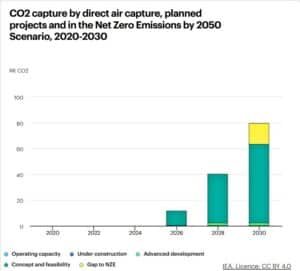
Climeworks operates some of the world’s first commercial DAC plants. Its facilities in Iceland and other locations capture CO₂ and store it underground through mineralization in basalt rock formations.
One of its flagship plants, Orca in Iceland, has a capacity of about 4,000 tons of CO₂ per year. Its newer plant, Mammoth, is designed to capture up to 36,000 tons of CO₂ per year when fully operational.
These numbers are small compared with global emissions. Global CO₂ emissions from fossil fuels remain above 37 billion tons per year, according to the Global Carbon Project.
ezstandalone.cmd.push(function () { ezstandalone.showAds(131); });
This gap shows the scale of the challenge ahead. It also explains why early carbon removal contracts like the Climeworks–TD Bank deal are important for market development. They provide revenue certainty. They also help finance new facilities.
Climeworks Expands Its Role in the Carbon Removal Economy
Climeworks is one of the leading companies in the direct air capture sector.
The company operates plants in Iceland and is developing larger facilities in collaboration with industrial partners and governments. Its model combines carbon capture technology with permanent geological storage.
ezstandalone.cmd.push(function () { ezstandalone.showAds(132); });
Climeworks has also signed agreements with major corporations across technology, finance, and consumer sectors. These deals are designed to provide long-term demand for carbon removal services.
This demand is important because DAC facilities are capital-intensive. They require a large upfront investment before they can operate at scale.
By securing long-term contracts, Climeworks can reduce financial risk and support expansion plans. The company has stated that scaling carbon removal is necessary to meet global climate goals. However, it also acknowledges that emissions reductions remain the first priority.
ezstandalone.cmd.push(function () { ezstandalone.showAds(133); });
Carbon removal is positioned as a complementary tool, not a replacement for decarbonization.
TD Bank Expands Its Net-Zero Strategy Through Carbon Removal
TD Bank is part of the global financial sector’s shift toward net-zero commitments. Many large banks have pledged to reach net-zero emissions in their operations and financed activities by 2050. These targets are aligned with frameworks such as the Glasgow Financial Alliance for Net Zero (GFANZ).
For banks, emissions are not only direct. A large share comes from “financed emissions.” These are emissions linked to lending and investment portfolios. This makes decarbonization more complex than in other industries.
ezstandalone.cmd.push(function () { ezstandalone.showAds(134); });
Carbon credits are often used as a transitional tool. They do not replace emissions cuts, but they can support near-term climate goals while long-term changes take place.
-
TD Bank has set a goal to reach net-zero emissions by 2050 across both its operations and financing activities.
The bank is also expanding its climate finance efforts. In 2024, TD reported C$76.4 billion in sustainable and decarbonization financing, up from C$69.5 billion a year earlier. This supports its larger goal of providing C$500 billion in sustainable and decarbonization finance by 2030.
ezstandalone.cmd.push(function () { ezstandalone.showAds(135); });
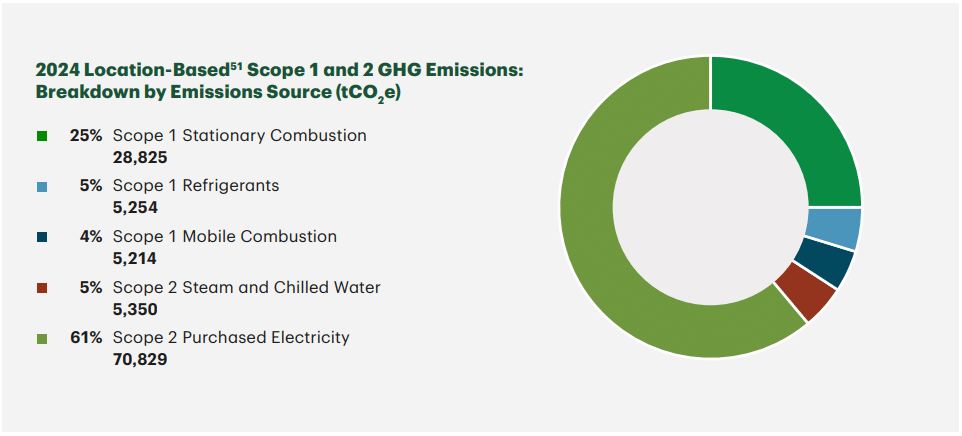
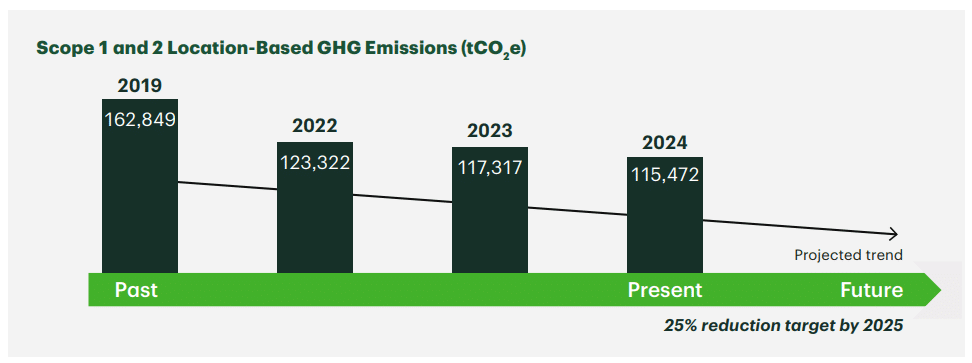
In 2024, the bank reported 115,472 metric tons of CO₂e from its Scope 1 and Scope 2 operations, a 29% reduction from 2019 levels. However, financed emissions were much larger, including:
- about 10.0 million metric tons of CO₂e from residential mortgages,
- 2.7 million metric tons from power generation financing, and
- 2.1 million metric tons from agriculture-related lending.
This is why TD’s climate strategy focuses not only on reducing its own emissions but also on supporting lower-carbon activities across its lending and investment portfolio. These efforts are part of TD’s broader strategy to support the transition to a lower-carbon economy while reducing emissions across its business.
ezstandalone.cmd.push(function () { ezstandalone.showAds(136); });
The bank also continues to increase its role in sustainable finance markets through green bonds, sustainability-linked financing, renewable energy funding, and other low-carbon investment activities.
The Climeworks deal fits into this broader approach. It allows the bank to support a new carbon removal industry while addressing emissions that are difficult to eliminate immediately.
At the same time, regulators and investors are paying closer attention to the quality of carbon credits. Financial institutions are under pressure to use credits that are durable, measurable, and verifiable.
ezstandalone.cmd.push(function () { ezstandalone.showAds(137); });
Direct air capture is often seen as a higher-integrity solution compared with traditional offset projects because CO₂ is physically removed and stored for long periods.
Carbon Removal Moves From Concept to Early Market Reality
Carbon removal becomes more important because emissions cuts alone are not enough to meet global climate goals. The IPCC says most pathways that limit warming to 1.5°C require carbon dioxide removal, alongside deep emissions reductions. This includes both nature-based methods like forests and engineered solutions such as direct air capture and BECCS.
ezstandalone.cmd.push(function () { ezstandalone.showAds(138); });
Nature-based offsets have risks such as fire, land-use change, and measurement uncertainty. Because of this, companies are moving toward engineered options that provide more permanent storage.
DAC systems, like those developed by Climeworks, capture CO₂ directly from the air and store it underground, where it remains permanently. But the technology remains costly. Prices usually range from several hundred dollars to over $600 per ton of CO₂, depending on the system and energy source used.
Even so, demand is growing as companies and banks move from short-term carbon offsetting toward longer-term carbon removal contracts. While current capacity is still very small compared with global emissions, early deals like this one between TD Bank and Climeworks help build the market structure needed to scale carbon removal in the future.
ezstandalone.cmd.push(function () { ezstandalone.showAds(139); });
The post Climeworks and TD Bank Deal Signals a New Financial Era for Engineered Carbon Removal Credits appeared first on Carbon Credits.


