
For dairy farmers considering grazing, the first question may not be whether cows should be on pasture, but how a grazing system can fit the farm.
At Sunflo Dairy near Brandon, Man., Jeremy Sundell has spent nearly a decade figuring that out.
The farm began rotational grazing in 2017, after previously turning cows onto a couple of pastures and feeding hay once those pastures dried up.
Sundell’s first investments included reels, step-in posts and other equipment for moving cattle through paddocks. The following year, the farm installed water lines throughout the property.
“This has really been key for making it easy for us to move the cows through the different paddocks,” Sundell said.
WHY IT MATTERS: Grass-fed milk commands a premium in some dairy products, and some dairy farms out west are finding different ways to make pasture work for them.
The farm uses 1.5-inch water lines and a solar pump at its dugout to move water throughout the grazing system. Spigots are located throughout the farm, allowing the water supply to move with the cattle.
For Sundell, getting the infrastructure in place was part of making a more intensive grazing system practical.
Making pasture work for dairy cows
However, the farm also learned that simply giving dairy cows access to pasture wasn’t enough.
Sunflo initially tried pushing its cows across larger areas of the farm. As the season progressed and the forage matured, milk production steadily declined.
“We’ve kind of learned that you’ve got to really be grazing it when that forage is really palatable. You don’t want it to mature,” Sundell said.
That lesson is particularly important for dairy cattle, where maintaining forage quality is closely tied to maintaining milk production.
Intensive grazing takes commitment
At Van Os Dairy near Wetaskiwin, Alta., Arnold Van Os has also settled on a highly intensive grazing system.
The farm moves cows onto fresh pasture every day, using flexible fencing to create new strips and moving a water bowl along with the cattle.
“We move the fence every day, and then we move the water bowl every day as well,” he said.
Moving cattle frequently helps both the pasture and the cows, Van Os said.
When cattle remain in the same paddock for several days, they tend to select the most palatable forage first, leaving lower-quality material for later in the grazing period.
This way, there’s faster regrowth, and the cows get their choice picks of grass.
- READ MORE: Getting the grass-fed dairy details right
Van Os said the daily system provides a more consistent ration for the cows.
“So now you have the same consistency every day, which is very good for the milk production. It’s very stable, and it’s better for the cows.”
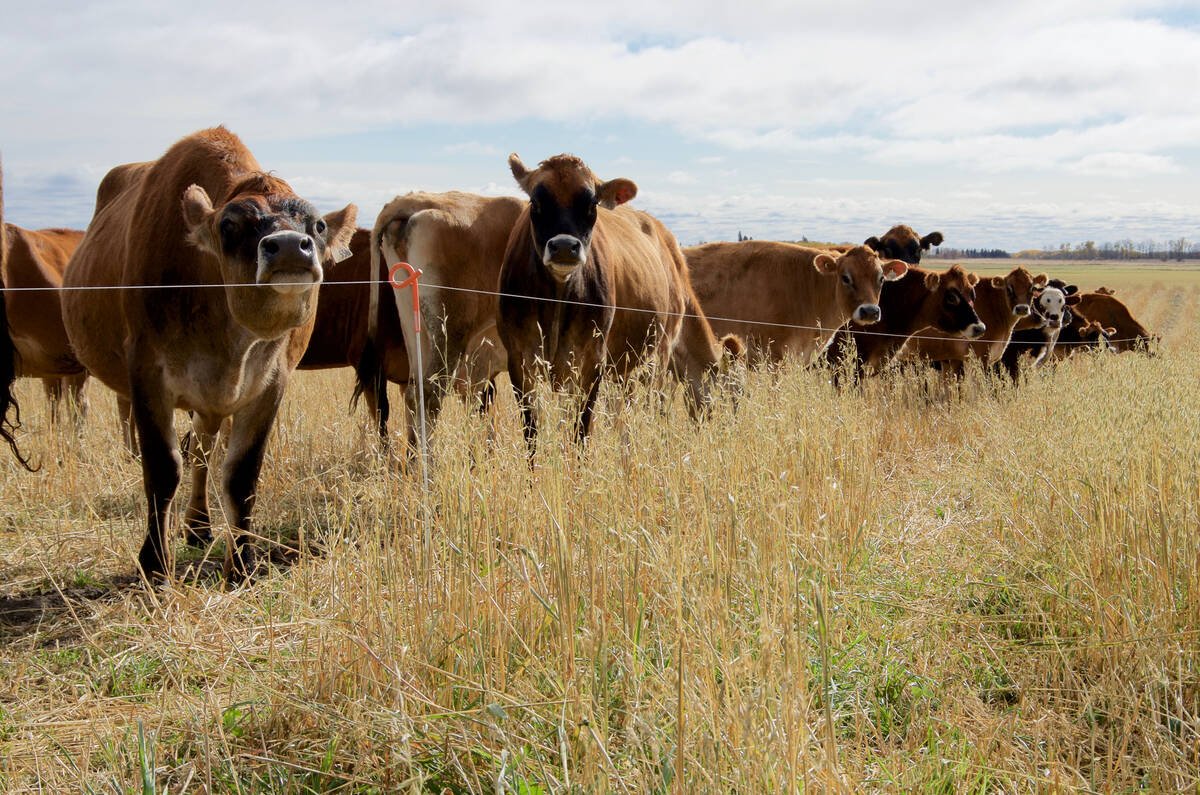
A study published in MDPI Sustainability that compared strip grazing to a continuous grazing system found that even at high stock rates, strip-grazed cows maintained a large fresh grass intake, averaging more than six kilograms of dry matter per cow per day.
Another study published in Livestock Science showed that for every kilogram increase of allocated pasture dry matter via controlled stripping, individual milk production went up by 0.24 kg per cow.
However, intensive grazing comes with a labour requirement that can make it less attractive to some producers.
“Most farmers don’t want to put the extra effort into it. But we do, and we think it’s more than worth it,” Van Os said.
Grazing doesn’t fit every farm
Grazing only plays a small role on Caroncrest Farm near Caronport, Sask.
Michael McLeod, the farm’s co-owner, is selective about which animals go onto the pasture.
“We try to keep heifers and dry cows out on pasture during the summer, but the milk cows stay in the barns,” he said.
The decision is tied to whether the available land makes sense for grazing the milking herd.
McLeod said land close to the farm is better suited to manure spreading and annual cropping, while some of the available pasture is farther away.
“It’s two miles of back and forth and interrupted by roadways, interrupted by train tracks. There’s a few things that just logistically don’t work out that well,” he said.
For the cattle that do graze, the objective is straightforward.
“We feed them as cheap as we can and still get a good result,” McLeod said.
Adapting to conditions
The grazing approaches used by the three farms also reflect differences in land, weather and farm infrastructure.
Grazing management has to account for the amount and timing of rainfall, as well as the quantity and quality of available forage.
At Sunflo, dry conditions have already prompted changes to the grazing system.
Sundell said the farm has experimented with stockpiling forage for later grazing, generally using heifers or dry cows in the fall. When milk cows are grazed on stockpiled forage, the farm supplements them.
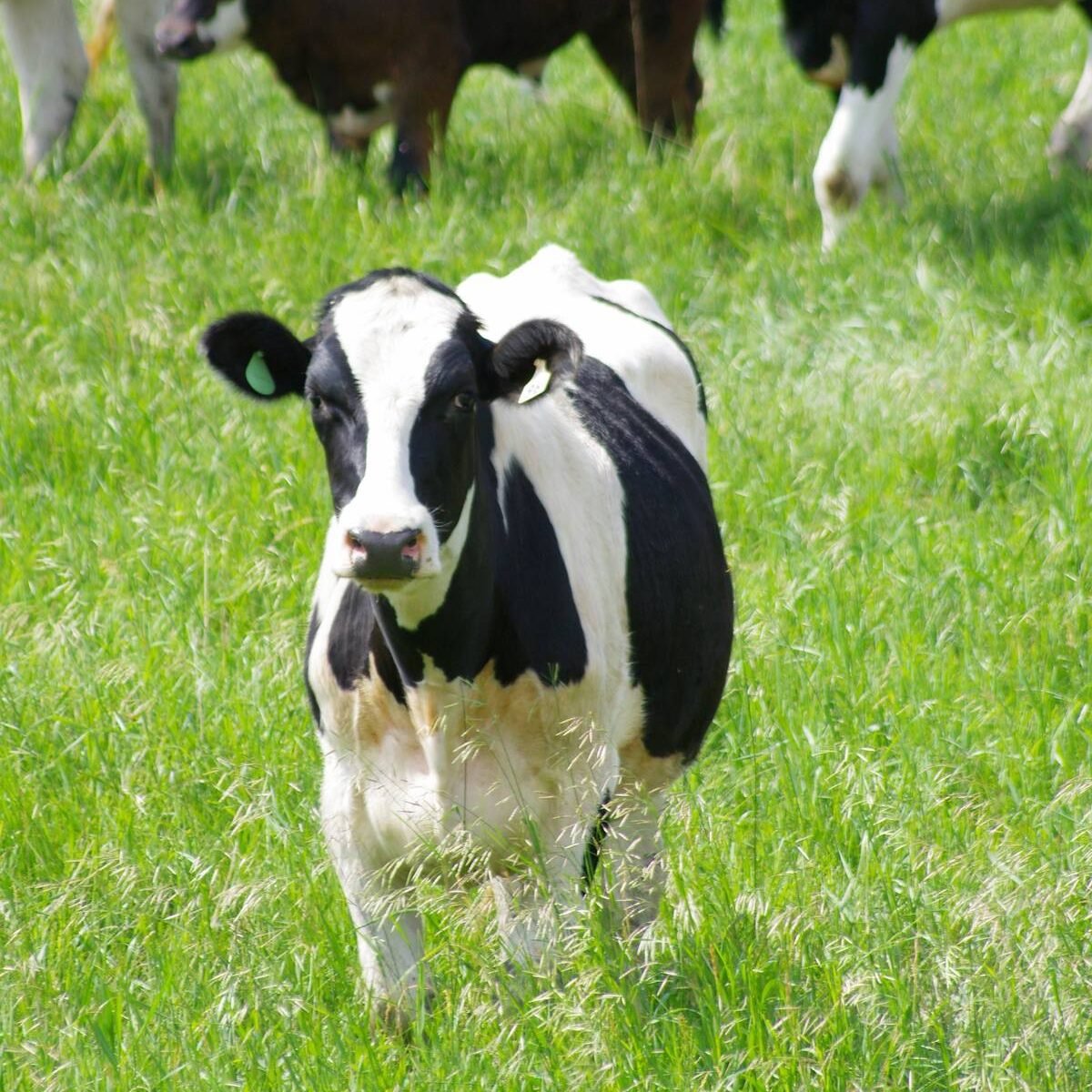
Sunflo has also used bale grazing as a way of distributing nutrients across pasture. Sundell said the farm saw noticeable differences in the pasture following winter bale grazing.
The farm grows multi-species cover crops as well, with Sundell saying the mixtures have appeared to produce better growth and handle drought better.
Weather is another factor that can determine how well a grazing system performs.
Van Os said adequate rainfall is essential to maintaining pasture production.
The farm has received enough rain this year, but dry years have presented a bigger challenge.
“We still like to maintain the pasture quality, and so then we just supplement more in the barn,” he said.
Maintaining milk production is ultimately the deciding factor.
“We need to fill our quota every day, so we need to make sure that the cows keep producing consistently,” Van Os said.
“So if the pasture goes down, the milk production will go down if you don’t supplement.”
The post Dairy operations experiment for more effective grazing systems appeared first on Farmtario.


