
Walking into a dining space should feel warm, welcoming, and effortlessly beautiful. Yet something often feels unfinished, even after adding the perfect table, elegant chairs, and stunning lighting. The missing piece is usually right beneath your feet. A carefully chosen rug can completely change the atmosphere, making the room feel larger, cozier, and more polished in a single step. The best part? It doesn’t require a major renovation or a huge budget. The following ideas showcase beautiful ways to transform an ordinary dining area into a space that feels inviting every single day.
A well-selected dining room rug ideas collection also protects flooring, reduces noise, defines the dining zone in open-concept homes, and adds personality through texture, color, and pattern. Throughout this guide, practical decorating tips, interior design inspiration, and styling advice make choosing the perfect rug much easier.
Why the Right Rug Changes Everything
Many people focus on dining tables, chairs, chandeliers, and wall décor while overlooking the floor. That single design choice can completely reshape how the room feels.
A rug creates visual balance by connecting every furniture piece into one coordinated design. Instead of individual items scattered across the room, the dining area becomes a complete, intentional space.
Besides beauty, rugs provide practical benefits:
- Protect hardwood, laminate, and tile floors from scratches.
- Reduce echo in larger dining rooms.
- Add warmth during colder months.
- Define the dining space in open floor plans.
- Introduce color, texture, and personality.
Choosing the right material, size, and pattern also makes cleaning much easier, especially in homes with children or pets.
Large Neutral Rugs for Timeless Elegance
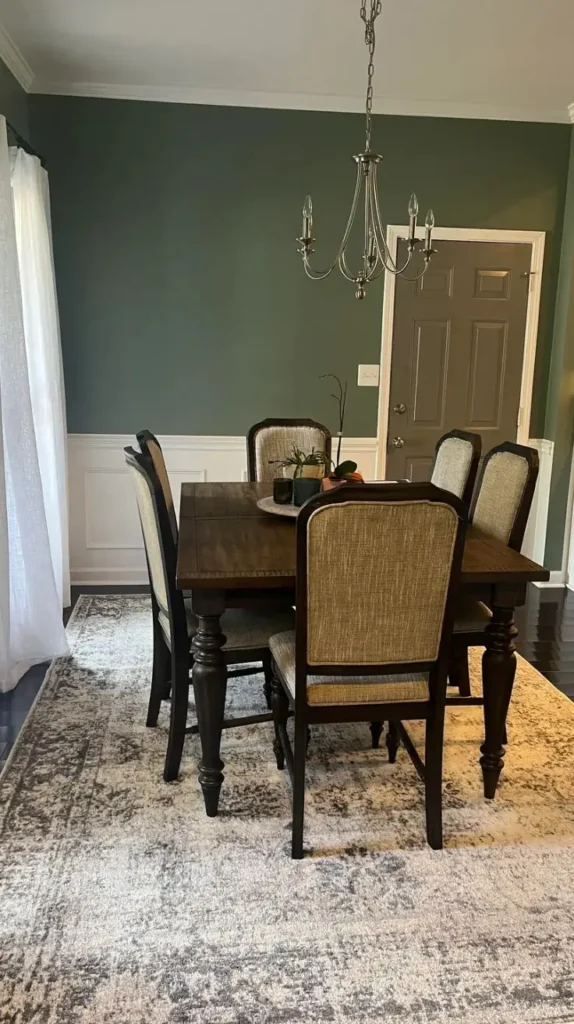
Sometimes the simplest design creates the biggest impact. Neutral rugs in beige, ivory, cream, soft gray, or light taupe never go out of style. They blend beautifully with farmhouse, Scandinavian, coastal, modern, and transitional interiors.
Large neutral rugs allow statement furniture to shine while keeping the room calm and balanced. Wood dining tables appear richer, black chairs stand out more dramatically, and decorative lighting becomes the center of attention. Natural woven textures also introduce depth without making the room feel busy.
Popular neutral materials include:
- Wool
- Cotton blends
- Flatweave rugs
- Performance fibers
- Low-pile synthetic rugs
A subtle geometric texture keeps the design interesting without overwhelming the space.
Bold Geometric Patterns That Add Personality
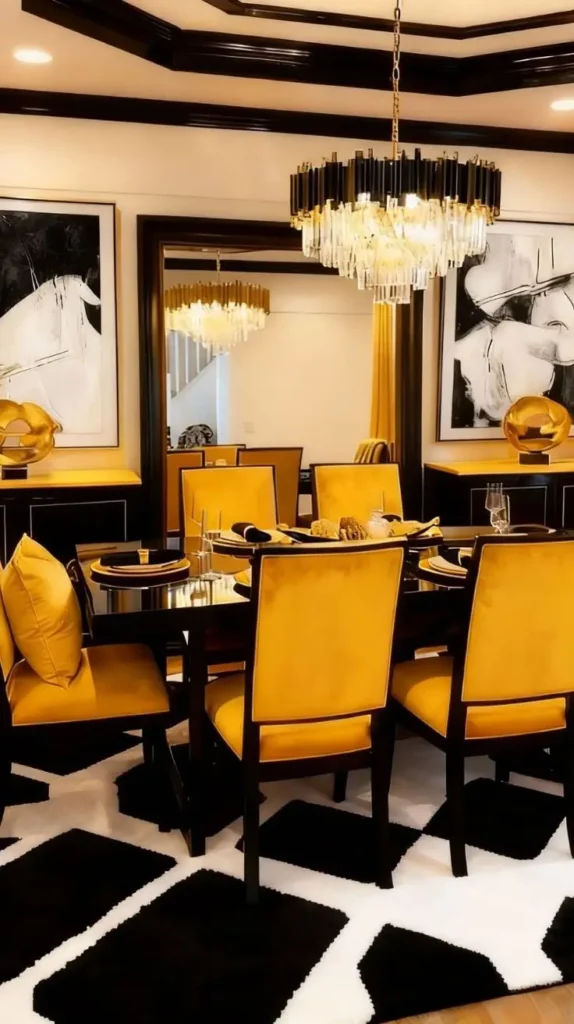
Some dining rooms need excitement. Geometric patterns instantly energize the entire space through movement and visual contrast. Diamond shapes, hexagons, abstract lines, and repeating patterns bring contemporary character while hiding everyday crumbs surprisingly well.
These rugs work especially well alongside:
- Modern dining tables
- Black metal chairs
- Glass tabletops
- Minimalist décor
- Industrial interiors
When using bold patterns, keep surrounding furniture relatively simple. This creates balance while allowing the floor to become a stylish focal point. Large geometric prints can even make smaller rooms appear wider by drawing the eye across the floor.
Vintage-Inspired Designs Full of Character
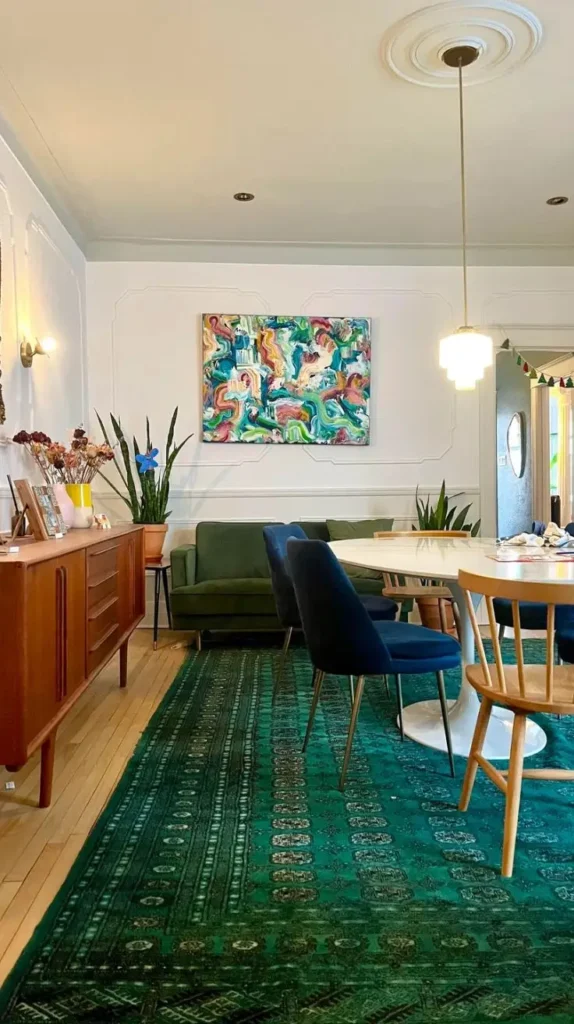
Vintage-style rugs continue to dominate interior design trends because they combine timeless beauty with practical function. Soft faded colors create warmth without overwhelming the room.
Popular shades include:
- Muted blue
- Terracotta
- Rust
- Sage green
- Dusty rose
- Soft charcoal
These distressed patterns naturally disguise stains and daily wear, making them perfect for active households.
Vintage rugs complement nearly every decorating style:
- Farmhouse
- French country
- Cottage
- Traditional
- Modern rustic
- Eclectic interiors
Layering antique-inspired rugs beneath natural wood dining furniture creates an inviting atmosphere that feels collected over time rather than newly decorated.
Round Rugs That Soften the Entire Space
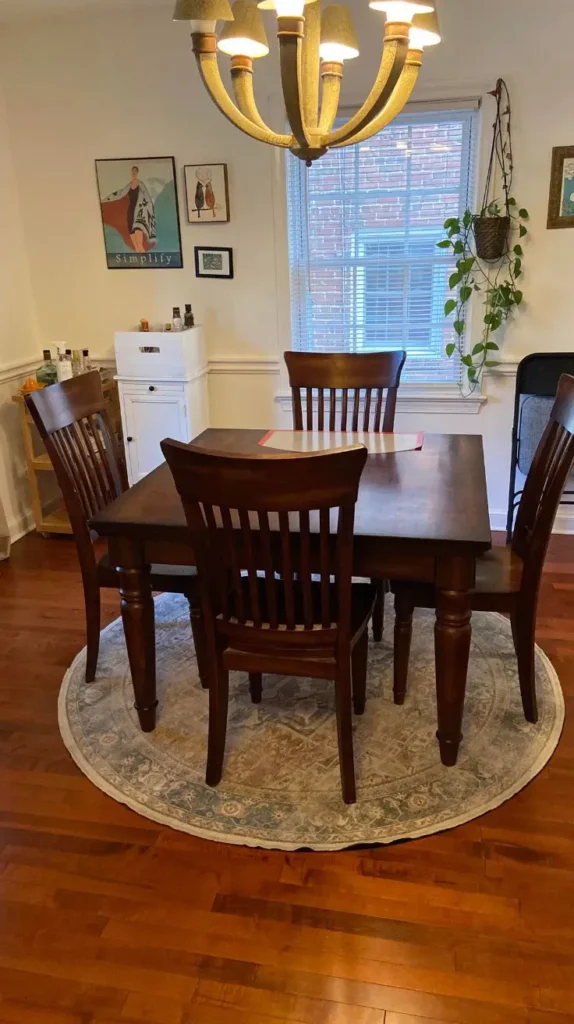
Straight furniture lines sometimes make a dining room feel rigid. Round rugs soften those sharp angles beautifully.
They work especially well beneath:
- Round dining tables
- Pedestal tables
- Small breakfast nooks
- Compact apartments
The circular shape encourages conversation because everyone naturally faces one another. A round rug also creates better visual flow, especially in square dining rooms where every piece of furniture already has straight edges.
To maintain balance, leave enough visible flooring around the edges so the room doesn’t appear crowded. Soft woven textures enhance the welcoming atmosphere even further.
Natural Fiber Styles That Bring Organic Beauty
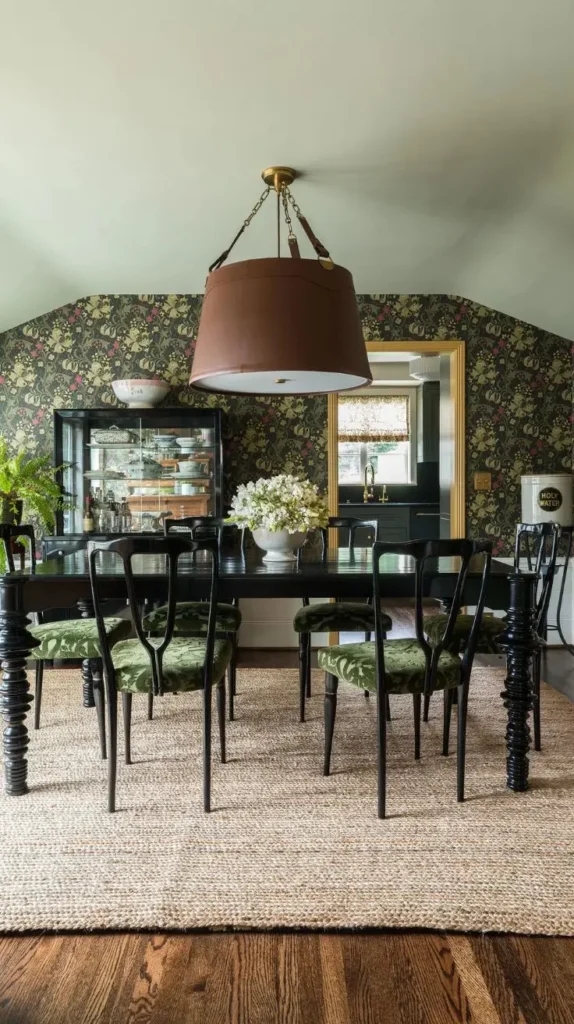
Natural materials never lose their appeal. Jute, sisal, seagrass, and woven grass rugs introduce earthy texture while creating a relaxed atmosphere.
These rugs pair perfectly with:
- White dining chairs
- Oak furniture
- Linen curtains
- Indoor plants
- Woven pendant lights
The layered texture adds warmth without relying on bold colors. Natural fiber rugs especially suit coastal homes, modern farmhouse interiors, bohemian spaces, and Scandinavian-inspired designs. For busy households, consider adding a thin rug pad underneath. It improves comfort while preventing movement during meals.
Washable Rugs for Busy Families
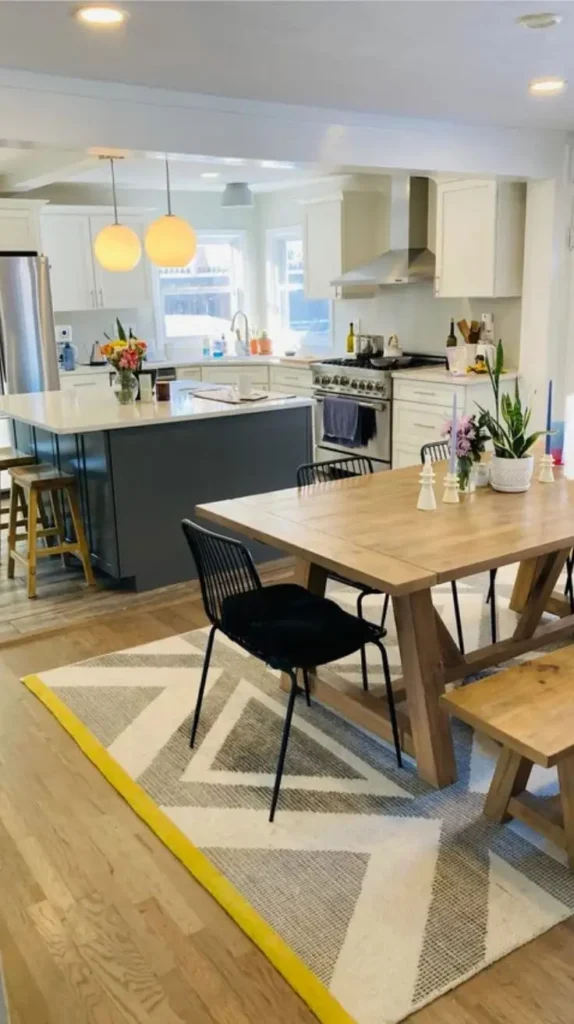
Life gets messy. Food spills, juice drops, pet accidents, and children’s art projects all find their way into the dining room eventually.
Washable rugs remove much of that stress. Modern washable designs now offer beautiful patterns that rival traditional rugs while providing simple maintenance.
Many feature:
- Machine-washable construction
- Stain-resistant fibers
- Fade-resistant colors
- Low pile
- Soft texture
These rugs work wonderfully in homes with:
- Young children
- Pets
- Frequent dinner parties
- Everyday family meals
Instead of worrying about every spill, cleaning becomes part of the normal routine. That peace of mind alone makes washable rugs worth considering.
Layered Rugs That Create Designer Style
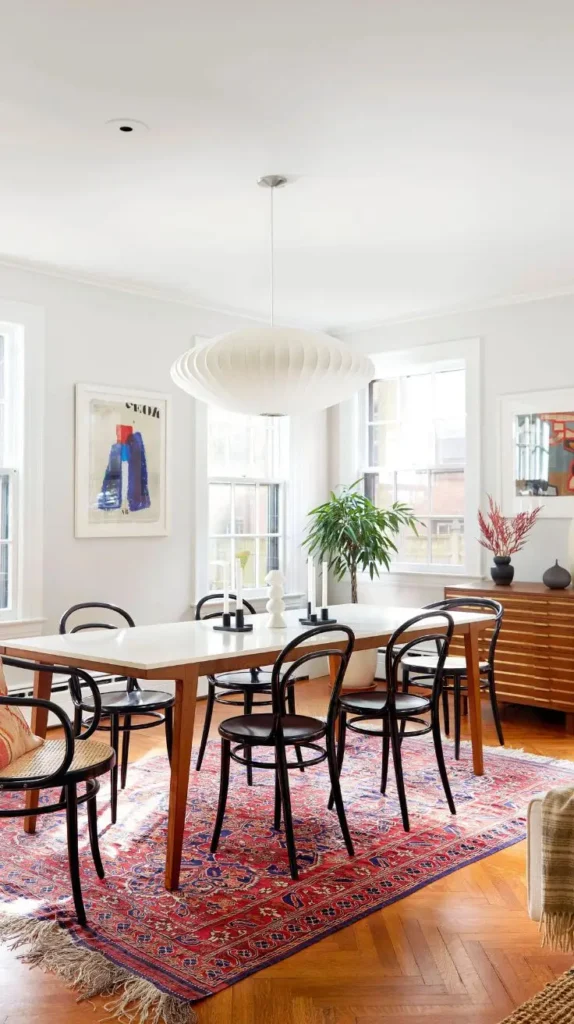
Professional interior designers often layer rugs to create depth. The technique looks surprisingly simple.
Start with a large natural fiber rug as the foundation. Then place a smaller patterned rug directly underneath the dining table. The combination creates texture, color, and visual interest without overwhelming the room.
Layering works especially well in:
- Farmhouse interiors
- Bohemian homes
- Rustic dining spaces
- Transitional designs
Mixing different materials creates additional richness while making the room feel thoughtfully designed. Just keep furniture centered so the layered arrangement remains balanced.
Dark Rugs That Hide Everyday Wear
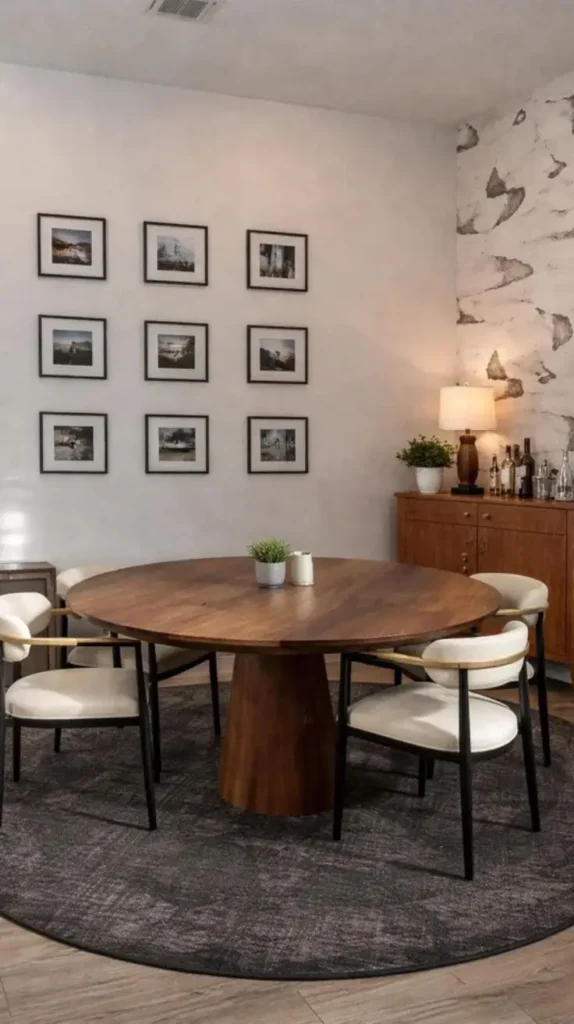
Light-colored rugs brighten a room, but darker shades provide practical advantages. Charcoal, navy, espresso, forest green, and deep brown naturally conceal:
- Food crumbs
- Minor stains
- Dust
- Chair marks
- Daily traffic
Dark rugs also create dramatic contrast beneath lighter dining furniture. Pairing a dark rug with white chairs or a light oak dining table creates a sophisticated appearance that feels luxurious without becoming overly formal.
Adding brass lighting and warm wood accessories completes the look beautifully. This approach works particularly well in homes where the dining room receives constant use.
Soft Textured Rugs That Add Comfort
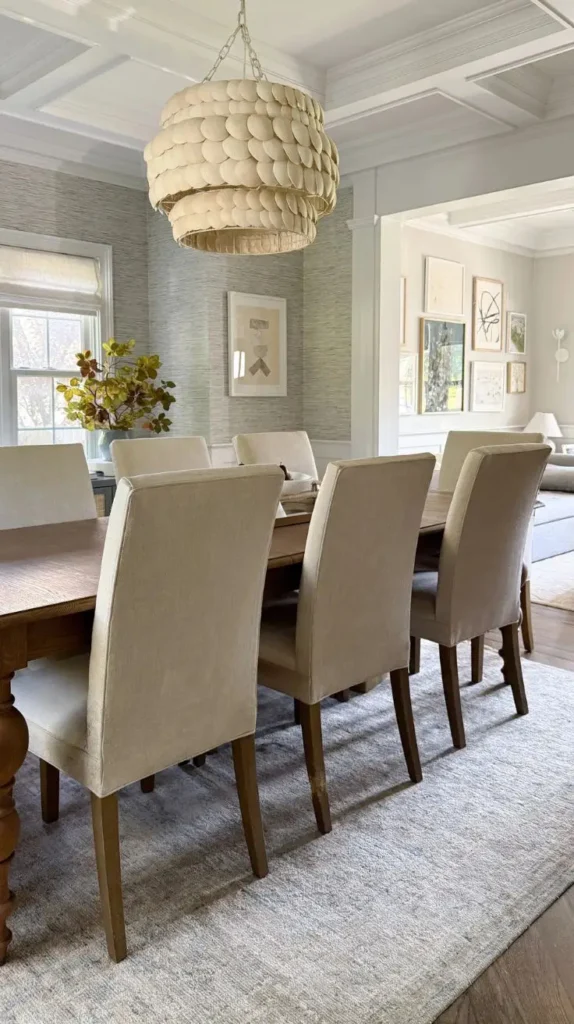
Texture transforms how a room feels. Flat surfaces can sometimes appear cold, even with beautiful furniture. Soft textured rugs solve that problem immediately.
Popular textures include:
- Wool loops
- Plush low pile
- Handwoven fibers
- Ribbed weaves
- Soft synthetic blends
These subtle details create depth without relying on bold patterns.
Textured rugs also photograph beautifully because changing light naturally highlights the woven surface throughout the day. Combined with upholstered dining chairs, textured flooring creates a warm environment where guests enjoy lingering long after dinner ends.
Statement Rugs That Become the Star of the Room
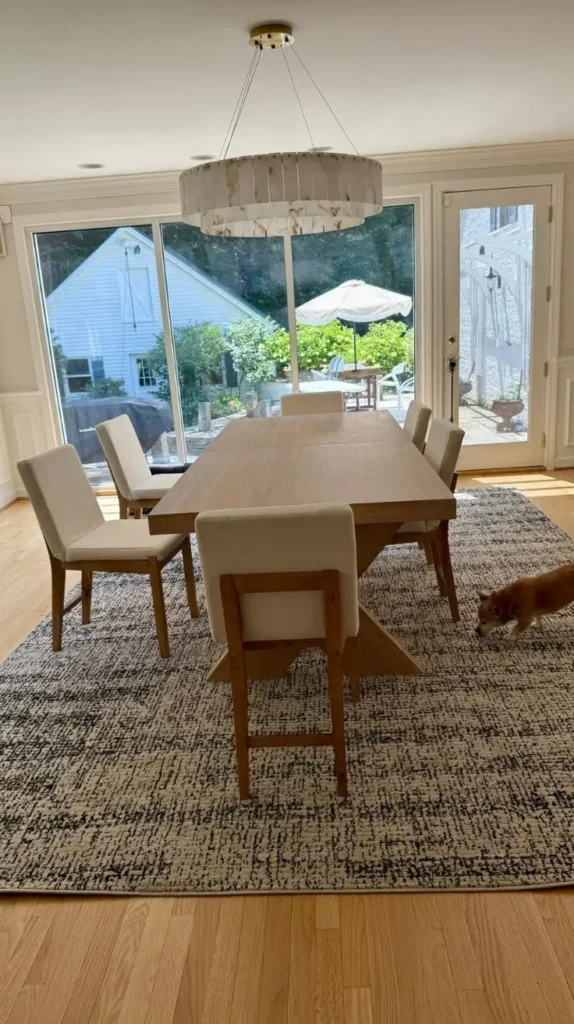
Sometimes the floor deserves all the attention. A statement rug becomes artwork beneath the dining table. Large floral prints, colorful abstract designs, oversized medallions, or artistic contemporary patterns immediately capture attention.
To maintain harmony:
- Keep walls neutral.
- Choose simple dining furniture.
- Limit competing patterns.
- Repeat one or two rug colors through artwork or accessories.
The result feels intentional rather than overwhelming. Statement rugs work especially well in modern homes where fewer decorative items allow bold flooring to become the centerpiece. Every meal suddenly feels surrounded by artistic style.
Choosing the Perfect Size
Size matters more than many homeowners realize. A rug that’s too small immediately makes the dining area feel awkward. The ideal rug extends at least 24 to 30 inches beyond every side of the dining table. That extra space allows chairs to remain completely on the rug, even when guests pull them out.
General guidelines include:
| Table Size | Recommended Rug Size |
|---|---|
| 4-seat table | 6×9 feet |
| 6-seat table | 8×10 feet |
| 8-seat table | 9×12 feet |
| Large rectangular table | 10×14 feet |
Always measure the fully extended dining chairs before purchasing.
Best Materials for Everyday Dining Spaces
Different households require different materials.
- Wool
- Naturally durable, soft, and long-lasting. Excellent for everyday use.
- Polypropylene
- Budget-friendly, stain-resistant, and easy to clean.
- Cotton
- Soft, lightweight, and often machine washable.
- Jute
- Natural texture with relaxed organic beauty.
- Synthetic blends
- Excellent for families needing durability with minimal maintenance.
Choosing materials based on lifestyle prevents frustration later.
Color Tips That Make Decorating Easier
Color influences mood more than many people realize.
Light colors create:
- Airiness
- Brightness
- Spaciousness
Dark colors create:
- Warmth
- Sophistication
- Drama
Earth tones create:
- Comfort
- Natural beauty
- Timeless style
Blue shades promote calmness.
Green introduces freshness.
Warm terracotta adds coziness.
Matching accent pillows, curtains, artwork, or centerpieces with one or two rug colors creates a professionally coordinated appearance.
Common Mistakes to Avoid
Beautiful decorating becomes much easier by avoiding a few common errors.
Buying a rug that’s too small remains the biggest mistake.
Other issues include:
- Choosing high-pile rugs that trap food.
- Ignoring chair movement.
- Selecting difficult-to-clean materials.
- Using overly busy patterns in already colorful rooms.
- Forgetting a quality rug pad.
Each small decision contributes to a dining room that feels comfortable, functional, and visually balanced.
Simple Maintenance for Long-Lasting Beauty
Regular care keeps rugs looking fresh for years.
Helpful habits include:
- Vacuum weekly.
- Clean spills immediately.
- Rotate the rug every few months.
- Use furniture pads beneath chair legs.
- Schedule occasional deep cleaning.
These small routines preserve both appearance and durability without requiring much effort.


