
Diversity matters!
We say this all the time. It is emphasized twice in Understanding Ag’s 6-3-4TM Framework. One of the six soil health principles is adding diversity. Our cropping and grazing systems have simplified nature incredibly. If we want to fix our degraded soil, we need to make changes in how we farm. You never see a natural system that is monoculture. In the 4 ecosystem processes that originated with Allan Savory one of the four processes is community dynamics. It is the study of the interrelationships between species at multiple levels. The more species, the more interaction. The more interaction the more resilient our system becomes.
Obviously diversity is important. Many of us focus on plant species when we think of diversity. Plants are important but they are not the main driver of success. The next level of diversity most of us think of is microbial. It is critically important. Practice the 6-3-4TM and it will gradually improve.
Diversifying Your Farm
Diversity is much bigger than plant diversity and microbial life. In this article I want to focus on diversity at a different level.
What I’m thinking about is the opportunities we all have in rural America. Less than 2% of our population is involved in agriculture. For most people agriculture is very poorly understood and foreign. The concrete jungle doesn’t lend itself well to teaching or understanding ecological principles.
When people are planning holidays they are looking for experiences:, local culture, food with a story, to connect with nature. Going to places with thousands of others is losing its appeal. We are all seeking a more human type of holiday: touching, feeling, experiencing. Don’t most of us have all of this right on our own farms?
Agritourism Creates New Opportunities
I believe there is a huge opportunity in agritourism. Bird watching is one of the most popular activities in the world. Where better to observe birds than a regenerative farm. As regenerative farms become more diverse, the birds move in to take advantage of the additional life that is being created. See the chart below.
General Mills Oat Pilot Sask. and Man. 2019- 2025
Conventional Farms Regenerative Farms
2019 2020 2019 2020
34 39 species 110 114 species
45 regenerative farms counted by AES Breeding bird survey
How many people have never seen the stars at night from a dark place? How about sitting around a campfire in the evening with only insects and bats as your company? These are things that we, who live in rural places, take for granted. A walk in the woods with silence as your company and the smells of the flowers and trees. Some call it forest bathing. To most of the population they are unique adventures that create memories for years to come. Most of these require very little investment or time from us as farmers or producers.
Agritourism Diversifies Farm Revenue
Of course driving a tractor, giving a horse ride, offering a corn maze, pumpkin patch, or having a herd of cows’ graze around you require more people management, but they can return even more revenue.
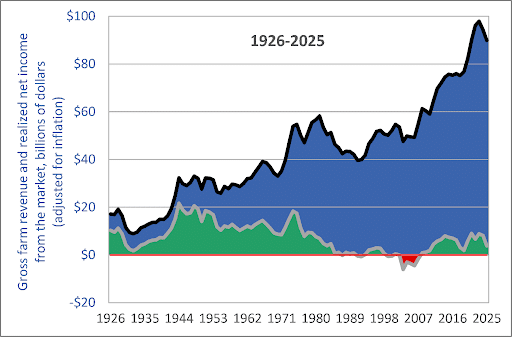
When I look at farm revenue, it’s not great! See graph below. Most of us can use some additional income.
You might say, “Yes, that’s all true but I hate people and I’m TOO busy to baby sit a bunch of tourists.” That is all true for many of us. What about more people on the farm ranch that operate an agritourism business? How about a son in law or daughter in law? A neighbour kid that has no opportunity at home. We need more people involved in agriculture. It’s called diversity. Revenue streams can be shared and more resiliency is achieved on the farm. And maybe most importantly our city cousins go home feeling good about how we are learning how to grow their food. With more wisdom resulting in a tastier, more nutrient dense experience of eating. Maybe they will spread the good news to their urban neighbours who will begin to support alternate systems of purchasing healthy food from our regenerative farms.
Building a More Resilient Farm Through Diversity
Is it easy? NO. Will it work? YES. Moving toward a more regenerative approach in farming or ranching caused us all to change our thinking. It was scary, uncertain, fearful (what will the neighbours think) but we all changed. Looking back, I think we are all glad we did. Our lives are much better today than they were 5 to 20 years ago.
Change is never easy. Agritourism will require a change as well. Brainstorm. What unique things does your farm/ ranch/area have to offer that people will want to experience? Do you have someone that could get a new enterprise like this going?
Diversity matters. I started this article with this statement. When we think of diversity it is at all levels of the farm from people to microbes to revenue streams. Our job as managers is to open the space between our ears, to let new ideas flow in. Let these ideas percolate. Share them with your management team. There are huge opportunities. Start small and learn. BUT start! Good luck.
An Understanding Ag consultant can help you look at your farm through a different lens, identify opportunities to improve soil health, build resilience, and create new revenue streams, and develop a practical path forward.
Ready to explore what’s possible on your farm? Reach out to an Understanding Ag consultant today and start the conversation.
The post Diversity: From Microbes to People to Revenue appeared first on Understanding Ag.


