
Disseminated on behalf of Alaska Energy Metals Corporation.
The global energy narrative has shifted again. What began as a climate-driven transition is now increasingly shaped by geopolitics, supply chain risks, and national security concerns. In 2026, energy security and decarbonization have become the dominant drivers of policy and investment decisions.
ezstandalone.cmd.push(function () { ezstandalone.showAds(119); });
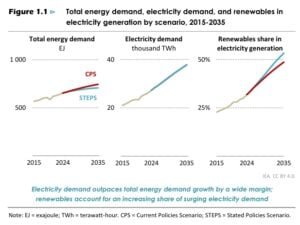
According to the IEA, nearly 80% of energy experts ranked energy security as a top priority in 2025, ahead of emissions reduction and affordability. This shift is transforming how markets value critical minerals. Among them, nickel is emerging as a strategic asset, not just a commodity.
The Return of Energy Security – and Why Nickel Is at the Center
Recent geopolitical shocks have exposed vulnerabilities in global energy systems. Disruptions in oil and gas flows and ongoing global tensions have pushed prices higher and accelerated demand for alternative energy systems. However, electrification brings its own dependencies, particularly on battery metals.
ezstandalone.cmd.push(function () { ezstandalone.showAds(127); });
- Nickel sits at the core of this transition because it plays a critical role in high-energy-density EV batteries, especially nickel-manganese-cobalt (NMC) chemistries.
- It improves battery range, efficiency, and performance, making it essential for electric vehicles, grid storage, and industrial electrification.
Demand trends reflect this growing importance. Nickel demand for clean energy is expected to more than double by 2030, while battery-grade nickel demand continues to grow at a double-digit pace annually. At the same time, the global nickel market is expanding rapidly in value terms, highlighting strong long-term fundamentals.
ezstandalone.cmd.push(function () { ezstandalone.showAds(128); });
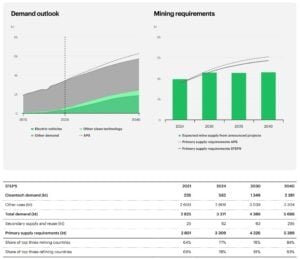
Yet supply remains fragile. A large portion of global nickel production and processing is concentrated in Indonesia and China. This concentration creates geopolitical exposure and environmental concerns. Even when supply is available, refining constraints and processing complexities can limit the availability of battery-grade material.
As a result, nickel is no longer priced purely on traditional supply-demand dynamics. Instead, it is increasingly valued based on security, reliability, and strategic access.
ezstandalone.cmd.push(function () { ezstandalone.showAds(129); });
Quality Over Quantity: The Strategic Premium of Sulphide Nickel
The nickel market is no longer just about volume. It is now about quality. A key distinction has emerged between laterite nickel and sulphide nickel, and this difference is shaping investment decisions.
Laterite deposits are more abundant but require complex and energy-intensive processing methods. In contrast, sulphide deposits are easier to process into high-purity Class 1 nickel, which is required for EV batteries. This simpler processing route reduces costs, emissions, and technical risks.
ezstandalone.cmd.push(function () { ezstandalone.showAds(130); });
Sulphide nickel also aligns better with environmental, social, and governance (ESG) goals. It produces fewer emissions and integrates more easily into clean energy supply chains. However, sulphide deposits are relatively rare, and most known high-quality resources have already been developed.
This scarcity is creating a premium for sulphide-based projects. Automakers and battery manufacturers are increasingly prioritizing high-purity, low-carbon, and geopolitically secure supply sources. The focus has shifted from simply securing more nickel to securing the right kind of nickel.
- MORE DETAILS: EV Batteries Need Nickel: Why Class 1 Supply Is Becoming Critical Amid Global Conflict
ezstandalone.cmd.push(function () { ezstandalone.showAds(131); });
AEMC’s Nikolai Project: From Mining Asset to Strategic Infrastructure
Alaska Energy Metals Corp.’s Nikolai project stands out in this evolving landscape. It is not just a mining project but a strategic asset that aligns closely with the United States’ energy security priorities.
Proximity to U.S. Gigafactories
The United States is rapidly expanding its domestic battery manufacturing capacity. New gigafactories are being developed to support electric vehicle production and energy storage systems. As a result, the need for secure, local sources of critical minerals is increasing.
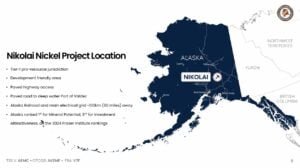
Nikolai’s location in Alaska provides a geographic advantage. It sits within reach of North American battery hubs, reducing reliance on long and vulnerable international supply chains. This proximity lowers transportation risks and supports the broader push toward supply chain localization.
ezstandalone.cmd.push(function () { ezstandalone.showAds(132); });
Stable Jurisdiction and Permitting Advantage
The United States offers a strong regulatory framework, transparent permitting processes, and growing policy support for critical minerals. The nickel junior is advancing its Nikolai project with support from the U.S. government.
In its latest press release, AEMC said it is continuing to work with the U.S. Administration and key government agencies to advance its critical minerals strategy. The company is exploring strategic funding opportunities, partnerships, and policy programs designed to support domestic mineral production and build more resilient supply chains.
AEMC also said that, through the Department of Defense’s Defense Industrial Base Consortium (DIBC), it responded to a new call for projects eligible for Defense Production Act Title III funding. The company submitted a proposal for its Nikolai project, which received a “MET” rating. AEMC noted that requests for more detailed proposals under this funding program could begin as early as May 2026.
ezstandalone.cmd.push(function () { ezstandalone.showAds(133); });
Thus, Nikolai is more than a nickel project. It is becoming a strategic U.S. asset. It supports both clean energy goals and defense supply chain security.
Low-CO₂ Sulphide Resource: Built for the Energy Transition
Nikolai’s sulphide-style mineralization is a key advantage. Compared to laterite operations, sulphide deposits require less energy-intensive processing, resulting in lower carbon emissions.
This is increasingly important as automakers face pressure to reduce emissions across their entire value chains. It is no longer enough to produce zero-emission vehicles. The materials used in those vehicles must also meet strict environmental standards.
ezstandalone.cmd.push(function () { ezstandalone.showAds(134); });
A low-carbon nickel source with clear traceability and strong ESG credentials becomes highly attractive in this context. Nikolai fits well within this requirement, positioning it as a future-ready supply option.
Multi-Metal Exposure: A Full Energy Transition Package
The Nikolai project also offers exposure to multiple critical metals beyond nickel. These include copper, cobalt, and platinum group metals, all of which play essential roles in the energy transition.
These materials are used in electric vehicles, renewable energy systems, and emerging technologies such as hydrogen production. This multi-metal profile enhances the project’s strategic value and reduces reliance on a single commodity.
ezstandalone.cmd.push(function () { ezstandalone.showAds(135); });
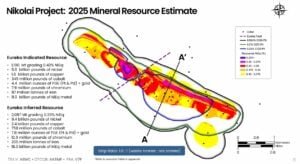
It positions Alaska Energy Metals Corp. as a broader participant in the clean energy supply chain rather than just a nickel-focused company.
The Bigger Shift: From Commodity Cycles to Strategic Positioning
The nickel market is undergoing a structural transformation. Historically, it was driven by stainless steel demand and cyclical economic trends. Today, it is increasingly shaped by energy policy, geopolitics, and technological change.
Buyers are securing long-term supply agreements to reduce risk and ensure stability. Companies are also willing to pay a premium for materials sourced from stable jurisdictions with strong environmental credentials. At the same time, vertical integration across the supply chain is accelerating.
ezstandalone.cmd.push(function () { ezstandalone.showAds(136); });
This shift means that nickel assets are now evaluated on more than just cost and scale. Location, carbon footprint, processing efficiency, and alignment with national strategies are becoming equally important.
Conclusion: Nickel as Energy Infrastructure, Not Just a Metal
The return of energy security concerns has fundamentally reshaped the role of critical minerals in the global economy. Nickel has moved beyond its identity as a commodity and is now seen as a foundational element of clean energy systems.
Projects like AEMC’s Nikolai are positioned at the intersection of energy transition, industrial policy, and national security. With its proximity to U.S. gigafactories, stable jurisdiction, and low-carbon sulphide resource, it represents more than a mining opportunity.
ezstandalone.cmd.push(function () { ezstandalone.showAds(137); });
It is part of a broader infrastructure layer that will support the next phase of global electrification. As geopolitical tensions persist and demand for clean energy accelerates, a secure and sustainable nickel supply will become increasingly valuable.
In this new landscape, success will depend not just on production volumes but on strategic positioning. And that is where projects like Nikolai are beginning to stand apart.
- READ MORE: Alaska Energy Metals’ Nikolai Project Ranks Among Largest U.S. Nickel Resources After 2025 Estimate
ezstandalone.cmd.push(function () { ezstandalone.showAds(138); });
DISCLAIMER
New Era Publishing Inc. and/or CarbonCredits.com (“We” or “Us”) are not securities dealers or brokers, investment advisers, or financial advisers, and you should not rely on the information herein as investment advice. Alaska Energy Metals. (“Company”) made a one-time payment of $75,000 to provide marketing services for a term of three months. None of the owners, members, directors, or employees of New Era Publishing Inc. and/or CarbonCredits.com currently hold, or have any beneficial ownership in, any shares, stocks, or options of the companies mentioned.
This article is informational only and is solely for use by prospective investors in determining whether to seek additional information. It does not constitute an offer to sell or a solicitation of an offer to buy any securities. Examples that we provide of share price increases pertaining to a particular issuer from one referenced date to another represent arbitrarily chosen time periods and are no indication whatsoever of future stock prices for that issuer and are of no predictive value.
Our stock profiles are intended to highlight certain companies for your further investigation; they are not stock recommendations or an offer or sale of the referenced securities. The securities issued by the companies we profile should be considered high-risk; if you do invest despite these warnings, you may lose your entire investment. Please do your own research before investing, including reviewing the companies’ SEDAR+ and SEC filings, press releases, and risk disclosures.
ezstandalone.cmd.push(function () { ezstandalone.showAds(139); });
It is our policy that information contained in this profile was provided by the company, extracted from SEDAR+ and SEC filings, company websites, and other publicly available sources. We believe the sources and information are accurate and reliable but we cannot guarantee them.
CAUTIONARY STATEMENT AND FORWARD-LOOKING INFORMATION
Certain statements contained in this news release may constitute “forward-looking information” within the meaning of applicable securities laws. Forward-looking information generally can be identified by words such as “anticipate,” “expect,” “estimate,” “forecast,” “plan,” and similar expressions suggesting future outcomes or events. Forward-looking information is based on current expectations of management; however, it is subject to known and unknown risks, uncertainties, and other factors that may cause actual results to differ materially from those anticipated.
These factors include, without limitation, statements relating to the Company’s exploration and development plans, the potential of its mineral projects, financing activities, regulatory approvals, market conditions, and future objectives. Forward-looking information involves numerous risks and uncertainties and actual results might differ materially from results suggested in any forward-looking information. These risks and uncertainties include, among other things, market volatility, the state of financial markets for the Company’s securities, fluctuations in commodity prices, operational challenges, and changes in business plans.
ezstandalone.cmd.push(function () { ezstandalone.showAds(140); });
Forward-looking information is based on several key expectations and assumptions, including, without limitation, that the Company will continue with its stated business objectives and will be able to raise additional capital as required. Although management of the Company has attempted to identify important factors that could cause actual results to differ materially, there may be other factors that cause results not to be as anticipated, estimated, or intended.
There can be no assurance that such forward-looking information will prove to be accurate, as actual results and future events could differ materially. Accordingly, readers should not place undue reliance on forward-looking information. Additional information about risks and uncertainties is contained in the Company’s management’s discussion and analysis and annual information form for the year ended December 31, 2025, copies of which are available on SEDAR+ at www.sedarplus.ca.
The forward-looking information contained herein is expressly qualified in its entirety by this cautionary statement. Forward-looking information reflects management’s current beliefs and is based on information currently available to the Company. The forward-looking information is made as of the date of this news release, and the Company assumes no obligation to update or revise such information to reflect new events or circumstances except as may be required by applicable law.
ezstandalone.cmd.push(function () { ezstandalone.showAds(141); });
The post Energy Security Fears Are Back – And Nickel Is Now a Strategic Asset in the Clean Power Race appeared first on Carbon Credits.


