

As of mid-2026, Texas is just behind California’s 55.5 GW of total solar capacity, and has about half the Golden State’s 60.6 GWh of energy storage capacity. But Texas is catching up quickly. More than 65% of the state’s solar capacity and more than 85% of its batteries were installed since the beginning of 2023.
The Lone Star State is also the nation’s fastest-growing market for solar manufacturing. Two of the largest solar module companies in the state – Canadian Solar and T1 Energy – are each operating facilities with 5 GW of annual output capacity. The former has announced plans to double its output in the coming months, while the latter is preparing to open a 2.1 GW solar cell facility in early 2027.
Another of the state’s largest solar companies, SEG Solar, recently opened a 4 GW facility in greater Houston, bringing its capacity to 6 GW, with a third facility on the way to bring its total module capacity to 10.6 GW by the end of 2027.
Texas is now home to some 20.6 GW of annual solar module assembly capacity at facilities that are currently operational. That’s enough to meet just under half of the Solar Energy Industry Association (SEIA)’s projections for installed solar capacity additions for the entire United States through 2032, which hover around 43 GW per year.
And solar manufacturing in Texas is just getting started, with an additional 18.7 GW of annual module assembly capacity slated for operation by the end of 2028. At least 10.4 GW of new solar cell manufacturing capacity has also been announced for the state, and recent developments hint at the possibility for much more.
Business climate
Right or wrong, Texas has earned a reputation for being less restrictive of large businesses than other places in the country.
In 2021, Elon Musk famously announced he would move Tesla’s headquarters from Palo Alto, California, to Austin, Texas, following more than a year of public disagreements over Covid-19 lockdowns and restrictions placed on his business by the state of California and Alameda County. But there were other good reasons to move to Texas.
The Austin area was (and is) well-known for its semiconductor industry, the history of which extends back to the 1960s, when IBM and Texas Instruments began operating in the city. The computer industry grew rapidly throughout the late 20th century, bringing with it a well-educated workforce that continues to staff companies like AMD and NXP Semiconductors.
Dan Barcelo, CEO of Austin-based T1 Energy, described the modern reputation of the Texas capital as “the Tesla revolution or the SpaceX revolution.” He told pv magazine that the number of companies operating in central Texas – along with the quality of engineers they attract – is a major factor in his company’s success.
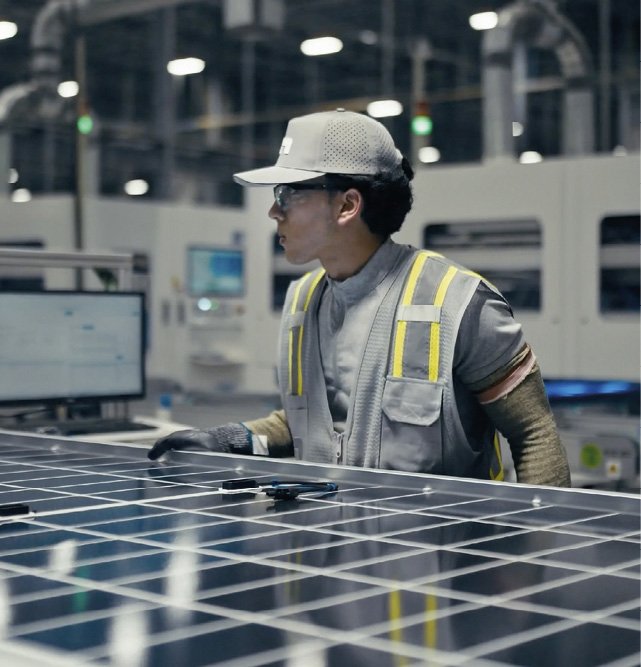
The Texas workforce is ideally suited to the kinds of tasks needed for solar cell and module production. According to the Bureau of Labor Statistics (BLS), Texas has the third-highest number of industrial engineers of any state, and the median wage for those engineers sits about 4.5% above the national median. Moreover, the state has more than 15,000 workers classified by BLS as “Electrical, Electronic, and Electromechanical Assemblers.” And those workers, who represent most of the production employees in solar module factories, make about 3% less than the national median.
Barcelo cites labor as one of three main “conversion costs” that go into making Texas an ideal place to manufacture solar cells, the others being utilities (water and power), and silver paste. “The silver paste is more of a commodity,” he explained, “but two out of the three core conversion costs are very advantaged in Texas.”
The last, and perhaps most obvious of the reasons Texas is the ideal place for solar manufacturing, is that the state has been the center of demand for solar modules in recent years, leading the country in installed capacity. SEIA figures show Texas added 10.8 GW of solar in 2024, and 11.1 GW in 2025. Although the 1.6 GW installed in the first quarter of 2026 represented a 40% decrease compared to the first quarter of 2025, volume is expected to pick up through the end of the year and remain strong into 2027.
Even holding steady at 10 GW or 11 GW per year, existing and planned manufacturing capacity will be enough to supply that amount of solar modules two times over, and export the additional capacity to other places in the United States.
Mutual benefits
Texas offers many reasons for manufacturers to keep building new factories in the state, but what do these companies give in return? Beyond the obvious outcomes of cheap electricity, the benefits of solar manufacturing accrue mostly to the state’s job numbers and local tax revenues.
The recent explosive growth of solar in Texas makes it difficult to pin down an up-to-date number for solar jobs in the state. While the Interstate Renewable Energy Council (IREC) produces an annual solar workforce report, at the time of writing their most recent published numbers are based on data from late 2024.
At that time, IREC cited 12,820 solar jobs in Texas, making it the third highest in the nation in terms of total solar employment, behind California and Florida. At the time, 2,158 of those jobs were in manufacturing. Since those numbers were released, Texas has seen its solar PV manufacturing base expand rapidly, and installers have connected nearly 13 GW of solar to the grid.
Anecdotally, solar manufacturers report large numbers of new employees, which, added together, far exceed the 2,158 cited by IREC at the end of 2024. Barcelo said T1 now has more than 1,200 employees, with just 5 GW of operational module manufacturing capacity. The company’s public filings state that number could grow to 1,800 or more if it can scale its cell manufacturing plant to the 5.3 GW capacity it targets.
When Canadian Solar announced its 5 GW module manufacturing plant in Mesquite, Texas, in June 2023, the company stated that the $250 million facility would create approximately 1,500 skilled jobs once fully ramped up – a milestone the facility reached at the end of 2025.
At the opening of its second facility in August 2026, SEG Solar said it had scaled up its operations to include 840 employees, and that it would continue to hire as it expanded its module assembly operations from 2 GW to 6 GW.
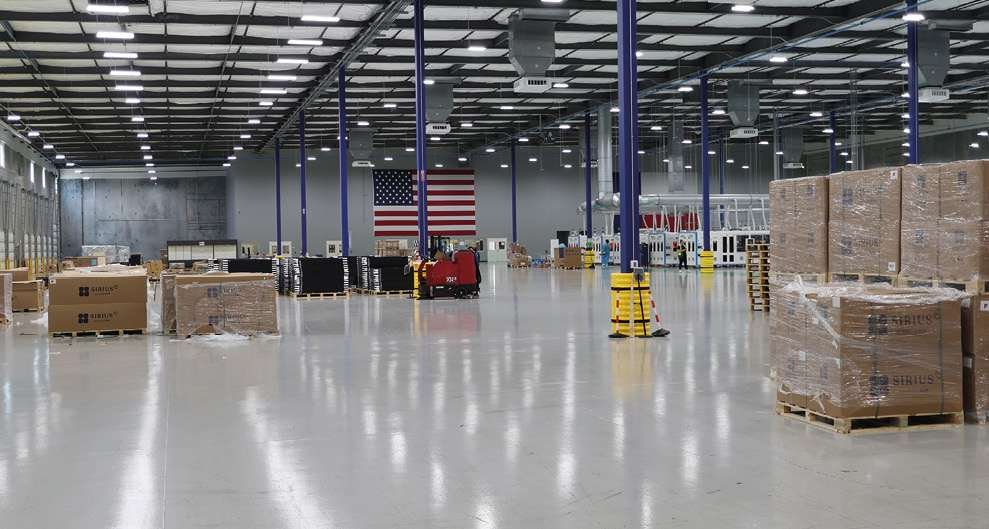
Ercan Kalafat, CEO of Sirius PV, which operates a 1 GW solar module line just southwest of Houston, told pv magazine his company now employs 300 workers at its plant, and the facility is set to double in capacity in the near term. Just these four manufacturers add up to more than 3,800 jobs for Texas workers.
The employment impacts don’t stop at the module factory doors. Texas solar manufacturers also support a vibrant industry of materials suppliers and service companies. Makers of aluminum module frames in Texas include Houston’s Kalumina and Dallas/Fort Worth’s J&L Solar. Ekinler produces junction boxes in Austin. Sunelec makes busbar ribbons in Richardson. And multinational giant Dow Chemical produces vitally-important junction box potting material at its Freeport facility.
Employment at these suppliers falls into what economists refer to as “indirect jobs;” that is, jobs that are supported by and/or made necessary in the economy because of the needs of the solar manufacturing companies and their workers.
A 2019 study by Josh Bivens at the Economic Policy Institute indicated that, for every 100 jobs in the durable manufacturing sector, the economy requires 289 jobs from suppliers and services and an additional 455 “induced jobs” (jobs supported by the spending of income from direct jobs and supplier jobs, as well as public-sector jobs supported by tax revenue), for a total of 744 indirect and induced jobs supported. If this is the case in Texas, the 3,800 jobs enumerated above could have led to nearly 28,000 additional jobs supported by just those four companies. In this way, solar manufacturing becomes a flywheel of growth, improving the state’s electricity grid, increasing direct and indirect employment and offering new revenues for the state. But this flywheel can only continue spinning for as long as there is a reason to keep building new solar.
According to the Electric Reliability Council of Texas (ERCOT), which oversees the generation and distribution of 93% of all electricity in the state, utility-scale solar generation in its territory rose from 8,749 GWh in 2020 to 67,800 GWh in 2025. Those numbers represent 2.3% of all electricity in 2020 and 13.7% of electricity in 2025.
Solar has now surpassed coal, nuclear, and all other sources of electricity in Texas, save for wind, which produced 23.3% of the state’s electricity in 2025, and natural gas, which made 40.6%. Additionally, electricity demand in ERCOT’s region rose by nearly 30% between 2020 and 2025, and new solar generation accounted for half of that increase.
The trend toward demand growth shows little sign of slowing, presenting solar with a huge opportunity in the coming years. Furthermore, with solar-plus-storage now among the cheapest, fastest to deploy sources of new electric generation capacity, Texas may go the way of California, where solar is now the largest source of electricity.
Barcelo said he’s seen this kind of paradigm shift before. In his early career as a natural gas analyst in the 1990s, he had a front-row view of how the technology took over utility-scale electric generation from coal.
“Natural gas became really distributable and lower cost,” Barcelo said. “And I think the same exact thing is happening with solar and storage now in the United States, where you’re seeing solar kind of go head to head. Look at the grid now and [see] how much is solar and storage.”
Another sign of the potential future for solar manufacturing in Texas came in early August 2026, as news came to light that Tesla had submitted a proposal to the Lamar Consolidated Independent School District, requesting consideration of an appraised value limitation for a vertically integrated solar cell manufacturing facility, in addition to seeking tax abatement agreements with local jurisdictions.
In the filing, Tesla estimated its facility at the 3,000-acre site would create more than 9,700 new solar manufacturing jobs. The new plant would result in $107 billion in GDP for Texas over a 38-year period.
The company estimated the site would hold $8.6 billion in manufacturing equipment – enough to fulfill the 100 GW goal outlined by its CEO months earlier at the World Economic Forum in Davos, Switzerland.
If the facility were to deliver on those ambitions, it would mean the quadrupling of the state’s solar manufacturing capacity and potentially give new meaning to the term “Tesla Revolution.” Either way, there is plenty of room for growth in the Texas solar manufacturing sector.
The post Everything’s bigger in Texas appeared first on pv magazine Global.


