
When summer flowers begin to fade, outdoor spaces can suddenly feel a little empty. That is the perfect moment to bring in rich autumn color, textured foliage, warm-toned blooms, and seasonal accents. A simple container near the front door, on a porch step, or beside a patio chair can completely change the mood of a space.
The beauty of fall planters is that they do not require complicated gardening skills. A few well-chosen plants can create a display that looks layered, full, and beautifully seasonal. From colorful mums and ornamental kale to trailing vines, pumpkins, grasses, and rustic branches, there are endless ways to create a charming autumn arrangement.
These 12 fall planter ideas offer inspiration for front porches, balconies, patios, entryways, and small outdoor corners. Some are colorful and cheerful, while others feel rustic and understated. Keep reading, because one of the simplest combinations can produce a surprisingly beautiful result.
Classic Mums With Mini Pumpkins
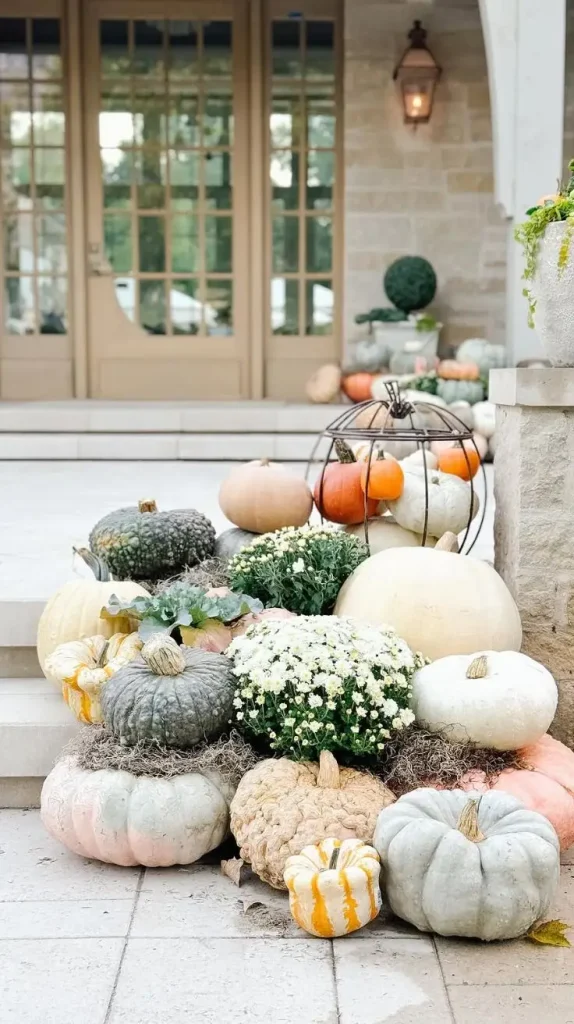
Few combinations capture the feeling of autumn as naturally as chrysanthemums and pumpkins. Start with a large container in a neutral shade such as black, cream, terracotta, or weathered gray. Place a full chrysanthemum plant toward the center, then add a few small pumpkins around the base.
Golden yellow, burnt orange, burgundy, and deep red mums create a rich seasonal palette. Small gourds can fill empty spaces without making the planter look crowded. A few dried leaves or natural twigs can add another layer of texture.
This arrangement works particularly well beside a front door because the bright flowers immediately draw attention. For a more polished appearance, use two matching planters on either side of the entrance. The repeated design creates symmetry while still keeping the display relaxed and welcoming.
Rustic Cornstalk Container Display
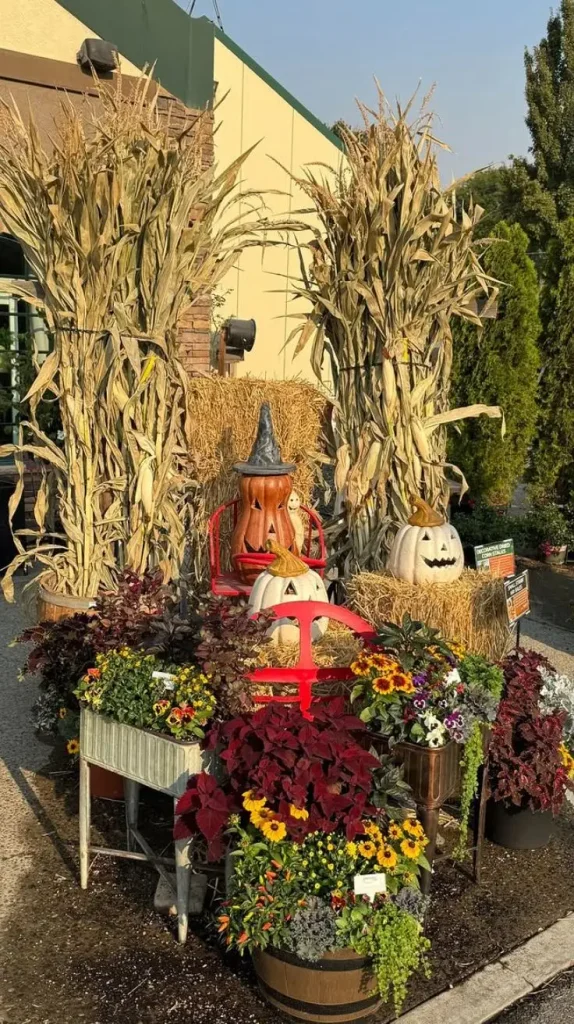
For a farmhouse-inspired look, combine container plants with dried cornstalks. Tall stems provide height while smaller plants create fullness around the bottom.
A large wooden, metal, or galvanized container makes a wonderful base. Add ornamental grasses, mums, and trailing foliage around the lower portion. Secure several dried cornstalks toward the back so they rise above the flowers.
The contrast between upright stems and rounded blooms creates visual movement. Small pumpkins, pinecones, or bundles of wheat can also sit around the soil surface. This style feels especially appropriate for porches with rustic furniture, wooden doors, woven baskets, and farmhouse accents. It can look intentionally imperfect, which is part of its charm.
Ornamental Kale and Cabbage Arrangement
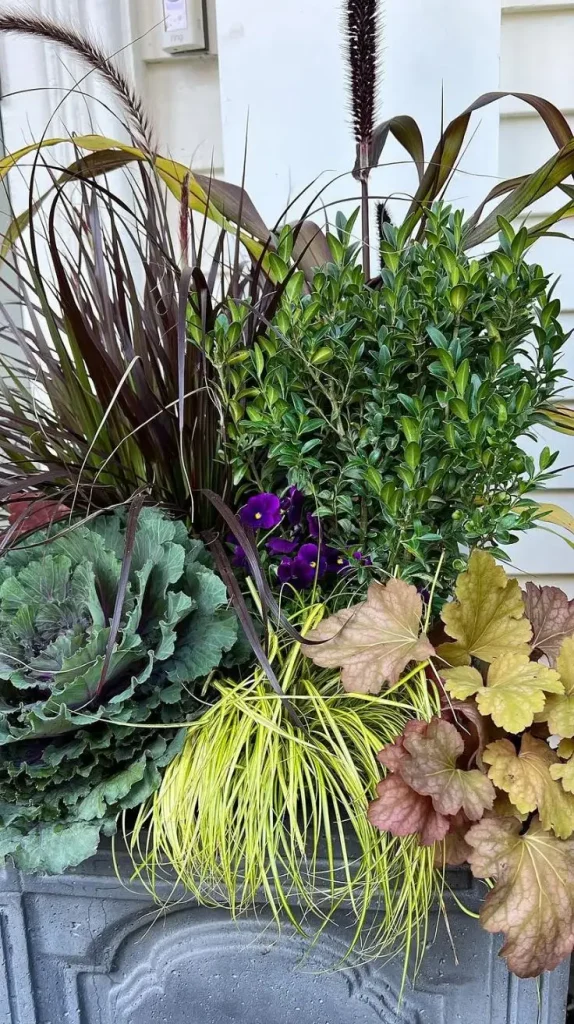
Ornamental kale and cabbage bring dramatic foliage to an autumn container. Their large, ruffled leaves create a completely different texture from traditional flowers.
Choose plants with green, white, pink, or purple centers and combine them with smaller flowering plants. Deep burgundy foliage can make a pale container feel richer, while white-centered varieties create a crisp contrast.
These plants are particularly useful when temperatures begin dropping because they can contribute seasonal interest beyond the peak flowering period. Place the container somewhere visible, such as near an entryway or along a walkway.
For additional texture, add a few slender ornamental grasses behind the foliage. The result feels natural and abundant without requiring dozens of plants.
A Warm Harvest-Themed Planter
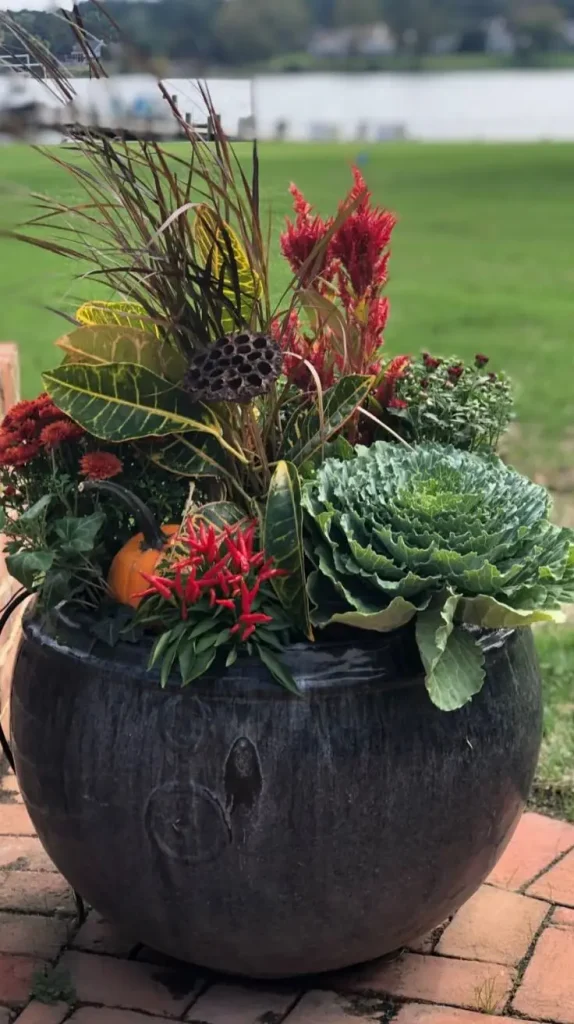
A harvest-inspired display can bring together several classic seasonal elements in one container. Think golden flowers, warm foliage, miniature pumpkins, dried wheat, and rustic branches. Begin with a sturdy planter large enough to support several plants. Place taller elements toward the back, medium-height flowers in the center, and low-growing foliage around the edges.
The layering creates depth and keeps the container from appearing flat. Small decorative pumpkins can rest between plants, while dried wheat can add movement above the flowers. Earthy shades work beautifully here. Gold, rust, brown, cream, and muted green create a cozy palette that complements wood, stone, brick, and natural outdoor materials.
Orange and Burgundy Flower Combination
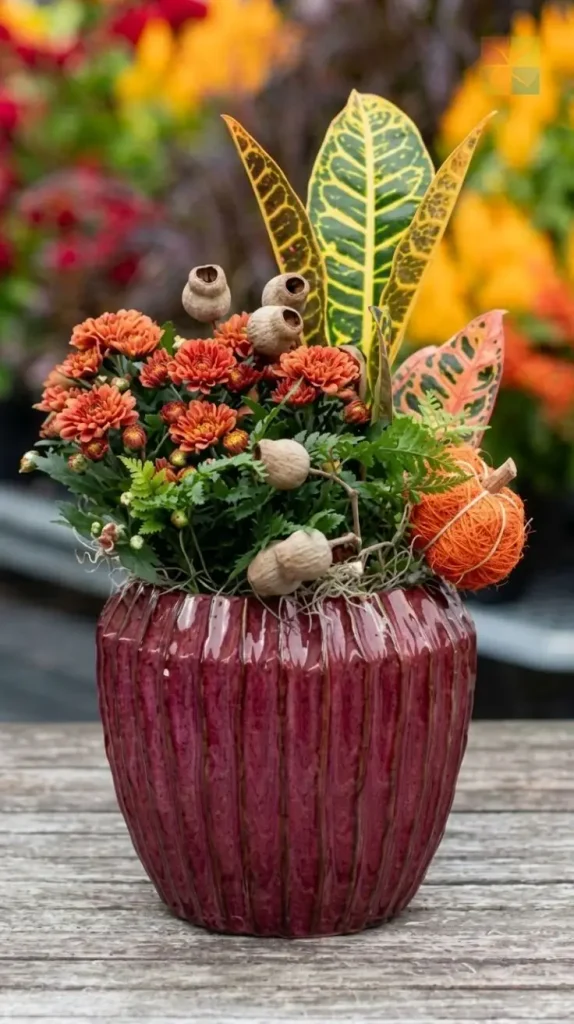
For a bold autumn statement, combine flowers in orange and burgundy tones. The deep colors instantly create a warm seasonal atmosphere. Mums are an easy starting point, but other cool-season flowers can add variety. Use one color as the dominant shade and bring in the second color through smaller blooms or foliage.
A dark container can make the flowers appear even more dramatic. Terracotta creates a warmer, rustic appearance, while a simple black planter provides a more modern contrast. Adding trailing greenery around the edges softens the arrangement. This is especially helpful when the central flowers have an upright growth habit.
Fall Planter With Ornamental Grass
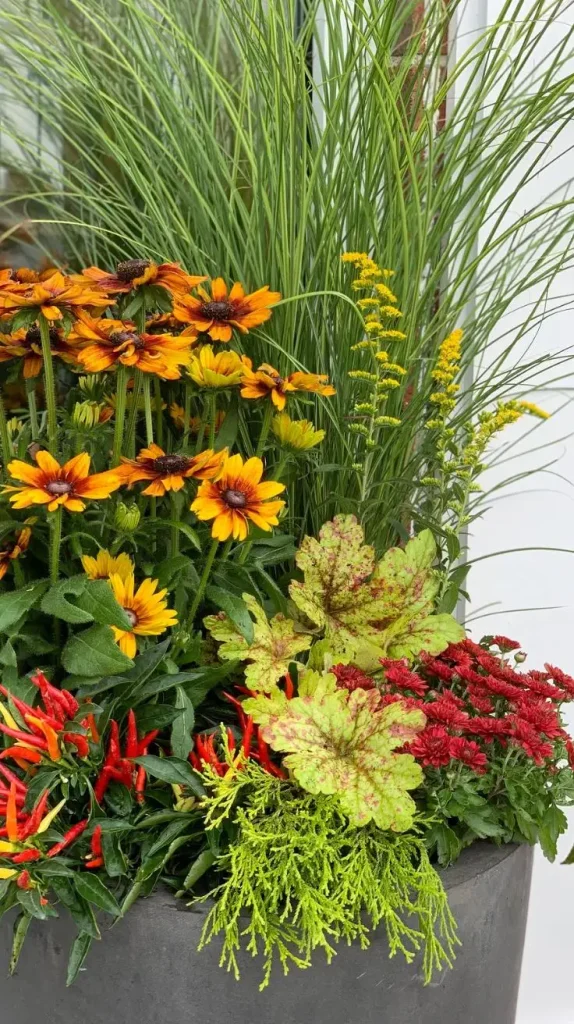
Ornamental grasses bring movement and height to seasonal containers. Their narrow leaves and feathery seed heads sway gently in the breeze, making the planter feel alive. Place a grass variety toward the back or center of a large container. Surround it with mums, ornamental kale, or other cool-season plants.
The grass acts almost like a natural fountain, allowing the arrangement to rise above shorter flowers. Small pumpkins or gourds can be placed at the base for an unmistakable autumn touch. This idea works particularly well for larger porches because tall planters can frame doorways and corners without taking up too much horizontal space.
White Pumpkins With Soft Greenery
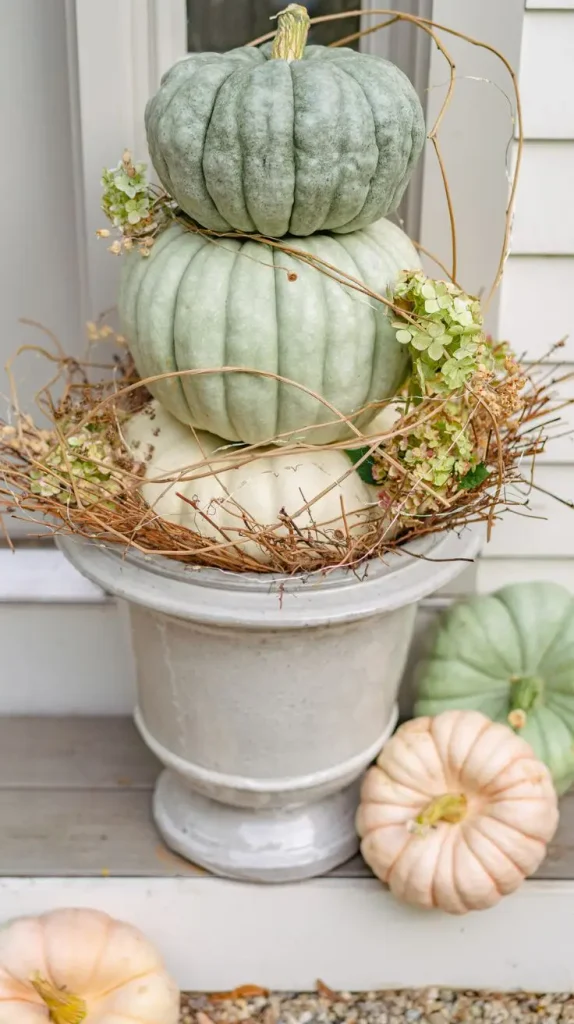
Not every autumn display needs bright orange. A neutral arrangement featuring white pumpkins and soft greenery can create an elegant, calm appearance. Choose cream, ivory, pale green, or silvery foliage. Add small white pumpkins between the plants to create a subtle seasonal statement.
This approach pairs beautifully with modern homes, white porches, neutral outdoor furniture, and minimalist decor. The limited color palette also makes the textures more noticeable. Look for plants with different leaf shapes. Combining rounded leaves with narrow grasses and trailing stems prevents the arrangement from becoming visually boring.
Trailing Vines Around the Edges
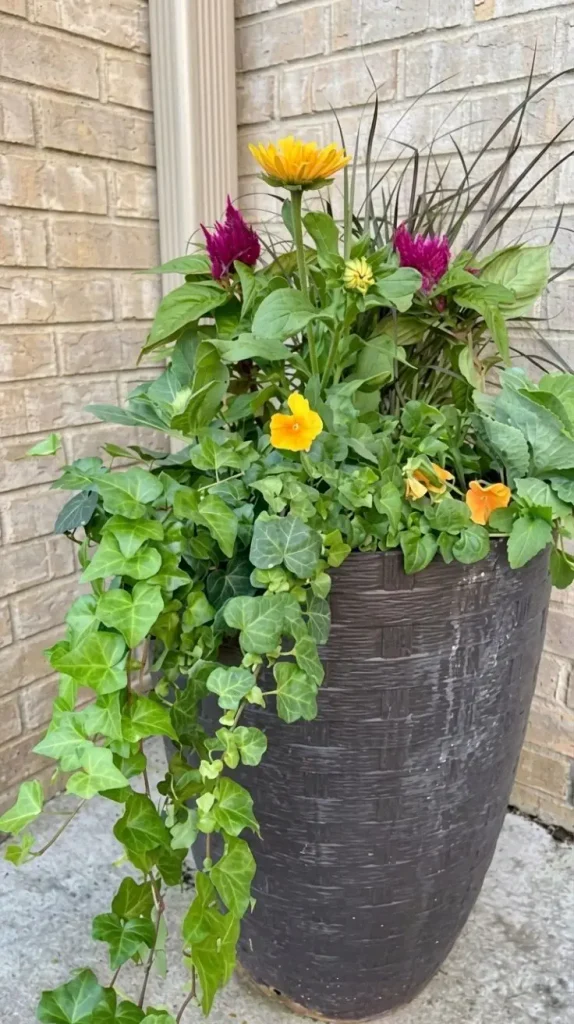
Trailing plants can transform an ordinary container into something much fuller and more decorative. Instead of allowing all the plants to grow upward, let some spill gently over the sides. Trailing ivy, ornamental sweet potato vine, creeping foliage, or other suitable seasonal plants can provide this cascading effect. Combine them with upright flowers in the center.
The basic design principle is simple: tall plants create height, rounded flowers create fullness, and trailing plants soften the edges.
This technique works especially well with elevated planters because the foliage has room to cascade downward. It can make a small porch or balcony feel lush without requiring a large garden bed.
Rustic Basket With Autumn Flowers
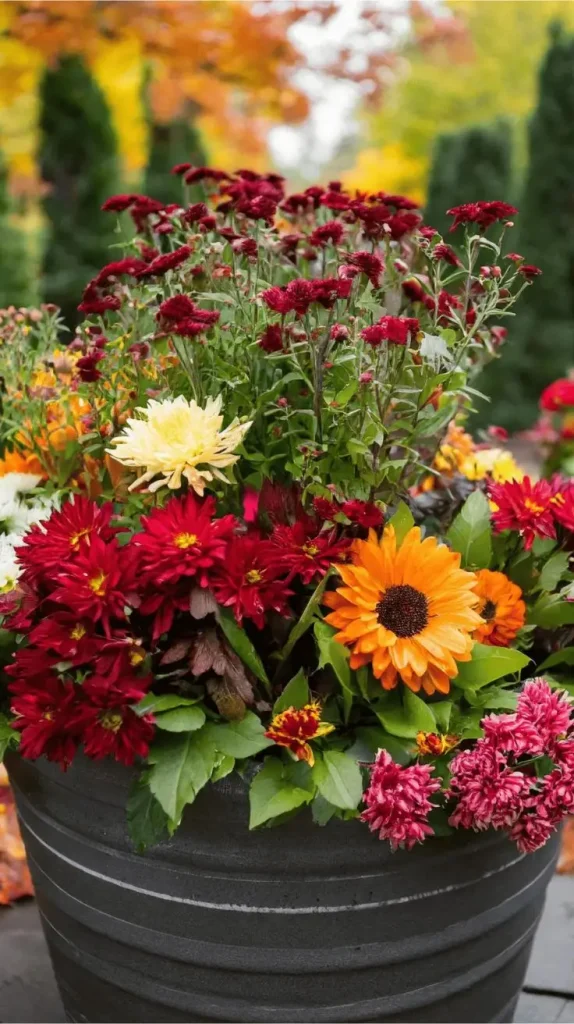
A woven basket offers an easy way to give seasonal flowers a relaxed, rustic appearance. Use a weather-resistant basket or place a suitable plant container inside the basket to protect the material.
Fill it with mums, ornamental grasses, foliage, and a few small seasonal accents. The natural texture of the basket works beautifully with autumn colors.
For extra charm, place the basket beside a wooden bench or a front door with a simple fall wreath. Repeating natural materials throughout the porch can make the entire space feel coordinated. The result does not need to look perfectly arranged. A little looseness can make the display feel handmade and welcoming.
Small-Space Fall Container Garden
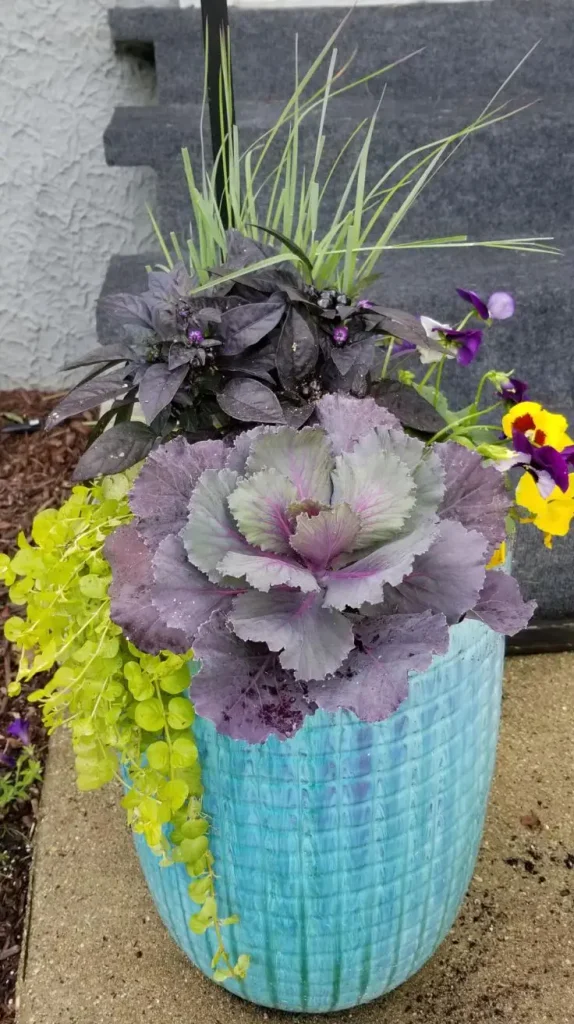
Limited outdoor space does not mean giving up on seasonal gardening. A single compact container can create plenty of impact on a balcony, apartment entrance, patio, or narrow porch. Choose one focal plant and surround it with two or three supporting plants. Avoid filling a small pot with too many varieties because the arrangement can quickly look crowded.
A compact mum paired with ornamental kale and trailing greenery can provide color, height, and texture without requiring much room. Small containers can also be grouped together at different heights. This creates a layered display while keeping each individual planter simple.
Berry-Toned Autumn Container
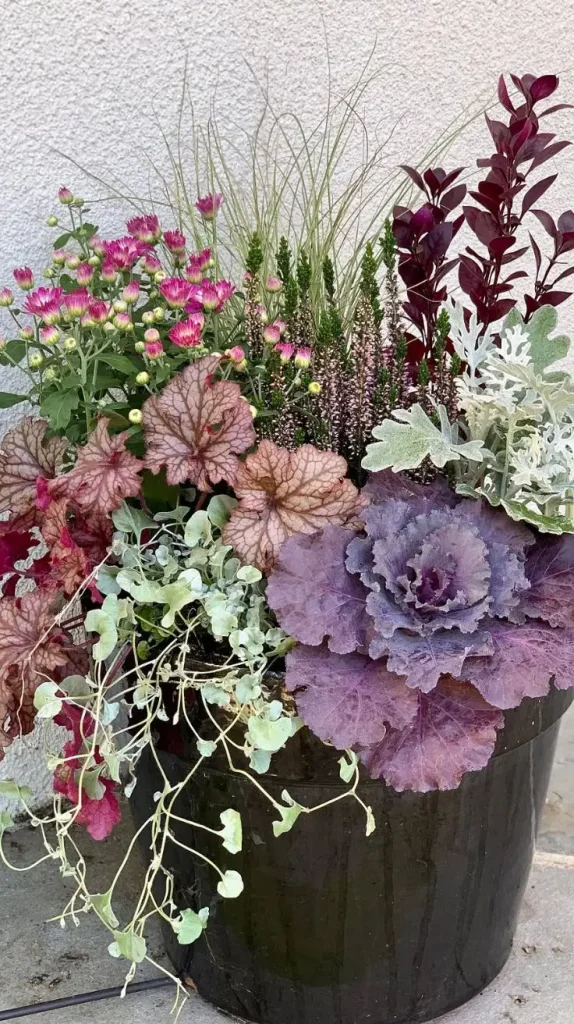
Deep berry shades can give autumn planters a sophisticated appearance. Burgundy, plum, wine, and deep red foliage create a moodier alternative to traditional orange and yellow displays. Pair dark-toned flowers with pale green foliage to create contrast. A cream-colored pot can make the deeper shades stand out, while a dark container produces a dramatic monochromatic effect.
Small berries, dried branches, or natural seed heads can add additional texture. This style works especially well when the surrounding decor already uses darker wood, black metal, stone, or rich neutral colors.
Layered Fall Planter With Pumpkins and Foliage
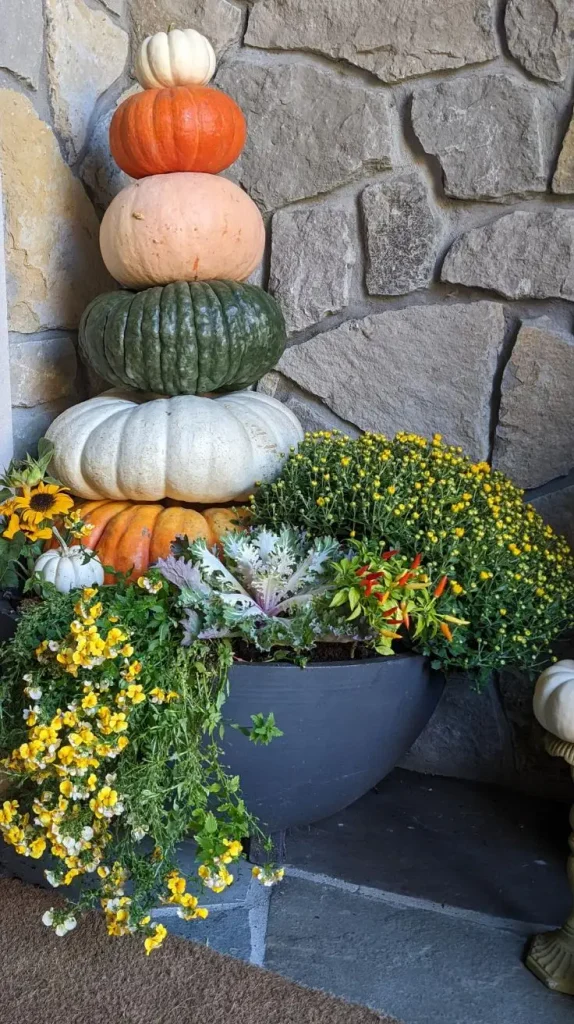
The final idea brings several autumn elements together in one abundant arrangement. The secret is layering rather than simply filling a pot with plants. Start with a tall focal element such as ornamental grass or an upright flowering plant. Add fuller flowers around the middle and finish with low-growing foliage around the edges.
Place small pumpkins or gourds near the base, leaving enough space for the plants to remain visible. A few dried stems can extend upward and give the display additional character.
The finished arrangement should have different heights, textures, and shapes. That contrast is what makes a container feel professionally styled rather than randomly planted.
How to Choose the Right Container
The planter itself plays a major role in the finished appearance. Large containers are useful for creating layered displays because they provide enough room for several plants.
Terracotta has a timeless garden appearance, while galvanized metal works well with farmhouse decor. Woven baskets add softness, and black containers create a clean modern backdrop.
Always consider drainage. Seasonal containers need suitable drainage holes so excess water can escape. Poor drainage can leave roots sitting in saturated soil, which may cause problems for many plants. Container size also matters. A very small pot may dry out quickly, while an oversized container can become unnecessarily heavy and difficult to move.
How to Build a Beautiful Seasonal Container
Creating a balanced arrangement becomes much easier when plants are chosen according to their role.
A simple formula is:
- Thriller: one tall plant that provides height.
- Filler: fuller flowers or foliage that occupy the middle.
- Spiller: a trailing plant that softens the container edges.
This classic container-gardening method works wonderfully for autumn displays. It creates structure without making the planting process complicated.
Think about color as well. Three or four related shades usually create a more cohesive appearance than a container filled with every available color.


