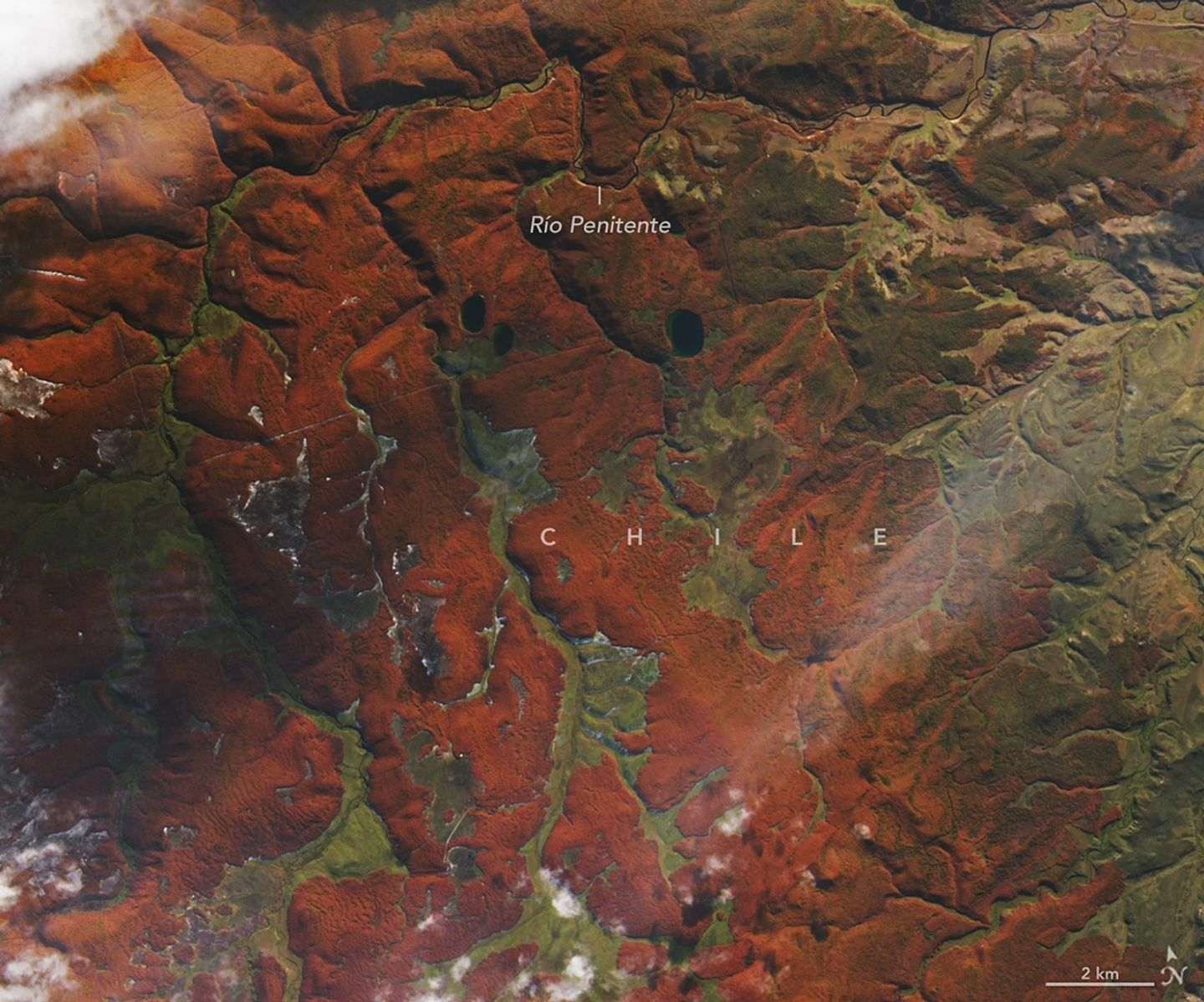
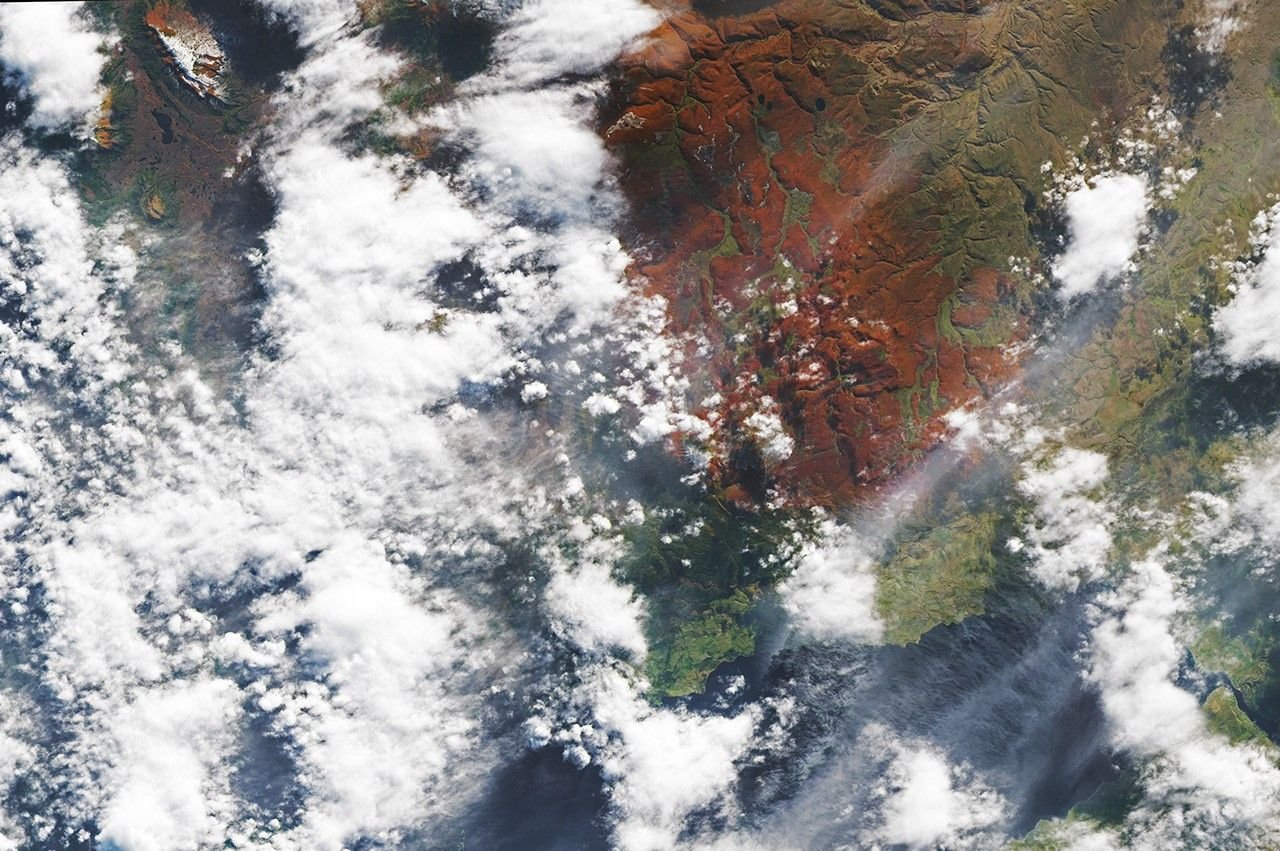
The bright whites of mountain snow, muted browns of the arid plains, and gem-like blues and teals of glacial lakes typically dominate the Patagonian color palette. But for a short time in the austral autumn, temperate deciduous forests add splashes of warm tones. On April 12, 2026, a break in the clouds allowed the Landsat 9 satellite to capture an image of reddish hillsides in the Magallanes region of southern Chile.
Patagonia contains the southernmost temperate forests in the world, home to many species found nowhere else on the planet. Among these are several types of southern beech tree (genus Nothofagus) that form the foundations of Andean forests. These highly adaptable trees can thrive in a range of climates, tolerating freezing temperatures and almost desert-like levels of rainfall.
The deciduous varieties put on a show in the fall, their leaves displaying yellows and reds when shorter, colder days set in. One of these species, known as the lenga beech (Nothofagus pumilio), occurs from about 36 degrees south latitude down to Tierra del Fuego at around 55 degrees south. Its range stretches about 2,000 kilometers (1,200 miles) along the spine of the continent and includes the area shown in this image.
Where lenga beeches grow, they tend to be the predominant or only type of tree in the forest, researchers note. As a subalpine-loving species, their presence often marks the highest elevation that trees will grow in an area. In the warmer, northern part of their range, they occur at higher elevations—around 1,700 meters (5,600 feet). In cooler, southern climes, they populate lower areas; the red ridgetops in the scene above, located about 100 kilometers (60 miles) northwest of Punta Arenas, are at about 600 meters (2,000 feet) above sea level.
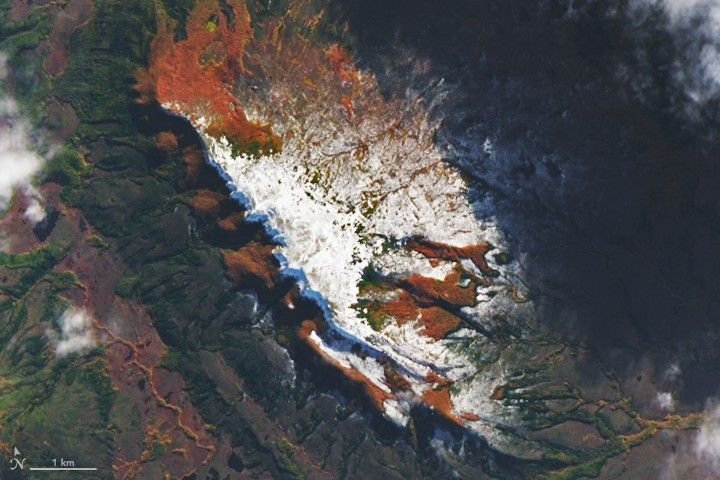
Colorful autumn displays of lenga and other southern beech forests dazzle leaf-peepers across Patagonia’s iconic locales. In Conguillío National Park, reds and yellows appear amid the clear lakes and volcanic peaks. And in Torres del Paine and Tierra del Fuego, trees such as Nothofagus antarctica, better known as ñire or “Antarctic fire,” lend touches of blazing color to the landscape.
NASA Earth Observatory images by Lauren Dauphin, using Landsat data from the U.S. Geological Survey. Story by Lindsey Doermann.
References & Resources
- Amigo, J., and Rodríguez Guitián, M. (2011) Bioclimatic and phytosociological diagnosis of the species of the Nothofagus genus (Nothofagaceae) in South America. International Journal of Geobotanical Research, 1, 1-20.
- Mattera, M.G., et al. (2020) Genetic diversity and population structure in Nothofagus pumilio, a foundation species of Patagonian forests: defining priority conservation areas and management. Scientific Reports, 10, 19231.
- ScienceDirect, Nothofagus. Accessed April 27, 2026.
- Steed-Mundin, O. (2024) The Southern Beeches: an introduction to the genus Nothofagus Blume. Curtis’s Botanical Magazine, 41(4), 439–456.
You may also be interested in:
Stay up-to-date with the latest content from NASA as we explore the universe and discover more about our home planet.
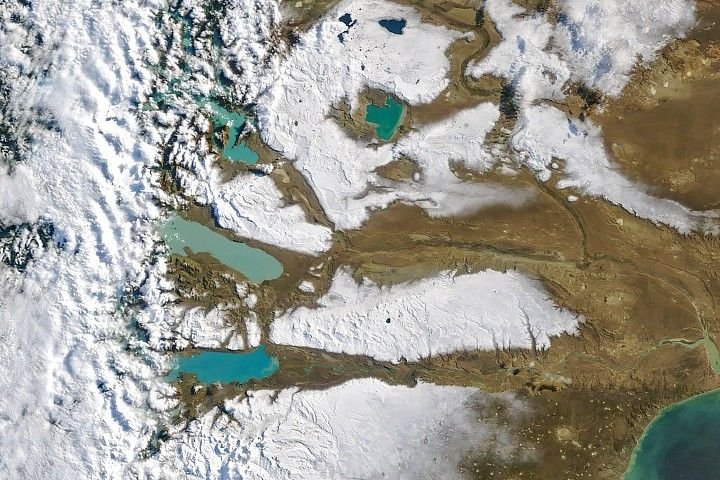
An early autumn storm left higher elevations in southern Argentina with a fresh and fleeting coat of white.
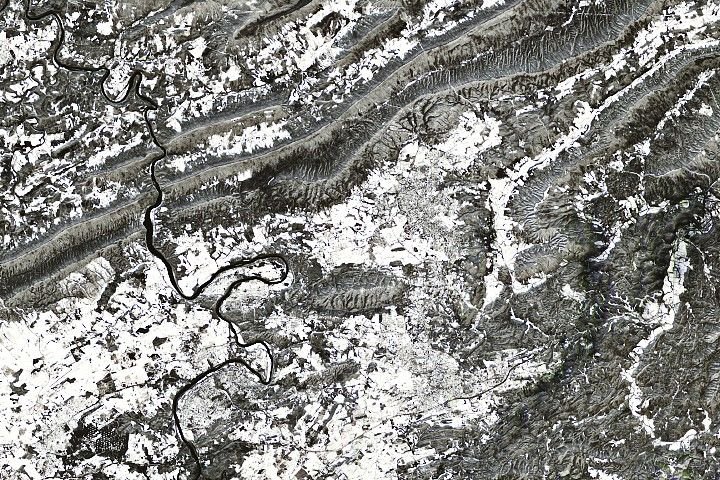
From autumn color to a winter-white finish, forested areas around Blacksburg trade foliage for snow over the span of two…
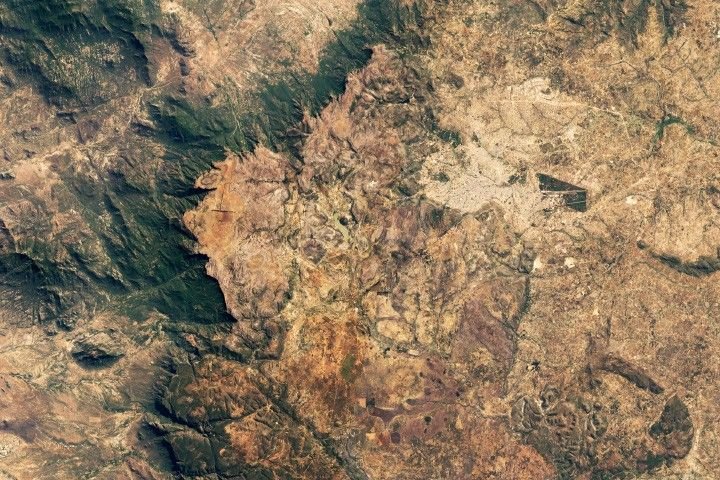
The Huíla plateau, bounded by dramatic cliffs and chasms, stands above the arid coastal plains in the country’s southwest.