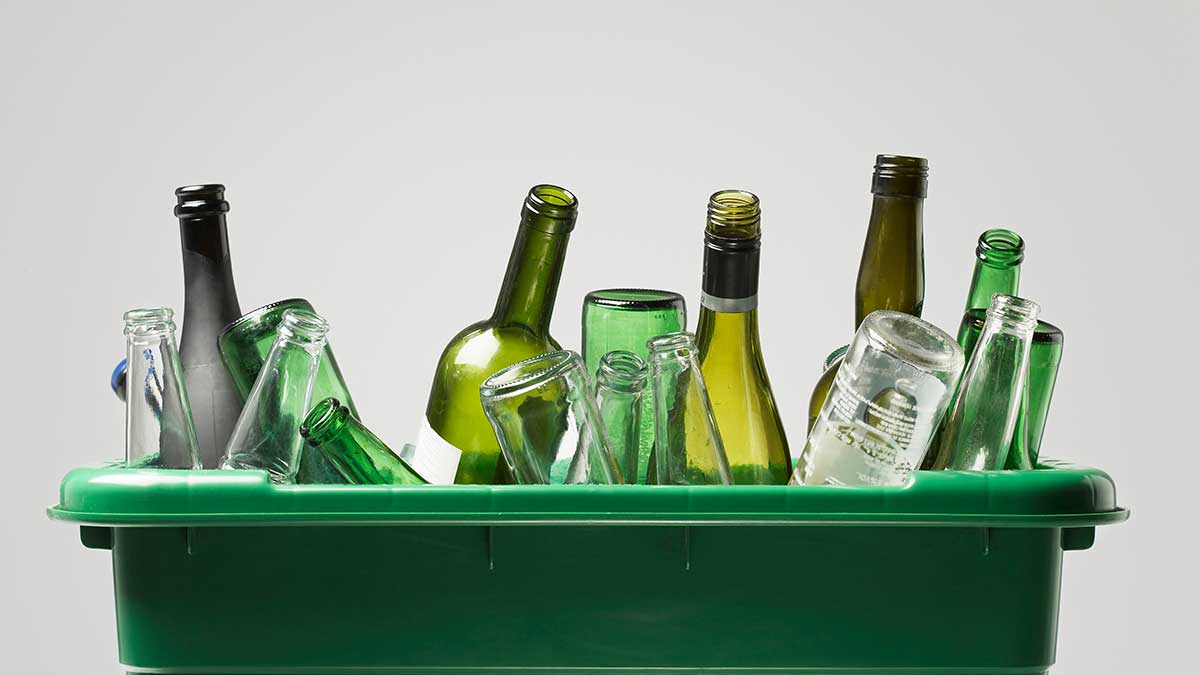
The average American household uses about 150 pounds of glass containers each year, but more than two-thirds of that glass never gets recycled into new bottles. This isn’t because people aren’t trying. Glass is now the only common packaging material that costs recycling facilities more to process than they make from selling it, and the U.S. recycling system has been adapting to this problem for the past twenty years.
According to the EPA, the U.S. has recycled about 31 percent of its glass containers for the past ten years. In contrast, the European Union collected 80.8 percent of its glass containers in 2023. This gap isn’t because of how people act, but because of differences in infrastructure, policies, and the fact that glass is heavy, breakable, and not very profitable. As a result, glass no longer fits well in the single-stream recycling system most Americans use.
The math that broke glass recycling
Cullet, which is the industry term for crushed and sorted recycled glass, is a permanent material. It can be melted and reused over and over without losing quality. Adding 10 percent more cullet to a furnace reduces energy use by 2.5 to 3 percent and lowers CO₂ emissions by about 5 percent. If a furnace uses only cullet, it produces about 58 percent fewer emissions than making glass from raw materials like sand, soda ash, and limestone.
These numbers show that glass should be valuable to bottle makers. However, manufacturers want cullet that is color-sorted, clean, and ready for the furnace, which is rarely what comes out of single-stream recycling facilities.
A 2017 analysis by the Closed Loop Foundation found that single-stream glass costs U.S. recycling facilities $150 million each year in equipment damage, transportation, and disposal. On average, a facility loses about $35 for every ton of glass it handles. For example, a transfer station in Washington, D.C. spends about tens of thousands of dollars a year replacing screen baskets damaged by glass shards. When trucks unload, glass shards also get stuck in paper and cardboard, making those materials less valuable.
This is known as the negative-value problem. The glass itself isn’t worthless, because high-quality cullet can be sold. But the way glass is collected usually produces a dirty, color-mixed load, so it often ends up being used as road base, landfill cover when ground into sand-like consistency and laid over the day’s waste, or just thrown away.
How we built a system that loses money
The current U.S. glass recycling shortfall is largely the story of two infrastructure decisions made decades apart.
The first decision was moving to single-stream collection in the 1990s and 2000s. This change increased overall recycling rates but mixed glass with other materials. As a result, glass often arrived at recycling facilities already broken, contaminating other recyclables and damaging equipment designed for paper and plastic.
The second decision was to close glass-only drop-off programs as city budgets tightened. Without dedicated collection routes, like the ones used in Italy, Belgium, and Germany to recycle 90 percent of glass containers, American glass no longer had a clean way to be collected.
The exception is the 10 states with container deposit laws. These states, known for their bottle bills, recycle about 70 percent of beverage containers, which is more than twice the national average of 33 percent. Oregon’s deposit system achieved an 87 percent redemption rate in 2024, the highest in the country. Glass returned through deposit programs is typically clean, sorted, and unbroken — exactly what manufacturers want.
What does glass costs your household?
Consumers end up paying for glass twice. First, the cost of the bottle is included in the price of products like wine, beer, sauce, or seltzer. Second, people pay municipal recycling fees through property taxes, garbage bills, or both. These fees cover the average $ 62-per-ton landfill tipping fee in 2024, plus the extra cost of glass contamination that affects other recyclables.
The exact dollar figure varies wildly by region. New York City’s Department of Sanitation has estimated curbside recycling collection at $686 per ton, a number that includes labor, fuel, and equipment that reaches beyond what households see on their utility bills, but shows up in tax rates.
In states with bottle bills, the economics are different for households. A 5- or 10-cent deposit can be fully recovered, and if the home doesn’t recycle, others can generate income picking it up.
Glass that would have cost the city money instead becomes a small refund for the household and a clean material for manufacturers. This system covers the cost directly through fees for using glass, rather than spreading it across all taxpayers.
Glass emissions matter
Glass furnaces use a lot of energy compared to other packaging processes. Making 1 ton of container glass produces between 0.5 and 1.6 tons of CO₂, depending on the furnace’s efficiency and the amount of cullet used. Each ton of cullet used instead of raw materials saves about 0.67 tons of CO₂ and 1.2 tons of mined sand, soda ash, and limestone. soda ash, and limestone.
If you apply these numbers to the 6 million tons of glass containers that were landfilled in the U.S. in 2018—the most recent year for which the EPA provides data—the country misses out on about 4 million tons of avoided CO₂ emissions each year, plus more than 7 million tons of raw materials that could have been saved. This is a climate cost that the recycling rate alone cannot capture.
The Glass Packaging Institute and Boston Consulting Group have created a plan to raise the U.S. glass recycling rate to 50 percent by 2030. It focuses on expanding deposit programs, building dedicated glass processing facilities, and moving away from single-stream collection where possible. Reaching this goal would nearly double the current recycling rate without requiring people to change what they drink or how often they recycle.
What’s changing, and what isn’t
Seven states, including California, Colorado, Maine, Maryland, Minnesota, Oregon, and Washington, have passed extended producer responsibility (EPR) laws for packaging. These laws shift the cost of recycling from cities to the companies that sell the bottles. Oregon started enforcing its program in July 2025, and Colorado, Minnesota, and Maryland will phase in their programs by 2028.
EPR is the policy most likely to change the economics of glass recycling in the next decade. When producers pay recycling costs directly, they have to deal with contamination from single-stream recycling, not the recycling facility. This makes dedicated glass collection much more appealing. The European experience shows that this approach works, but it has not yet been tried on a large scale in the U.S.
What you can do
- Check if your state has a bottle bill. If it does, redeem your deposit for a clean recycling stream and a small refund. If not, look up your local recycling options using the Earth911 recycling search before putting glass in your curbside bin.
- If your area has glass-only drop-off sites, use them. Many cities offer free drop-off locations at transfer stations or grocery store parking lots. The glass collected from these sites is the type manufacturers prefer.
- Rinse your bottles instead of crushing them. Whole bottles are easier to sort than broken pieces. Take off metal lids and recycle them separately.
- Buy refillable bottles when possible. A refilled bottle does not use any cullet, raw materials, or the recycling system. Programs for returnable beer, milk, and water bottles are slowly becoming more common in the U.S.
- Support extended producer responsibility and bottle-bill laws in your state. Most glass that gets recycled in the U.S. today comes from the 10 states with deposit programs. Expanding these programs is the most effective policy change available.
The post Glass: Recycling’s Negative-Value Problem appeared first on Earth911.