

Organizations can no longer afford to manage waste based on assumptions.
For many large corporate campuses, waste collection schedules remain unchanged for years despite changes in occupancy, hybrid work schedules, employee behavior, and recycling participation. The result is unnecessary hauling, higher operating costs, and missed opportunities to improve sustainability performance.
Recycle Away partnered with a Multi-national bank to support the waste bin roll-out in their corporate campus in Texas. The goal was to confirm whether its waste collection services reflected actual demand. Using smart waste monitoring technology and operational analysis, the project uncovered significant opportunities to optimize collection schedules, reduce unnecessary service events, and improve the efficiency of the entire waste management program.
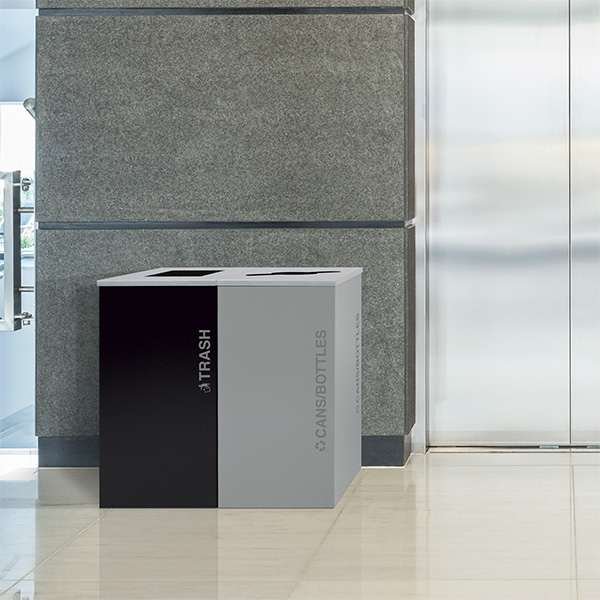
The findings demonstrated how data can transform waste managementfrom a routine facility service into a measurable operational asset.
The Business Challenge
The campus operated multiple office buildings supported by scheduled landfill, recycling, and organics collection. Like many organizations, service frequencies had evolved over time without ongoing validation against actual waste generation.
Facility managers needed answers to critical operational questions.
- Are containers being emptied too often?
- Where can hauling costs be reduced?
- Which locations need larger containers?
- Are recycling and compost programs properly balanced?
- How can sustainability goals be achieved without increasing operating costs?
Without utilization data, every decision relied on assumptions.
Recycle Away’s Approach
Recycle Away helped evaluate the waste system using smart fill-level monitoring across the campus. Rather than focusing only on collection frequency, the analysis examined how the entire waste system functioned.
The project monitored:
- 24 smart devices
- Seven office buildings
- Three waste streams
- 19 collection services
- 206 service events during one month
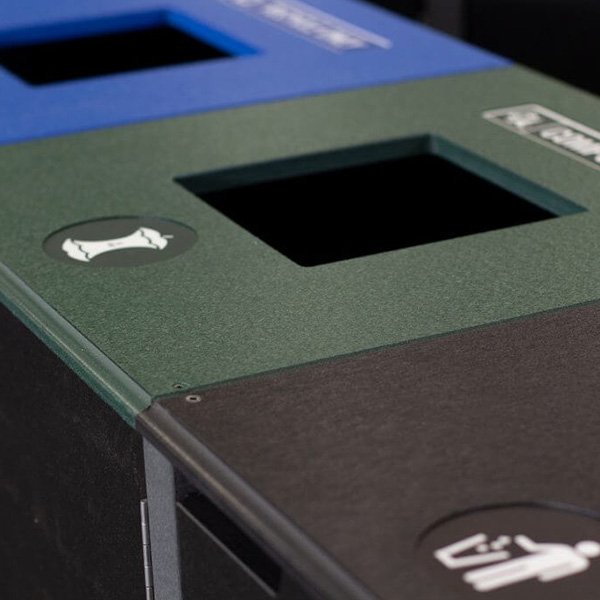
Each pickup was evaluated against the actual fill level of the container, providing facility managers with a complete picture of system performance rather than relying on anecdotal observations.
What the Data Revealed
The results immediately highlighted opportunities for operational improvement.
Although landfill containers accounted for half of all collection activity, they averaged only 16.1 percent full when emptied.
Meanwhile
- Organics averaged 49 percent
- Recycling averaged 38.1 percent
- Campus-wide average fill level was 30.5 percent
In many locations, containers were being serviced while nearly empty, creating unnecessary labor, transportation, fuel consumption, and hauling expenses.
Business Outcomes
Rather than simply reducing pickups, the analysis created a roadmap for improving operational performance.
Lower Waste Hauling Costs
Sensor data identified eight containers that could safely receive less frequent service. Optimizing these locations alone was projected to eliminate 30 to 40 percent of current landfill service events, reducing hauling expenses without compromising cleanliness.
More Efficient Facility Operations
Maintenance teams could shift from fixed collection schedules to demand-based service, allowing labor to be focused where it creates greater value.
Improved Sustainability Performance
Reducing unnecessary truck trips lowers fuel consumption and greenhouse gas emissions while improving operational efficiency. Waste reduction becomes a measurable sustainability initiative rather than simply an operational expense.
Better Capital Planning
The data identified containers that were oversized, undersized, or incorrectly serviced, allowing future investments to be based on actual usage instead of estimates.
Actionable ESG Reporting
Real-time utilization data provides measurable metrics that support sustainability reporting, waste diversion initiatives, and corporate ESG commitments.
Continuous Improvement
Instead of conducting a one-time waste audit, facility managers now have continuous operational intelligence that allows service schedules to evolve as building occupancy changes.
Recommendations
Based on the analysis, Recycle Away recommended:
- Transitioning from fixed schedules to demand-based collection.
- Establishing fill-level thresholds before service.
- Right-sizing oversized containers.
- Verifying sensor accuracy where repeated zero-fill readings occurred.
- Increasing capacity only where high-utilization containers consistently approached full capacity.
These recommendations help organizations reduce operating costs while maintaining excellent occupant experience.
Why This Matters
Waste collection is often one of the largest hidden operational expenses within commercial facilities.
Organizations frequently focus on purchasing recycling containers while overlooking the long-term costs associated with unnecessary hauling, labor, contamination, and inefficient collection schedules.
By combining waste infrastructure, smart monitoring, operational analysis, and data-driven recommendations, Recycle Away helps organizations transform waste management into a measurable business advantage.
The result is lower operating costs, improved diversion performance, stronger ESG reporting, and a waste system designed around actual user behavior.
Project Metrics
Buildings Evaluated
7
Smart Devices
24
Waste Streams
3
Collection Services
19
Monthly Service Events
206
Average Weekly Services
46.5
Average Campus Fill Level
30.5%
Average Organics Fill
49%
Average Recycling Fill
38.1%
Average Trash Fill
16.1%
Potential Reduction in Trash Collection
30–40%


