

By Tianyi Sun, Senior Climate Scientist & Stephane Sartzetakis, Senior Research Analyst, Environmental Defense Fund
Hydrogen has significant potential to cut climate emissions from some of the hardest-to-abate sectors. But producing more hydrogen will not, by itself, deliver a global climate benefit, and using it where electrification is readily available could undercut potential climate benefits. Those are just two of the findings of a recent climate impact assessment created by Environmental Defense Fund and published in Frontiers in July.
Presented in Hydrogen in context: comparative climate impact assessment across multiple decarbonization pathways, the assessment examined hydrogen’s climate benefit across 57 decarbonization pathways and 11 uses. It compared renewable hydrogen, hydrogen made from fossil fuels with carbon capture, hydrogen-based fuels, direct electrification and other options.
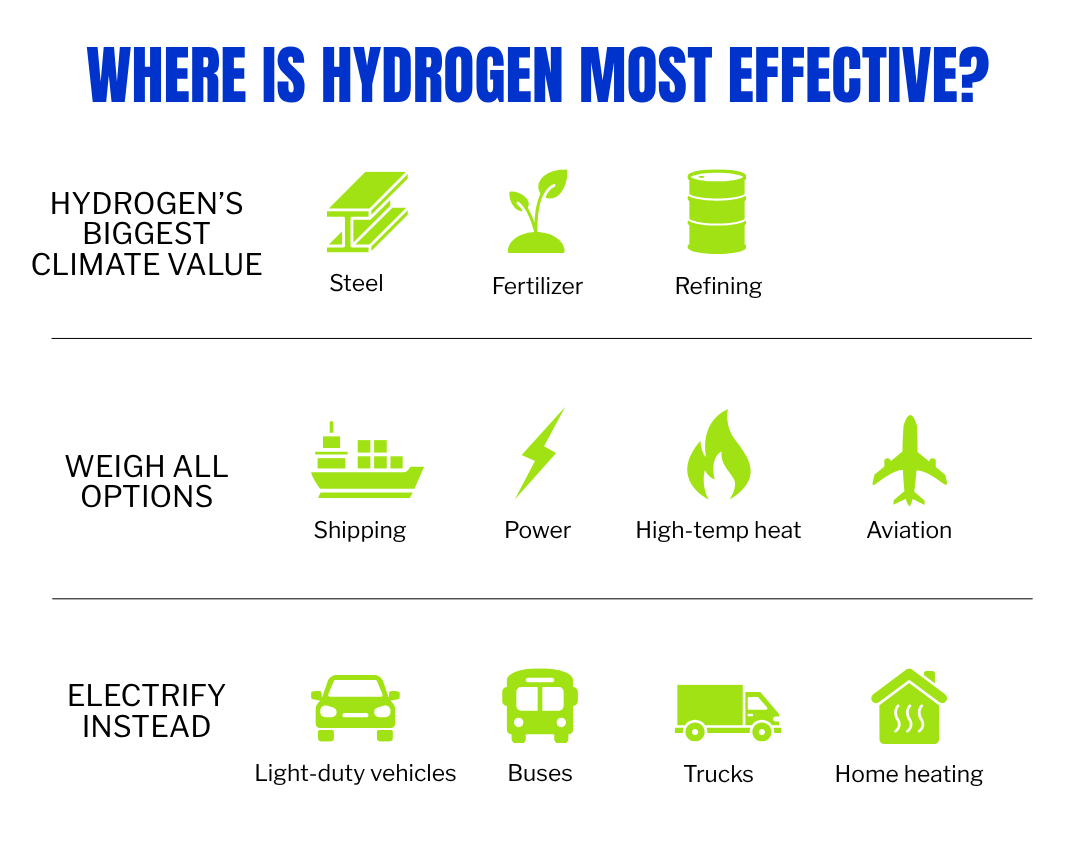
The results point toward a practical strategy: electrify with clean energy where feasible, use hydrogen where its unique capabilities are most needed, and require hydrogen projects to demonstrate their climate performance from production through use.
The bottom line: like other available energy options, hydrogen is neither a climate panacea nor a climate liability. Its climate benefits depend on how it’s made, how it’s used, and how well its lifecycle emissions are measured and managed.
Putting hydrogen to work where it adds the most value
Renewable hydrogen makes a particularly strong case as an industrial feedstock because it can serve as a chemical input, not just an energy source, in processes such as steel and fertilizer production. In the study, renewable hydrogen used for steel production delivers the largest climate benefit per unit of renewable electricity among the hydrogen applications examined.
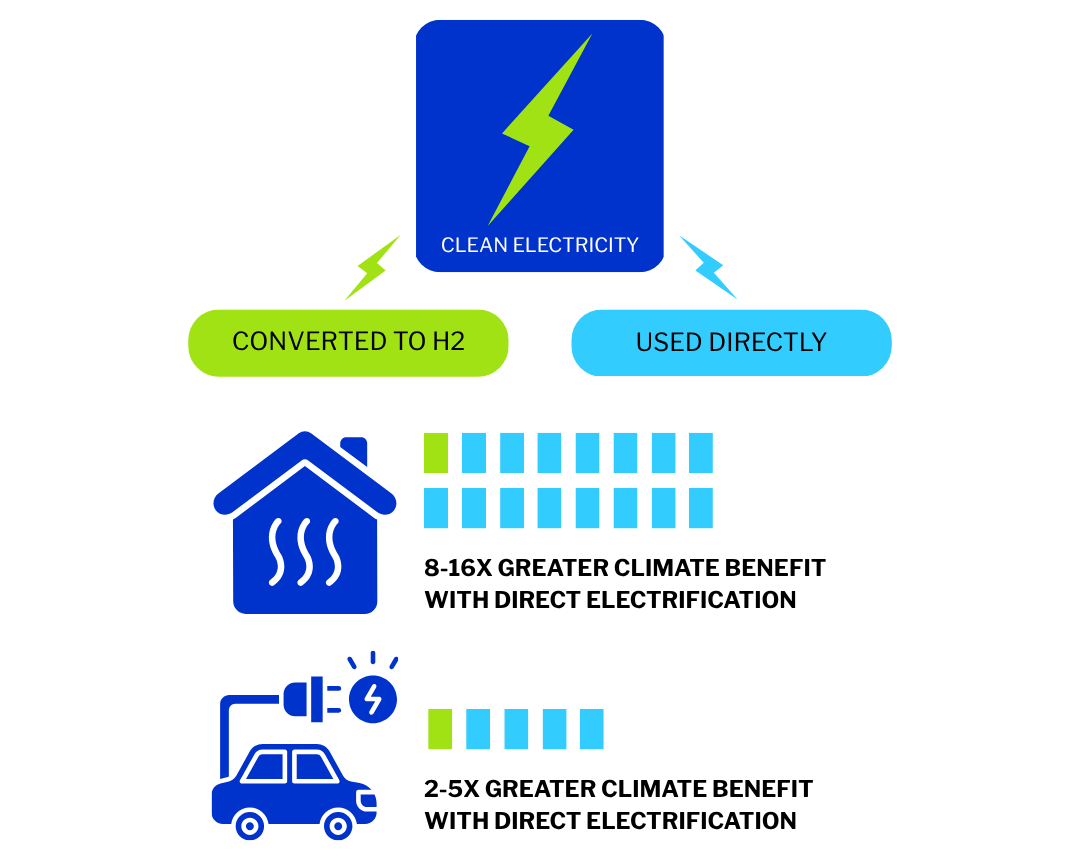
Hydrogen and hydrogen-based fuels can also help in applications where direct electrification faces practical limits, including parts of shipping and aviation. Where electricity can do the job directly, however, the comparison changes significantly. For home heating, for example, direct electrification delivers 8 to 16 times the near-term climate benefit per unit of renewable electricity as using that electricity to make hydrogen and using the hydrogen for heat. For road transportation, the advantage of direct electrification is 2 to 5 times. Converting electricity into hydrogen, moving it and using it as fuel consumes energy that could otherwise serve the same need directly.
Every kilowatt-hour of clean electricity has an opportunity cost. Policymakers and companies should ask where that kilowatt-hour will cut the most pollution.
Measure the whole hydrogen climate footprint across the value chain
Production is only part of hydrogen’s climate story. Regardless of how it’s made, hydrogen that escapes during production, storage, transport or use contributes to warming. Across the pathways examined, each additional 1% of lost hydrogen reduces near-term climate benefits by about 3% (and 1.5% in the long term), on average. That makes loss prevention and mitigation an integral part of a credible hydrogen industry.
Hydrogen made from fossil fuels with carbon capture can deliver substantial benefits under favorable conditions. However, upstream methane emissions and proven carbon capture performance can make or break the deal. Here, every 1% reduction in methane emissions brings a 15% improvement in near-term benefits (and 9% in the long term); and every 1% improvement in carbon capture rate brings about a 1% improvement in benefits.
However, even with the best carbon capture, high emissions of methane and hydrogen can still make fossil-based hydrogen produce net near-term warming in eight of the 11 uses examined.
The study underscores the importance of accurate, transparent and trustworthy measurement and management of methane, carbon and hydrogen emissions throughout the entire supply chain.
Renewable hydrogen faces a different test: its electricity supply. If an electrolyzer uses clean power that would otherwise serve the grid, it’s likely that additional fossil generation will fill the gap. New clean electricity, matched to hydrogen production in time and location, can help avoid that result.
Build the market around results
This study modeled possible pathways; it did not measure the performance of operating hydrogen projects. Its findings show why better measurement and transparent lifecycle accounting are essential as projects scale up. Policy should reward verified emissions reductions, industry should manage hydrogen and methane losses as operating priorities, and investors should examine the electricity supply and intended use alongside production capacity.
Hydrogen has an important role in a cleaner economy. The strongest projects will demonstrate where they create genuine climate value and can prove they deliver it.
The post Hydrogen in context: What new assessment shows for decarbonization choices appeared first on Energy Exchange.


