
Indonesia is stepping up its sustainable aviation ambitions. State-owned energy company PT Pertamina (Persero) has signed a memorandum of understanding (MoU) with Boeing to explore the development of a sustainable aviation fuel (SAF) ecosystem in Indonesia.
The partnership aims to accelerate SAF production, strengthen the country’s clean aviation supply chain, and support Indonesia’s long-term net-zero emissions goals. It also comes as air travel across Southeast Asia is expected to grow rapidly over the next two decades, increasing demand for lower-carbon aviation fuels.
The agreement reflects Indonesia’s ambition to become a regional leader in sustainable aviation while reducing emissions from one of the world’s hardest-to-decarbonize sectors.
Pertamina and Boeing Join Forces on Indonesia’s SAF Ecosystem
Under the memorandum of understanding, Pertamina and Boeing will work together to evaluate opportunities across the entire sustainable aviation fuel value chain.
The collaboration will focus on:
- Identifying sustainable feedstock sources
- Assessing SAF production technologies
- Supporting policy and regulatory development
- Strengthening technical knowledge and workforce capabilities
- Encouraging long-term investment in Indonesia’s SAF industry
Rather than focusing solely on fuel production, both companies aim to help build a complete SAF ecosystem that connects feedstock suppliers, refineries, airlines, policymakers, and technology providers.
According to Pertamina President Director Simon Aloysius Mantiri, the partnership represents a long-term investment in Indonesia’s clean energy future.
He said the country possesses abundant renewable feedstock resources, while Pertamina brings refining expertise and Boeing contributes decades of aviation knowledge. Together, the companies expect to accelerate the development of a competitive domestic SAF industry that supports both economic growth and aviation decarbonization.
Indonesia Has Strong Potential to Become a Regional SAF Hub
Indonesia is widely viewed as one of Southeast Asia’s most promising markets for sustainable aviation fuel.
- According to the ASEAN 2050 SAF Outlook, Indonesia ranks among the top three ASEAN countries with the largest projected SAF production surplus.
- By 2050, the country could produce an estimated 2.2 million barrels of SAF per day, highlighting its significant long-term production potential.
Several factors support this outlook:
- Large agricultural and forestry resources
- Significant volumes of used cooking oil (UCO)
- Palm oil residues and other agricultural waste
- Existing refining infrastructure
- Growing domestic and regional aviation markets
These advantages position Indonesia to become both a major SAF producer and exporter as airlines seek cleaner fuels to meet future climate targets.
Boeing Sees Strong Aviation Growth in Southeast Asia
The partnership also reflects Boeing’s long-term outlook for aviation demand across Southeast Asia.
The aerospace manufacturer expects passenger traffic in the region to grow by approximately 7% annually over the next two decades. To meet this demand, airlines are projected to require 4,885 new commercial aircraft by 2044.
While aviation growth supports economic development, it also increases fuel consumption and carbon emissions.
According to Indra Duivenvoorde, Managing Director of Boeing Indonesia, Indonesia is well positioned to become a leader in sustainable aviation.
He said Boeing looks forward to collaborating with Pertamina on multiple initiatives, including feedstock identification, education, workforce development, and broader SAF ecosystem growth.
The company believes these efforts can help support Indonesia’s aviation industry while contributing to national economic development.
Sustainable Aviation Fuel and Aviation Emissions
The aviation industry currently accounts for roughly 2–3% of global energy-related carbon dioxide emissions, making it one of the most challenging sectors to decarbonize.
Unlike passenger vehicles, aircraft have limited near-term alternatives to liquid fuels, especially for long-haul flights. That makes Sustainable Aviation Fuel one of the aviation industry’s most important tools for reducing emissions.
SAF is produced from renewable and waste-based feedstocks instead of fossil crude oil. Common feedstocks include:
- Used cooking oil
- Animal fats
- Agricultural residues
- Municipal solid waste
- Forestry waste
- Industrial waste gases
- Future feedstocks such as algae and captured carbon
Depending on the production pathway, SAF can significantly lower lifecycle greenhouse gas emissions compared with conventional jet fuel.
- In its pure form, known as neat SAF, the fuel can reduce lifecycle carbon emissions by up to 80% compared with conventional aviation fuel.
Today’s certified SAF is blended with conventional jet fuel before use and is compatible with existing aircraft engines and airport infrastructure, allowing airlines to reduce emissions without modifying current fleets.
Pertamina Is Expanding Its SAF Portfolio
Pertamina has already launched several initiatives to build Indonesia’s domestic SAF industry.
These include:
- Producing and certifying Pertamina Sustainable Aviation Fuel
- Conducting SAF implementation with Indonesian airline Pelita Air
- Developing the Cilacap Biorefinery project
- Producing both Sustainable Aviation Fuel and Hydrotreated Vegetable Oil (HVO)
The Cilacap project is expected to utilize used cooking oil (UCO) and other waste-based renewable feedstocks rather than relying solely on virgin vegetable oils.
Using waste materials can improve the environmental performance of SAF while supporting circular economy objectives.
The refinery is expected to become an important part of Indonesia’s strategy to develop domestic renewable fuels and reduce dependence on imported fossil fuels.
Building a Complete Aviation Decarbonization Strategy
The partnership between Pertamina and Boeing is about more than producing SAF. The two companies want to build a complete SAF ecosystem in Indonesia to support cleaner aviation over the long term.
They will work together to identify sustainable feedstocks, evaluate production technologies, support government policies, develop technical expertise, and attract investment. Expanding SAF production requires more than new refineries. It also depends on reliable feedstock supplies, supportive regulations, skilled workers, and strong demand from airlines.
This effort supports the aviation industry’s broader goal of reaching net-zero emissions. Along with SAF, the sector is improving fuel efficiency, developing more efficient aircraft, optimizing flight operations, and investing in new technologies such as hydrogen and electric aircraft for shorter routes.
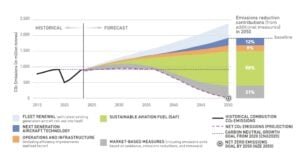
- According to the Air Transport Action Group (ATAG), SAF could deliver 53% to 65% of the emissions reductions needed for aviation to achieve net-zero emissions by 2050, making it the industry’s most important decarbonization solution.
As air travel continues to grow across Southeast Asia, expanding domestic SAF production will improve energy security, reduce reliance on imported fossil fuels, and help airlines meet future emissions targets.
Supporting Indonesia’s Net Zero Goals
The agreement aligns with Indonesia’s broader energy transition strategy and supports the country’s efforts to reach net-zero emissions by 2060.
It also supports the vision of President Prabowo Subianto, whose administration has identified cleaner energy development as a national priority.
For Pertamina, expanding renewable fuels complements the company’s wider transition strategy.
The state-owned energy company has committed to integrating environmental, social, and governance (ESG) principles across its operations while investing in cleaner fuels, renewable energy, and lower-carbon technologies.
The company views SAF as an important opportunity to reduce transportation emissions while creating new industries based on Indonesia’s abundant renewable resources.
Outlook
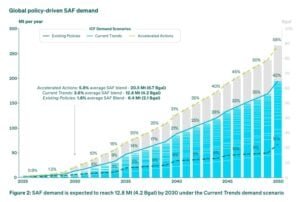
As airlines face growing pressure to reduce emissions, sustainable aviation fuel is expected to play a much larger role in global aviation over the coming decades.
Indonesia’s combination of abundant biomass resources, expanding refining capacity, and rapidly growing aviation market gives it a strong foundation for becoming one of Asia’s leading SAF producers.
Lastly, this collaboration could strengthen Indonesia’s position in the regional clean aviation market while helping airlines secure greater supplies of lower-carbon fuel as demand continues to rise.
The post Indonesia Targets Aviation Decarbonization With Pertamina-Boeing SAF Partnership appeared first on Carbon Credits.


