
Lucid Motors has appointed a new chief executive officer while securing more than $1 billion in fresh capital, marking a major strategic shift toward autonomous driving and mobility services.
ezstandalone.cmd.push(function () { ezstandalone.showAds(119); });
The leadership transition comes at a critical time for the luxury electric vehicle (EV) maker. Lucid Motors is expanding beyond premium EV manufacturing into autonomous vehicle development and ride-hailing partnerships.
The move shows wider changes in the global auto industry. Companies are racing to blend electrification with self-driving technology.
ezstandalone.cmd.push(function () { ezstandalone.showAds(127); });
Lucid built its brand on high-performance EVs. The Lucid Air, its flagship model, offers an EPA-estimated range of over 500 miles. This makes it one of the longest-range electric vehicles on the market today. This technological strength now serves as the foundation for its next phase of growth.
The CEO change suggests a stronger focus on scaling technology platforms, partnerships, and long-term revenue streams beyond vehicle sales.
ezstandalone.cmd.push(function () { ezstandalone.showAds(128); });
A $1B War Chest to Fund Lucid’s Next Chapter
The new funding round features a public offering of common stock. It also includes increased investment from strategic partners like Uber Technologies. The deal is one of the larger capital raises in the EV sector in recent months.
Raising capital has become more difficult across the EV industry. Investors are now focusing on companies with strong technology and clear growth strategies. This shift is due to higher interest rates and tighter financial conditions.
ezstandalone.cmd.push(function () { ezstandalone.showAds(129); });
Lucid’s ability to secure over $1 billion suggests continued confidence in its long-term plans. The funding is expected to support several priorities:
- Development of autonomous driving systems,
- Expansion of manufacturing capacity, and
- Strengthening of partnerships in mobility services.
The partnership with Uber is especially important. It shows a deeper relationship that could extend beyond supplying vehicles to supporting future autonomous ride-hailing networks.
ezstandalone.cmd.push(function () { ezstandalone.showAds(130); });
This hybrid approach combines vehicle production with platform partnerships. It may help Lucid lower risks as it enters a competitive market. Its shift toward robotaxis places it in direct competition with companies such as Waymo, Cruise, and Tesla.
Robotaxi Market Growth Creates New Opportunities
The autonomous vehicle market is expected to grow rapidly in the coming years. Industry forecasts predict that the global robotaxi and autonomous mobility market may exceed $2 trillion by 2030. This growth is due to improvements in artificial intelligence, sensors, and electric vehicle technology.
A more conservative estimate shows around $44 billion in market value for robotaxis in 2030.
ezstandalone.cmd.push(function () { ezstandalone.showAds(131); });
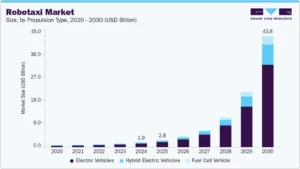
Several factors are supporting this growth:
- Rising demand for shared mobility in urban areas,
- Lower operating costs from automation,
- Policy support for low-emission transport, and
- Increased investment from technology and automotive companies.
Lucid’s technology may offer specific advantages in this space. Its long-range battery systems can reduce charging frequency for fleet vehicles. This is important for robotaxis, which need to operate for long hours with minimal downtime.
Its premium status might allow for higher-margin services. This could include luxury ride-hailing or subscription-based mobility options.
ezstandalone.cmd.push(function () { ezstandalone.showAds(132); });
How Robotaxis Could Cut Transport Emissions at Scale
The expansion of electric robotaxi fleets could have a significant impact on emissions. Transportation makes up around 24% of global energy-related CO₂ emissions, says the International Energy Agency.
Electric vehicles already reduce emissions compared to gasoline-powered cars. When combined with shared mobility and autonomous operation, the impact can be even greater.
Shared electric autonomous vehicles could cut per-mile emissions by 60% to 80%. This depends on how electricity is made and how well the vehicles are used.
ezstandalone.cmd.push(function () { ezstandalone.showAds(133); });
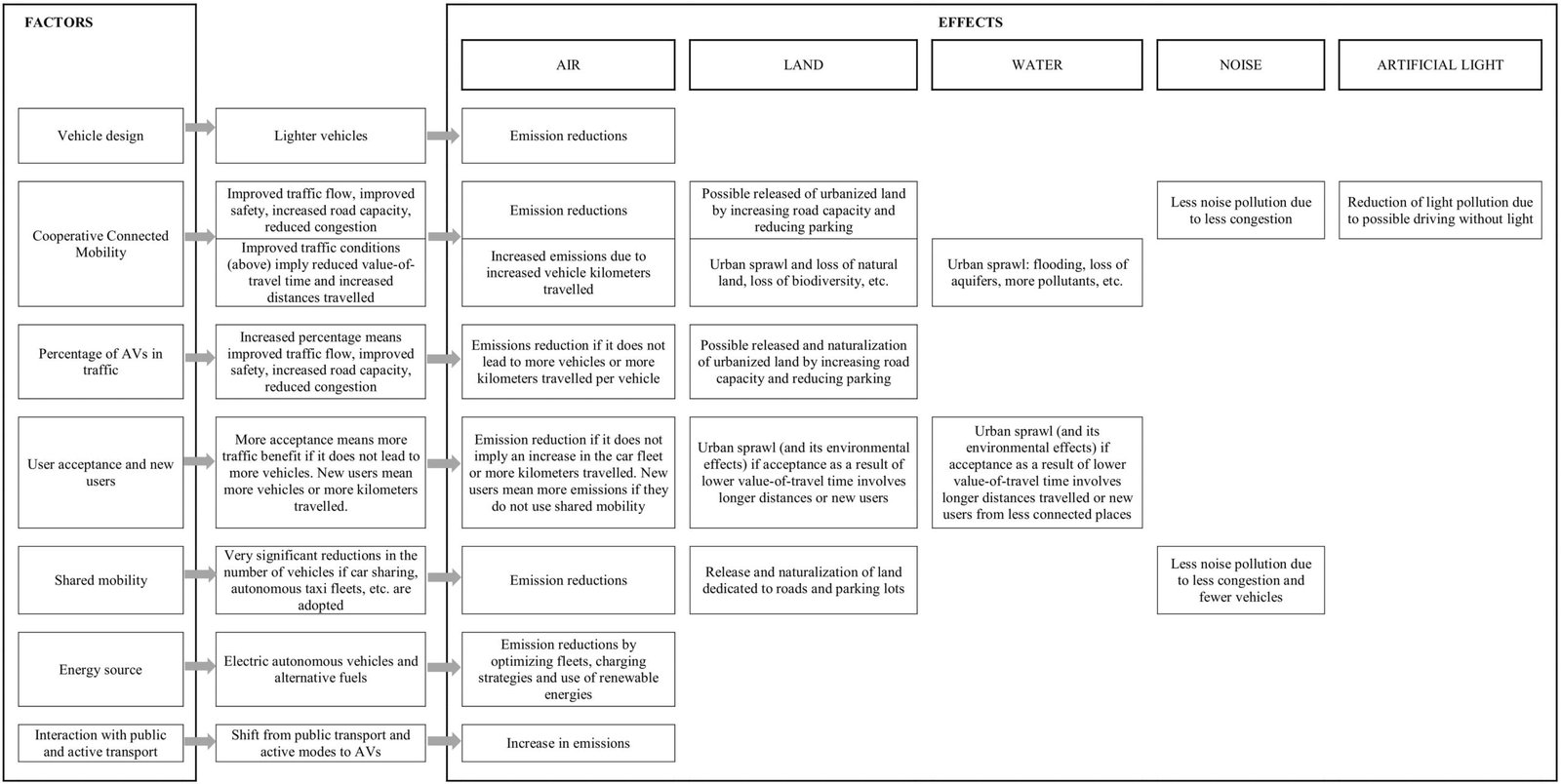
Lucid has also emphasized sustainability in its operations. Its manufacturing facility in Arizona incorporates energy efficiency measures and increasing use of renewable energy. EVs have zero tailpipe emissions, but their total lifecycle emissions vary. This depends on battery production and the electricity mix used for charging.
The company has set broader ESG goals. These include:
- Improving energy efficiency,
- Reducing supply chain emissions, and
- Supporting cleaner transportation systems.
More countries are setting net-zero targets. Thus, EV and autonomous technologies will be crucial for cutting transport emissions.
ezstandalone.cmd.push(function () { ezstandalone.showAds(134); });
High Stakes, High Costs: The Reality of Autonomous Tech
The autonomous vehicle sector has strong growth potential. However, it remains very competitive and technically complex. Companies should invest heavily in:
- Artificial intelligence and machine learning,
- Sensor systems such as lidar and radar,
- High-performance computing platforms, and
- Safety validation and regulatory compliance.
Urban driving environments remain a major challenge. Autonomous systems must handle unpredictable traffic, pedestrians, and changing road conditions.
ezstandalone.cmd.push(function () { ezstandalone.showAds(135); });
This has led many companies to form partnerships to share costs and risks. Lucid’s collaboration with Uber reflects this trend. Both companies can speed up development and deployment by combining vehicle expertise with a proven mobility platform.
At the same time, regulatory frameworks for autonomous vehicles are still evolving. Different regions have different rules, which can slow large-scale deployment.
Lucid will need to balance innovation with compliance as it expands into new markets.
ezstandalone.cmd.push(function () { ezstandalone.showAds(136); });
Market Trends in EV and Autonomous Investment
The broader EV market continues to grow, but at a more measured pace than in previous years. Global EV sales reached about 17 million units in 2024. That represents roughly 20% of total car sales worldwide, says the International Energy Agency.
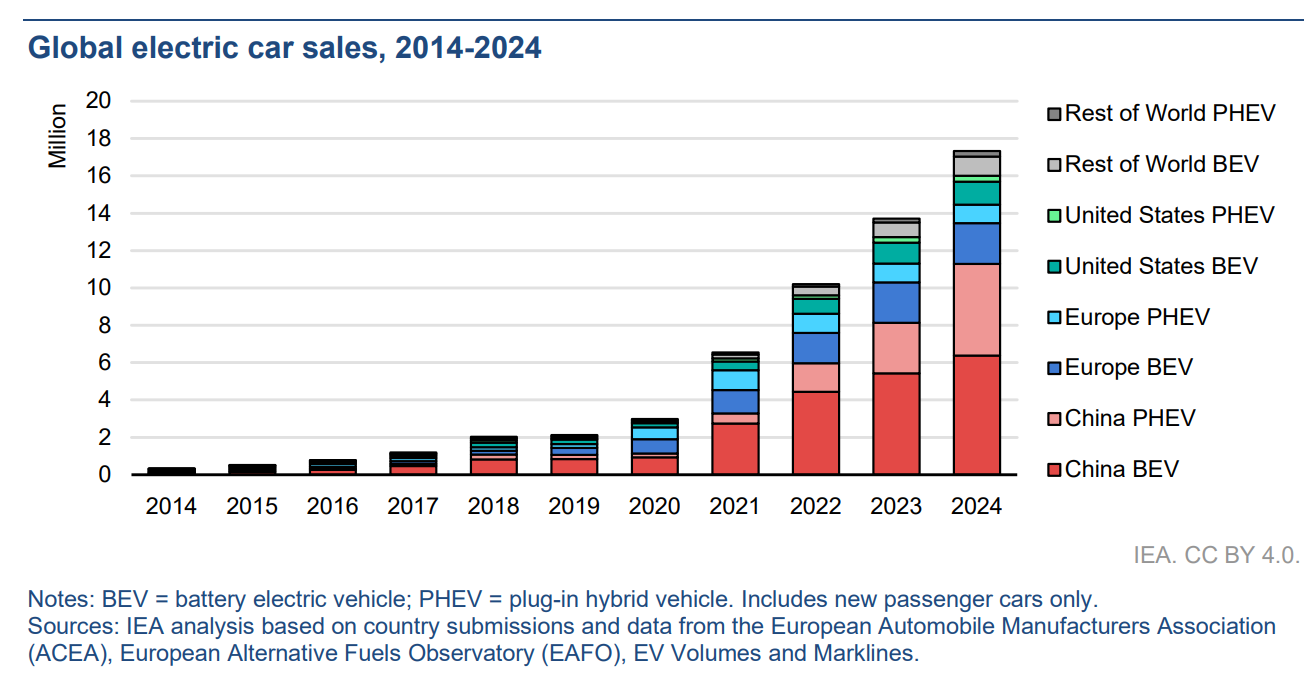
Growth is expected to continue, supported by government policies, falling battery costs, and expanding charging infrastructure. However, competition has intensified, with both new entrants and established automakers investing heavily.
At the same time, investment is shifting toward software and mobility services. Autonomous driving is viewed as a major long-term value driver. It can create steady revenue from ride-hailing and fleet services.
ezstandalone.cmd.push(function () { ezstandalone.showAds(137); });
Lucid’s strategy reflects this shift. The company plans to combine EV manufacturing with autonomous technology and partnerships. This will help it adapt to future mobility trends.
Lucid’s High-Risk, High-Reward Bet on Mobility’s Future
Lucid Motors’ leadership change and $1 billion-plus funding round mark a turning point in its growth strategy. The company is moving beyond luxury EV manufacturing to focus on autonomous driving and shared mobility.
The investment provides financial support for technology development and expansion. Partnerships with companies like Uber offer a pathway to market for future robotaxi services.
ezstandalone.cmd.push(function () { ezstandalone.showAds(138); });
At the same time, the move aligns with broader industry trends. Automakers are increasingly integrating electrification, automation, and digital services into their business models.
Lucid’s success will depend on its ability to scale autonomous technology, manage costs, and compete in a crowded market. It must also navigate regulatory challenges and maintain its brand in the premium segment.
If successful, the company could play a role in shaping the future of transportation—where electric, autonomous, and shared mobility systems work together to reduce emissions and improve efficiency.
ezstandalone.cmd.push(function () { ezstandalone.showAds(139); });
As the global transition to low-carbon transport accelerates, strategies like Lucid’s highlight how technology and capital are converging to redefine the automotive industry.
The post Lucid Motors Raises $1B and Names New CEO to Accelerate Robotaxi Push appeared first on Carbon Credits.


