The last few years have been pretty brutal for cultivated meat, but can a leaner, meaner, pet food-focused approach prevail?
UK cultivated meat startup Meatly is commissioning a new production facility running 20,000-liter vessels as it seeks to prove it can achieve commercially viable unit economics at industrial scale.
The company, which raised a £10.4 million Series A round earlier this year, expects to move into the site shortly and says the project will require just £3-4 million in capex—a fraction of the cost spent by first wave companies, CEO Owen Ensor told AgFunderNews.
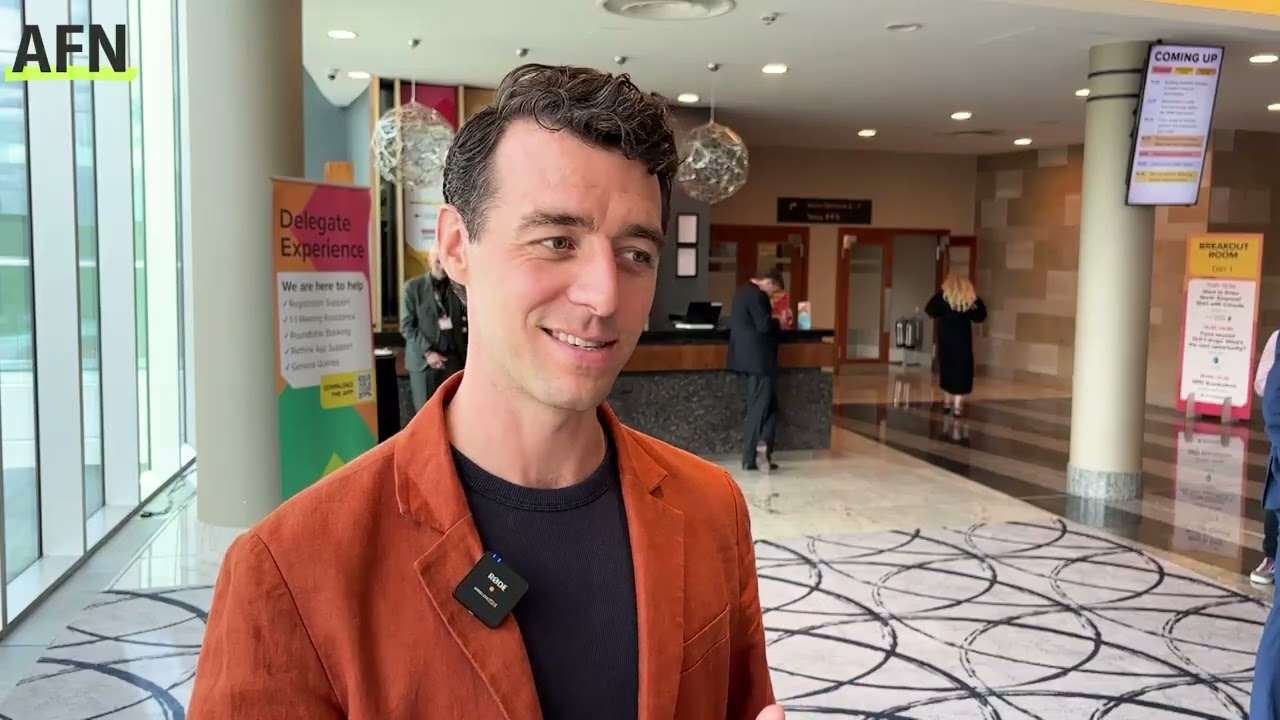
AgFunderNews (AFN) caught up with Ensor (OE) at the Future Food-Tech summit in London to discuss what cultivated meat still has to prove on cost and scale, Meatly’s capital-efficient approach to biomanufacturing, and why he believes pet food offers an attractive route to mass-market commercialization.
AFN: What does the cultivated meat industry need to prove now to turn things around?
OE: I think we’re very fortunate to be a wave two cultivated meat company, and I think if you look at the last 10 years in which the industry has been around, we’ve done a lot. We’ve proven the products can taste wonderful. We’ve proven whether we can scale up. We’ve proven we can get regulatory approval. We haven’t yet proven that we can scale and reach price parity, and so that is the big challenge now.
What a lot of these early companies did was raise and build on ambition and not on the actual technical foundations that they needed. We spent the last four years in a small lab with a small team, figuring out what’s the lowest possible cost we can do this at, and now we’re looking to scale.
As a result, the facility we’re building now is about £3-4 million in capex, rather than $30-40 million, or even $300 to $400 million that some other companies have spent, and so that is really encouraging for us, and it’s really encouraging for our investors.
AFN: Has investor sentiment soured on the whole cultivated meat sector?
OE: I think on the investor landscape, it’s hard across the board at the moment. Everything is going into AI so foodtech [investment] is down, particularly in cultivated meat.
But it’s really about the story, and if you can say here is our technical progress, here is where our costs are at, here is why we can scale up, here’s the commercial interest we have, there is still money around. It’s just much, much harder than it used to be in 2018, 2019, where they were throwing money at you, and it was just valuation that was the consideration.
A lot of our strategy is how to be incredibly simple. How do we make the process simpler? How do we be very focused on a few key technical challenges that really need to be solved? And how do we be very fast and capital efficient? And that’s how we sold Europe’s first [cultivated meat] product, having spent £5 million rather than £500 million.
AFN: Tell me about your latest progress…
OE: In April this year, we raised a £10.4 million Series A from three top tier investors: JamJar Investments, Oyster Bay Capital, and Clean Growth Fund, as well as follow-on investment from Agronomics and Jim Mellon, one of our early investors. And so with that, we’re now scaling up.
We started fit out of that site very soon after closing. We’re moving in in the next few weeks, and in that site we’ll be able to run to a 2,000-liter [bioreactor] and a 20,000-liter vessel.
AFN: If you can get things running successfully at 20,000 liters, what will that prove?
OE: This is the inflection point for us. Running at 20,000-liters is the largest scale we ever need to go to. And if we do it in one vessel, then we can do it in numerous 20,000-L vessels running simultaneously. And so with this site, in the next two or so years, we aim to prove commercially viable unit economics at 20,000 liters.
AFN: So let’s just say you prove your tech at 20,000 liters. Would you seek to scale up in-house or with a partner, and who will fund the capex?
OE: We probably would do it ourselves. What we want to avoid is using equity financing to build large-scale industrial facilities. So we would look at an array of options, whether that’s debt and project financing or whether that’s a joint venture model with a pet food manufacturer or a processor.
AFN: What still has to improve on the efficiency front to get to compelling unit economics?
OE: What we’ve done in the last four years, and what the team has done an incredible job of with [Dr.] Helder [Cruz], our chief science officer, is building the fundamental technology blocks we need.
There’s the low-cost media, the low-cost bioreactor and some low-cost bioprocesses around that, and we’re very confident in the foundations we have.
There are three things we need to do now. First, there’s a bit more optimization to be done on those [three areas above]; second we have to build consistency, so how do we maintain sterility, and maintain control of those processes so we can do them every single week in a uniform manner; and then finally scaling up. So [Australian cultivated meat startup] Vow Foods has gone to 20,000-liters and apparently 30,000-liters and Biopharma has gone to 20,000 and 30,000-liters, so we know it can be done, we just need to do it with our processes and equipment.
AFN: Why have you focused on pet food?
OE: We love being in pet food, we have a lot of interest and support from pet food manufacturers and retailers. Pets at Home, the UK’s largest [pet food] retailer, is one of our earliest investors and biggest supporters, so we have a lot of commercial interest and traction in the pet food world.
It is a market which is booming, and it’s increasingly premium. But we want this to be a mass market product, so we have to get the cost down below £10 per kilogram, which you can do in premium pet foods relatively easily. And so that is where we all need to be targeting.
We don’t want to scale a process which is £50 or £100 per kilogram and only suitable for Michelin-star restaurants.
AFN: What is your basic proposition to pet food companies?
OE: Initially, we talked about offering consumer benefits and commercial benefits. So the consumer benefits are sustainability, animal welfare, and health, because we’re not using antibiotics, steroids, or hormones.
But we also have commercial benefits. So this is a completely controlled, traceable supply chain. Particularly in pet foods, there are often opaque supply chains, and contamination and product recalls are a big challenge.
These are challenges we can help solve because we have a controlled, traceable supply chain and production process. We also have a 24-month shelf life, which is radically better than any traditional meat product.
When I started the company five years ago with [key investor] Agronomics, and when the industry started 10 years ago, we were talking about these trends of there not being enough land on Earth to feed the population, about the meat supply chain being very volatile. Those are still true, and we still face the same challenges.
And whether politicians want to try and ban this or limit this, they’re going to have to answer those same fundamental questions.
So I think in the next five or 10 years, when we start seeing that constraint really come in…. you’re already seeing it; people discuss it with the mega El Niño that will be a real test of our food supply chains… I think having traceable, controlled production methods like we have is going to be increasingly attractive.
Further reading:
Cultivated meat deep dive: After the crash, who’s still standing?
The post 🎥 Meatly bets on 20,000-liter scale to prove cultivated meat economics appeared first on AgFunderNews.