

Summary:
Extended Producer Responsibility (EPR) regulations can drive commercial growth rather than act as a defensive tax. By leveraging durable refill shells, flat-packed paperboard inserts, and modular packaging grids, brands can cut freight costs by 60%, streamline assembly lines, reduce tax liabilities, and elevate the unboxing experience without sacrificing luxury.
When brands approach Extended Producer Responsibility (EPR) regulations, they often view compliance as a defensive tax—a set of rules to follow to avoid penalties. But when we shift our mindset from “scary regulations” to “tactical design solutions,” we unlock an entirely different reality.
Zenpack Co-founder Leo recently co-hosted a webinar with rePurpose Global on how brands can navigate evolving EPR regulations without compromising luxury or margins. Watch the full webinar replay here. Here are a few key insights from the session.
How Can Refill Systems Turn Compliance into a Growth Engine?
A refill system isn’t just an elegant way to reduce single-use materials; it is a powerful product and business solution that improves a brand.
Turning Packaging Costs into Permanent Assets
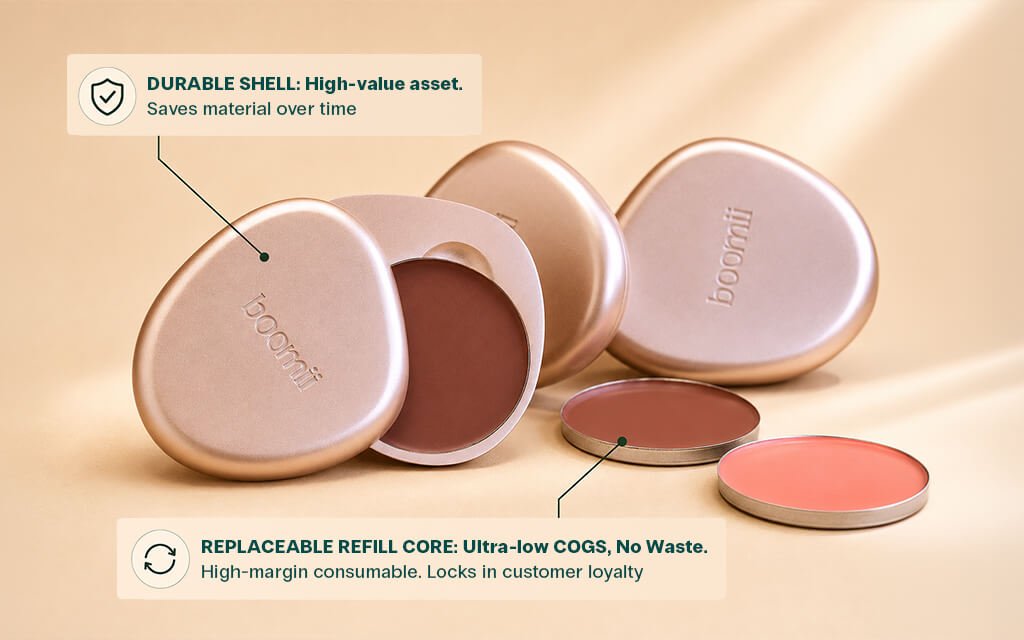
In traditional cosmetics or personal care packaging, the entire container is thrown away after a single use. This means brands must constantly pay for high-end molding, custom finishes, and complex assembly for a packaging that’s meant to be tossed away.
Pairing a durable outer shell with replaceable refill cores completely changes the math. The outer casing becomes a permanent brand asset in the customer’s room, while the actual consumable refill core is stripped down to minimal materials. Brands can lower ongoing manufacturing costs, simplify production, and stop throwing Cost of Goods Sold (COGS) into the landfill.
The Habit Loop That Drives Retention
Physical refill systems create built-in product compatibility. Just as a razor handle demands a specific blade, or a coffee machine requires a specific pod, a premium outer shell like Boomii naturally encourages consumers to buy the brand’s refill cores.
Instead of chasing a new customer for every single purchase, the design itself guides them into a recurring purchase loop. This lowers customer acquisition costs and boosts lifetime value.
Luxury and Low Waste Can Coexist
A big win of a tactical refill design is that less single-use material yields a more premium experience.
Sustainable packaging often gets a bad reputation for feeling cheap or flimsy. A refill system flips this stereotype. Because the outer casing is built to last, brands can invest in premium materials, magnetic closures, and polished finishes.
Why Replace Traditional Foam Inserts with Paperboard?
Moving from foam inserts to precision-folded paperboard isn’t just an environmental win—it’s a driver for cost reduction, shipping efficiency, and brand perception.
Squeezing the Freight Air Out of Logistics
Traditional foam inserts are expensive to ship and store because brands are essentially paying for transport and warehouse air. They cannot be compressed; they take up massive volumes, and they drive up inbound shipping costs before a single product is even packed.
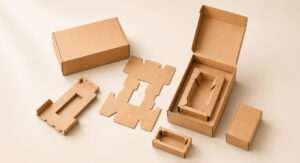
By contrast, engineered paper inserts can be stored and shipped completely flat. This simple structural change is a logistics gamechanger:
- The Freight Win: Zenpack helped Flaviar switch from bulky foam to flat-folded corrugated inserts saved up to 60% in shipping costs.
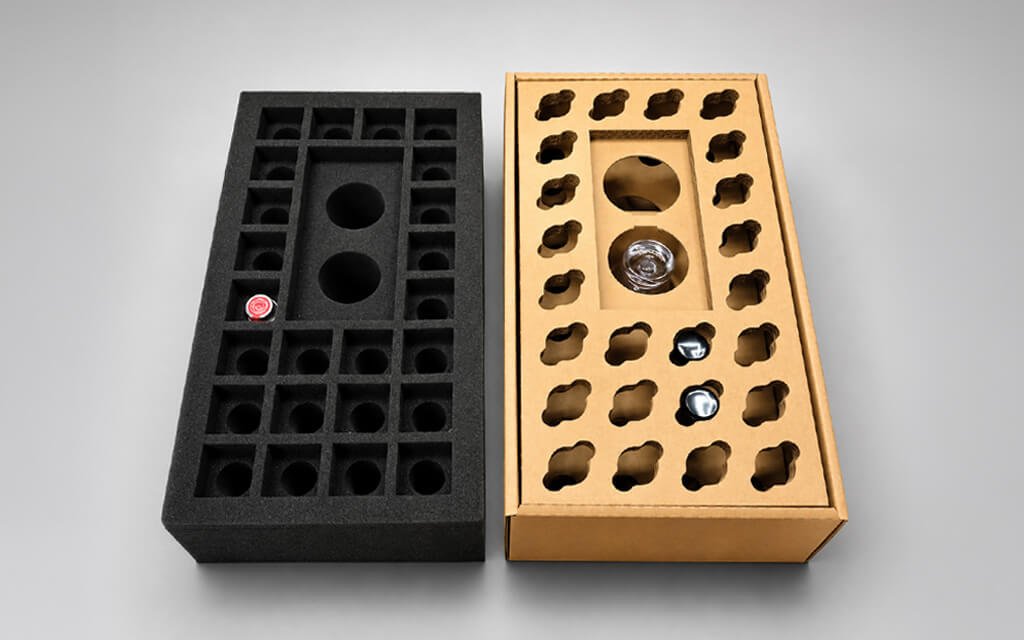
- Fulfillment Ease: For small teams managing thousands of orders, flat-packed inserts can be engineered to pop open and lock into place with a single motion. It turns a tedious assembly line into a process so simple that a single person can fulfill an order in minutes.
Paperboard Safeguards Fragile Products
Paperboard can protect heavy, fragile glass just as effectively as plastic foam when engineered for physics rather than raw bulk.
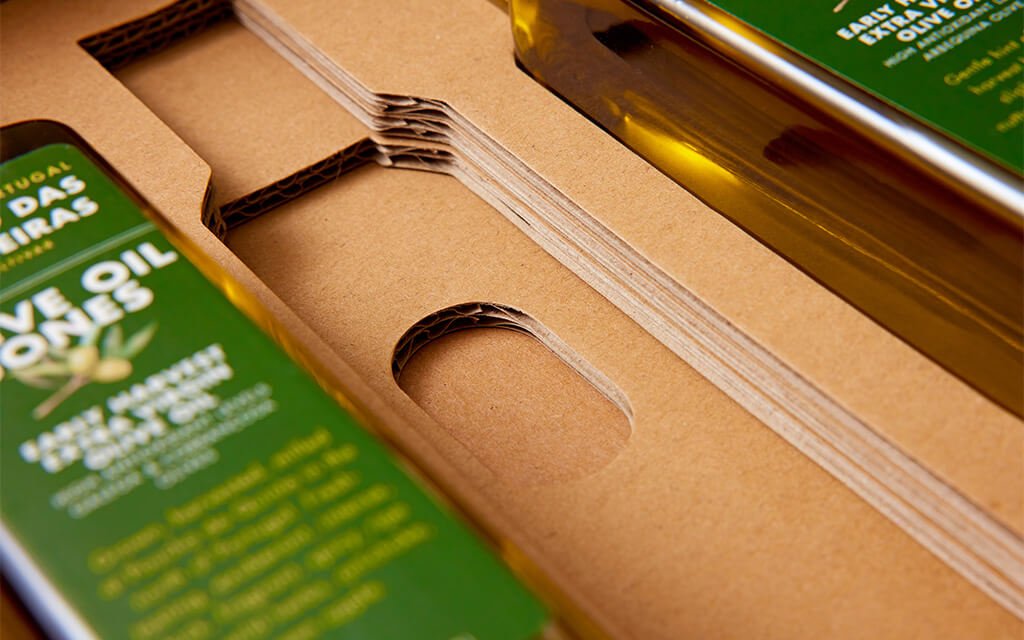
When Olive Oil Jones needed to ship fragile glass bottles plastic-free, they turned to clever structural geometry:
- Triangular Neck Locks: Suspends the fragile bottle neck to absorb movement without putting direct pressure on single stress points.
- Corrugated Crumple Zones: Circular-cut air pockets at the top and bottom act as built-in shock absorbers during drops.
- Friction-Fit Precision: Custom cutouts keep products completely immobile while ensuring labels always face forward for a flawless reveal.
Turning Utility into an Unboxing Experience
Moreover, paperboard is a high-fidelity marketing canvas. Because inserts start as flat sheets, brands can print them edge-to-edge with brand colors, stories, or setup instructions using eco-friendly soy inks. Instead of unboxing dusty gray packaging, customers are greeted by an intentional, beautifully branded ritual that immediately elevates the product inside.
How Can a Unified Packaging System Be More Compliance-ready and Scalable?
When brands look at sustainable transitions, they often treat each product’s box as an isolated design project. This custom-by-SKU approach will increase tooling costs, complicate the warehouse, and slow down the packing line.
Instead of designing individual boxes, Zenpack helps brands build a unified packaging system. Here’s how a standardized structural language turns packaging into a scaling advantage:
Built for Compliance
A standardized paperboard packaging system skips the glue, plastic trays, and extra tape entirely. By relying on precision die-cuts:
- The shipping footprint is dramatically lighter, shrinking overall carbon impact.
- The material usage is stripped down to the absolute bare minimum necessary to protect and present the product, reducing EPR liabilities.
Standardizing the Assembly Line
If a packaging design is complicated to construct, the fulfillment line will suffer from bottlenecks, packing errors, and inconsistent presentation.
Systematized inserts use pre-creased, flat-folding geometry that pops up into rigid nests with a single motion. There’s only one way to fold it, and only one way the product fits inside. The fulfillment team stops wasting time with bubble wrap, and customers unbox a clean, perfectly organized product every time.
Modular Foundation for Fast Scaling
For brands like APTO, growth means adding more SKUs, expanding product lines, and increasing order volumes.
A systematic approach to packaging provides a modular foundation that scales seamlessly with the business. Instead of designing a completely new packaging format for every single product, APTO uses a cohesive visual and structural grid.
This structural modularity allows the brand to order packaging materials in larger, more cost-effective volumes, simplifies warehouse inventory management, and builds instant brand recognition on the shelf or on social media unboxing videos.
Conclusion
When approached through the lens of structural engineering, compliance becomes an avenue to optimize margins, lower shipping fees, and drive long-term customer loyalty. By replacing single-use containers with durable refill shells, swapping freight-heavy foam for flat-pack paperboard, and aligning SKUs into unified packaging systems, brands can meet sustainability mandates without ever sacrificing premium design.
Extended Producer Responsibility (EPR) is a regulatory framework that holds brands financially accountable for the end-of-life environmental impact of their packaging. Design strategies that minimize plastic usage, reduce overall material weight, and utilize easily recyclable materials (like paperboard) directly lower EPR tax liabilities and compliance penalties.
Yes. When designed using structural engineering principles, paperboard can match or exceed the protection of plastic foam. Structural elements like triangular suspension locks, corrugated crumple zones, and engineered air pockets absorb drop impacts and disperse shock without relying on raw plastic bulk.
Foam inserts are shipped pre-molded, meaning brands spend money transporting and warehousing empty volume (“shipping air”). Flat-packed paperboard inserts ship compressed and flat, drastically reducing storage footprint and cutting inbound freight costs by up to 60%.
Designing a completely unique box for every new SKU leads to fragmented ordering, higher custom tooling costs, complex warehouse inventory, and slower assembly lines. A unified, modular packaging system uses standardized outer dimensions and interchangeable inserts, enabling bulk material purchasing and faster, error-free fulfillment.
The post Merging EPR Compliance with Premium Design appeared first on Zenpack Blog.


