
Nutritionists have welcomed the emphasis on reducing consumption of highly processed foods in the new Dietary Guidelines for Americans, but say their emphasis on animal protein and fat “dismisses 75 years of research favoring diets higher in plant foods.”
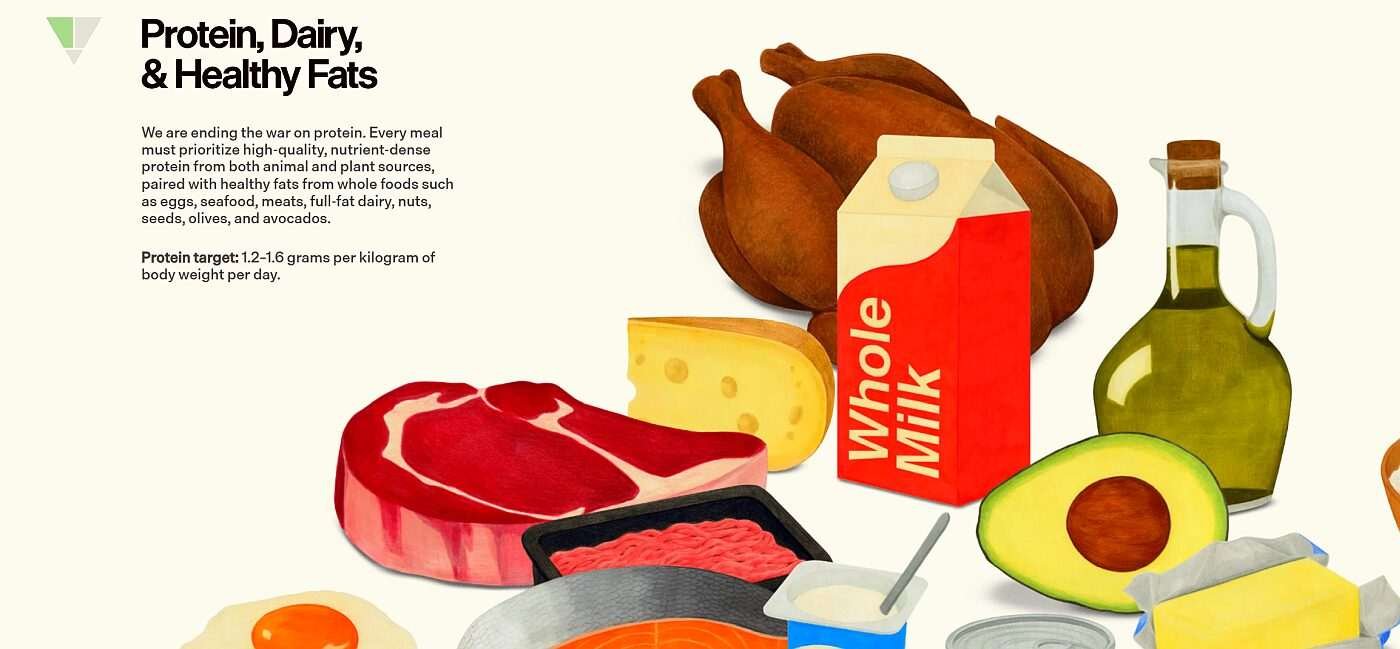
The 10-page document, and accompanying inverted food pyramid, was pitched by USDA secretary Brook Rollins this morning as a bid to “realign our food system to support American farmers, ranchers, and companies who grow and produce real food,” although some critics have challenged her claim that the Trump administration is “working to ensure all families can afford it” given its recent moves to cut food assistance and access to healthcare.
In a nutshell, the guidelines encourage Americans to:
- Prioritize more protein: “We are ending the war on protein.” New advice advises 1.2-1.6g protein per kilo of bodyweight per day vs the current Recommended Dietary Allowance (RDA) of 0.8 grams per kilogram of body weight per day. The text advises consuming a “variety of protein foods from animal sources, including eggs, poultry, seafood, and red meat, as well as a variety of plant-sourced protein foods, including beans, peas, lentils, legumes, nuts, seeds, and soy,” although the accompanying graphic highlights animal sources in the protein section.
- Eat dairy with an emphasis on full-fat products
- Eat ‘healthy fats” and when cooking with or adding fats to meals, ‘prioritize oils with essential fatty acids, such as olive oil. Other options can include butter or beef tallow.’
- Prioritize whole grains
- Limit highly processed foods, added sugars, and refined carbs
- Eat more high fiber and fermented foods
- Eat 3 servings of veg and 2 servings of fruit daily, which Prof. Marion Nestle claims is technically less than the 2.5 cups and 2 cups respectively recommended previously, although it’s not clear that the official advice is actually to eat less fruit & veg
- Limit portion sizes of 100% fruit or veg juice or mix with water
- Limit foods and beverages that include artificial flavors, petroleum-based dyes, artificial preservatives, and low-calorie non-nutritive sweeteners.
AMA: More research needed on protein consumption and sources
The American Heart Association welcomed the focus on limiting added sugars, refined grains, highly processed foods, saturated fats and sugary drinks, but said more research was needed on “both the appropriate amount of protein consumption and the best protein sources for optimal health.
“Pending that research, we encourage consumers to prioritize plant-based proteins, seafood and lean meats and to limit high-fat animal products including red meat, butter, lard and tallow, which are linked to increased cardiovascular risk.”
The Plant Based Foods Association and Plant Based Foods Institute in turn welcomed the new guidelines’ emphasis on “high-quality, nutrient-dense foods” but said they did not fully reflect scientific advice on the health benefits of plant-forward dietary patterns.
“We are pleased the Dietary Guidelines recommend Americans prioritize protein and that families can get that protein from nutrient dense meat and poultry. Secretary Rollins and Secretary Kennedy’s leadership have simplified the Dietary Guidelines making it clear that meat is a protein powerhouse which plays a vital role in healthy diets.” Julie Anna Potts, president, Meat Institute
Marion Nestle: Most Americans get enough protein already
Given the current obsession with adding protein to all manner of foods and beverages, some nutritionists expressed surprise at the phrase “We are ending the war on protein” on the realfood.gov website, although some have argued that the current RDA was designed to prevent deficiency rather than optimize health.
Marion Nestle, PhD, M.P.H., Paulette Goddard Professor of Nutrition, Food Studies, and Public Health Emerita at New York University welcomed the emphasis on cutting highly-processed foods, but claimed that the “prioritization of protein makes no sense” given that “most Americans already eat plenty.”
She added: “If you increase the amount of protein, meat, and full-fat dairy in your diet, you will not be able to keep your saturated fat intake below [the recommended] 10% of calories, and will have a harder time maintaining calorie balance [as fat has 9 cals/gram vs 4 cals/gram for protein and carbs].”
Meanwhile, the “fats recommended as sources of essential fatty acids—olive oil, butter, and beef tallow—have little or no essential linoleic or alpha-linolenic acids,” she pointed out. “For those, seed oils, which are not mentioned in these guidelines, are much better sources. The prioritization of animal-based as opposed to plant-based is inconsistent with research on diet and health.”
Aside from the “excellent advice” to reduce intake of highly processed foods, she said, “These guidelines take us back to the diets of the 1950s when everyone was eating lots of meat and dairy and not worrying much about vegetables, and heart disease was rampant. I’m all for eating whole foods but these guidelines dismiss 75 years of research favoring diets higher in plant foods.”
CSPI: ‘Blatant disinformation’
Health advocacy group The Center for Science in the Public Interest, meanwhile, said the new protein advice “undermines established processes” for setting recommended daily allowances for nutrients “in service of [HHS] Secretary [Robert F.] Kennedy’s predetermined beliefs.”
The document also “spreads blatant misinformation that ‘healthy fats’ include butter and beef tallow,” claimed the CSPI, although the National Milk Producers Federation said its emphasis on full-fat dairy reflected science suggesting that saturated fat in dairy is not the same as saturated fat in some other foods, adding that, “Not all fats are created equal.”
Lisa Young: A welcome emphasis on ‘whole unprocessed foods’
Nutrition consultant Lisa R. Young, PhD, RDN praised the increased emphasis on whole, unprocessed foods and noted that the “recommendation to limit added sugar to about 10 grams per meal is more specific and more stringent than in previous versions of the guidelines.”
However, she too queried the “strong emphasis on animal-based protein sources, despite substantial evidence showing that plant-based proteins are associated with better long-term health outcomes. The research for prioritizing beans, lentils, nuts, and seeds, over animal protein is not well reflected here.”
She added: “The higher protein recommendations also raise questions, as most Americans are not protein deficient. Increasing protein intake without parallel guidance on strength-based exercise may be unnecessary, and the upper range of the recommended intake may be higher than needed for most people.”
Farm Action: How will this translate into food and ag policy?
Nonprofit Farm Action praised the guidelines’ emphasis on eating fruits and vegetables throughout the day but said food policy “must strengthen markets for farmers growing real food for people, not keep rewarding highly processed products and consolidated supply chains. Farm Action will be watching closely to see how this translates into procurement decisions and real access for families.”
Further reading:
🎥 Tufts MD on GLP-1 and the protein obsession: ‘I worry we might be missing the mark’
🎥 Collaborate or die: Hacking the next generation of healthy foods at MISTA
‘Stunning’ MAHA report draws praise and fury: Stated goals undermined by GOP policies, say experts
RFK Jr: ‘He believes in nutrition, but MAHA and MAGA don’t really seem to square’
Farmers sound alarm on anti-seed oil rhetoric and escalating trade tensions
Fermentation will power next wave of natural colors say startups as FDA targets synthetic food dyes
The post New US dietary guidelines elevate meat and full-fat dairy, ignite protein debate: ‘Most Americans already eat plenty’ appeared first on AgFunderNews.


