

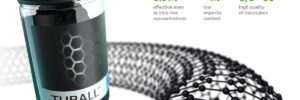
OCSiAl is contributing its TUBALL single-wall carbon nanotubes to ELEVATE, a Horizon Europe project that aims to develop aviation-grade battery cells exceeding 400 Wh/kg in specific energy—a level that is widely considered essential for commercially viable electric regional aircraft.
OCSiAl is one of 11 partners in ELEVATE. The consortium is combining silicon-rich anodes and dry-coated cathodes, and OCSiAl calls its nanotubes a key enabling material for both. Silicon stores far more lithium than graphite but expands substantially as it charges, so swelling and loss of electrical contact limit how much of it an anode can use. Dry coating makes electrodes without solvents.
Unlike conventional conductive additives, OCSiAl says, its nanotubes bridge active-material particles and reinforce the electrode structure. That raises electrical conductivity and mechanical stability, improves bending flexibility, reduces electrode swelling during charge and discharge and minimizes spring-back after calendering.
Aviation is the project’s first application, but OCSiAl expects the work to strengthen the competitiveness of Europe’s wider battery industry.
In June 2026, OCSiAl was named a supplier to PowerCo for its Unified Cell battery platform.
“At ultralow loadings, single-wall carbon nanotubes create conductive reinforcing networks throughout the electrode, helping overcome key challenges related to conductivity, mechanical integrity, and cycle life,” said Andrej Seniut, Head of Energy Projects at OCSiAl.
Source: OCSiAl


