
Farmers with funding from the Canadian Alliance for Net-Zero Agri-food (CANZA) are conducting trials on their farms to determine best practices to improve efficiency and reduce climate impacts.
Some of the first trials involve nitrogen use efficiency, including looking at encapsulated fertilizers and variable-rate nitrogen.
“A lot of farmers push to make sure they have enough nitrogen. The CANZA program allowed us to feel more comfortable doing variable rate nitrogen,” says Aaron Breimer, an independent agronomist with his company, Moose Ag and the agronomist for Van Osch Farms, who is helping them navigate the CANZA program.
Breimer uses numerous data points in his variable-rate nitrogen calculations, including satellite imagery, crop yield history and high-definition soil sampling. He says the CANZA program can help reduce the risk of experimenting with potential crop production practices.
CANZA, which is funded by some of the largest food processors and retailers in Canada, recently held its first in-person working day for farmers in Lucan, Ont., and hosted a tour of the nearby Van Osch operation.
The farmers heard from speakers on the soil health and water quality improvements that come with managing farms using sustainable practices.
There was also a workshop for the first cohort of farmers and agronomists going through the CANZA program.
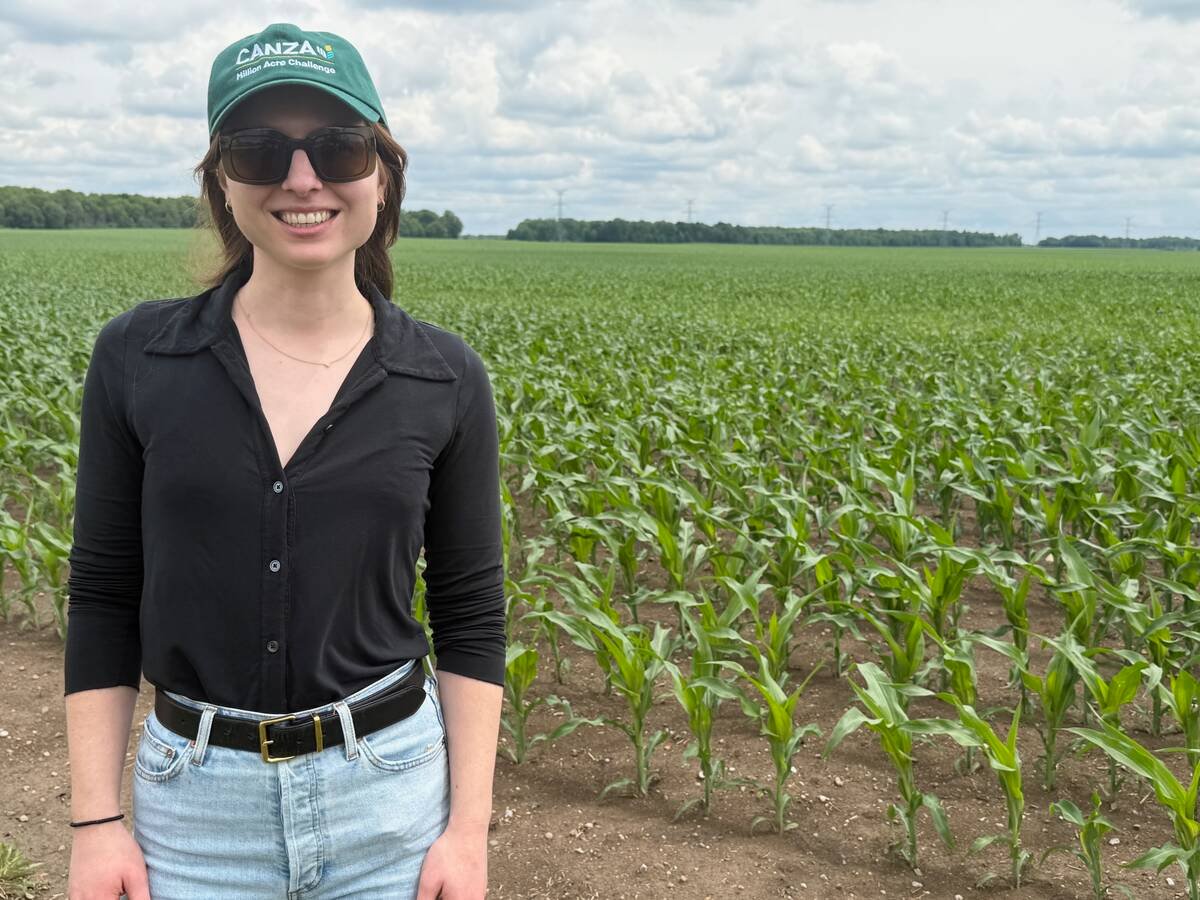
“We hosted our own workshop, just to give farmers an opportunity to share some insight and some feedback on how things have been going so far, and for us to give them some insight on what we’re trying to improve for next year and looking ahead to year two and future cohorts,” says Emily Robinson, manager of program implementation and partnerships, with CANZA.
In its first year, 2025 CANZA collected scientific data on more than 51,000 acres and engaged 75 farmers to test the trusted advisor system the program uses to validate processes and results with local agronomists and experts.
The first cohort involves 15,000 acres in Ontario, and those acres have been tested for soil organic carbon levels.
Soil organic carbon is a measure to gauge progress in the impact of different farming practices on carbon levels in soil.
“It’s been a really good opportunity for farmers who want to try something new on a subset of their acres, or maybe they’ve already done something on other fields, and they want to expand it across new acres,” Robinson says.
The program pays farmers in the first cohort over three years, with $31 per acre in the first year, $25 in the second year and $12.50 in the third year. The Certified Crop Advisors involved also get a payment.
The farmers also get access to their soil organic carbon data.
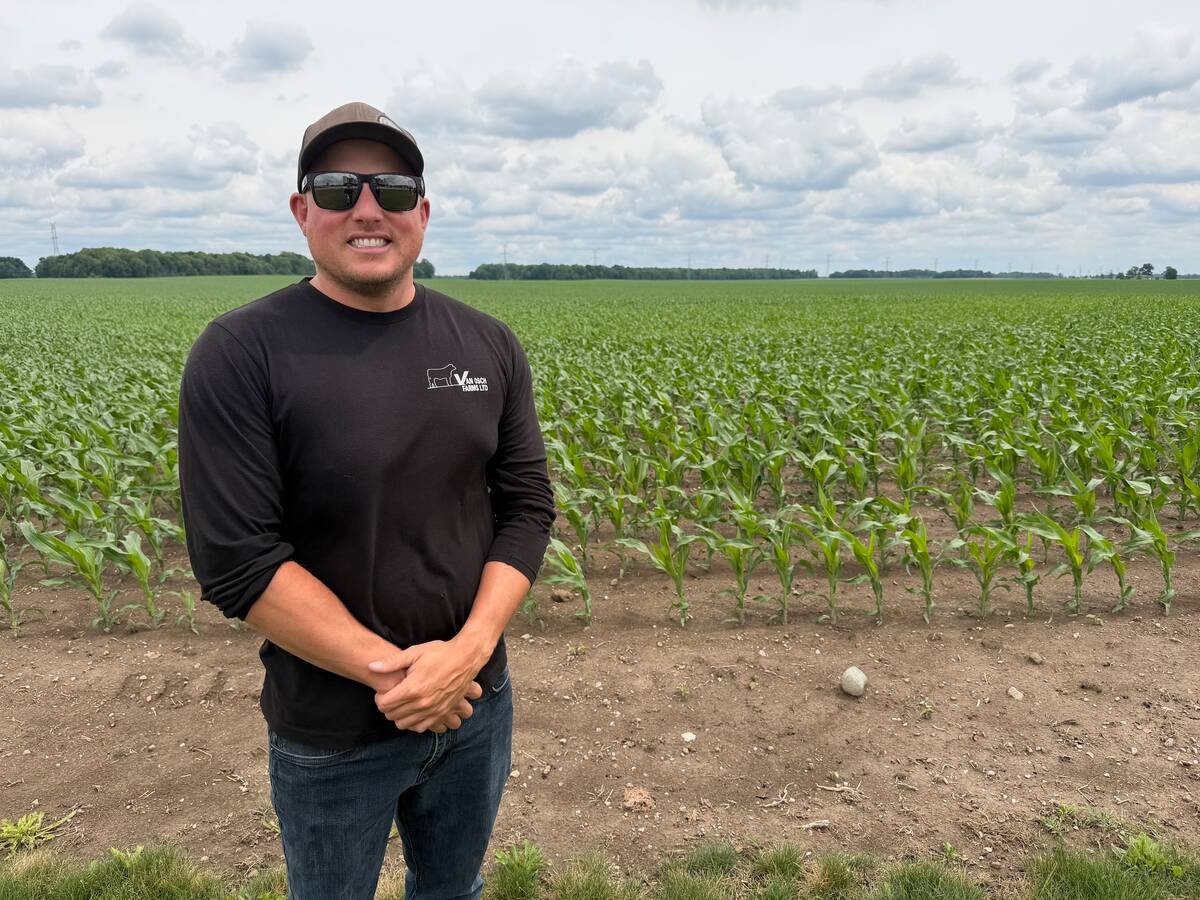
There were a lot of beef farmers in the room for the first CANZA workshop, as the Ontario Corn Fed Beef program has partnered with CANZA to help its members experiment with better soil health and nutrient management practices.
During the field tour at Van Osch Farms, Kurt Van Osch said the family farm plants 4,500 acres of corn for use in their feedlots.
They also grow edible beans and soft, white wheat in a three-crop rotation.
Breimer says he’s learned that maximizing yields in corn means putting more nitrogen on lower-organic-matter soils because of their inability to mineralize the nutrient compared to soils with higher organic matter.
Where corn might be struggling, such as in tougher clay soils, as are common in North Middlesex where the Van Osches’ farm is, “that’s where you need a kiss of a higher rate of nitrogen.”
The corn was planted with about 115 pounds of nitrogen, with 250 lbs of urea applied and incorporated with a pre-emergent herbicide, but more will be added when the corn reaches waist or shoulder height.
“We’ll probably come back with an average of between 60 and 80 lbs of nitrogen, depending on how much rain this crop gets over the next few days,” says Breimer.
Heavy rains can cause denitrification and loss of the nutrient.
The corn was planted in the previous year’s wheat fields. Manure was spread from the farm’s beef feedlot onto the wheat fields after harvest. A cover crop was also planted and incorporated with the manure, which would also create some nitrogen credit.
The post On-farm nitrogen management trials mark CANZA first appeared first on Farmtario.


