
Significant change to a system often comes when it’s least expected.
That’s the case with the positive, dramatic demand for protein affecting milk production and pricing in Canada.
The change underway, with more potential depending on how long the protein trend persists, is inside baseball and few consumers and mainstream media will notice, but it matters to farmers, processors, and others in the sector.
Benoit Basillais, the CEO of the Canadian Dairy Commission, was at the Lactanet Dairy Open Industry Forum recently, speaking about the impact of protein on the marketplace.
Basillais was clear that the way ahead would require collaboration and thought. He even mentioned the idea of quota based on protein levels, versus the current way quota is issued, in kilograms of butterfat. Basillais said he didn’t expect the industry would go that way, but it’s an interesting idea to contemplate.
That’s the kind of change being thrown around as dairy boards across the country push farmers to produce higher protein percentages in milk with significant changes to milk pricing for farms.
Farmers are excellent at meeting financial signals in the marketplace. In fact, they are known for collectively overshooting demand as individual farmers work to improve their income. When butterfat demand rose starting in 2019 and continuing to today, farmers used feeding strategies and genetics to boost butterfat levels of milk to never-before-seen levels. From the butterfat percentages being produced in Holstein herds, you’d think they’d changed to Jerseys.
As farmers focused on butterfat, protein percentage as a percentage of butterfat — an important ratio in the dairy world — declined. The marketplace now wants that decline reversed in the worst way.
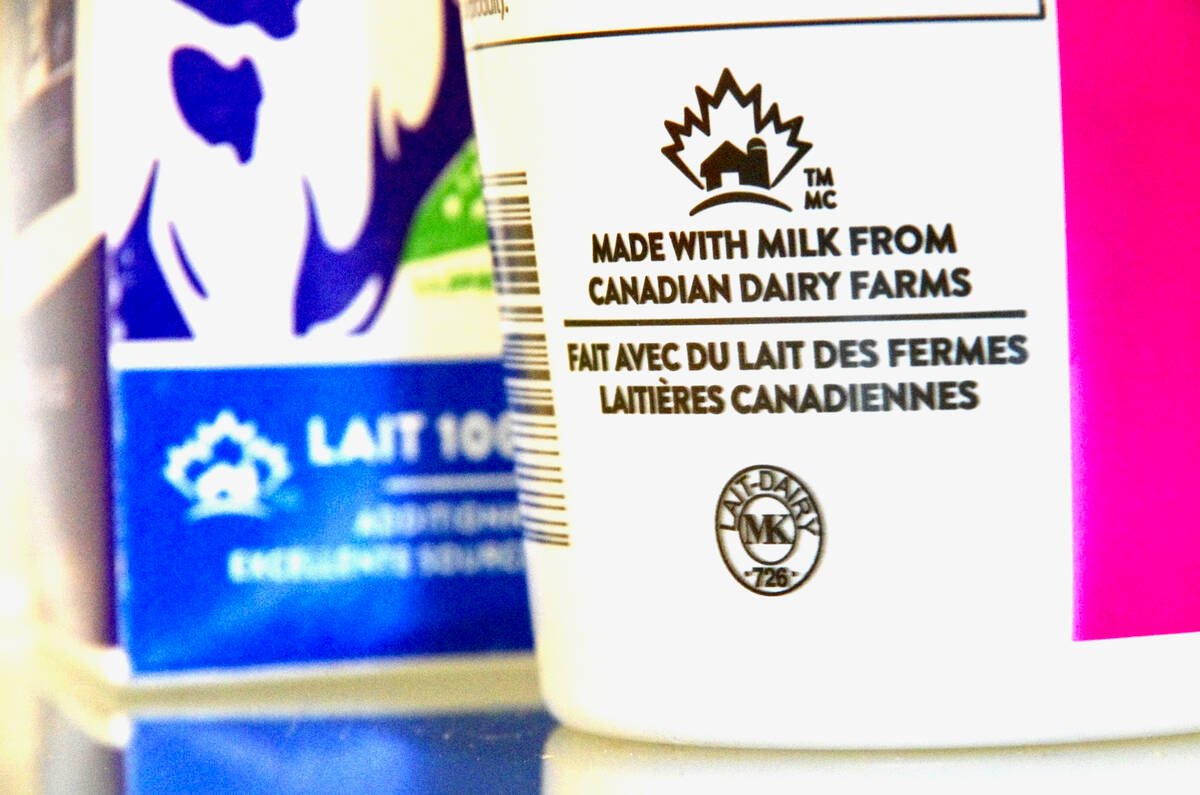
Labels on milk and other dairy products note their contents as coming from Canadian farms. Photo: Alexis Stockford
Demand keeps growing for the healthy and useful components of milk. Consumers are eating more dairy products, but not drinking more milk. It may be time for dairy farmers to realize that fluid milk (for a long time, the money-maker) is not the future. Milk solids other than butterfat are grouped into a label of Solids Not Fat. Even the name of the other components devalues them, being based on not being fat.
I expect we’ll soon see further breakdown of the increasingly important individual components of Solids Not Fat, especially the protein inside it.
Basillais also says he’s heard from more processors with interest in expansion or new plants than he had in the previous five years. That’s driven by the interest in protein fractions. Protein isn’t homogeneous, and as consumers consume more, they are also looking at the quality of proteins they eat.
The surge in demand for protein is good news all around for the dairy sector. Processors are interested. There’s more demand for milk and the great nutrients found in dairy products, and that’s good news for farmers.


