
When Ontario changes, agricultural marketing often changes with it.
Factors like increasing food costs, opposition to U.S. tariffs and a general surge in support for Canadian products have created opportunities for marketing agriculture in Ontario. The best thing to do may be to strike while the iron is hot and find a way to connect with consumers across the province while eyes are turned to agriculture.
WHY IT MATTERS
Following multiple rounds of U.S. tariffs, Canada has seen surging support for a buy Canadian movement, and Ontario farm groups are building campaigns to meet it. Agritourism operators are seeing the same lift.
These approaches often go beyond simply informing where food comes from, with targeted, data-driven approaches which meet the moment and target current consumer interests, from budget cooking to buying Canadian to health and wellness.
FOUR GROUPS, FOUR PLAYBOOKS
Ontario Pork
Hambassador program and Pig Mobile in classrooms and at fairs, plus partnered TikTok and Instagram creators making cooking videos aimed at Gen Z.
Ontario Federation of Agriculture
Homegrown, launched in 2021, focused on farmland preservation and local food, framing 319 acres lost a day as 58 city blocks or 797 hockey rinks.
Dairy Farmers of Ontario
Everybody Milk since 2022, the Milk Masters On the Move YouTube series, and the Pillow Pitcher shaped like the Ontario milk pitcher.
Grain Farmers of Ontario
We Are Grain Farmers, a social media video series profiling grain farmers across the province.
What, and how, is Ontario eating?
The first step to effective messaging is often finding a way to reach across the divide between consumers and agriculture. This can involve a closer look at data and statistics, meeting consumers where they are.
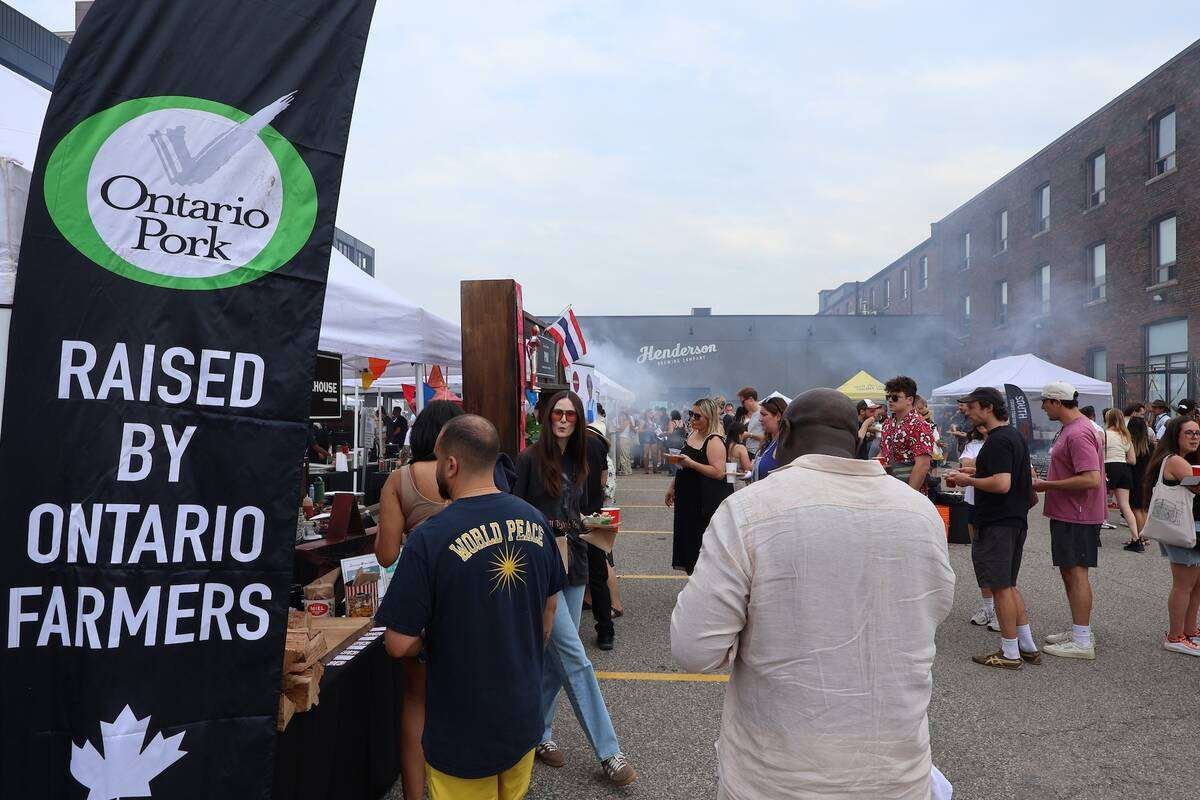
Ontario Pork’s marketing efforts include the Hambassador program and Pig Mobile, both of which act to educate the Ontario public about pig farming in settings like classrooms and fairs.
“The goal is to connect consumers, or the general public, just to get a better idea and understanding for them of where their food comes from,” said Julie Kuiack, the communications manager for Ontario Pork.
While those programs are still running, recent efforts have taken a modernized approach, reaching young Ontarians online in targeted ways.
As of 2021, around 83 per cent of the province’s over 14 million inhabitants lived in urban areas. Over one fifth lived in the Greater Toronto Area alone.
“There is always a disconnect between farms and the food on their plate,” Kuiack said
On the other side of that disconnect are trends and statistics ready to be capitalized on. Kuiack said Ontario Pork saw an opportunity to boost brand awareness among younger Ontarians through social media cooking videos.
According to a 2025 Ontario Pork report, Gen Z buys 60 per cent less fresh pork at the grocery store compared to the average consumer, often because they don’t know how to cook it.
“We really wanted to target that younger generation,” Kuiack said, “and how do we do that? Well, they’re online.”
She said the approach to reaching Gen Z required a focused, of-the-moment approach.
Fusion flavours and fewer myths

The younger generation, she said, may associate pork with “their grandma’s recipe that might not have been as moist as it should be,” but “now fusion flavours are more important.”
“So, incorporating, you know, a Vietnamese twist onto pork, or Mexican-style pork, so opening up different flavours.”
Videos from partnered TikTok and Instagram creators drew over half a million views in one month.
“We did some research on local folks here in Ontario hitting that demographic, but we also used an agency at the time who helped us partner up with folks that meet our messaging,” Kuiack said.
Several Instagram videos appeal to Gen Z interests by extolling the protein content and budget-friendly nature of Ontario pork. Others present nontraditional recipes like pork tacos, “marry me” pork chops and marinated pork chops served with rice.
In many videos, influencers make a clear effort to dispel the idea of pork being flavourless. One caption reads “pork isn’t bland, you’re just not using Ontario pork.”
Keeping it homegrown
The current “buy Canadian” movement has also provided an opening for Ontario farm groups.
Following the first round of U.S. tariffs, many Canadian consumers began purchasing Canadian products wherever possible. According to the Bank of Canada, as of the end of 2025, 56 per cent of Canadians said they were spending more on Canadian goods than before.
Tyler Brooks, Director of Communications and Stakeholder Relations at the Ontario Federation of Agriculture (OFA), said this movement has strengthened OFA’s core goal of encouraging the public to buy more locally grown goods.
“I think the most important thing right now with the geopolitical issues that we have going on is people want to buy Ontario,” Brooks said.
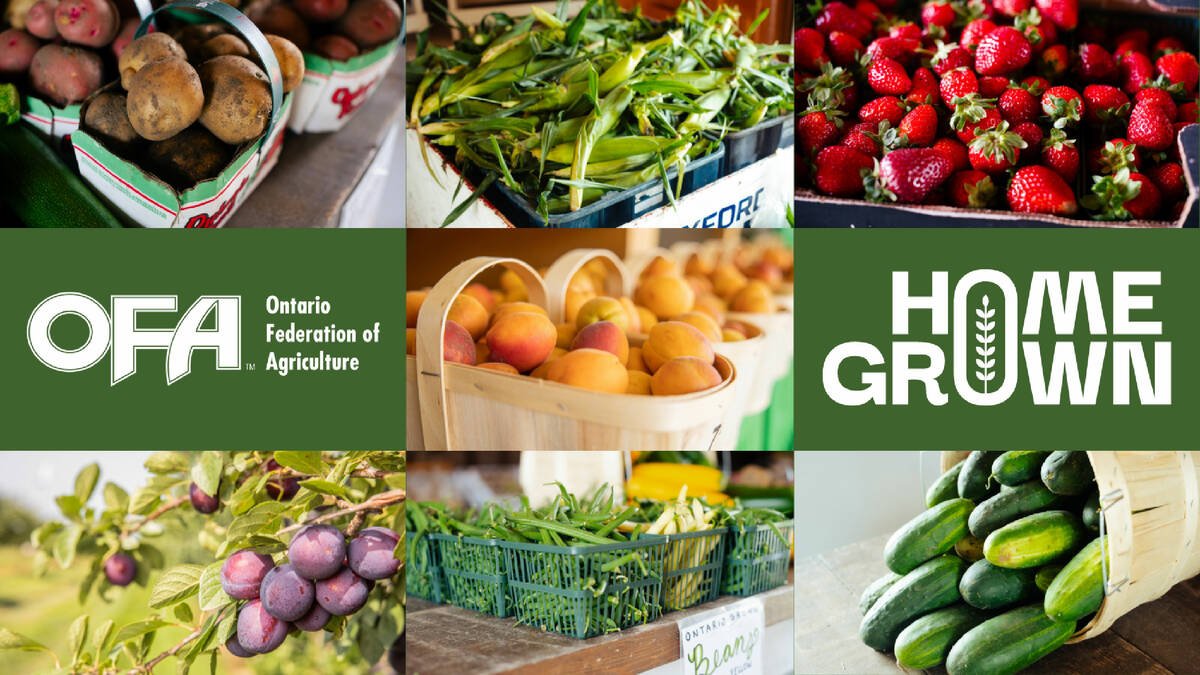
OFA connects with the public through its Homegrown initiative, started in 2021, which focuses on farmland preservation and local food. Brooks says a key part of the campaign’s messaging is meeting Ontarians where they are.
“The statistic is we lose 319 acres of farmland per day,” Brooks said. “So, how large is 319 acres? That’s what we try to get people to understand.”
“That’s 58 (city) blocks, to provide you with a little bit of context. It’s … 797 hockey rinks, and it’s utilizing that, those types of statistics, while also making it relevant to them.
“Nobody can really envision what 319 acres is, and most people can’t even envision what an acre is,” Brooks said. “Because why would you?”
Opportunities in health trends
Other groups, like the Dairy Farmers of Ontario (DFO), have found their way to consumer attention in more niche ways.
The group has long been a heavy advertiser in the province, including data-informed, targeted ads. Current campaigns like Everybody Milk and the YouTube series Milk Masters On the Move aim to highlight Ontario milk and its uses.
DFO recently revived its Pillow Pitcher– a pillow shaped like an iconic Ontario milk bag and pitcher, with the equally recognizable DFO milk logo. The Pillow Pitcher was available by draw to those who commented on social media posts about how milk is a part of their nighttime routine.
In an email interview, DFO Chief Marketing Officer Rosa Checchia said the campaign arose primarily from a consumer wellness trend.
“Recently, there has been an uptick in the narrative on sleep and recovery routines from sleep trackers to recovery tech,” Checchia wrote. “We knew milk had a unique role in this routine — a return to something more simple and familiar.”
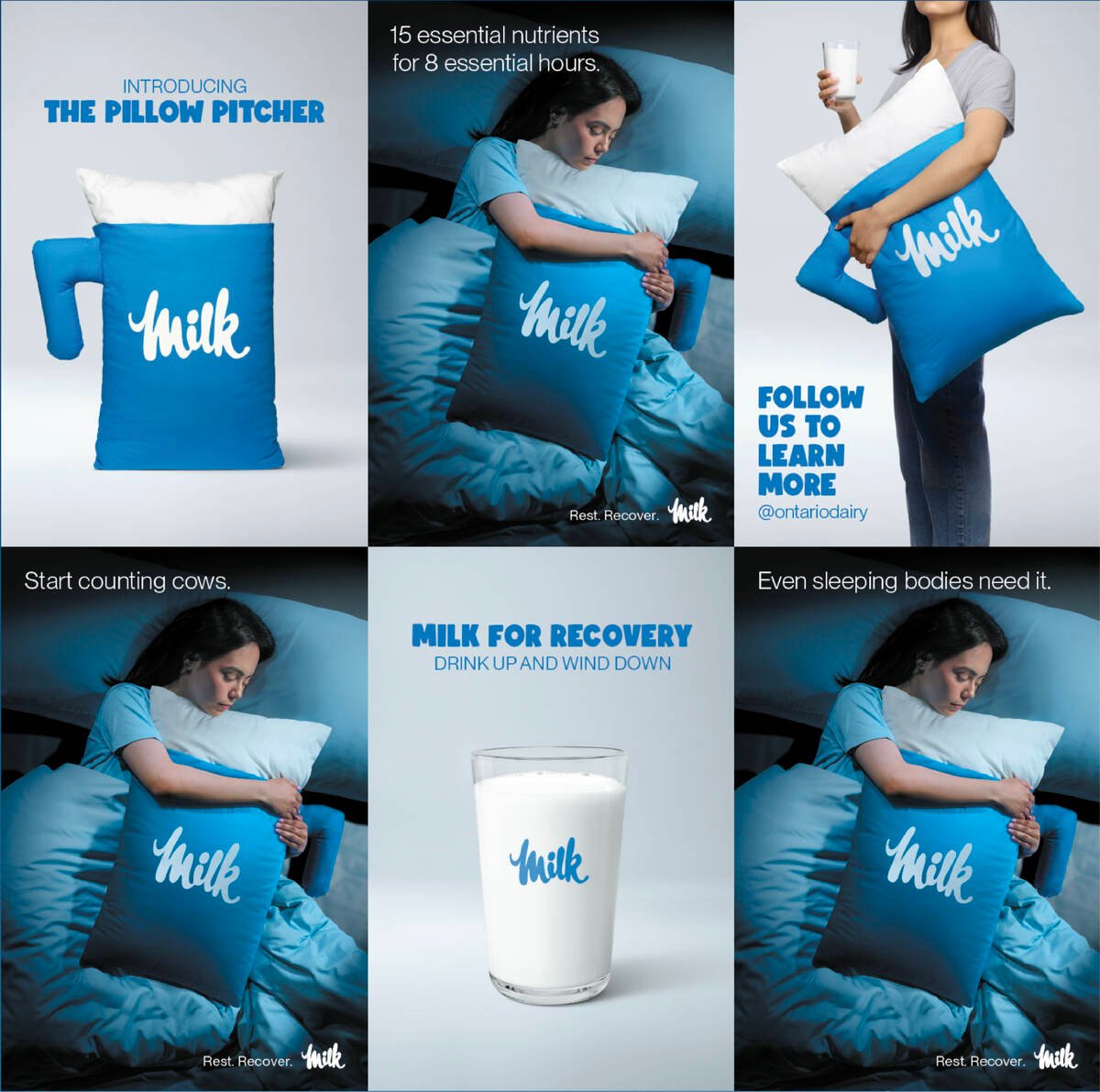
“From this insight came the idea of the Milk Pillow Pitcher,” she continued. “The milk pitcher itself is unique to Ontario, an instantly recognizable cultural symbol making the idea feel deeply local and ownable. It transforms something familiar into a visual symbol of recovery, making it memorable, tangible and shareable, while supporting a message that resonates within the larger wellness conversation.”
Checchia said consumer research has shown Ontarians have a strong awareness of the milk brand and those exposed to its advertising campaigns have a more positive perception than the general population.
This brand awareness includes the importance of local farmers to the food system, as “agreement for (the statement) ‘Milk is produced by local dairy farmers’ sees a 24 per cent increase for those that are exposed to our advertising versus the general Ontario population.”
DFO’s marketing efforts are twofold, presenting both milk as a brand and dairy farmer as who they are. Since 2022, marketing has been based around the unified ‘Everybody Milk’ campaign.
That centring of farmers is often key to the marketing of agriculture, as it puts a face behind the produce and shows the local aspect of Ontario’s food system.
An emphasis on what’s local
A recent social media campaign from Grain Farmers of Ontario takes a similar approach.
The We Are Grain Farmers video series highlights the stories of grain farmers across Ontario, showcasing their realities and how they may not align with public perception. Episode one focuses on a young, first-generation farmer who was told he would not find a profession in agriculture.
Beyond the grocery aisle
Brooks said connection and engagement with the public can have benefits beyond just selling products; it can help to create a coalition that works to represent the needs of agriculture.
“Whether it’s municipal, provincial, or federal, people will have that top of mind,” Brooks said. “People will think, OK, these are you know, the options that I have to vote for. I want to make sure that the people who are in power do what’s best for me, but also what’s best for our families, our communities, and when you can start to put food in that conversation, and then by association, you’re putting agriculture and farming in that.”
“It’s important for us because we want those people to be allies, ambassadors, and help push our voice forward with other friends, neighbours, family that that might be outside of the agriculture industry.”
The post Pork tacos and milk pillows: marketing agriculture in Ontario appeared first on Farmtario.


