


Battery electric vehicle (BEV) architectures continue to evolve. Higher charging rates, greater stored energy, bidirectional power flow and tighter packaging can increase the demands placed on high-voltage DC circuit protection.
Traditional protection architectures that coordinate contactors, fuses and pyrotechnic devices were developed for earlier BEV platforms. In some applications they remain effective, but higher fault energy, faster fault development and greater system complexity may reduce available design margin.
This article outlines how BEV fault behavior is changing, where conventional protection strategies may face increasing constraints and why some next-generation architectures may benefit from a more integrated and resettable approach.
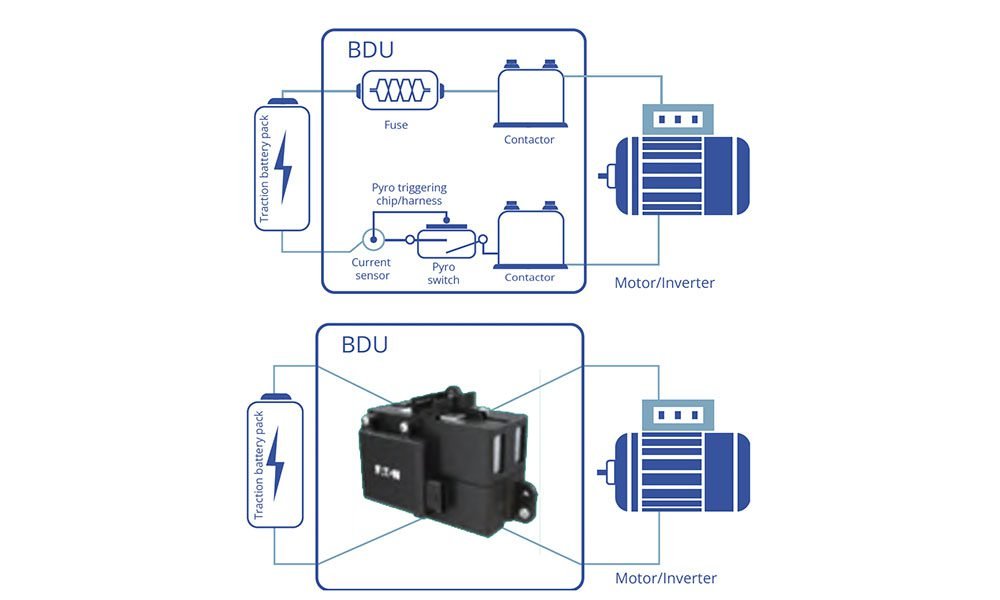
BEV architectures are transferring higher energy at higher rates
Current BEV platforms differ significantly from earlier generations. Several trends are changing electrical architecture:
- Higher charge rates driven by fast-charging requirements
- More stored energy to support longer range
- More compact battery packaging that increases thermal and electrical density
- Bidirectional power flow (V2L, V2H and V2G) that expands fault scenarios
- Higher system voltages, including 400 V and 800 V platforms and beyond
Taken together, these trends increase the amount of energy transferred through compact systems. Protection and switching devices may therefore be required to operate under higher stress, shorter response windows and a broader range of high-voltage direct current (HVDC) fault conditions.
HVDC fault behavior is changing
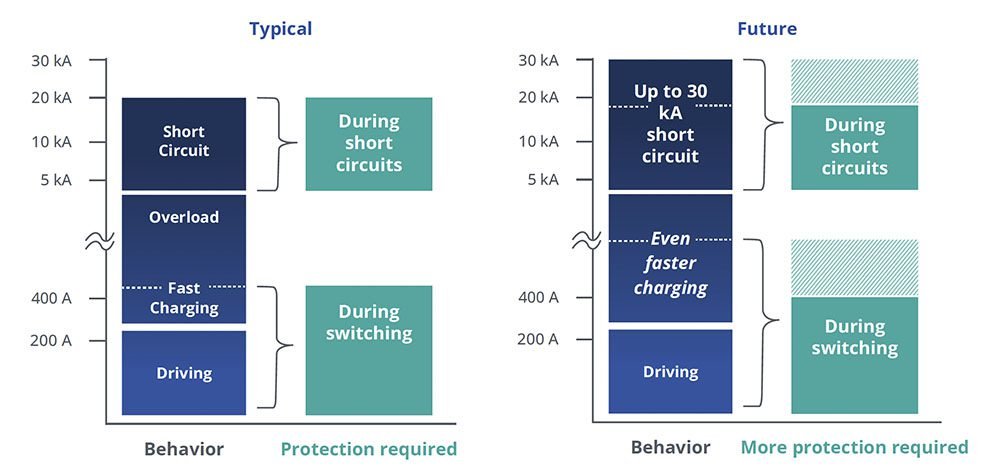
HVDC faults are not new. What has changed is the context in which they occur. Higher stored energy, faster charging and denser packaging can allow faults to escalate more quickly. In some architectures, engineers must manage not only higher fault current, but also faster fault development, shorter decision windows and greater energy transfer in the first milliseconds of an event, including:
- Rapid fault-current rise
- Increased difficulty extinguishing DC arc energy
- Reduced time available for protection decisions
- Higher consequence of misclassification or delayed response
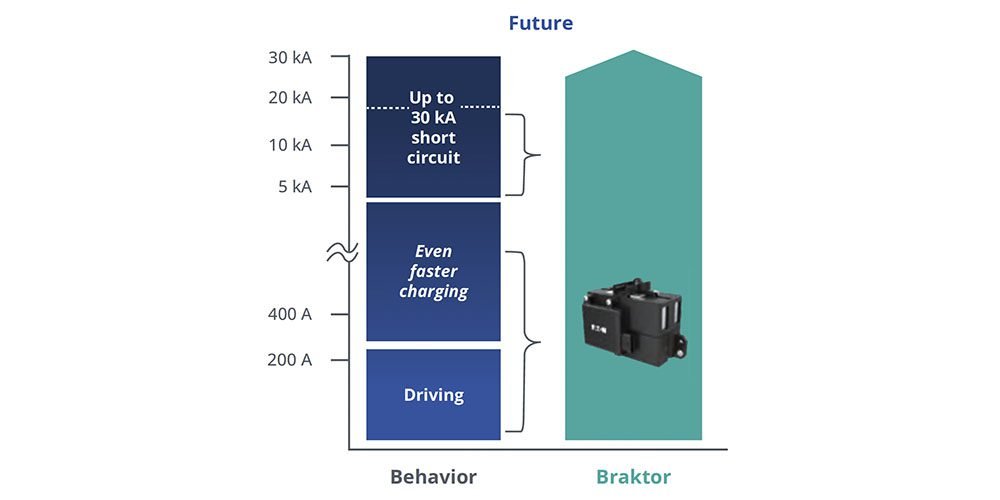
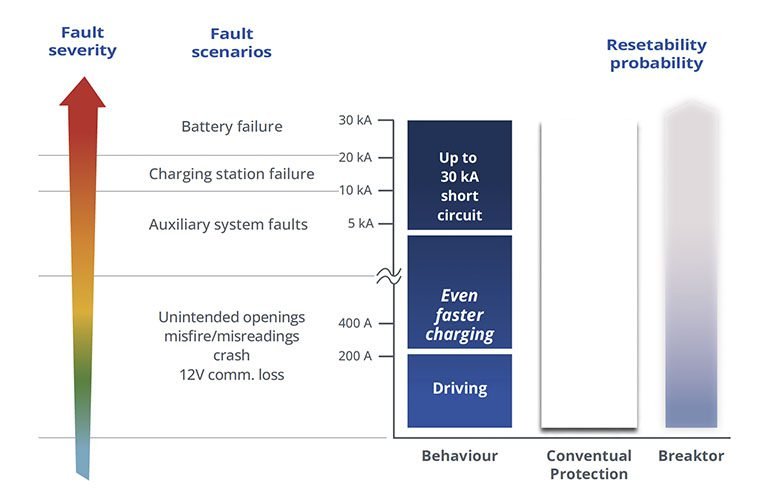
As system energy and charging power increase, some applications may need to consider short-circuit currents in the 20 kA to 30 kA range or higher. At the same time, normal fast-charging current may move closer to levels that reduce the margin between nominal operation and fault response.
This can narrow the operating window for protection devices.
In these conditions, devices may need to handle a wider range of operating and fault scenarios, including:
- Continuous high current during charging
- Rapid interruption of high fault current
- Predictable operation during transients, signal errors, communication loss and auxiliary failure
Constraints in conventional protection architectures
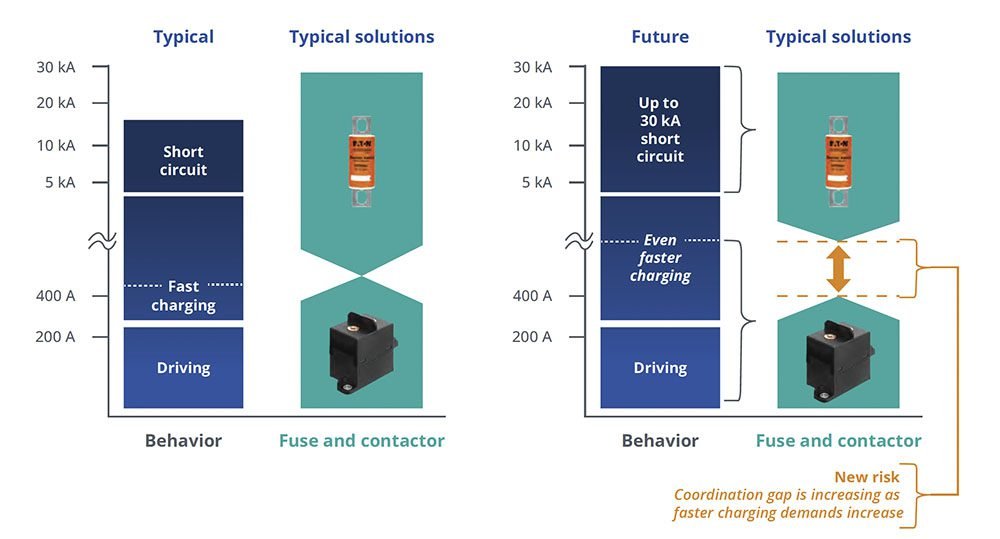
Fuse and contactor architectures
Conventional BEV protection depends on sequential coordination:
- Detection by the BMS and sensors
- Switching via contactors
- Protection via fuses
This model assumes enough time for detection, signaling and handoff between components. As operating current and charging power rise, that margin can shrink. Under these conditions, it may become increasingly difficult to maintain reliable sequencing across the entire range of expected scenarios, and several limitations become evident.
- Coordination gaps across detection, switching and interruption functions
- Contactors may not be optimized to interrupt high-energy DC faults on their own
- Potential for contact welding and degradation of isolation performance under severe fault conditions
- In some cases, fuse response may not align with faster fault dynamics
- Reduced design margin as system voltage, current and stored energy increase
These considerations do not necessarily indicate a design deficiency. In many cases, they reflect architectures operating closer to the limits assumed during earlier design cycles.
Pyrotechnic protection approaches
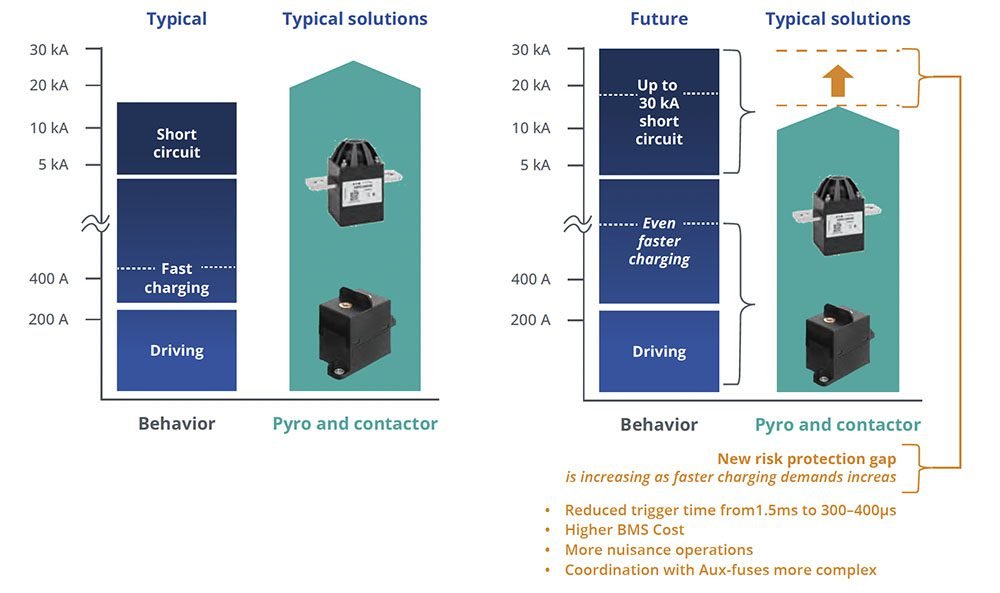
Pyrotechnic devices can address some fuse-coordination issues by forcing the circuit open. Depending on the implementation, they may also introduce a different set of constraints.
- Dependence on an external trigger: In many designs, operation depends on a trigger signal from another system
- One-shot operation: Following activation, service intervention and component replacement may be required
- Faster trigger requirements: Future battery systems may require response times measured in hundreds of microseconds, depending on architecture and fault scenario
- Additional BMS complexity and associated cost
- Potential for nuisance activation: If evaluation windows become very short or system inputs are ambiguous
As fault energy increases, designers may need to balance earlier intervention against the risk of acting on incomplete information.
Protection performance is increasingly architecture-dependent
In earlier EV platforms, circuit protection was largely a component-level choice. Engineers selected contactors, fuses or pyrotechnic devices by rating, then coordinated them with timing margins and external control logic. If baseline requirements were met, many combinations could be made to work. For some modern BEV architectures, that approach may no longer provide sufficient margin on its own.
Protection performance can depend on how detection, switching, interruption, communication and power availability interact under severe conditions. When those functions are not aligned by design, component ratings alone may not be enough to achieve the desired level of protection performance.
Circuit protection is increasingly determined by system architecture, not only by individual component ratings. The protection concept influences fault response, subsystem dependencies, recovery capability and vehicle availability.
A protection architecture intended for future BEV platforms should:
- Accommodate higher voltage, current and stored energy
- Integrate detection, switching and protection functions where appropriate
- Provide predictable response across the defined fault envelope
- Maintain safe operation with limited dependence on external trigger chains
- Minimize dependence on single-use protection elements where feasible
- Permit recovery after non-catastrophic events where appropriate
Integrated protection architectures
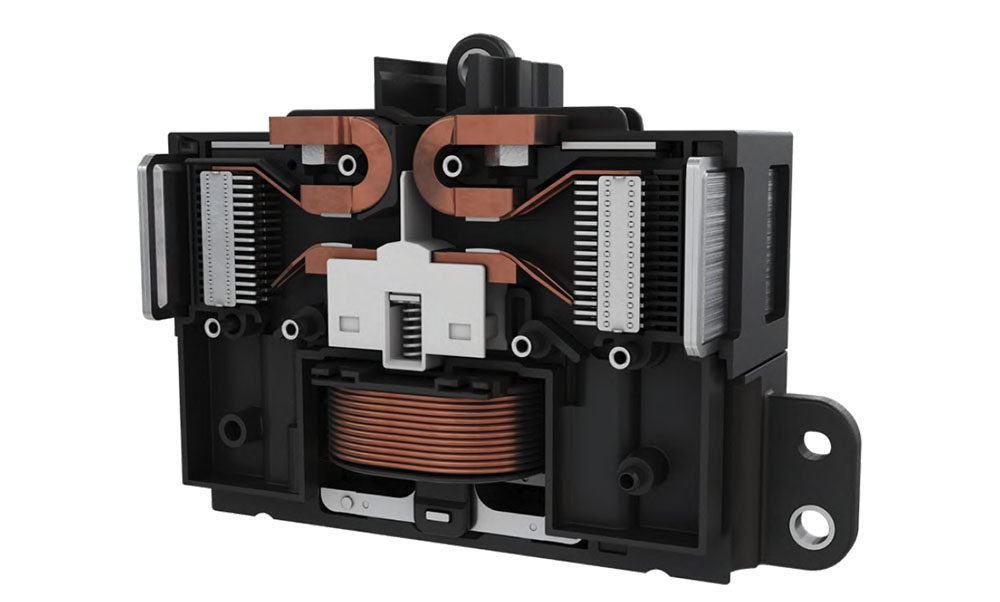
A different approach is emerging, one that integrates protection and switching into a single, self-contained device. Compared with architectures that coordinate separate contactors, fuses and pyrotechnic devices, integrated approaches eliminate coordination dependencies by design.
- Combine detection, interruption and isolation functions within one device
- Reduce dependence on BMS timing and external trigger chains in some implementations
- Respond autonomously to defined high-energy DC fault conditions
- Provide more consistent response across defined fault conditions in some application
Resettable protection and serviceability
Many real-world fault events, like the following, are not catastrophic.
- Charging station failures
- Communication loss on auxiliary systems
- Transient overcurrent events
- Sensor misreads or misfires
With single-use protection approaches, these events can still lead to:
- Stranded vehicles
- Costly component replacement
- Battery pack swaps
- Unclear liability across vehicle, grid, and charging infrastructure
A resettable protection approach allows recovery from manageable events, support vehicle availability, and shift certain service actions to planned maintenance intervals. This can significantly reduce downtime and total cost of ownership
Evaluation questions for engineering teams
As protection becomes more architecture-dependent, engineering teams should also reconsider how technologies and suppliers are evaluated. In practice, that means asking questions such as:
- Which fault scenarios exist across the entire ecosystem—vehicle, grid and charging infrastructure?
- How often will protection devices encounter these events in the real world?
- Which faults should permit recovery, and which should not?
- Is the protection function self-contained, or does it depend on external systems and timing?
- Can the technology scale with future BEV energy levels?
- Is system response predictable and repeatable?
Conclusion
BEV electrical systems are evolving in ways that challenge protection architectures developed for earlier platforms. As energy levels, charging power and system complexity increase, protection strategies may need to evolve as well.
Legacy approaches are facing increasing constraints, not because they are poorly designed, but because system assumptions are changing. In some applications, coordination gaps can widen, dependencies can increase and available reaction time can shrink.
Integrated, resettable protection technologies represent a shift from single-use components toward architecture-level safety functions. By simplifying certain aspects of fault response, reducing selected dependencies and enabling recovery in
defined scenarios, they provide a more sustainable foundation for next-generation electric vehicle platforms.
Products featuring Breaktor circuit protection
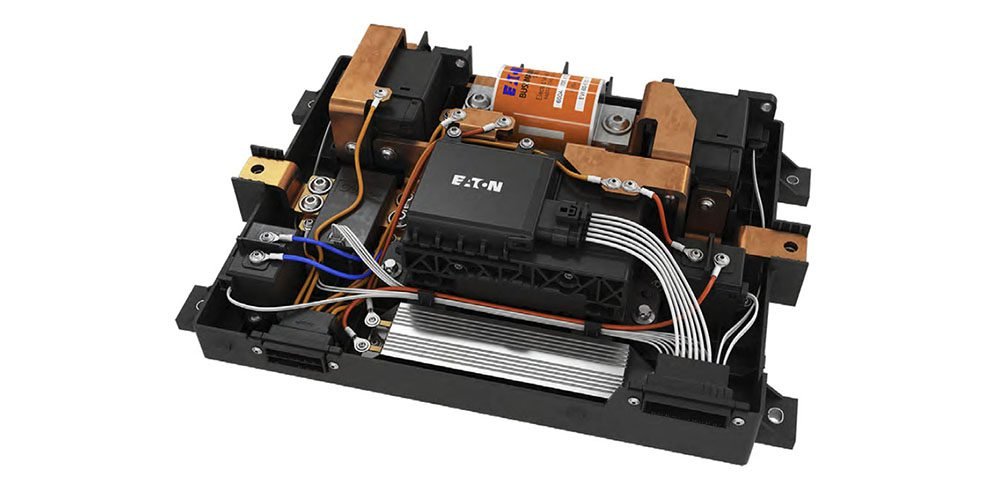
Battery disconnect unit
The Battery disconnect unit (BDU) is designed to efficiently distribute power throughout the EV system. With the integration of Breaktor, the BDU provides improved quality and simplified architecture by combining current switching and resettable bidirectional short-circuit protection with fast actuation (up to 900V).
Enabling reduction of up to 15 components from the BDU assembly, Breaktor’s integrated coil driver, economizer, and sensing/triggering circuit reduce overall cost and complexity. Additionally, it’s self-triggering design, diagnostic electronics, and mirror contact help to ensure utmost safety and reliability.
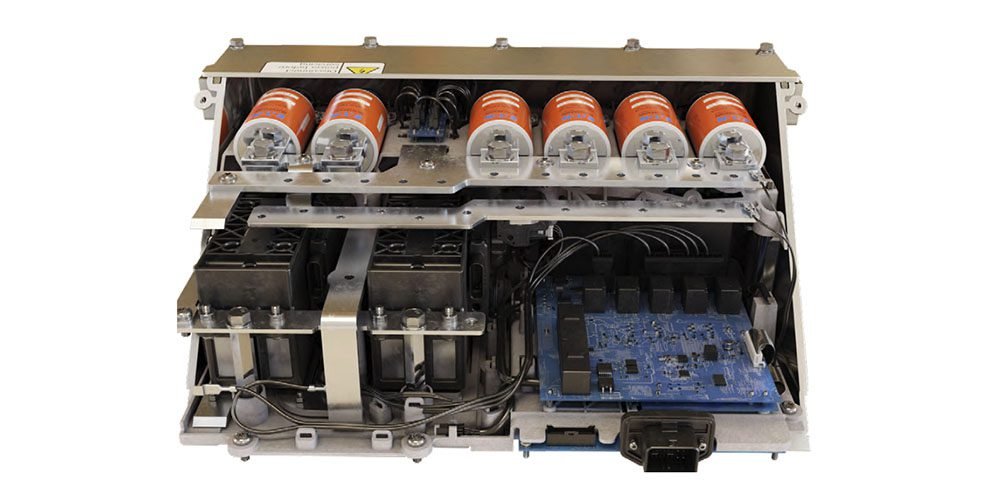
FLEX power distribution unit
The next generation high-voltage intelligent FLEX power distribution unit (FLEX PDU) monitors and manages all power distributed to power electronics and provides central protection for the electrical system for hybrid, fuel cell and fully battery electric commercial vehicles. Fully customizable to meet a commercial vehicle’s specific requirements, the FLEX PDU can be integrated with Breaktor. This allows for integrated over-current protection for high power loads including traction inverters and DC fast charge.


