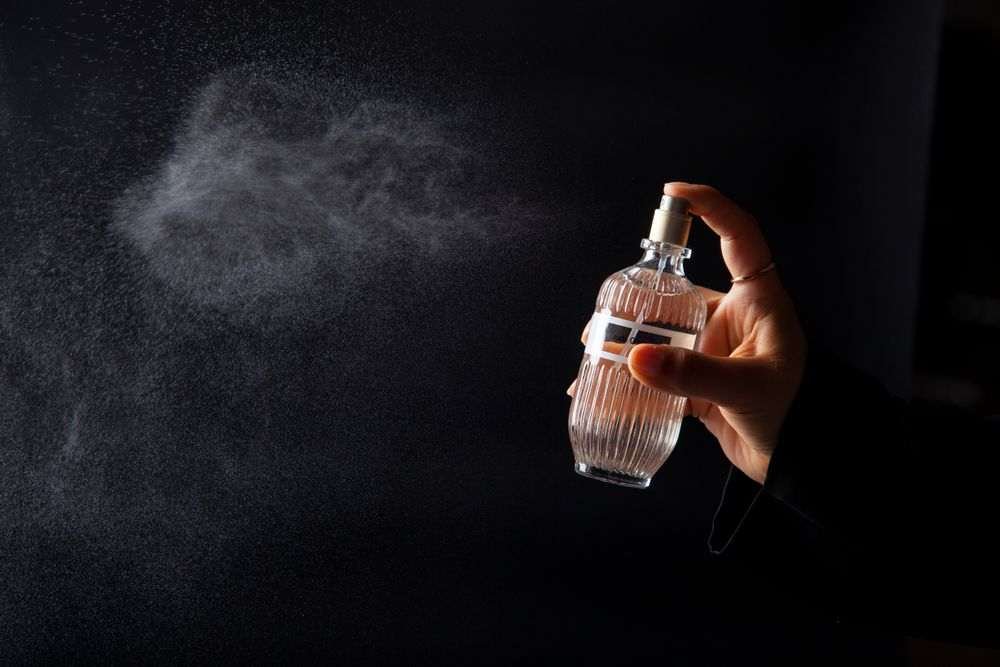
The value of global fragrance ingredients is set to hit $30 billion within a decade.
Yet the industry faces major risks, including consumer backlash around health and sustainability.
Petrochemicals, which account for 70 percent of fragrance ingredients, are linked to health problems and environmental damage.
Natural ingredients are no easy fix either, lacking the chemical consistency of synthetics while posing ecological problems of their own.
Meanwhile, climate change poses supply risks to key species prized by the luxury sector.
For many multinationals, the answer is precision fermentation – a biomanufacturing technique that merges synthetic performance with the safety of plant-based ingredients.
Here is how fermentation biotech could solve some of the fragrance industry’s biggest supply challenges.
Where synthetics and plants fail
Fragrance is one of the pillars of consumer manufacturing, cutting across large swathes of the economy: think scented cleaning chemicals, deodorants, and cosmetics.
Like many consumer products, however, synthetic fragrances leave much to be desired from a health perspective. Skin allergies, respiratory issues, and endocrine disruption issues have been linked to synthetic fragrance ingredients.
When products are toxic to humans, they tend to be toxic to nature too. Synthetic fragrances are no exception. These non-biodegradable compounds cause water contamination and leave toxic traces that damage wildlife.
Switching to plant-based ingredients is only a partial solution. Cultivated plants take up resources like land and water, putting hard limits on the amounts we can source sustainably.
Natural extracts from plants can also fall short when it comes to the consistency that the fragrance industry craves.
Lab-grown fragrances step in
Beyond plant-based and synthetic ingredients lies a third option: precision fermentation.
This biomanufacturing method is an emerging fragrance production route that some big players are already investing in. It uses biology to replicate any molecule at scale – including the ones that smell good.
Thanks to precision fermentation, we can now produce some of the rarest, most expensive fragrance molecules in factories using relatively few inputs. This avoids the need to either forage or intensively cultivate plants for the industry.
Its real power lies in customisability. Producers can tweak fragrance molecules until it balances scent with other features: biodegradable, hypoallergenic fragrances with powerful scents become possible with just a fraction of the impacts linked to petroleum ingredients.
California’s fermented fragrance powerhouse
One of the longest-standing names in the precision fermented fragrance business is the Californian startup Amyris
Today, Amyris operates four fully operational production lines at its facility in Barra Bonita, Brazil. Back in 2015, however, things were just getting started. This was when Amyris first announced it had developed a yeast strain to make a new fragrance molecule at commercial scale.
Over the next ten years, the company would use its precision fermentation platform to build out a palette of fragrance ingredients.
Partnerships propel Amyris’ portfolio
Amyris pioneered biotech-led fragrance manufacturing at a time when precision fermented industrial chemicals were still in their infancy. Much of Amyris’ product development has happened through collaborations with European companies.
Through the 2010s, its biggest was with Firmenich, a Swiss beauty and nutrition multinational. One of the biggest achievements of the Amyris-Firmenich partnership was their precision fermented version of Ambrox – a principal compound in ambergris.
Ambergris evokes the rich scents of an imagined east: it is a foundational chemical in classic scents like Guerlain’s Shalimar or Samsara. Amyris’ version, also known as β-farnesene, uses Saccharomyces cerevisiae yeast and sugar cane.
Another major milestone for the partnership came in 2018 when they announced a joint project to develop and commercialise Z11. Similar to Ambrox, its key characteristic is dry wood with an amber-like scent. This biodegradable, renewable fragrance is meant for shampoos, shower gels, soaps, and fine fragrances.
Amyris’ other major partner since 2011 was Givaudan, a Swiss multinational fragrance and cosmetics ingredients producer. By 2023, the companies deepened their relationship when Givaudan acquired a major cosmetics ingredients portfolio from Amyris.
Scaling rarity
One of the inherent problems with the fragrance supply chain today is the rarity of key ingredients.
Many of the species responsible for luxury scents are scarce and, in some cases, endangered. These precious sources are in constant danger of over-harvesting, threatening supply security for the industry over the long-run.
Over-harvesting is just one of the supply risks facing rare fragrance botanicals, however. Climate change is another emerging threat, with extreme weather changing the chemistry of the plants we extract from and making them more difficult to cultivate. The climate threat applies to relatively common fragrance sources like lavender, as well as rarer scents like vanilla and sandalwood.
L’oréal-backed Debut is a biobased fragrances startup that says it can work around these problems using its biotech platform.
The startup announced in 2025 that it had achieved its first proof-of-concept for precision-fermented orris, one of the most prized and expensive perfume ingredients. Derived from the iris root, it is valued at up to $100,000 per kilogram.
According to the company, precision fermentation is a technique that can reliably supply industry with key ingredients that are facing supply crunches.
Quantity is not the only factor at play, however. Quality control is a critical consideration for startups selling to luxury fragrance houses.
In fragrances, complexity is king. The richness of a scent results from a blend of different ingredients. Within individual ingredients, too, we find very precise ratios of different molecules. It is this precision and diversity that gives the best scents their depth and richness. According to Debut, precision fermentation is the only tech that can replicate these complex molecular profiles.
Precision fermentation goes big
Smaller startups spearheaded a lot of the precision fermentation platforms for fragrances in use today.
However, the sector has changed rapidly in the last half-decade. Major firms have acquired smaller biotech companies to take their fermented platforms mainstream.
From the late 2010s, established chemicals producers began biotech fragrance startups. Isobionics, once a small Dutch biobased fragrance producer, is a case in point. BASF acquired it in 2019 to expand its natural fragrances category, unlocking a growing customer base for healthy ingredients in personal care.
BASF’s acquisition of Isobionics signalled the mainstreaming of precision fermentation in fragrance making. It proved there was real appetite from businesses and consumers globally for biomanufactured scents.
As a startup, Isobionics specialised in citrus fragrances. Citrus notes still dominate its offerings under BASF, which now markets its Santalol, a Sandalwood substitute, natural beta-Bisabolene 90, and Nootkatone 98.
Isobionic’s natural beta-Bisabolene evokes cut fruit: green-scented pear, white grape and apple skin are dominant notes, while Nootkatone suggests grapefruit juice and cedar incense.
In addition to fragrances, Isobionics uses its fermentation platform for manufacturing food flavourings.
The latest Isobionics launch for BASF was a food aroma ingredient, Natural beta-Caryophyllene 80 – described as having a woody, herbal, and grapefruit taste.
There is a tight relationship between taste and scent, explaining Isobionic’s dual specialism in both perfume inputs and flavour ingredients. This highlights another advantage of the acquisition for BASF – bringing Isobionics into the fold is allowing it to tap not just one but two growth markets for natural ingredients, in both food and fragrance.
Firmenich buys up fragrance startup
Amyris, the California startup that pioneered precision fermentation in fragrances, has been the subject of a recent takeover too.
In 2021, Dutch nutrition company Royal DSM bought up the Ayris’ intermediates business, acquiring 7 biobased aromatic intermediates in the process.
The consolidation trend did not end there. In 2022, DSM itself merged with Firmenich, Amyris’ longstanding partner. The new company that resulted was DSM-Firmenich.
DSM-Firmenich may be a relatively new company, but its product line was already world-leading. In particular, its batch of proprietary biodegradable, biotech-derived fragrance ingredients, such as Amyris’ Ambrox, was one of its leading assets.
These acquisitions and mergers serve two goals: they boost the natural ingredients portfolio of the firms, enabling them to tap a growing market for sustainable ingredients.
At the same time, picking up startups gives legacy companies access to cutting edge fermentation IP that they can use for developing further products in-house.
The future of fragrances
Precision fermentation offers industry powerful alternatives as it reckons with the supply risks posed by climate change, over-harvesting, and sustainability regulations.
Its technical performance aspects are formidable when compared to traditional plant-based extracts, offering more consistency from batch to batch.
Precision fermentation also gives producers unmatched control over the chemical properties of their ingredients, offering strong substitutes for synthetics.
While the costs of precision fermented alternatives have to come down before they make a bigger impact on the industry, recent investments in fermented fragrance startups by major players signal a bright future for the tech.
Precision fermentation is no longer a frontier technology pushing the boundaries of the fragrance industry. These platforms are now embedded in large commercial production lines, with developers now able to turn out quality dupes for popular synthetic at scale.
With precision fermentation now embedded into the capacity of multinational producers, it is only a matter of time before fermented fragrances expand their market share.
The post Scaling rarity: Lab-grown perfumes ease industry risks appeared first on World Bio Market Insights.