
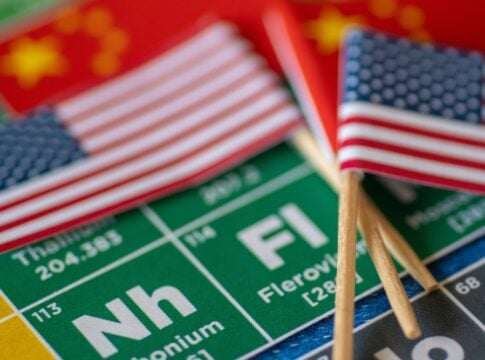
The Trump administration is boosting the U.S. mining industry to lessen dependence on foreign critical minerals. On August 7, the President met with mining leaders at the White House. The administration announced over $2 billion in new investments for mining and related projects. More than $180 million will also support mining schools and workforce programs.
This move comes as the U.S. needs to secure minerals for batteries, electronics, defense, renewable energy, and advanced manufacturing.
The country relies heavily on imports for many critical minerals. The U.S. is entirely dependent on imports for 11 critical minerals, including graphite, gallium, scandium, and yttrium.
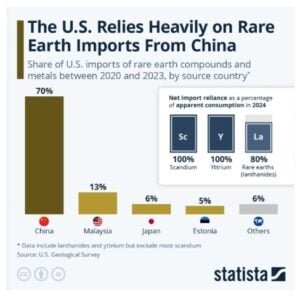
This reliance poses economic and national security risks. Disruptions in global supplies could raise costs for American manufacturers and slow production.
Billions for US Critical Mineral Projects
The press release revealed that the new investments target various parts of the critical mineral supply chain, from mining to battery materials and manufacturing.
Defense Drives Bauxite and Magnet Investments
The Department of War plans to invest over $85 million in Standard Bauxite. This funding will secure domestic supplies of refractory-grade bauxite, essential for high-temperature-resistant products in industry and defense.
The department will also invest $150 million in Niron Magnetics, a Minnesota company that creates rare-earth-free permanent magnets. This aims to build a U.S. alternative to foreign magnets.
Magnets are crucial for electric motors, defense equipment, electronics, and advanced technologies. Reducing reliance on foreign supplies could strengthen multiple U.S. industries.
$1.4 Billion Boost for Battery Manufacturing
Another major investment goes to Sila Nanotechnologies. The Department of War is investing $1.4 billion to boost production of silicon-carbon battery anodes and establish a lithium-ion battery cell manufacturing facility.
These materials support various uses, from satellites to defense equipment.
Scandium Project Targets Aerospace Demand
The department will invest $400 million in Sunrise Energy Metals to develop a domestic scandium supply chain. This could lead to the world’s first primary scandium mine.
Scandium is vital in high-performance aluminum alloys, important for fighter aircraft and spacecraft.
US Backs Boron and Graphite Supply
The Export-Import Bank is also backing several critical mineral projects.
It plans to invest $8 million in 5E Advanced Materials for a boron deposit in California. Boron is used in permanent magnets, semiconductors, and glass.
Tantalum, Niobium and Rare Earths Gain Support
Another $25 million will support Westwater Resources in developing its Coosa Graphite Deposit in Alabama. Graphite is crucial for batteries and will be increasingly important as U.S. battery production expands.
The bank will invest $25 million in Global Advanced Materials in Pennsylvania, focusing on tantalum and niobium for electronics, magnets, and steel.
Additionally, the U.S. Development Finance Corporation will match a $4.8 million investment in Harena Rare Earths. This project aims to develop a rare earth mine in Madagascar to benefit American manufacturers.
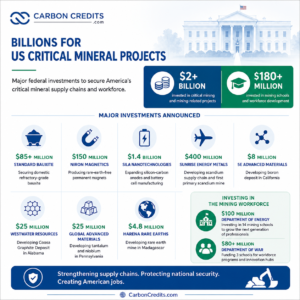
Here’s a summary of the investment plan:
Mining Workforce Funding
Building mines alone won’t resolve the supply chain issue. The U.S. needs skilled workers to operate them. That’s why the administration is allocating over $180 million for mining education and workforce development.
- The Department of Energy will invest $100 million across 14 U.S. mining schools to enhance training and increase skilled graduates.
- The Department of War will provide over $80 million to three schools for workforce programs and technology hubs.
These programs will train future geologists, metallurgists, and mining engineers.
This workforce initiative addresses a long-standing problem. While demand for critical minerals has risen, domestic mining and processing capacity has declined.
Consequently, the U.S. has become more reliant on foreign supply chains.
US-China Competition Heightens Stakes
The push to grow domestic mining comes as the U.S. and China compete over critical minerals.
Bloomberg reported that the White House event emphasized efforts to speed up U.S. mining ahead of a planned September visit by Chinese President Xi Jinping. Trump stated that domestic mining activity is quickly expanding under his administration. He highlighted the reopening of mines and new industrial facilities.
The U.S. is particularly focused on rare earth elements. China remains dominant in the global rare earth supply chain, especially in processing and magnet production.
- According to customs data from Reuters, China exported about 62,600 metric tons of rare earth products in 2025, up from about 55,400 metric tons in 2024.
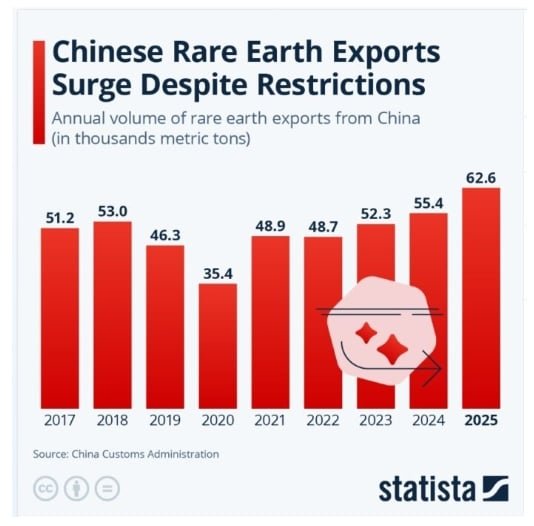
While a recent trade truce eased some export restrictions on critical minerals, tensions remain between the two largest economies. However, for the U.S., the challenge lies not just in finding more mineral deposits but also in developing the infrastructure for mining, processing, refining, manufacturing, and recycling those materials domestically.
- ALSO SEE: U.S. Department of War Backs Phoenix Tailings With $500M to Rebuild America’s Rare Earth Industry
A Mine-to-Magnet Supply Chain
The latest investments reflect a strategy to build a secure domestic supply chain.
Critical minerals are essential across the modern economy. They power electric vehicles, batteries, smartphones, computers, factory equipment, aircraft, and military systems.
Thus, securing supply is increasingly vital.
Since January 2025, the Trump administration has signed or approved 160 minerals-related deals worth nearly $40 billion. These projects aim to boost domestic production, attract investment, and create jobs.
The administration has also employed trade policies, including Section 232 measures, to protect industries crucial for U.S. national and economic security. These measures cover products like steel, aluminum, copper, automobiles, timber, semiconductors, critical minerals, and pharmaceuticals.
The latest mining investments build on this strategy.
However, building a competitive domestic mineral industry will take time. New mines require years of permitting, construction, and investment, while processing and refining capacity must expand alongside production.
Still, the August 7 announcement marks a major step toward strengthening U.S. critical mineral supply chains. As demand for batteries, electronics, and defense technologies grows, secure domestic supplies will become increasingly important.
The U.S. aims to build a complete supply chain, from mining and processing to manufacturing. This could reduce exposure to geopolitical risks while supporting American mining, manufacturing, and clean energy industries.
- ALSO READ: Trump’s Tactic to Make America Great Again: Expanding Domestic Oil, Gas, and Critical Minerals
The post Trump Unveils $2 Billion Mining Push for US Critical Mineral Independence appeared first on Carbon Credits.


