

Table of Contents
Belonging to the same family of carrot, and celery (Apiaceae or Umbelliferae), parsley (Petroselinum crispum) is a cool-season crop popularly used in countless cuisines around the globe. Typically, chopped parsley is sprinkled on top of dishes as garnish, offering mild hints of vegetal flavor.
However, some parsley varieties are more flavorful than others. Growing this bright green herb in your home garden gives you access to tasty parsley cultivars that can be used in salad dressings, sauces, soups, stews, and stir-fries. You can also ensure your own parsley is organic when cultivated at home.
Common Parsley Types
Based on appearance alone, parsley varieties can be categorized in two common types. Both have subtle differences in taste and smell, which influence their kitchen uses.
Parsley with leaves that look like cilantro are considered flat-leaved. These varieties are characterized by their broad, plain leaves that tend to carry more aroma and flavor.
Moss curled parsley, or curly parsley varieties have wavy leaves and are subtle in aroma and flavor. Thus, curly parsley is more often used for garnishing.
Heirloom and Hybrid Parsleys
Like other culinary crops, parsley has heirloom and hybrid varieties.
Dark Green Italian Flat Leaf, Evergreen, Italian Giant, Mitsuba, Plain, and Plain or Single are popular heirloom parsley varieties usually sold in seed markets and grocery stores. For a certain variety to be considered heirloom, it should be free from cross breeding for at least 40 to 50 years. As temperature becomes warmer, parsley plants bloom white-to-yellow flowers that seed. Historically, heirloom seeds are passed down from generation to generation among ethnic, familial, or other social groups. Because you get similar characteristics as the parent plant, heirloom varieties are excellent for seed saving.
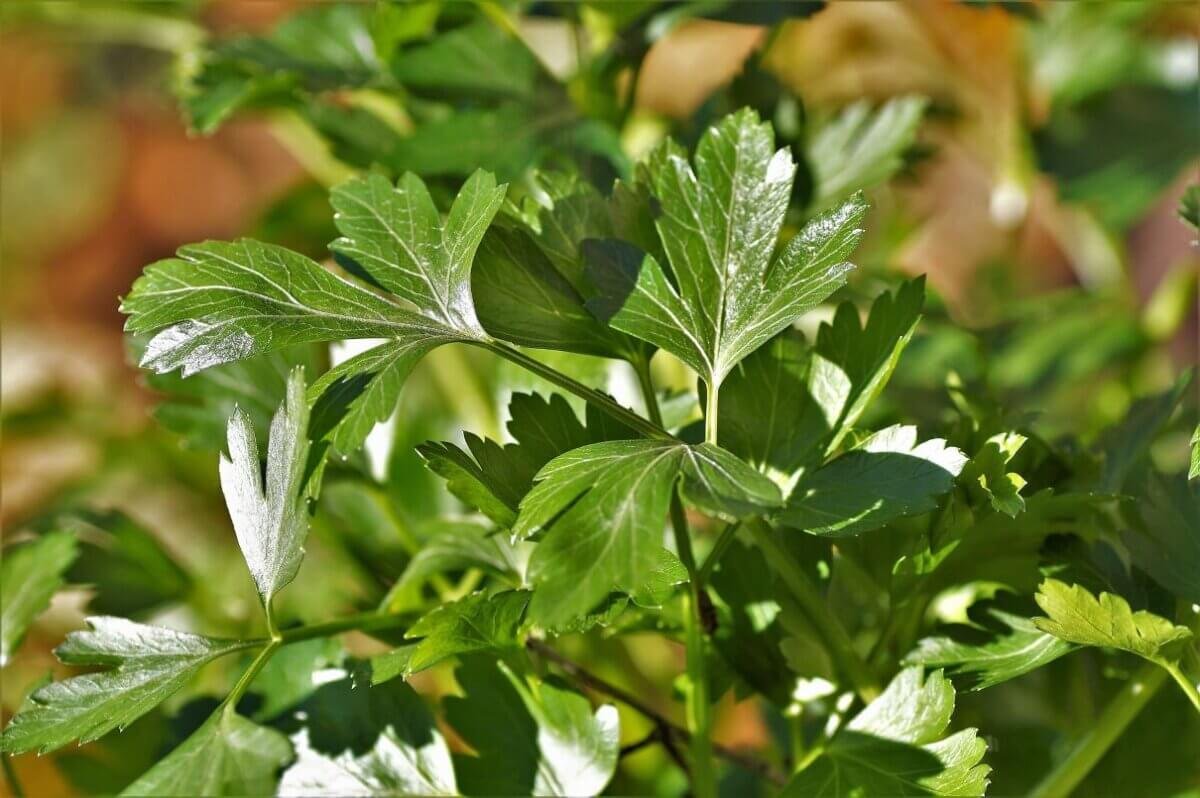
Heirloom varieties, however, tend to be less resistant to diseases and pests.
To alleviate these issues, agriculturists came up with hybrids. These are created through deliberate cross breeding between two plant varieties, allowing agriculturists to make improvements on disease resistance, flavor, growth, pest resistance, size, yield, and other traits. Examples of hybrid parsleys include Commun 2, Demand Agro, and Iris.
Other Popular Parsley Groupings
Get to know these different types of parsley, grouped by their unique characteristics.
Types of Parsley Leaf Shapes
As mentioned above, parsley plants can be categorized into two leaf shape types.
| Parsley Leaf Shapes | Common Examples (Where to Buy) |
|---|---|
| Broad Parsleys | Dark Green Italian Flat Leaf (Eden Brothers, Territorial Seed Company, True Leaf Market) Evergreen (True Leaf Market) Italian Giant/Gigante D’Italia (Territorial Seed Company, True Leaf Market, Rare Seeds) Japanese Mitsuba (True Leaf Market, Rare Seeds) Plain or Single (True Leaf Market) |
| Curly/Wavy Parsleys | Curled (Eden Brothers) Forest Green (True Leaf Market) Moss Curled (True Leaf Market, Rare Seeds) Paramount (Eden Brothers) Wega (Territorial Seed Company) |
Types of Parsley Flavors
Parsley generally has a vegetal flavor, but some varieties are milder than others.
| Parsley Flavors | Common Examples (Where to Buy) |
|---|---|
| Earthy Parsleys | Hamburg Rooted (Eden Brothers, True Leaf Market) |
| Mild Parsleys | Curled (Eden Brothers) Forest Green (True Leaf Market) Moss Curled (True Leaf Market, Rare Seeds) Paramount (Eden Brothers) Triple Moss Curled (True Leaf Market) |
| Peppery Parsleys | Dark Green Italian Flat Leaf (Eden Brothers, Territorial Seed Company, True Leaf Market) Italian Giant/Gigante D’Italia (Territorial Seed Company, True Leaf Market, Rare Seeds) Mitsuba (True Leaf Market, Rare Seeds) Plain (True Leaf Market) Plain or Single (True Leaf Market) |
Types of Parsley Lifecycles
Parsley has a biennial lifecycle, but some varieties can be grown as either an annual or perennial.
| Parsley Lifecycles | Common Examples (Where to Buy) |
|---|---|
| Biennials that are also Annuals | Dark Green Italian Flat Leaf (Eden Brothers, Territorial Seed Company, True Leaf Market) Italian Giant/Gigante D’Italia (Territorial Seed Company, True Leaf Market, Rare Seeds) Plain (True Leaf Market) Plain or Single (True Leaf Market) Triple Moss Curled (True Leaf Market) |
| Annual Parsleys that are also Perennials | Hamburg Rooted (Eden Brothers, True Leaf Market) Mitsuba (True Leaf Market, Rare Seeds) |
Types of Geographic Origins
Parsley is believed to have originated in the Mediterranean, specifically in regions of Algeria, the Balkans, Jordan, Morocco, and Tunisia.
| Geographic Origins | Common Examples (Where to Buy) |
|---|---|
| European/Mediterranean Parsleys | Curled (Eden Brothers) Dark Green Italian Flat Leaf (Eden Brothers, Territorial Seed Company, True Leaf Market) Hamburg Rooted (Eden Brothers, True Leaf Market) Italian Giant/Gigante D’Italia (Territorial Seed Company, True Leaf Market, Rare Seeds) Moss Curled (True Leaf Market, Rare Seeds) |
| North American Parsleys | Paramount (Eden Brothers) |
| Asian Parsleys | Mitsuba (True Leaf Market, Rare Seeds) |
Types of Culinary Uses
Parsley can be used as a versatile herb in recipes, or as an eye-catching garnish for your cooked dish. Flat leaf varieties can be dried to extend their storage life. In the United States, Hamburg parsley is commonly grown as a root vegetable and served as an alternative to parsnips and turnips.
| Culinary Uses | Common Examples (Where to Buy) |
|---|---|
| Parsley for Salads, Soups, Stir-fries, and Stews | Dark Green Italian Flat Leaf (Eden Brothers, Territorial Seed Company, True Leaf Market) Evergreen (True Leaf Market) Forest Green (True Leaf Market) Hamburg Rooted (Eden Brothers, True Leaf Market) Plain or Single (True Leaf Market) |
| Parsleys for Decorative and Garnishing Purposes | Curled (Eden Brothers) Triple Moss Curled (True Leaf Market) Wega (Territorial Seed Company) |
Types of Disease Resistance
Some parsley varieties are more resistant to disease than others. Common diseases in parsley leaves include Botrytis blight, and Septoria leaf spot.
| Disease Resistance | Common Examples (Where to Buy) |
|---|---|
| Disease Resistant Parsley | Paramount (Eden Brothers) |
| Susceptible Varieties | Dark Green Italian Flat Leaf (Eden Brothers, Territorial Seed Company, True Leaf Market) Plain or Single (True Leaf Market) Triple Moss Curled (True Leaf Market) |
Types of Preferred Growing Conditions
Whether you have ample or minimal garden space, there’s a parsley variety for you to grow at home. Get to know their preferred growing conditions before buying your parsley seeds.
| Preferred Growing Conditions | Common Examples (Where to Buy) |
|---|---|
| Container Parsley | Dark Green Italian Flat Leaf (Eden Brothers, Territorial Seed Company, True Leaf Market) Evergreen (True Leaf Market) Plain (True Leaf Market) Plain or Single (True Leaf Market) Triple Moss Curled (True Leaf Market) |
| Field/Greenhouse Parsleys | Forest Green (True Leaf Market) Hamburg Rooted (Eden Brothers, True Leaf Market) Italian Giant/Gigante D’Italia (Territorial Seed Company, True Leaf Market, Rare Seeds) Mitsuba (True Leaf Market, Rare Seeds) Wega (Territorial Seed Company) |
Popular Flat Leaf Varieties of Parsley
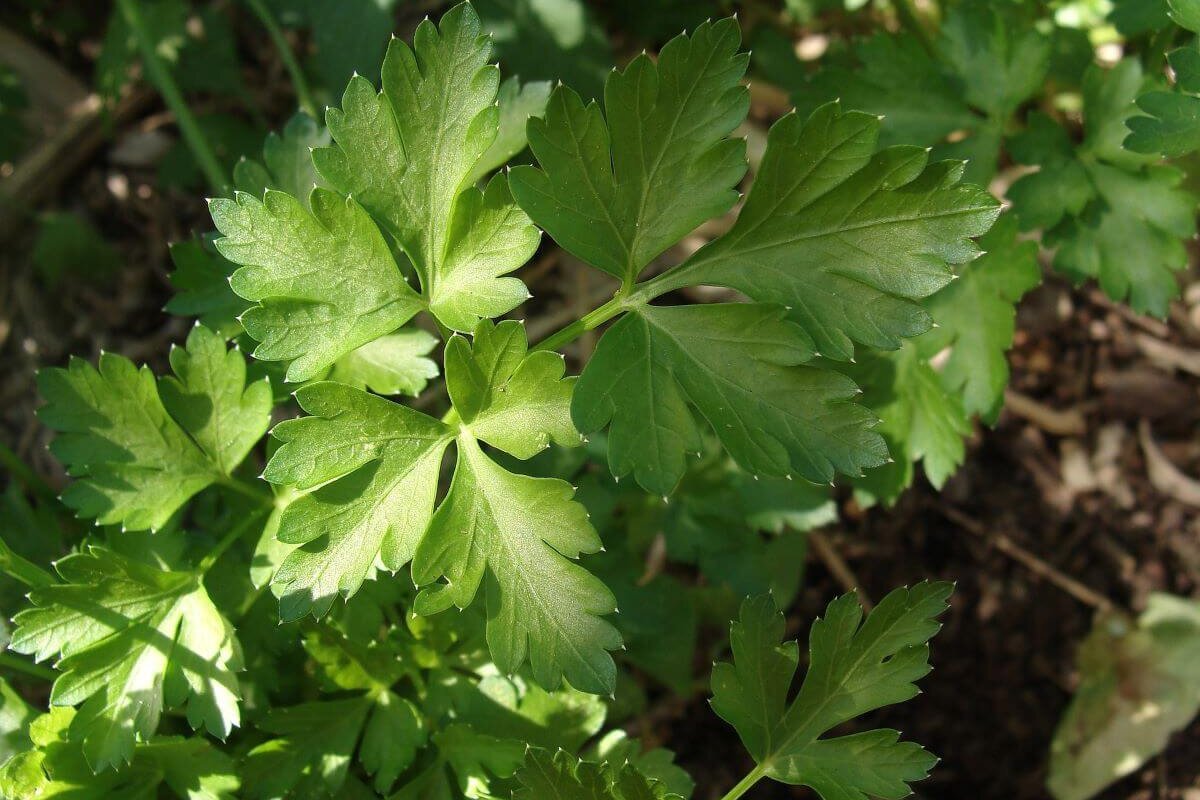
These varieties have broad, flat leaves that offer stronger flavor and aroma.
| Variety | Description | Days to Germinate | Days to Maturity | Where to Buy |
|---|---|---|---|---|
| Dark Green Italian Flat Leaf | This Italian parsley does wonders as a culinary herb. Dark Green Italian Flat Leaf can be grown as a warm-season biennial or as an annual, ready for harvest in late spring to mid to late summer. This variety can grow 12 to 18 inches tall. | 14 to 21 days | 72 to 77 days | Eden Brothers, Territorial Seed Company, True Leaf Market |
| Evergreen | Reaching 12 to 14 inches tall, Evergreen parsley can elevate your soups and stews due to its unique, aromatic flavor. Leaves from this parsley variety can be dried to extend storage life. This variety is an All-America Selections winner. | 14 to 21 days | 70 to 80 days | True Leaf Market |
| Italian Giant/Gigante D’Italia | Italian Giant is an heirloom parsley variety traditionally used in Italian cuisine. Growing as tall as 3 feet, the upright stems can be consumed like celery. | 14 to 30 days | 75 to 90 days | Territorial Seed Company, True Leaf Market, Rare Seeds |
| Japanese Mitsuba | Japanese Mitsuba thrives in well-drained soil with moderate shade, especially in summer. You can sow the seeds in spring or fall. Other names for this Japanese parsley include Dento-yasai, Japanese hornwort, and Japanese wild parsley. | 7 to 14 days | 50 to 60 days | True Leaf Market, Rare Seeds |
| Plain or Single | Plain or Single grows smooth, flat leaves and crisp, slender stems that are packed with citrusy, peppery flavor. You can dry the leaves for later culinary use. This parsley can be grown in containers. | 14 to 21 days | 60 to 80 days | True Leaf Market |
Popular Curly Leaf Varieties of Parsley
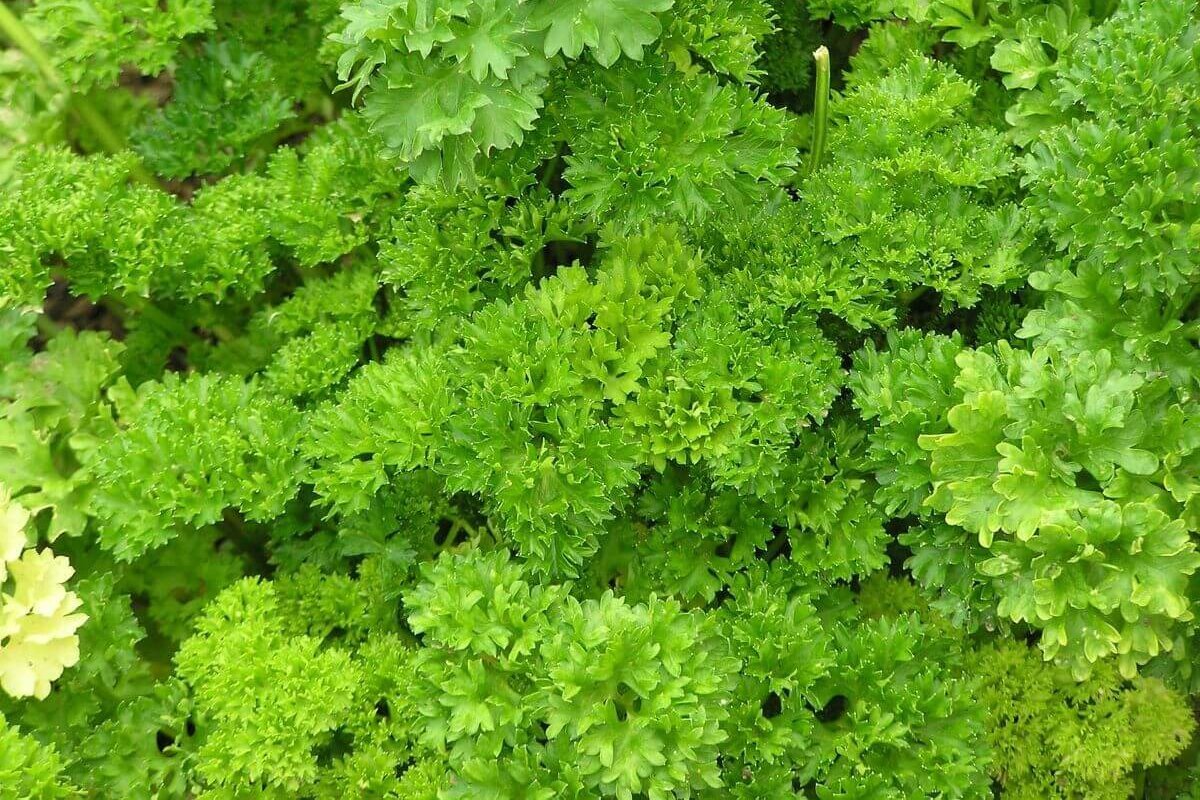
These parsley varieties have ruffled, thick leaves. Most cooks use fresh parsley as garnish to elevate food presentation.
| Variety | Description | Days to Germinate | Days to Maturity | Where to Buy |
|---|---|---|---|---|
| Curled | Suitable for indoor and outdoor planting, Curled is your standard curly parsley, excellent for garnishing. The bright-green leaves of this variety can add an extra pop of color to your meals without any overpowering flavor or aroma. This parsley variety is cold and drought tolerant. | 10 to 28 days | 70 to 80 days | Eden Brothers |
| Forest Green | Forest Green’s steady growth, reaching from 10 to 12 inches tall, prevents its curly leaves from catching dirt, allowing for a clean harvest. This curly-leaf variety is a good option for gardeners in areas with warm temperatures due to its drought and heat tolerance. | 14 to 21 days | 70 to 80 days | True Leaf Market |
| Moss Curled | Expect dense bunches of moss-like parsley leaves from this parsley variety. Moss Curled can reach up to 12 inches tall in a uniform, and compact plant growth. Expect a loaded bunch of parsley from this variety. | 14 to 21 days | 75 to 80 days | True Leaf Market, Rare Seeds |
| Paramount | A reliable variety, Paramount can be cultivated indoors or outdoors. This curly-leaf parsley adapts well under full and minimal sun exposure, and produces deep green, wavy leaves. | 14 to 25 days | 60 to 65 days | Eden Brothers |
| Wega | Wega is a non bolting parsley variety with uniform growth and upright plant structure. Sprinkle chopped leaves of Wega parsley to add texture to your food. | 14 to 28 days | 75 to 80 days | Territorial Seed Company |
FAQ About Types of Parsley
Which type is excellent for making dried parsley?
Flat leaf types of parsley are suitable for producing dried parsley because they can provide more aroma and flavor. Examples of flat parsley types are Dark Green Italian Flat Leaf, Evergreen, Italian Giant, Japanese Mitsuba, and Plain or Single.
What are the characteristics of English parsleys?
English parsleys are characterized by their curly leaves that carry less flavor. Among the main types of parsley, these varieties are often cultivated for garnishing purposes.
Originally published on Types of Parsley


