Nova Pangaea Technologies has completed a major round of endurance trials. The results add further proof that its process for turning waste biomass into carbon-negative aviation fuel works at scale.
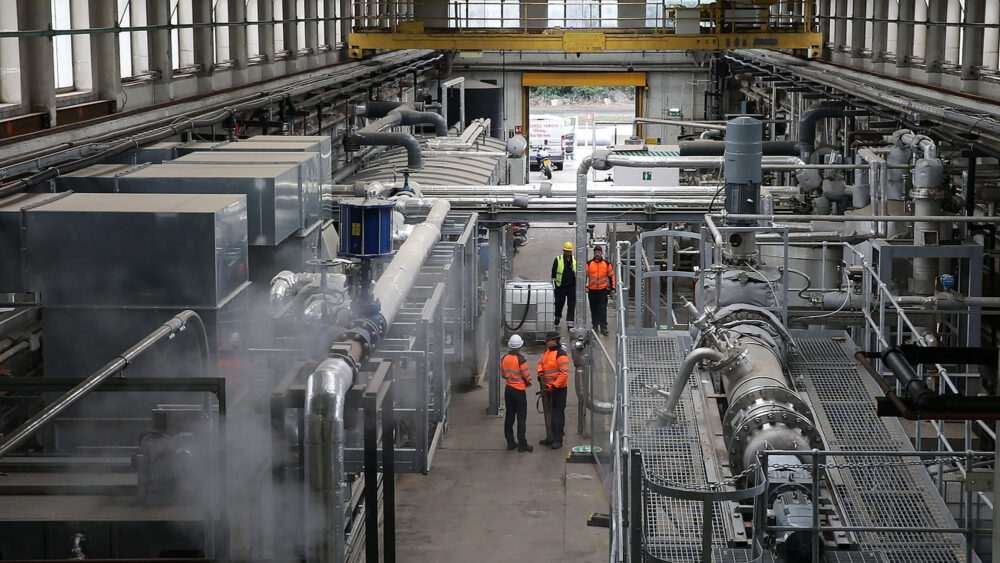
The trials took place at the UK company’s demonstration plant on Teesside. They showed continuous, stable operation over runs lasting up to 72 hours. Yields came in above target throughout. Multiple runs processed up to three tonnes of softwood residues from timber processing each day.
Nova Pangaea’s REFNOVA process converts waste biomass into ethanol. Feedstocks include wood chips, sawdust and wheat straw. The ethanol can then be upgraded into sustainable aviation fuel or renewable diesel. The process also yields biochar, a co-product that locks away carbon permanently. This makes the overall process carbon negative, removing more CO2 than it emits.
The results build on smaller-scale trials from early 2025. Those trials first proved the process could work outside the lab. Further trials are planned next year. They will help refine the design ahead of the company’s first commercial-scale plant.
The technology addresses a growing supply problem. Most sustainable aviation fuel today comes from used cooking oil, a feedstock in limited supply. Under UK and EU rules, the required share of SAF in aviation fuel will rise sharply in the coming decades. The International Air Transport Association estimates that by 2030, Europe’s waste biomass could support enough SAF production to meet 2050 targets.
Nova Pangaea is also working with British Airways and LanzaJet on Project Speedbird. The UK government backed initiative will build four facilities producing bioethanol from local waste for conversion into SAF.
Chief executive Stewart Stewart said the trials strengthen investor confidence as the company works toward its first commercial plant. He pointed to waste biomass as a genuine alternative to single-feedstock dependence.
Nova Pangaea has raised over £21m to date, including UK government grant funding.
The post Waste biomass trials boost carbon-negative fuel appeared first on World Bio Market Insights.