

Introduction: Why Waste Programs Fail (and How to Get Them Right)
SEE THE SIZE GUIDE
GET THE RECYCLING TOOLKIT
DOWNLOAD THE CHECKLIST & WORKSHEET
Launching a successful waste and recycling program doesn’t happen by accident—it requires careful planning, clear goals, and ongoing collaboration. Most organizations don’t fail because they don’t care about sustainability; they fail because their waste systems are unclear, inconvenient, or disconnected from operations.
A successful waste management program is not just about recycling. It’s about:
- Behavior design: Making it easy for people to do the right thing.
- Operational efficiency: Streamlining collection, sorting, and disposal.
- Cost control: Reducing expenses through smarter logistics and partnerships.
- Measurable sustainability outcomes: Tracking progress and celebrating wins.
As emphasized in Recycle Away’s framework, successful programs require planning, stakeholder alignment, and continuous improvement—not a one-time setup.
The 10-Step Waste Management Program Framework
Step 1: Conduct a Waste Audit
Before designing anything, understand what you’re managing. A waste audit reveals your biggest opportunities and prevents overcomplicating your system.
What to analyze:
- Waste types (paper, plastics, organics, landfill)
- Volume and frequency
- Where waste is generated
- Current contamination issues
Industry examples:
- Offices: Paper and food waste dominate.
- Hospitals: Regulated waste streams and packaging.
- Manufacturing: Cardboard, pallets, scrap materials.
- Events/Stadiums: Bottles, cans, food packaging.
Step 2: Set SMART Waste Goals
Define clear targets, such as:
- Diversion rate (e.g., 60% ? 80%)
- Contamination reduction (e.g., -25%)
- Cost reduction (e.g., hauling savings)
Goals must be Specific, Measurable, Achievable, Relevant, and Time-bound (SMART).
Step 3: Align Budget, Haulers, and Infrastructure
A strong program aligns:
- Hauler capabilities (what they actually recycle)
- Equipment (bins, signage, liners)
- Budget (capital + operational)
Key insight: Not all recyclables are accepted locally. Understanding downstream markets is critical to program success.
Step 4: Design Your Waste System
Core components:
- Centralized stations
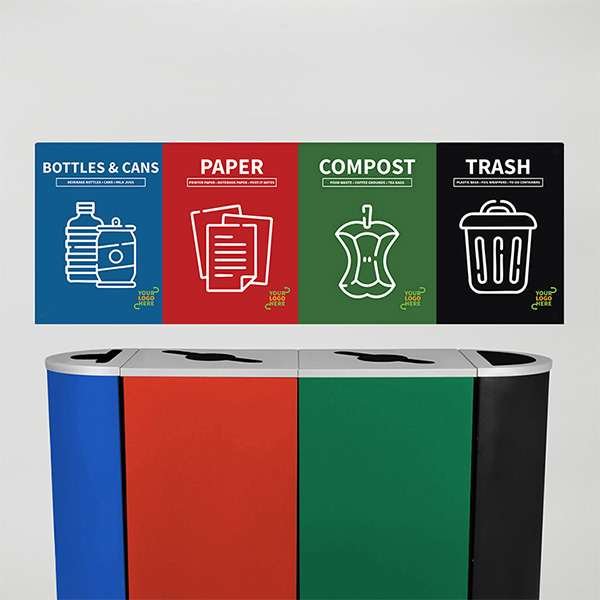
- Multi-stream bins (2, 3, or 4 streams)
- Consistent signage and colors
- Restrictive lids to reduce contamination
Golden rule: Every trash bin should have a recycling companion. This dramatically increases participation and reduces landfill waste.
Step 5: Optimize Bin Placement
Placement drives behavior more than education. High-impact locations include:
- Entrances and exits
- Break rooms and cafeterias
- Production areas
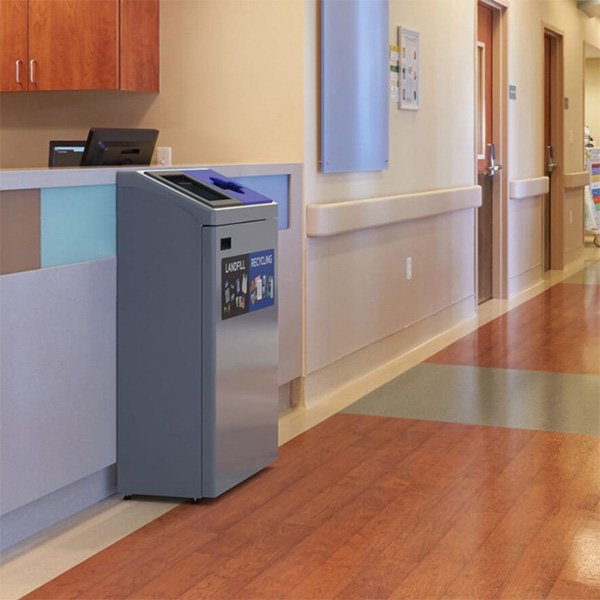
- Hallways and circulation zones
- Outdoor gathering spaces
In high-traffic environments like stadiums, placing bins near concessions, seating, and exits is essential for capturing recyclables.
Step 6: Simplify the System for Users
If users have to think, the system fails. Best practices:
- Limit streams (2–3 is ideal for most environments).
- Use visual signage (not text-heavy).
- Match lid openings to materials.
- Standardize colors across locations.
The reality: Contamination happens when systems are confusing—not when people don’t care.
Step 7: Education + Engagement = Behavior Change
Education must be visual, repetitive, and location-specific. Tools include:
- Bin signage
- Digital communications
- Training for staff and janitorial teams
- Event announcements (for venues)
Programs succeed when users understand both what to do and why it matters.
Step 8: Engage Operations and Janitorial Teams
Your custodial team is the backbone of your program. They need:
- Efficient bin designs
- Easy liner changes
- Logical collection routes
- Reduced handling time
Pro tip: If your system makes their job harder, it will fail operationally.
Step 9: Track Data and Performance
You can’t improve what you don’t measure. Track:
- Diversion rate
- Waste volume
- Contamination rate
- Cost per ton
- Labor time
Monitoring performance allows continuous optimization and long-term success.
Step 10: Continuously Improve the System
The best programs evolve. Ongoing improvements include:
- Adjusting bin placement
- Updating signage
- Adding composting streams
- Introducing smart waste technology
- Refining training
Waste programs are living systems that require iteration.
Industry-Specific Implementation Playbooks
Offices & Corporate Spaces
Focus on: Centralized stations in addition to desk-side bins, paper and organics diversion, employee engagement.
Universities & Campuses
Focus on: High-volume areas (dining halls, dorms), student education, standardized campus-wide systems.
Hospitals & Healthcare
Focus on: Regulatory compliance, segregation of medical waste, staff training and clarity.
Manufacturing & Warehouses
Focus on: High-volume material streams, durable containers and carts, operational efficiency and logistics.
Events & Stadiums
Focus on: High visibility, simplified streams, temporary infrastructure and rapid servicing.
Parks & Public Spaces
Focus on: Outdoor durability, strategic placement, public education and visibility. Well-placed, clearly labeled stations significantly reduce litter and improve diversion in public environments.
The 4 Pillars of a High-Performing Waste Program
- Infrastructure: Right bins, right placement, right streams.
- Behavior: Clear signage, intuitive design, user simplicity.
- Operations: Efficient servicing, janitorial alignment.
- Data: Tracking, reporting, continuous improvement.
Common Mistakes That Kill Waste Programs
- Poor bin placement
- Confusing signage
- No janitorial alignment
- No performance tracking
- Assuming users will “figure it out”
Quick Start Checklist
Use this to launch or audit your program:
Planning
- Conduct waste audit
- Identify top waste streams
- Set measurable goals
Design
- Select bin types and streams
- Standardize signage and colors
- Map bin locations
Operations
- Align with hauler capabilities
- Train janitorial staff
- Define collection routes
Launch
- Educate users
- Communicate program goals
- Install infrastructure
Optimize
- Track performance
- Reduce contamination
- Adjust system over time
[Download the Waste Management Program Checklist & Worksheet PDF]
Final Takeaway
A successful waste management program is not about bins. It’s about designing a system that makes the right behavior the easiest behavior. Organizations that get this right:
- Reduce costs
- Improve ESG reporting
- Increase diversion
- Strengthen their brand
The key to a lasting recycling and waste management program is treating it as an evolving system rather than a one-time project.
To make the process easier, Recycle Away offers a wide range of customizable recycling bins designed to fit the unique needs of every workplace, school, or public space. From bespoke containers to tailored collection systems, we provide the tools and expertise to help your program succeed. Explore our solutions today and take the next step toward building a cleaner, more sustainable environment.


