
What are the ingredients that keep some farm families pulling together in the same direction?
A well-functioning family business is one with owners who take an active interest in the family and the business, says family business advisor Jim Soldan. But this can also cause all kinds of business and family issues if not done right.
Here are 11 key ingredients successful farm families use in the recipe that keeps their businesses — and families — strong.
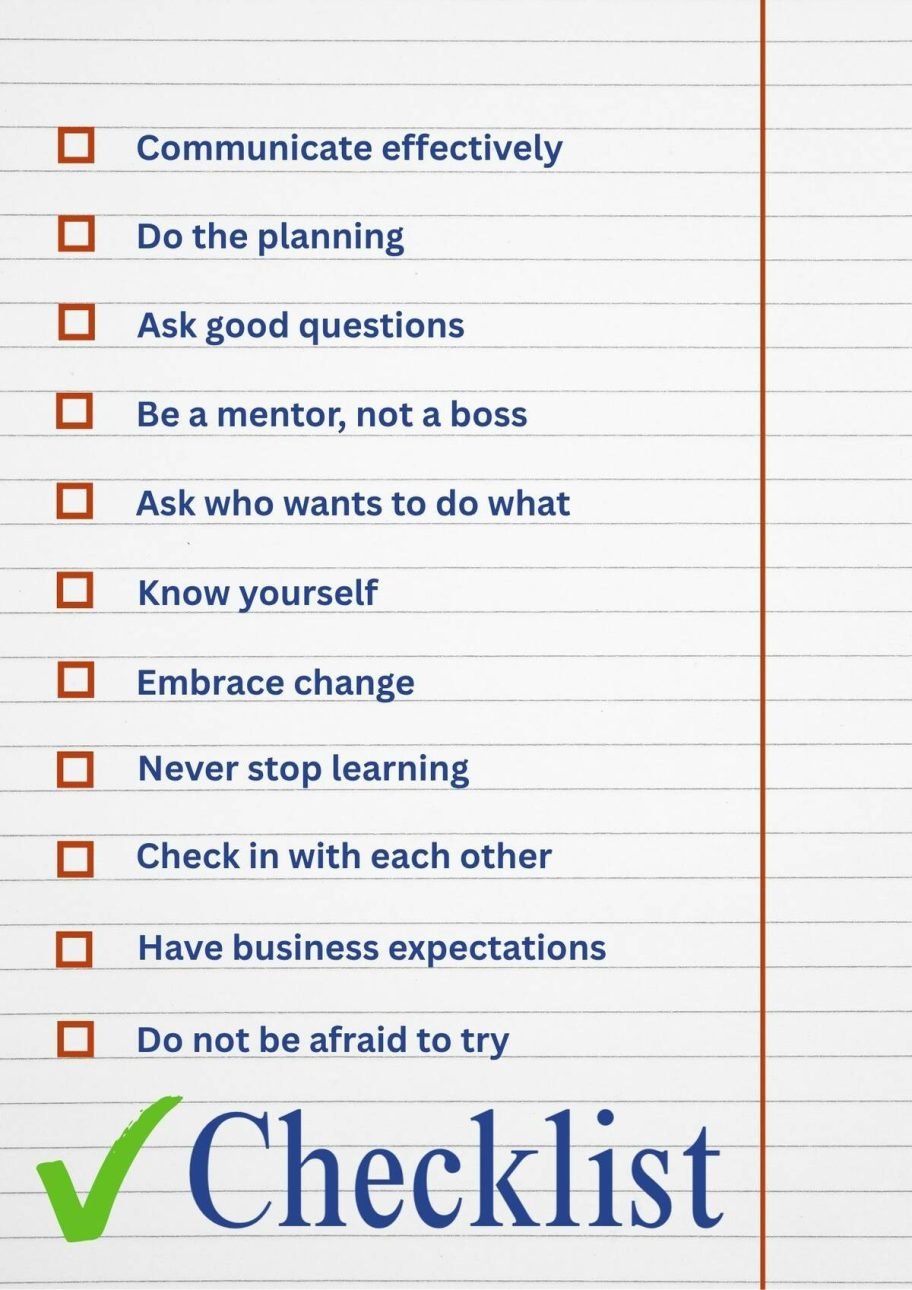
1. Communicate effectively
Although not always easy, effective communication is critical to good working relationships, whether with family or employees — but not all communication is effective.
“Everything that could go wrong stems from misconceptions, assumptions, greed, selfishness, stubbornness, poor or non-communication and total lack of planning,” Soldan says.
“The first thing people need to learn is how to communicate. They learn how to change the oil in the tractor, look after the cows, but the thing that they need to learn they don’t, which is how to effectively communicate. They need to take effective communication training, to sit down with somebody and go through the basic principles of communication, what works, what doesn’t work.”
Then they need to maintain that communication through regular meetings, both face-to-face and through technology to keep everyone connected and in the loop between those meetings.
“We have management or partner meetings throughout the year, and with our team we have group chats on WhatsApp to keep people interested and involved,” says Roberta Galbraith who farms with her husband, Neil, and their two sons, Ryan, 35, and Jason, 32, near Minnedosa, Man.
“We have a (WhatsApp) thread that keeps the whole team connected and we use two-way radios, because cell service is spotty sometimes, to ensure smooth transition between team members.”
2. Do the planning
Soldan often sees situations where families approach planning first by consulting with their legal and accounting experts. Although these advisors are vital to any business or transition plan, it should not be the starting point.
“Before that they need to sit down as a family and say this is how we would like this thing to look like five years from now, and put it down on paper,” he says. “Then bring that to the accountant and lawyer as opposed to going there first without any discussion with the family.
“After that, they need to sit down and decide what they hold important in terms of the business and the family, and what does the crossover of that look like?”
This is the beginning of a governance foundation for the family and the business, he adds, and needs to build in accountability and consequences.
“If everyone puts their name to all these things and agrees to them, it is important that if someone transcends that, there is a consequence and people need to know that,” Soldan says.
3. Ask good questions
“Early on, assumptions were made with our accountants and lawyers,” Galbraith says. “Once we got over that hurdle, we realized we needed to ask better questions and dive deeper, and then we started to feel more empowered.”
4. Be a mentor, not a boss
“It’s not easy as the founder and owner of a family business to provide room for that next generation to participate, but if you don’t, then they will go somewhere else where they can see their visions develop,” Galbraith says.
5. Ask who wants to do what
Defining roles and responsibilities for each family member (and employee) creates a better work environment and improves job satisfaction. It all begins by simply asking what people like and don’t like to do while recognizing there are some jobs that no-one is going to like but that someone has to do.
“We had made assumptions about what people wanted and liked to do and found out you shouldn’t do that because when we asked them, some people like doing a job that you know someone else hated,” Galbraith says. “It was insightful from the standpoint that we got a sense of where they like to spend their time, so that helps when you’re trying to figure out who in your crew might be the stone picker, or who likes to spend time on the drill or the sprayer, or whatever.”
Ryan Galbraith and his brother Jason, have clearly defined roles. Ryan is responsible for the day-to-day management of the farm, while Jason prefers operating equipment and trucking the grain.
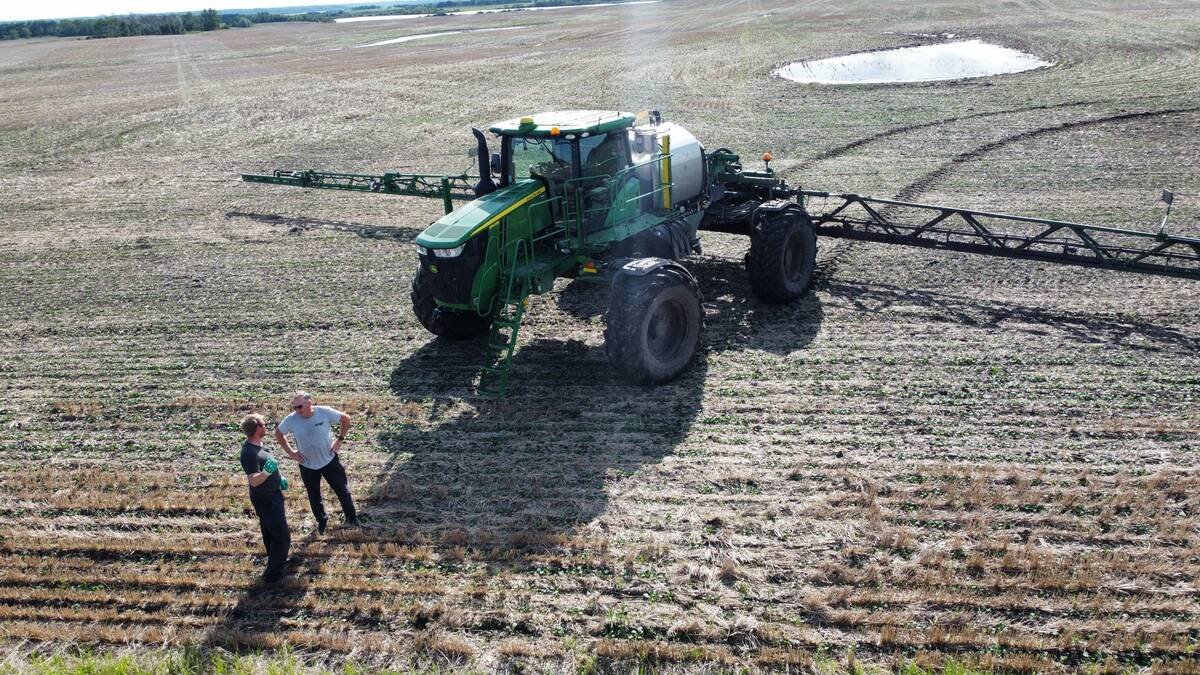
“The boys were both clear about what kinds of roles and responsibilities they were looking for, and that made it easy as far as how we split those,” Galbraith says. “Jason is an excellent operator and knows what is going on in the business, but he doesn’t want to be the person that manages the overall operation. Ryan is also an excellent operator but he really enjoys the management of the business, so it was a natural fit.”
The Lavoie family, who own Lavoie Ventures, a 13,000-acre grain farm near St-Isidore, Alta., also have clearly defined roles based on their specialized skills and interests. There are five family members involved in the operation: brothers, Normand and Laurent, and their first cousins, Lévis, Alexandre and Simon.
“We see our strengths and our weaknesses and we make it work,” says Normand, who manages the production side of the farm. “Everybody has a role, and we meet once a week to discuss what we are doing. We like to keep the lines of discussion open and if there is a conflict we get to the bottom of it before it creates bigger problems. We also cross-train, so there are always two people (in each vital role) so someone can take over if someone has a family issue to deal with or something else.”
6. Know yourself
A few years ago, the Galbraiths completed a DISC test that categorizes personality types and communication styles into four main categories: dominance (D), influence (I), steadiness (S) and conscientiousness (C).
“The DISC profile determines where you sit, like are you a leader, are you a driver or are you an introvert, are you somebody who likes to get along with everybody,” Galbraith says. “We did it initially with just the family members and that helped with conversations and communication. Once you sort out where people land on the assessment it provides you with guidance on how you might have conversations differently.”
7. Embrace change
Anticipating the need for business and life changes that will impact farm operations and family dynamics is important to make sure everyone has their needs met while keeping the business on track.
“We have had to grow the business to support our sons coming back to the farm, and now they are married and have kids, so we are trying to manage time off so they can have more family time because what’s the whole point of doing this if you don’t spend time with your family?” Galbraith says.
“Then, Neil and I are trying to remove ourselves from the day-to-day, so that we can spend more time doing other things like retirement but still being here as mentors and supports because that is a huge part of what we do. Our roles are changing and I spend more time as a grandma now as our daughter-in-law is taking over the books, and things are constantly shifting.”
When Normand Lavoie’s two sons decided they wanted to come into the farm business two years ago, they came up with a creative way to make it happen.
“There wasn’t much room for them, so we decided to start a small feedlot operation,” he says. “They came up with the business plan and showed it to the partners and since then we have added on-farm slaughter capacity that will allow them to expand in different directions.”
8. Never stop learning
Business management and financial literacy are vitally important to the family farm business today.
Both Ryan and Jason Galbraith completed the University of Manitoba’s ag diploma program, which includes a management project component, and Ryan is part of the Farmer Coach program developed by Evan Shout and Kristjan Hebert of The Hebert Group. He also took the TEPAP program (an executive program for agricultural producers), offered through Texas A & M University.
“Having access to people who are outside of your business that are helping you analyze things is important because when you’re in the business, if you don’t have that acumen, you can tell yourself a story that may or may not be true,” Galbraith says. “It all comes back to continuing to ask questions to get clarity. You cannot put your head in the sand and think it will all work out.”
9. Check in with each other
When the family business owners meet, they need to take an active interest in each other, Soldan says. “They need to discuss how it is going for them personally, in their business and in their family,” he says. “They need to know if anyone has any issues. You cannot separate the family and the family business; what affects the family is going to directly affect the business, and what affects the business is going to affect the family.”
Mental health and wellness are something everyone in the agriculture industry needs to pay more attention to, Galbraith says.
“In a busy time like seeding, we are all running on empty, but it makes it so much better when there’s a team around you,” Galbraith says. “You must be willing to say, ‘I’m tired, I can’t do another day,’ and then you decide as a team about what to do. Being open to having people say things and being approachable is so important.”
“We definitely value family first,” says Normand. “If somebody goes through something where they have to be away from the business, there’s not even a question that they just take the time they need.”
10. Have business expectations
“It was passed down to us from the previous generation that the farm is a business and you have to treat it that way, so we take it seriously and try to keep everything organized,” says Lévis Lavoie, Normand’s first cousin who brings his off-farm accounting experience to the office side of the farm. That includes documentation such as shareholder agreements, policies and operating standards.
“We treat everybody fairly, but everybody’s got to give back and put in the time on the operation, and we will reward those people,” he says. “When we come up with a policy, we’ll discuss it as a group and hash out the pros and cons of option A versus option B, then everybody votes and majority rules.”
11. Do not be afraid to try
There is no template for harmonious family or business relations, and every family and farm will be different.
“It is just a work in progress, and some things work and some things don’t, but good on you for trying,” Galbraith says.
The post What keeps farm families pulling in the same direction appeared first on Farmtario.


