
An increased focus on knowledge transfer in agriculture won’t matter if the systems and people aren’t available to move the information to users.
That was a central theme of the recent Canadian Agri-food and Rural Advisory, Extension and Education (CAREE) conference at the University of Guelph.
WHY IT MATTERS: Concerns were raised that new research and technology aren’t reaching the farm level.
“I think sometimes we overlook a very important question: Who is actually going to help farmers and other organizations actually use that information?” said Christine Baes, associate dean of external relations at the Ontario Agricultural College.
“We can develop the best technologies in the world, but if they’re not adopted, they’re not going to deliver the benefits that we’re hoping for.”
Technology adoption isn’t just about having resources available; it’s about having people available to move the information to farmers, said Baes.
KTT is not extension
Knowledge Translation and Transfer, or KTT, requirements have been included in most research funding in recent years. However, agricultural extension resources across Canada have declined or been left to the private sector.
“KTT and extension education are not the same thing,” said Baes. “Extension is about much more than communicating research results. It’s about understanding what people need, building relationships, helping evaluate options and supporting people as they make decisions where they do have skin in the game, and that takes expertise.”
KTT AND EXTENSION COMPARED
Knowledge translation and transfer (KTT)
- Turns knowledge into use, according to the Ontario Agri-Food Innovation Alliance
- Required in most research funding in recent years
- Can be project-based
Extension
- Starts with people, their needs and their context
- Is a continuous relationship that includes evaluating options and supporting decisions
- Takes expertise in facilitation, communication, judgment and relationship building
The extension system in most parts of Canada has declined, as provincial agencies have cut staff and changed the focus of their extension services.
That means private companies have filled the information gap but have a profit motive in the information they distribute.
Indeed, Ontario’s agricultural extension system was redesigned 30 years ago to remove extension people from farmer-facing work and instead focus on providing extension services and technology transfer to businesses and organizations, which have become the farmer-facing access point.
Ontario was not alone.
Privatization since the 1990s
Ataharul Chowdhury, an associate professor in capacity development and extension at Guelph and the lead organizer of the CAREE conference, told attendees that extension services across the global north were privatized and reduced in the 1990s.
The tide is turning back to collective work in extension, he said. The Netherlands led in the privatization of extension.
“They had an excellent success,” said Chowdhury. “They improved client relationships, but now they realize that with all of these successes, they are missing collective function,” especially around climate change and regenerative agriculture.
Chowdhury said that if Canada wants a strong extension system, then it needs a place to educate those people.
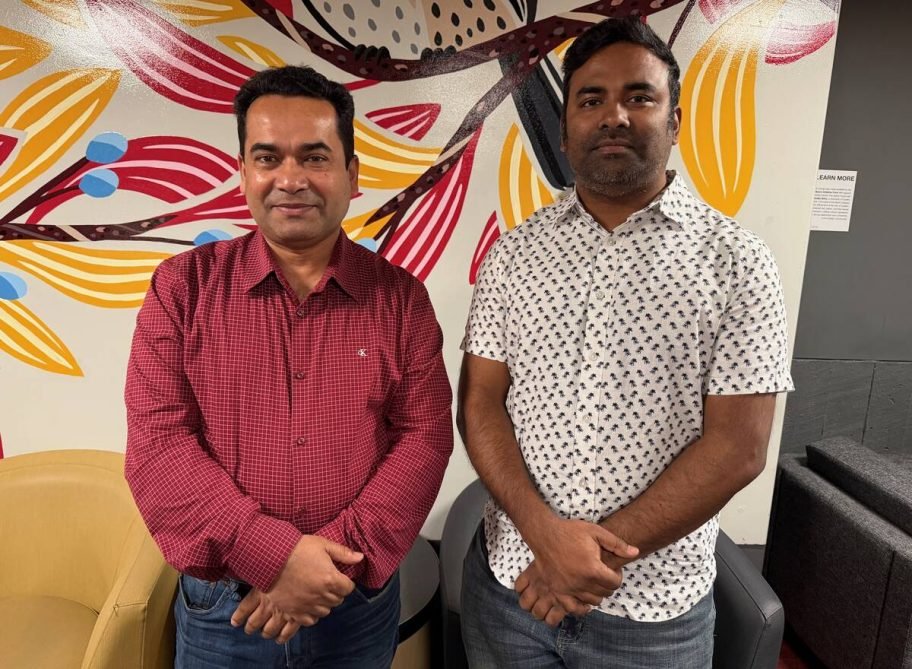
“Competencies like facilitation, communication, judgment, relationship building, and ethical practice, and extension as discipline — that’s probably completely forgotten in our career system,” he said.
Funding the foundation
The Ontario Agri-Food Innovation Alliance, the research funding agreement between the provincial government and the university, said KTT transforms knowledge into use.
KTT is important, but extension is different, Chowdhury explained.
“Extension education starts with people, the needs, context, experience, decision, and capacity to continue learning,” he said, adding that knowledge transfer can be project-based; extension is about a continuous relationship and building a foundation.
“If we continue funding individual KTT or extension initiatives without investing in that foundation, we may continue producing activity while gradually weakening the people, scholarship, and institutions that sustain it.”
Farmer trust and funding cycles
Farmers trust the advisors they use, said Lauren Benoit, a doctoral student at the University of Saskatchewan, who was raised on an Ontario farm and did a Nuffield Scholarship on extension topics.
However, she said there’s a lack of clarity around extension systems and funding goals to make that happen.
Benoit was part of a panel on the state of extension with Steven Roche, president of Acer Consulting, a private extension company working mostly in livestock, and Tongzhe Li, a professor in behavioural economics at Guelph, who is increasingly working on how farmers respond to innovations.
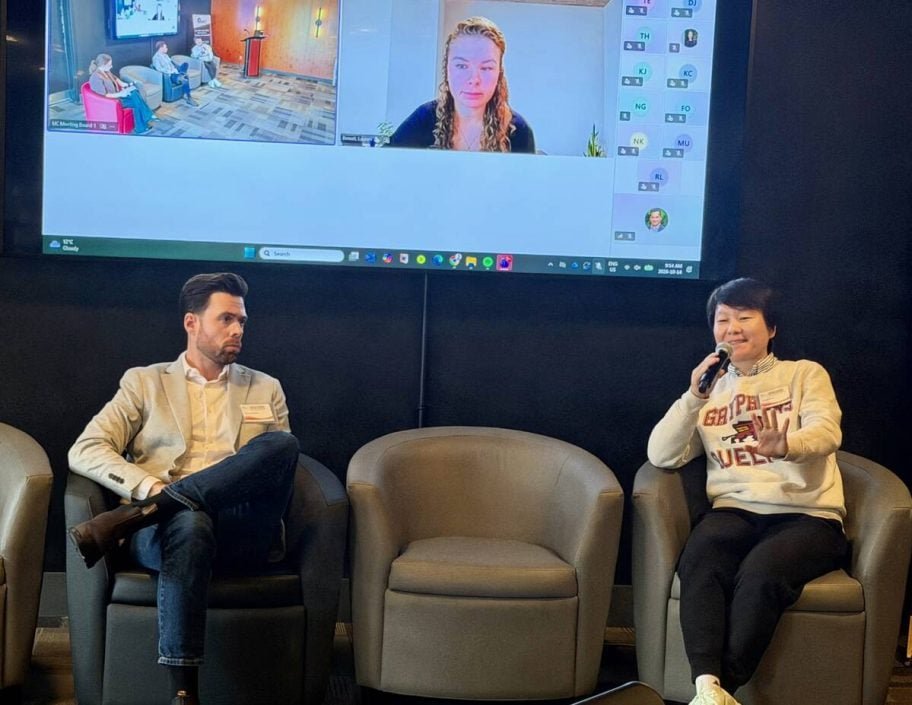
Their observations underlie the argument that extension needs expertise to succeed, especially in agriculture.
“I think some of that trust starts to degrade when you get funding cycles that are incomplete,” said Benoit.
The fact that farmers are involved in businesses makes their responses different than consumers, added Li.
“It’s very difficult to stay superficial and tell them (farmers) this is an innovation that will actually help the environment, and all of a sudden, everybody jumps on board and are willing to pay much higher for the technology,” she said.
Roche agreed and pointed out that despite well-meaning information resources, what an advisor is trying to get across won’t necessarily fit a farmer’s unique needs.
“Maybe many of us in this room are underestimating the challenge, and I think one of the things we underestimate, or we assume wrongly, is that people armed with information will act rationally,” said Roche. “That makes sense. That’s an innovation. People want this. My supply chain asks for this; therefore, I will. That’s not the case in many cases for various, different reasons.”


