One load of laundry can release up to 1.5 million tiny plastic fibers into the water that drains out of your washing machine. Most water treatment plants can’t catch fibers that small, so they end up in rivers, lakes, and the ocean. Scientists now think laundry is responsible for about 35% of the small plastic pieces found in the sea.
That changes what “zero-waste” cleaning actually means today. The plastic detergent bottle is the obvious problem. The hidden problems, including shedding fibers, plastic films sold as “eco-friendly,” mystery fragrance chemicals, and contaminants you’ll never see on a label, are the bigger concern. But here’s the good news: most of the simple ingredients people have used for generations still work, and a few small upgrades make the rest of your routine a lot cleaner.
Cleaning Your Home
Most chemicals in store-bought cleaners haven’t been fully tested for long-term health effects. The EPA’s Safer Choice program certifies products made without ingredients linked to cancer, hormone problems, or harm to wildlife. About 2,000 products carry the label. Almost lost in a 2025 budget cut, the program survived but with fewer staff. Words like “natural” and “green” on packaging aren’t regulated and don’t really mean anything, so look for the Safer Choice label or check the EWG Guide to Healthy Cleaning before trusting a brand.
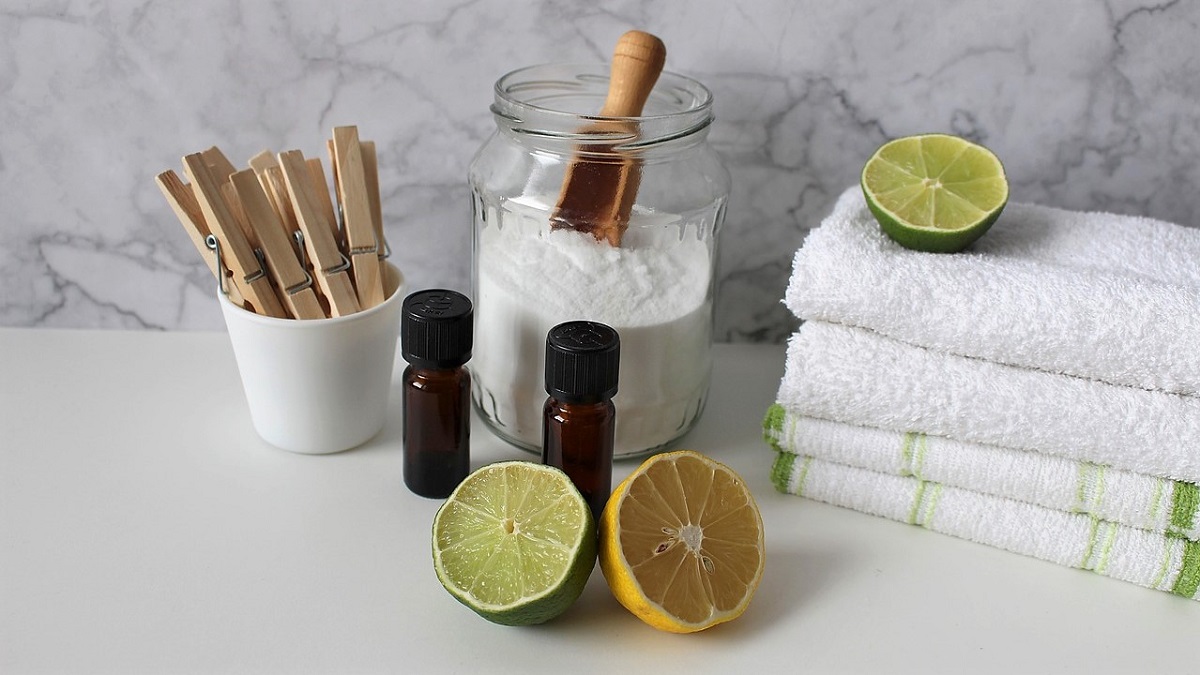
Making your own cleaners gives you control, cuts packaging, and saves money. The basic kit is short: baking soda for scrubbing, white vinegar for windows and mineral stains, lemon juice for cutting boards, 3% hydrogen peroxide (in a dark bottle) for stains and germs, and castile soap for general cleaning. A spray bottle of half vinegar, half water cleans most surfaces. Reuse jars and spray bottles instead of buying new ones.
One important update: older recipes, including earlier versions of this article, used borax as a staple ingredient. Newer research has changed that advice. Europe added borax to its list of substances of very high concern in 2010 because high doses caused reproductive problems in animals, and California lists it as a reproductive toxin under Proposition 65. Borax isn’t banned in the U.S., but the Environmental Working Group recommends skipping it in homemade cleaners. Plenty of borax-free recipes work just as well.
About killing germs: the popular advice to spray vinegar, then hydrogen peroxide, came from a 1996 study on beef tissue, not on home surfaces. Vinegar at normal household strength doesn’t reliably kill many germs, including norovirus and several drug-resistant bacteria, and it isn’t EPA-registered as a disinfectant. For everyday cleaning, vinegar is fine. When real germ-killing matters, when cleaning up after handling raw meat or during a stomach flu outbreak, use 3% hydrogen peroxide alone or an EPA-registered disinfectant.
Never mix peroxide and vinegar in the same bottle and don’t mix bleach with vinegar or any acid; the gases created when these are mixed is dangerous.
Laundry
The laundry room in a great place to start your zero-waste journey.
Microfibers. Synthetic fabrics like polyester, nylon, and fleece shed tiny plastic threads every time you wash them. France passed a law requiring built-in filters on all new washing machines, which took effect January 1, 2025. California passed a similar law in 2023, but the governor vetoed it. Oregon, New York, and several other states have filter bills moving through their legislatures. Until U.S. machines come with filters, you can use a microfiber-catching laundry bag like Guppyfriend or a Cora Ball, or attach an external filter from Filtrol or PlanetCare to your drain hose. These catch up to 90% of fibers.
“Plastic-free” laundry sheets and pods. Most laundry sheets use a film made from polyvinyl alcohol (PVA or PVOH), which dissolves in water. The cleaning industry says PVA breaks down completely in wastewater treatment, but a 2021 study estimated that about 75% of it passes through treatment plants intact and persists in the environment. The science is debated, but the labels aren’t: if you see polyvinyl alcohol, PVOH, or PVA on the package, the dissolving film is a synthetic plastic. Powdered detergent in cardboard, concentrated liquid in glass, or PVA-free sheet brands are alternatives that avoid this question.
A hidden carcinogen called 1,4-dioxane. This chemical isn’t added to detergent on purpose — it’s a leftover from how certain ingredients are made. Because it’s a contaminant rather than an ingredient, manufacturers don’t have to list it. Independent testing has found it in most conventional detergents. New York finalized rules in September 2024 limiting it to 1 part per million, and the EPA officially called it an unreasonable health risk in November 2024. To avoid it, skip detergents listing SLES (sodium laureth sulfate), “PEG” anything, or ingredients with “-eth-” in the name.
Skip dryer sheets. A University of Washington study found dryer vents emit more than 25 different volatile chemicals when scented detergent and dryer sheets are used together. Seven are classified as hazardous air pollutants. Wool dryer balls reduce drying time and static without coating clothes in chemicals. For scent, put a few drops of essential oil on a damp washcloth and toss it in.
Wash cold. About 90% of the energy a washing machine uses goes to heating water. Switching from warm to cold cycles saves about 3.2 kWh per load, roughly the same as running your fridge for 10 months over a year’s worth of laundry. Cold water also makes clothes last longer and shed fewer microfibers. Modern detergents are designed to clean in cold water. Replace fabric softener with half a cup of white vinegar in the rinse cycle. If you’re shopping for a new dryer, heat-pump dryers use 20–60% less energy than conventional ones.
What You Can Do Today
- Wash in cold water on shorter cycles. Saves energy, money, and reduces microfiber shedding.
- Use a microfiber-catching laundry bag, ball, or external filter.
- Skip dryer sheets and fabric softener. Use wool dryer balls and vinegar instead.
- Read ingredient lists. Avoid SLES and PEG compounds in detergent. Skip products with PVA in their dissolvable film if microplastics matter to you.
- Make your own cleaners with baking soda, vinegar, peroxide, and castile soap. Skip borax.
- Look for the EPA Safer Choice label on store-bought products.
- Never mix bleach with vinegar or any other acid.
- Support state and federal microfiber filter laws so this stops being a consumer-level problem.
Related Reading
- 7 Steps to a Zero-Waste Lifestyle
- How to Safely Dispose of Cleaning Products
- The 30-Day Zero-Waste Challenge: Simple Daily Actions for Beginners
Featured image by Monfocus from Pixabay
Editor’s note: Originally authored by Sarah Lozanova on May 18, 2016, this article was substantially updated in May 2026.<!–
You Might Also Like…
–>
The post Zero-Waste Cleaning and Laundry Tips appeared first on Earth911.