

Why Recycling Infrastructure Is Central to Modern Sustainability Goals
Earth Day is more than a symbolic moment. It is a reflection of how far environmental awareness has come and a reminder of how much work remains. Since its founding in 1970, Earth Day has helped shape global conversations around pollution, conservation, and sustainability. Today, one of the most visible and actionable ways organizations contribute to Earth Day goals is through effective waste and recycling systems.
For businesses, municipalities, and institutions, waste management is no longer just an operational necessity. It is a measurable, reportable, and highly visible component of environmental responsibility.
The First Earth Day and the Start of the Modern Environmental Movement
The first Earth Day took place on April 22, 1970, mobilizing an estimated 20 million Americans. At the time, there were few regulations around waste, air pollution, or water contamination.
This moment sparked a wave of environmental legislation and awareness:
- Creation of the Environmental Protection Agency in 1970
- Passage of the Clean Air Act and Clean Water Act
- Launch of the modern recycling movement in the 1970s
Recycling itself was still in its infancy. Curbside recycling programs were rare, and most waste went directly to landfill.
Waste by the Numbers: Then vs Now
Over the past five decades, waste generation has grown dramatically alongside population and consumption.
Key Data Points
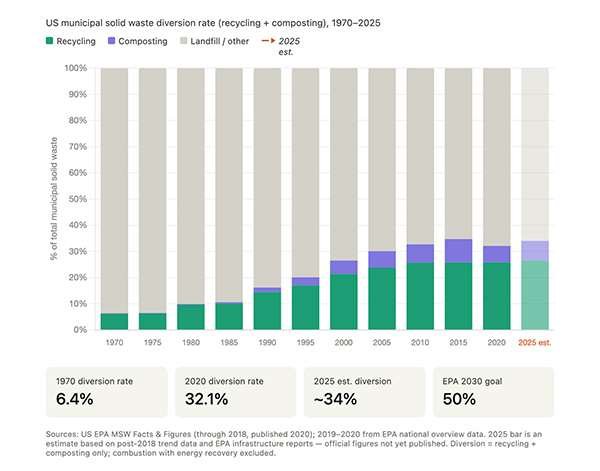
- 1970 U.S. waste generation: ~121 million tons
- Today: ~292 million tons annually
- Recycling rate grew from under 10 percent to ~32 percent
- Global waste exceeds 2 billion tons annually
- Plastic recycling remains around 9 percent globally
Awareness has increased. Infrastructure has not always kept pace.
Earth Day Today: From Awareness to Accountability
Earth Day has evolved into a global movement focused on measurable outcomes:
- ESG reporting and data transparency
- Zero waste and landfill diversion targets
Circular economy strategies- Carbon reduction commitments
Waste management is central because it is visible, measurable, and operationally tied to cost and performance.
How to conduct a Waste Diversion Audit
Why Waste Management Is Core to Earth Day Goals
Waste Is a Visible Sustainability Signal
Recycling systems are often the most public-facing proof of a company’s environmental commitment. Investing in well-designed commercial recycling bins ensures that sustainability is not just stated but experienced.
Diversion Rates Drive ESG Performance
Organizations track diversion rates, contamination, and waste per occupant. Without proper infrastructure like multi-stream recycling stations, these metrics cannot improve.
Landfill Reduction Supports Climate Goals
Diverting waste, especially organics, reduces methane emissions. Implementing composting systems and bins is one of the most effective ways to align with Earth Day climate goals.
Waste Systems Influence Behavior
The moment of disposal matters. Clear signage and intuitive bin design, such as recycling bins with restrictive lids , significantly reduce contamination.
The Recycle Away Approach to Earth Day
At Recycle Away, Earth Day is built into everyday infrastructure decisions.
Designing for Real-World Use
Different environments require different solutions:
- Offices benefit from desk side recycling bins that promote individual responsibility
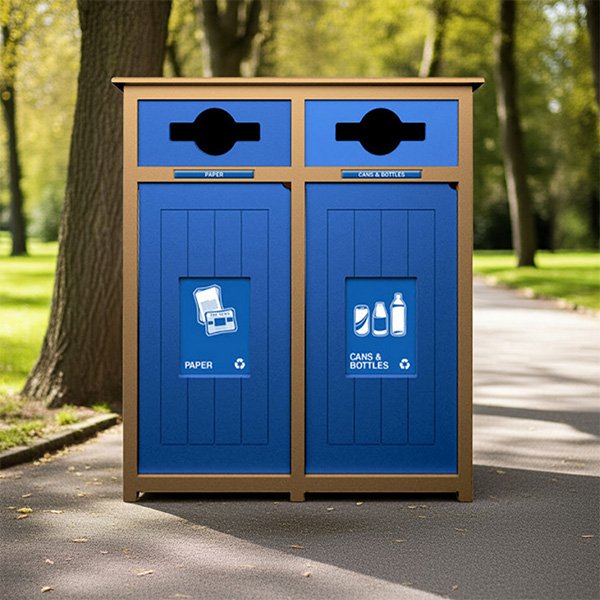
- Parks require outdoor recycling bins that withstand weather and heavy use
- Stadiums and events rely on public space recycling stations designed for high traffic
Simplifying Waste Streams
Overcomplicated systems fail. Recycle Away helps organizations align their setup with real behavior and hauler capabilities using solutions like centralized recycling stations.
Prioritizing the Moment of Decision
Clear communication at the bin is critical. Custom recycling signage and graphics help users quickly make the right choice.
Supporting Measurable Outcomes
Recycle Away supports:
- Waste audits
- Diversion tracking
- Program optimization
Tools like the Recycling Toolkit help organizations build structured, data-driven programs.
Key Earth Day Actions for Organizations
Conduct a Waste Audit
Understanding your waste stream is the foundation of improvement.
Upgrade Recycling Infrastructure
Replace inconsistent bins with standardized systems like office recycling bins that improve participation.
Reduce Contamination
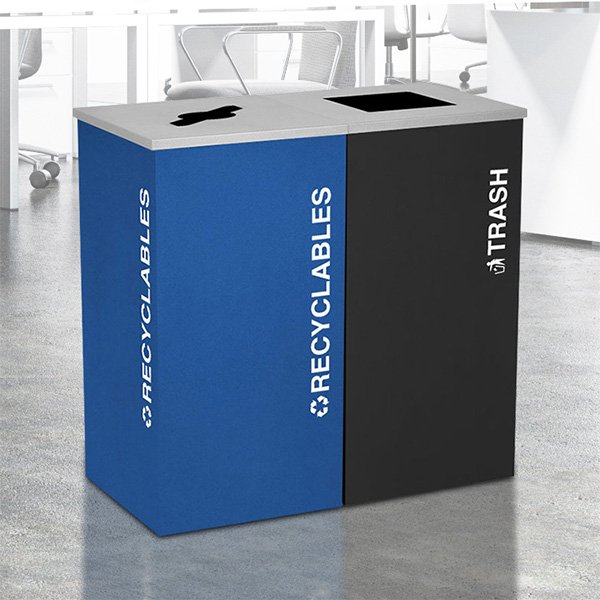
Use restrictive openings, consistent labeling, and proper bin pairing such as landfill + recycling stations.
Introduce Organics Diversion
Add composting in high-impact areas like cafeterias using food waste collection bins.
Leverage Smart Technology
Smart waste monitoring tools can reduce collection costs and improve efficiency.
The Next 50 Years of Earth Day
The future of Earth Day will be defined by:
- Circular material systems
- Waste-to-energy solutions
- Smarter infrastructure
- Data-driven waste management
Organizations that invest in systems today will lead tomorrow.
Conclusion: Earth Day Happens Every Day
Waste management is one of the most immediate and impactful ways to support Earth Day goals.
It is visible
It is measurable
It drives behavior
It delivers real environmental outcomes
Recycle Away helps organizations turn everyday waste decisions into meaningful sustainability progress through better infrastructure, smarter design, and data-driven strategy.
FAQ: Earth Day and Waste Management
Additional topics of interest:
Green Up Day – A Vermont Tradition
How to Start and Grow a Successful K – 12 Recycling Program
Meeting the Challenge of Recycling and Waste Management for Municipal Parks


