
Emissions from oil and gas used to be simply calculated using a uniform carbon content in these resources — a barrel of oil was reported to emit 434 kg carbon dioxide equivalent (CO2e), and an equivalent barrel of gas was reported to emit 315 kg of CO2e. But now we know how different oil and gas, and their resulting emissions, really are. That’s because these resources are diverse, ranging from the heaviest oils, with the consistency of peanut butter, to wet gases that are more like cream soda. Their varying makeups require varying complex processes to extract, process, transport, and turn oil and gas into fuels and other end products. As such, their associated emissions cannot be standardized so simply.

In fact, the emissions from equivalent volumes of these resources can vary markedly—even for assets in the same region. In the United States alone, RMI’s Oil Climate Index plus gas (OCI+) tool finds that oil and gas methane emissions intensities range over 10-fold from under 1 kilogram to over 8 kilograms of methane per barrel oil equivalent. (See graph below).
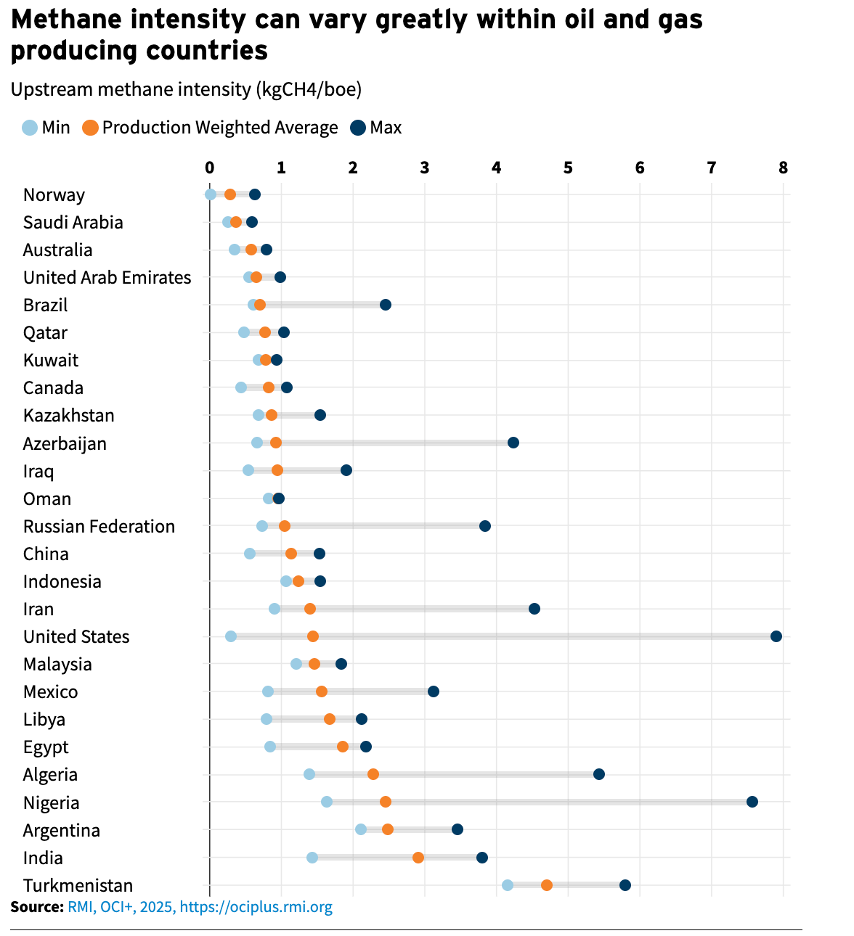
RMI’s data also analyzes oil and gas by resource types. And here, differences in emissions intensities are large enough to matter.
Extra-heavy oils have the highest average emissions intensities that take into account both CO2 and methane emitted. But gases tend to have the widest ranges in emissions, with some of the lowest and some of the highest overall emissions intensities. Emissions increase when methane — the main component in gas that powerfully warms the planet — leaks. Preventing the loss of gas systemwide both minimizes emissions and cuts energy waste.
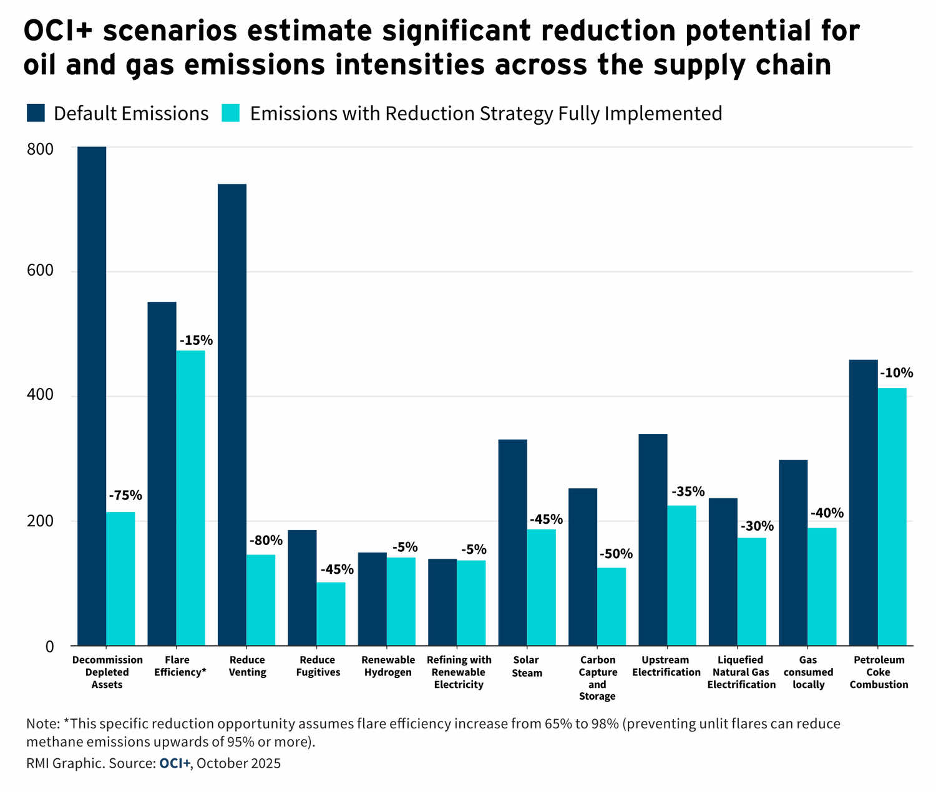
Armed with this knowledge, industry, investors, insurers, and policymakers can strategically target the most effective ways to reduce emissions from the diversity of oil and gas assets worldwide. Modeling scenarios offers decision-making tools for production, processing, refining, transport, and end uses that can slash emissions as much as 80 percent, making a huge contribution to climate action now.
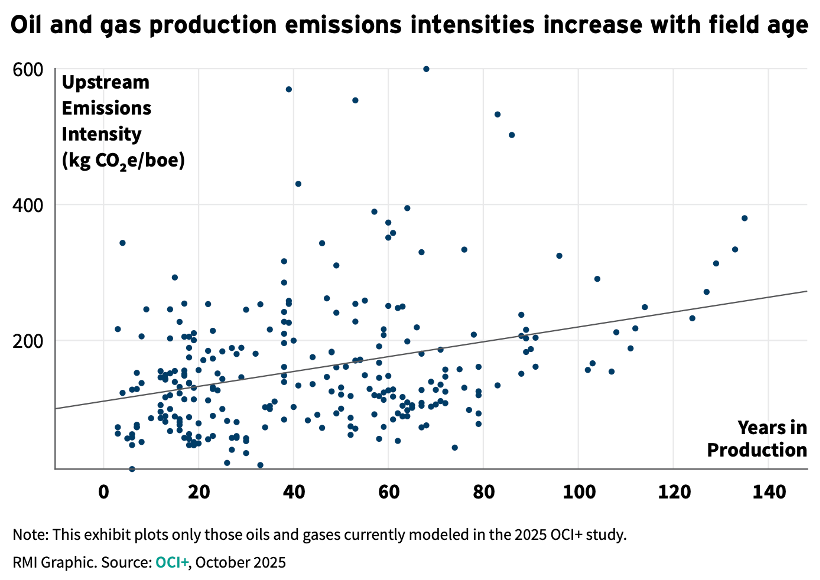
Routinely collecting data and making it publicly available is critical to track changing resource characteristics over time.. These resources change underground as they age and wells that once gushed become depleted.

This can have implications for safeguarding local communities and the global climate. The emissions intensity and composition of oil and gas also change over time as an asset moves beyond its production heyday. As a well gets older and production drops, it can become a “marginal well,” producing less than 630 gallons a day while contributing a disproportionate amount to emissions and the subsequent environmental and health risks. Around 75 percent of America’s currently producing wells are marginal wells, but they produce less than 5 percent of oil and gas in the United States. Properly maintaining and decommissioning aging, low-producing assets could yield economic and social benefits.
Focusing on life-cycle emissions from the entire supply chain — from production, processing, refining, transport, and end use — reveals where targeted, cost-effective interventions can help reduce oil and gas sector emissions immediately and in the long term. This information helps stakeholders fully factor emissions and waste into their decisions around oil and gas purchases, investments, development, and regulation.
RMI’s Know Your Oil and Gas report presents total and disaggregated life-cycle emissions intensity estimates for over 70 percent of global oil and natural gas supplies and provides guidance so that companies, investors, policymakers, and civil society can take action to improve efficiency, cut costs and waste, support energy security, and combat environmental damages.
The post How many emissions are in a standard barrel of oil and gas? It’s complicated but quantifiable. appeared first on RMI.


