
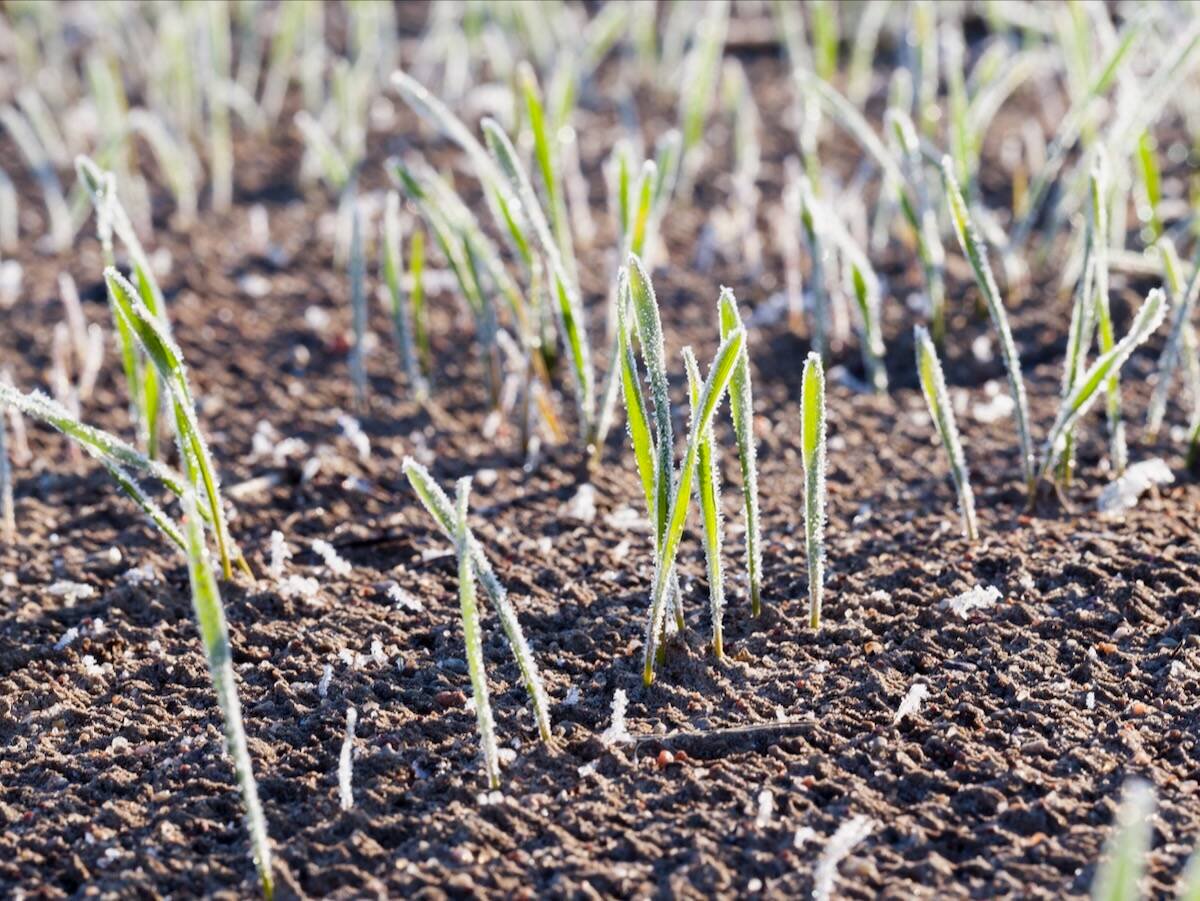
When a cold snap hits in early spring, farmers can see the damage almost overnight. Seedling growth stalls, roots struggle and stands thin out.
Now, new research from Chonnam National University in South Korea is shedding light on what’s happening inside plants during those sudden temperature drops — and how we might help crops cope better.
The research team, led by Professor Jungmook Kim, has uncovered a rapid molecular “switch” that helps plants survive freezing conditions by rewiring how their roots grow.
WHY IT MATTERS: Frost damage hits yield potential early, which can be an expensive hit on the bottom line. It’s a growing threat as extreme weather swings become more frequent.
For years, scientists have known that cold stress reduces plant growth. What wasn’t clear is how quickly plants sense the cold and what internal systems they activate to survive it. Understanding how plants respond at the molecular level to freezing temperatures could help researchers develop varieties that recover faster — or avoid damage in the first place.
Kim and his team found that cold temperatures don’t just put growth on pause. Instead, they trigger a fast breakdown of specific regulatory proteins known as Aux/IAA repressors.
Under normal conditions, these repressors act like brakes, preventing certain growth genes from turning on. But when temperatures drop, those repressors rapidly break down, releasing two key regulators that then activate a “master gene” called CRF3.
According to Kim, cold stress doesn’t simply slow plant growth, it actively rewires hormone signaling to adapt root development. The study showed that once CRF3 is activated, it reshapes root architecture.
In simple terms, the plant switches gears and instead of following its usual growth pattern, it reorganizes root development to better survive cold soil conditions. It’s a fast, coordinated reaction rather than a slow decline, which is why frost damage is visible almost immediately.
The work was done using tobacco plants as well as a small member of the mustard family called Arabidopsis thaliana, which is popular with plant scientists because of its short life cycle and prolific seed production. Both species are commonly used in plant science because their genetics are well understood, and Arabidopsis was the first-ever sequenced plant genome.
But according to Kim, the mechanism is likely broader. That’s because the proteins in question are found in all known land plants, including major, economically important crops like corn, soybeans, wheat and canola.
Fields for real
The next step for Kim’s team is to confirm how the switch behaves under real field conditions before they can look at implementable on-farm applications. If it pans out, it could mean new varieties capable of maintaining stable root growth in cold soils or better nutrient absorption and less fertilizer use.
The research also suggests the possibility of developing synthetic molecules or biostimulants that could protect seedlings during extreme cold spells, something that could interest both farmers and input suppliers.
According to the Weather Network, “spring in reverse” events, where cold arctic air hits after a warming trend, have been a reasonably frequent occurrence in southern Ontario in recent years.
In 2020, there was more snow in May than April, for example, and in 2021, May tied March for snowfall levels.
Longer-term, this discovery could even become a target for precision breeding or gene-editing approaches such as CRISPR. Rather than simply selecting for general cold tolerance, breeders could focus specifically on strengthening this molecular switch to improve how roots respond at the moment cold stress hits.
That could support earlier planting windows, particularly in northern areas where sub-zero temperatures can often last well into May, as well as lower replant risk and improve crop stability and even food security in marginal climates or more remote regions.
The post Scientists uncover plant ‘cold switch’ that could reduce costly spring frost losses appeared first on Farmtario.


