
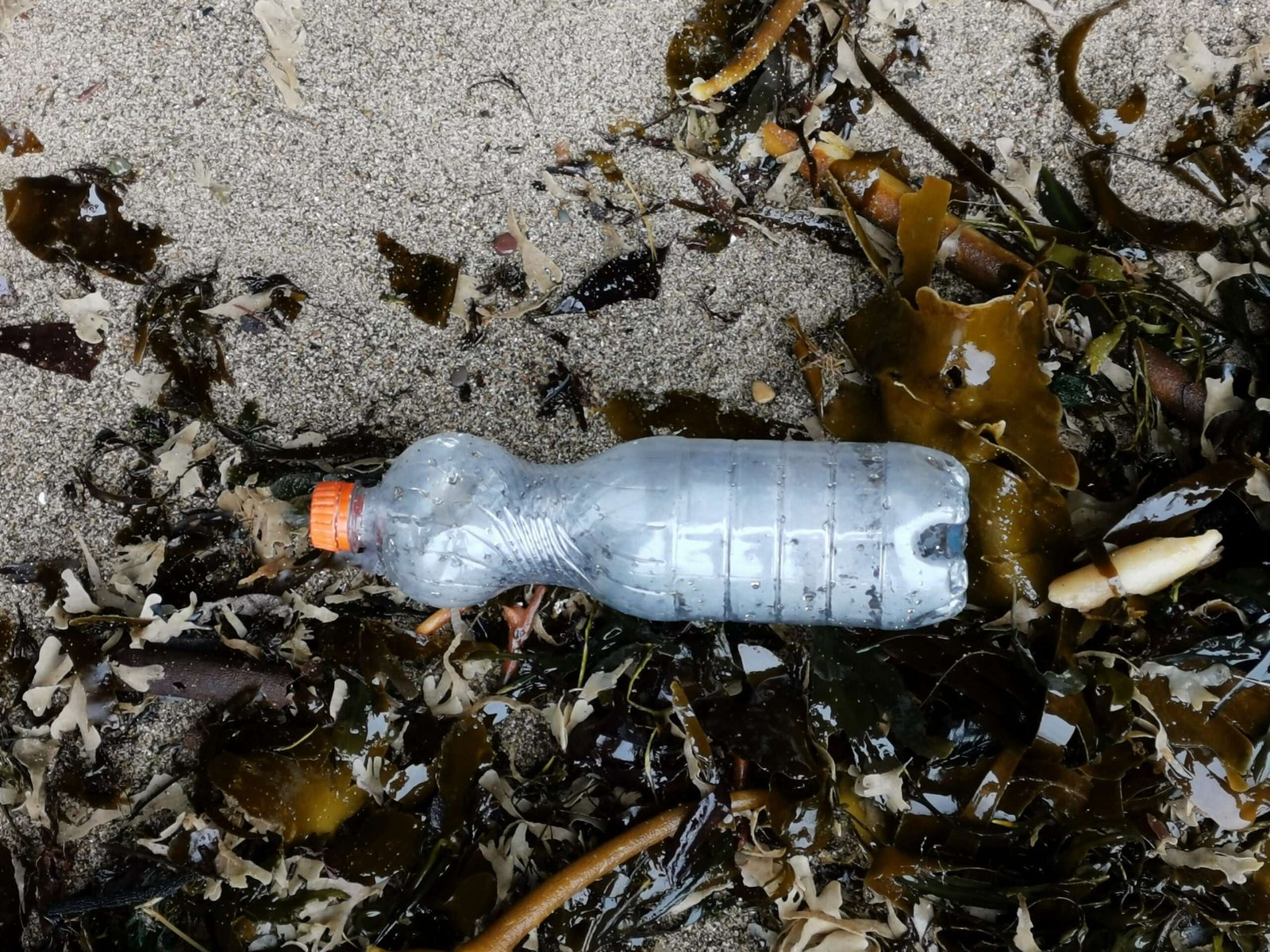
During a community litter pick in Morecambe (UK), members of our Plastic Packaging in People’s Lives (PPiPL) project at Lancaster University collected bags of debris along the seafront. The project followed how plastic packaging moved through systems of design, production, consumption and disposal – and what we found on that seafront made clear that littering is part of that story.
Among the items collected were many familiar ones: crisp packets, drink bottles, and takeaway containers. Everyday plastic packaging. Packaging rarely begins its life as litter. It is designed to protect products and support convenience. But when the systems surrounding it — waste infrastructure, individual behavior, and household recycling habits — fall out of alignment, packaging can slip out of circulation and into the environment.
That experience on the seafront reflects a wider and growing challenge. This month, the UK government announced clearer rules to support councils in tackling litter louts, giving local authorities stronger direction and legal powers to address serious and persistent littering. The move reflects growing recognition that litter remains an enduring and significant environmental challenge.
Yet litter does not begin on the roadside — it starts much closer to home. While it is often framed as a matter of individual responsibility, litter is typically the symptom of a system that is not working as intended. It is also deeply contextual. Whether something becomes litter depends on several factors.
Why Do Things Become Litter?
The first factor is the object itself. Some items are simply easier to discard. A cigarette butt is small and easily dropped, whereas a soft drink can is bulkier and more likely to be carried to a bin for disposal.
The second is setting. Behavior changes depending on location, whether someone is travelling along a motorway, stopping at a service station, or walking in the countryside. The expectations and social norms that shape behavior also vary across these places. People are often more inclined to dispose of waste responsibly in settings that appear clean. Where bins are present, they signal expected norms of disposal, and their use is socially monitored – failure to dispose of waste appropriately may be read by others as antisocial behavior subject to informal sanction. Environments that already show signs of litter can signal that neglect is tolerated.
The third is infrastructure. Access to bins and convenient disposal systems influence behavior; changing these contingencies can shape whether people litter or not. Even well-intentioned people may dispose of waste improperly if bins are scarce, poorly located, or difficult to use. Visibility, proximity, and capacity each matter. People are more likely to use bins that are easy to see and reach and are not already overflowing. In this sense, not all littering is intentional. Researchers describe “polite littering”, where people leave waste beside an overflowing or full bin expecting it to be collected later.
Other littering pathways include accidental loss, wind dispersal, wildlife movement or waste escaping during transport. As one UK Waste Collection Manager put it: “the value of litter is small, but the resource needed to keep on top of it is very high”.
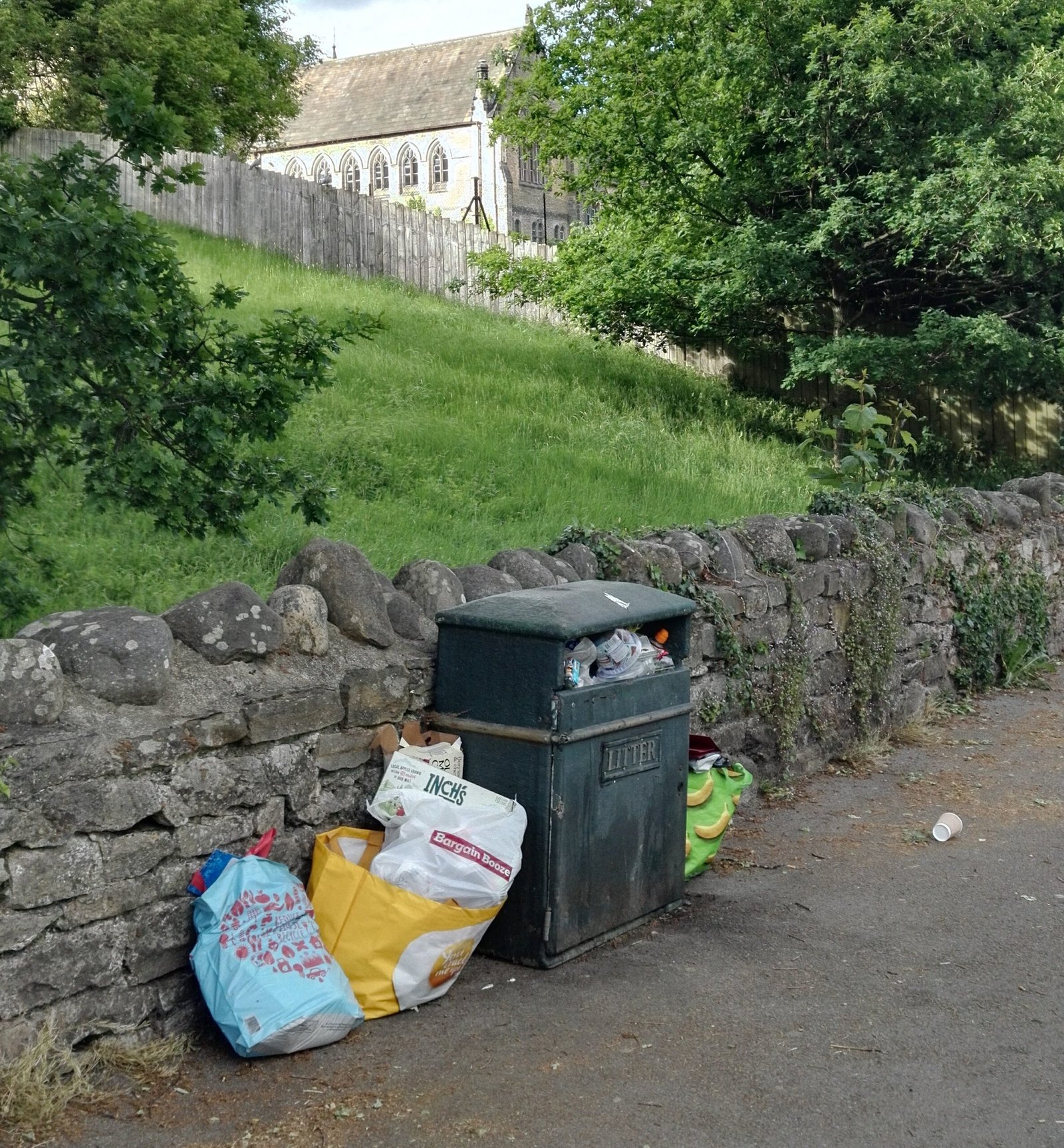
Marta Ferri, 2023
Why Litter Appears More Visible Today
The items collected on that Morecambe seafront point to a broader trend. Part of the answer lies in the materials themselves. Plastic packaging is increasingly prominent in litter streams.
Unlike paper or organic waste, single-use plastics are durable and do not degrade, meaning they remain in the environment, polluting and disrupting human activities (such as fishing) and natural ecosystems.
Consumption patterns have also shifted. The use of single-use packaging has increased alongside convenience retail, takeaway food, and delivery services.
Infrastructure pressures also play a role, and public concern is high. A nationally representative YouGov survey of 1,737 adults in England, commissioned as part of Keep Britain Tidy’s report, found that 77% of people believe litter has become more of a problem in recent years, with seven in ten noticing it in their local area. This perception is borne out by a decade of on-the-ground surveying: in the latest assessment, only nine in every 100 locations in England were litter-free.
Local waste services face financial constraints, and disposal systems are not always designed for the volume of packaging now in circulation. A UK infrastructure analysis shows that the national plastic reprocessing infrastructure covers only about 23% of the plastic packaging placed on the market, and that capacity has declined with recent facility closures. Furthermore, behavioral issues such as fly-tipping also contribute. For example, UK Government statistics show that local authorities in England handled 1.26 million fly‑tipping incidents between 2024–25; about two-thirds of these involved household waste, such as plastic packaging.
Systemic Solutions for a Shared Responsibility
Litter is more than an individual behavioral problem — it is systemic. Policies such as Extended Producer Responsibility and the Plastic Packaging Tax aim to shift responsibility towards producers and encourage better packaging design.
If litter is contextual and systemic, so too must be the solutions.
No single intervention is sufficient — reducing litter depends on industry, policy, infrastructure, and individuals acting in concert. Industry influences how packaging is designed and how likely it is to become litter. Many UK beverage brands now use ‘tethered caps‘ that remain physically attached to the bottle, preventing small plastic components from being discarded separately. More broadly, Keep Britain Tidy’s research has shown that large, brightly packaged drinks containers act as visible cues that attract further littering – a finding that points toward container design itself as a lever for reducing litter in public spaces. Policy establishes responsibilities through the Extended Producer Responsibility scheme and the Plastic Packaging Tax, as well as the normative framework to address littering behavior. Infrastructure shapes disposal options; for instance, the specific configuration of a municipal waste sorting plant determines whether an item like a plastic bottle is processed as a resource or rejected as contamination. Individuals make everyday decisions about waste by properly disposing of items in the correct bin, not littering, and contributing to community initiatives, which remain important to address littering. Campaigns such as the Great British Spring Clean, organised by Keep Britain Tidy, mobilize volunteers to remove litter while raising awareness.
The key message is simple: litter is a shared responsibility that reflects how products are designed and how systems operate. When those systems align, everyday plastic packaging is far less likely to become litter.
Ultimately, this alignment calls for a systemic transition toward a Circular Economy, such as the circularity framework suggested by the Ellen MacArthur Foundation. Such a transition will require rethinking the very necessity of certain materials, and a redesign that avoids the creation of waste in the first place. This means designing to avoid single-use and for high-level reusable products. Although Circular Economy practices will not automatically phase out the linear model of the ‘make-consume-dispose’ economy, by ensuring that plastic packaging remains a valuable resource, there will be more chances that items such as plastic bottles and sandwich wraps stay out of the environment and do not become litter in the first place. The valorization of materials once considered irredeemable — cigarette butts among them, now recovered and processed into new products — suggests that what we call litter is as much a design failure as a behavioral one. Preventing litter, ultimately, means designing a world in which disposing of materials carelessly makes as little sense as throwing away something valuable.


