
Fried foods remain some of the most popular items in takeout, delivery, and prepared-food programs because they are flavorful, craveable, and easy to build into meals. French fries, chicken tenders, wings, onion rings, fried seafood, and breaded appetizers appear across a wide range of operations, from quick-service restaurants and fast-casual brands to sports bars, diners, food trucks, convenience stores, grocery prepared-food departments, and concession businesses.
As widely used as these items are, they also present a unique challenge once they leave the kitchen. Fried foods are highly sensitive to packaging conditions, especially during transport. That is why choosing the right takeout container is not just about holding the food. It is about protecting texture, managing heat and moisture, and ensuring the product arrives the way it was intended.
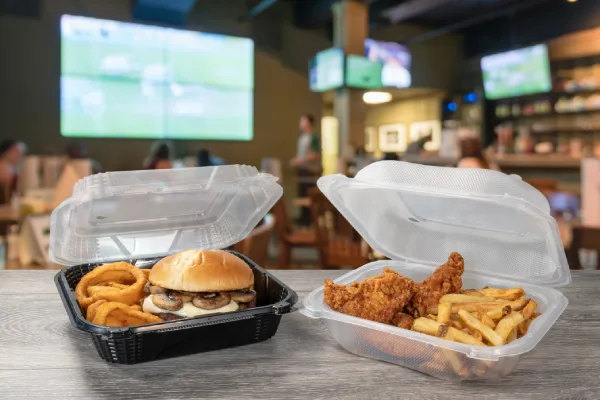
Steam Is the Real Enemy of Fried Food Quality
The biggest threat to fried food in takeout is not movement or leakage. It is steam.
Freshly fried foods release heat and moisture. When that steam becomes trapped inside a sealed container, it condenses and settles back onto the food. The result is rapid loss of crispness. Fries become soft, coatings lose their crunch, and fried appetizers no longer deliver the texture customers expect.
For fried foods, the best container is usually not the tightest one. It is the one that manages airflow, allows excess moisture to escape, and still protects the food during transport.
From QSR to Game-Day Takeout, Fried Foods Travel Everywhere
Fried foods are not limited to one type of operation. They are central to menus across multiple segments.
Quick-service restaurants rely on fries, nuggets, and sides as core items. Chicken concepts build entire menus around tenders, wings, and sandwiches. Sports bars and pubs package fried appetizers for takeout and delivery, especially during high-volume events. Food trucks and concession operators need packaging that performs under fast-paced conditions. Grocery prepared-food teams depend on containers that support hot grab-and-go fried meals.
Across all of these environments, one expectation remains consistent: fried foods should arrive hot, intact, and as crisp as possible.
What Fried Foods Actually Need from Packaging
Choosing the best container for fried foods starts with understanding what the packaging must do under real conditions.
Moisture control and venting
The most important function is allowing steam to escape. Containers with venting or breathable design help reduce condensation and protect crispness.
Structure without compression
Fried foods should not be crushed or crowded. A container needs enough strength to protect the food while maintaining space for airflow.
Grease resistance
Fried foods contain oil, so packaging should maintain performance without breaking down or creating a messy presentation.
Fit that supports airflow
A container that is too tight traps steam. One that fits the portion properly helps balance protection with airflow.
These factors matter more for fried foods than for most other takeout categories.
Fries, Wings, Tenders, and Apps Do Not Need the Same Package
Not all fried foods behave the same way in packaging, which means the container should match the specific item.
French fries and fried sides lose crispness quickly, so airflow and moisture release should be the top priority.
Chicken tenders and fried chicken are heavier and often packed in larger portions, so they require structure, space, and venting to prevent crowding and steam buildup.
Wings introduce both heat and grease, especially when sauced, so packaging needs to handle moisture while still maintaining containment and structure.
Fried appetizers and combo meals need a balance of protection and usability, ensuring the food stays intact and easy to handle when the customer opens the container.
Quick Guide: Choosing the Right Container
| Fried Food Type | Main Packaging Risk | What to Prioritize | Best Genpak Fit |
| French fries and sides | Steam buildup, fast sogginess | Venting, airflow, proper fit | Clover |
| Chicken tenders and fried chicken | Trapped moisture, crowding | Vented lid, structure, space | Clover or Genpak Foam |
| Wings | Heat, grease, transport movement | Grease resistance, structure, moisture control | Clover |
| Fried appetizers and combos | Compression, mixed-order handling | Structure, fit, easy handling | Clover or ProView |
| Grab-and-go fried foods | Presentation plus freshness | Visibility, venting, portability | ProView |
Where Genpak Fits Best for Fried Food Packaging
For everyday takeout and delivery, Clover hinged containers are a strong fit because they combine portability, structure, and vented design. This makes them especially effective for fries, tenders, wings, and combination meals where airflow and transport performance both matter.
When presentation plays a larger role, ProView containers offer a clear, vented top that allows customers to see the product while still supporting moisture control and portability. This is particularly useful in grab-and-go or retail settings where visual appeal influences purchase decisions.
For operations where heat retention is a higher priority, Genpak Foam containers provide insulation and durability for transporting heavier fried meals. In these cases, operators may balance insulation with the need to manage moisture depending on the item and delivery conditions.
Together, these options give operators flexibility to choose packaging that aligns with both the food and the service model.
“Most of the customers I work with are experiencing challenges with fried foods for off-premises dining. Our Clover line is an excellent solution, designed to handle heat and be microwave-safe. It features a 360-degree seal to prevent leaks, ensuring sauces stay contained. The containers also stack easily thanks to a raised lip that allows for secure interlocking without slipping. Additionally, they offer a vented option, and the design allows them to remain vented even when stacked—helping maintain food quality and delivering the best possible experience. The Clover line is available in clear, black, and stone color options, providing flexibility for different presentation needs. It is also recyclable, helping address environmental concerns, as more consumers have access to recycling programs than composting facilities. From a value standpoint, it offers one of the best price points, providing customers with exceptional performance and overall value.”
Genpak
Why the Right Container Protects More Than the Food
When fried foods arrive crisp, hot, and well presented, the food defines the experience. When they arrive soft, greasy, or compressed, packaging becomes part of the problem.
In off-premise dining, that difference matters. Customers may not think about the container directly, but they notice the result. Texture, appearance, and ease of handling all influence how the meal is perceived.
For operators, the right packaging supports consistency, reduces complaints, improves efficiency, and helps maintain the value of the menu item.
Choosing for Crispness, Not Just Convenience
The best takeout containers for fried foods are the ones that manage steam, protect structure, and preserve texture during transport.
Because fried foods are such a central part of menus across restaurants, convenience operations, and prepared-food programs, packaging decisions have a direct impact on customer satisfaction. Crispness is part of product quality, and once it is lost, the food no longer delivers the intended experience.
With vented hinged options like Clover, presentation-focused containers like ProView, and insulated solutions like Genpak Foam, Genpak provides multiple ways to match packaging to fried food performance.
When the right container is selected, it does more than carry the food. It helps deliver fried foods that arrive hotter, cleaner, and closer to the texture customers expect.
The post The Best Takeout Containers for Fried Foods (And Why It Matters) appeared first on Genpak.


