

A Practical Guide to Measuring, Managing, and Improving Your Waste Streams
If you cannot measure your waste, you cannot improve it.
A waste diversion audit is the foundation of any successful recycling program. It gives you a clear picture of what is being thrown away, what could be diverted, and where your system is breaking down.
For facilities, campuses, municipalities, and businesses, this is not just a sustainability exercise. It is a way to reduce cost, improve ESG reporting, and create a system that actually works in the real world.
This guide walks through exactly how to conduct a waste audit, where to get your data, and how to turn that information into a strategy that improves diversion.
What Is a Waste Diversion Audit
A waste diversion audit is the process of analyzing your waste streams to determine:
- How much waste you generate
- What percentage is diverted from landfill
- What materials are being incorrectly disposed of
- Where contamination is occurring
The goal is simple: identify opportunities to increase recycling and reduce landfill waste.
Step 1: Gather Data From Your Hauler
Your waste hauler is one of your most important data sources, but most organizations underutilize this information.
What to Request From Your Hauler
Start by asking for the following:
- Monthly or quarterly waste reports
- Total landfill tonnage
- Recycling tonnage by material (if available)
- Compost or organics tonnage
- Pickup frequency and container sizes
- Contamination reports or rejected loads
If your hauler cannot provide detailed reporting, that is a signal in itself. You may need to supplement with internal tracking or explore partners who can provide better data transparency.
Key Metrics to Calculate
Once you have the data, calculate:
- Total waste generated
- Total diverted waste (recycling + compost)
- Diversion rate = (diverted waste / total waste) × 100
A typical diversion rate varies widely, but many organizations fall between 20 and 40 percent without optimization.
Step 2: Conduct a Physical Waste Audit
Data tells you what is happening. A physical audit tells you why.
How to Run a Waste Sort
- Choose a representative area or building
- Collect waste from all streams over a set period (typically one day)
- Sort waste into categories:
- Landfill
- Paper
- Containers (bottles and cans)
- Organics
- Specialty waste (e-waste, film plastic, etc.)
- Weigh each category
- Document contamination
What You Are Looking For
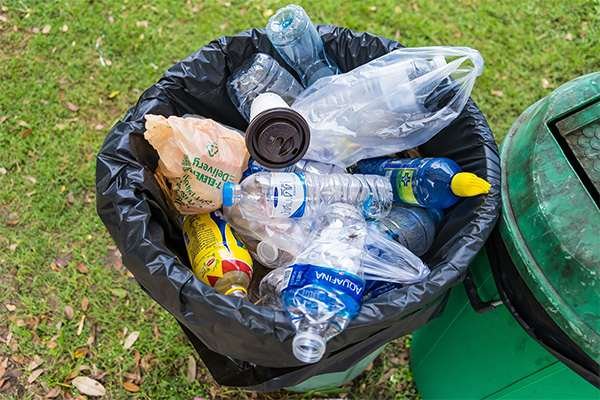
- Recyclables in landfill bins
- Contamination in recycling bins
- Volume of compostable material being lost
- Mismatch between bin types and actual waste generated
This step is where most insights come from.
Step 3: Map Your Current Infrastructure
Before making changes, understand what exists today.
Evaluate Your Bin System
Walk your facility and assess:
- Are there enough bins?
- Are bins located where waste is generated?
- Are landfill and recycling paired together?
- Are streams consistent across the building?
Many facilities rely on inconsistent or outdated bins, which leads to poor participation.
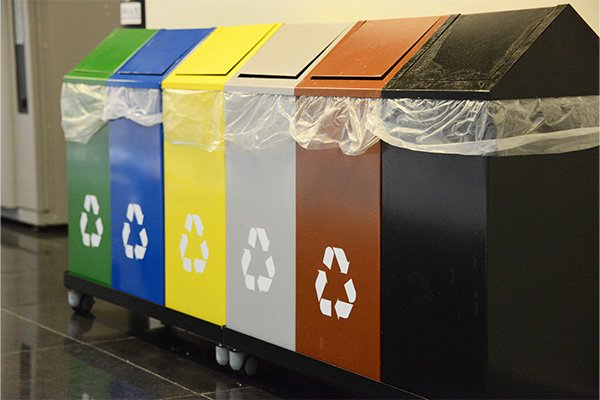
Upgrading to standardized systems like centralized recycling stations can significantly improve performance.
Assess Bin Types and Functionality
Look at:
- Open tops vs restrictive lids
- Indoor vs outdoor durability
- Capacity vs actual waste volume
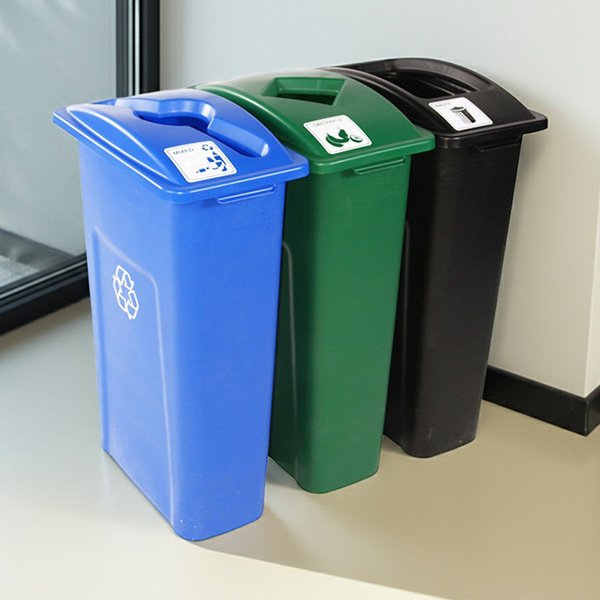
Using clearly defined containers such as multi-stream recycling bins helps reduce confusion and contamination.
Step 4: Identify the Biggest Gaps
At this point, patterns should emerge.
Common Audit Findings
- High percentage of recyclables in landfill
- Contaminated recycling streams
- Lack of composting in food areas
- Poor bin placement in high-traffic zones
- Overcomplicated systems that users ignore
One of the most common issues is that bins do not match behavior. For example, food areas without compost options almost always drive landfill waste.
Adding targeted solutions like compost bins for food waste can dramatically increase diversion.
Step 5: Build a Waste Diversion Strategy
Now turn insights into action.
Simplify Your Streams
Do not overcomplicate your system. Most facilities perform best with:
- Landfill
- Recycling
- Compost (in select areas)
Clarity always beats complexity.
Standardize Your Infrastructure
Use consistent bins, colors, and signage across all areas.
Products like office recycling bins and desk side recycling bins help create uniform systems that are easier to maintain.
Improve the Moment of Decision
The most important moment is when someone throws something away.
Improve this by:
- Clear labeling
- Color coding
- Restrictive openings
Solutions such as recycling bins with lids help guide correct disposal.
Align With Your Hauler
Make sure your system matches what your hauler actually accepts.
There is no value in collecting materials that cannot be processed downstream.
Step 6: Train and Engage Your Team
Even the best system will fail without user participation.
Focus Areas
- Employee education
- Clear signage
- Simple instructions
- Consistent messaging
Custom recycling signage and graphics can reinforce correct behavior at the point of disposal.
Step 7: Track and Improve Over Time
A waste audit is not a one-time event.
Ongoing Tracking
Monitor:
- Diversion rate
- Contamination rate
- Waste per occupant
- Hauling costs
Use tools like the Recycling Toolkit to standardize tracking and reporting.
Continuous Improvement
Revisit your audit quarterly or annually to:
- Identify new opportunities
- Adjust bin placement
- Optimize service schedules
- Improve signage and communication
Common Mistakes to Avoid
Overcomplicating the System
Too many streams lead to confusion and contamination.
Ignoring Bin Placement
If a bin is not where waste is generated, it will not be used correctly.
Mismatched Infrastructure
Using the wrong bins for the environment reduces effectiveness.
Explore solutions like commercial recycling bins designed for specific use cases.
Lack of Data
Without tracking, there is no accountability or improvement.
What Success Looks Like
A successful waste diversion program is:
- Easy to understand
- Consistent across all areas
- Aligned with hauler capabilities
- Measurable and continuously improving
Most importantly, it reflects how people actually behave, not how we hope they behave.
Conclusion
A waste diversion audit is the most powerful tool you have to improve your sustainability program.
It turns assumptions into data
It reveals where systems fail
It provides a clear path to improvement
With the right data, infrastructure, and strategy, organizations can significantly reduce landfill waste, improve ESG performance, and create systems that work every day.
FAQ
Additional resources:
Top 10 Steps to Creating a Successful Waste Management Program
Quick Tips for Offices and Workspaces


