

Businesses today face increasing pressure to manage waste more responsibly while also controlling operational costs. Waste hauling fees continue to rise in many regions, sustainability expectations are growing, and many organizations are now tracking diversion rates as part of ESG reporting.
The good news is that waste and recycling systems, when designed properly, can reduce costs, recover valuable materials, and improve environmental performance at the same time. The key is understanding how waste flows through your facility and building a system that people can use easily every day.
This guide answers the most common questions businesses ask about reducing waste, saving money through recycling, and building an effective waste management program.
How Businesses Can Reduce Their Waste
The most effective waste reduction strategies begin with understanding what your organization is throwing away. Many waste consulting and recycling service providers begin with a waste audit to identify the materials being discarded and where those materials are generated within a facility. This process helps uncover opportunities to divert recyclable materials, reduce landfill disposal, and improve operational efficiency.
Once waste streams are understood, businesses can begin separating materials at the source. This means collecting recyclables such as cardboard, paper, metals, plastics, and glass separately from landfill waste before contamination occurs. Some operations may also separate additional streams such as electronics, organic waste, or specialty materials depending on their industry.
Equally important is how the system is physically implemented inside the building. If containers are inconvenient, unclear, or poorly placed, even well-intentioned recycling programs fail. Employees and visitors will always choose the easiest option available.
The most successful programs place waste and recycling containers exactly where waste is generated. This often includes centralized recycling stations in shared areas, deskside sorters in offices, and dedicated containers in locations where specific materials are produced.
The Recycle Away Recycling Toolkit supports you in the process to understand your waste diversion goals, your janitorial team’s perspective on improvements and your organizations waste related sustainability priorities.
Our team will provide you with a practical framework for building these systems by organizing containers, signage, and recycling infrastructure by application. The process includes offering you options such as indoor recycling stations, outdoor containers, multi-stream waste stations, compost containers, cardboard collection bins, bottle and can containers, and customizable signage systems that help guide users at the moment of disposal.
When the right containers, lids, and signs are placed where waste is generated, participation improves dramatically and contamination decreases.
How Much Can a Recycling Program Save a Business
The cost savings from a recycling program vary depending on several factors including the size of the facility, waste volume, hauling contracts, and the types of materials generated.
However, most businesses see savings in three primary areas.
The first is reduced landfill disposal. When recyclable materials are separated effectively, less waste goes into landfill dumpsters. This can allow organizations to reduce dumpster size or lower pickup frequency, both of which directly lower waste hauling costs.
The second area of savings comes from operational efficiency. When waste is organized into clear streams and containers are properly located, janitorial teams spend less time sorting mixed waste, handling contamination, or transporting unnecessary trash loads throughout a building.
The third source of value comes from improved waste tracking and reporting. Many waste management providers offer reporting tools that allow businesses to analyze waste volumes, invoices, and diversion performance over time. This visibility helps organizations identify inefficiencies and make smarter decisions about equipment, service frequency, and recycling opportunities.
When these factors are combined, recycling programs often offset a meaningful portion of waste management costs and in some cases can pay for themselves over time.
Can Businesses Make Money From Recyclable Materials
Some recyclable materials do have market value. When materials are clean, properly separated, and generated in sufficient quantities, they can sometimes produce rebates or commodity revenue.
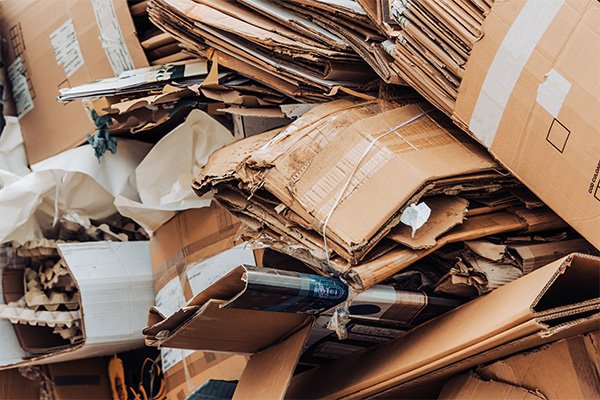
Cardboard is one of the most commonly recovered materials with value in commercial recycling programs. Large volumes of corrugated cardboard from warehouses, distribution centers, and retail operations can often be consolidated and sold to recycling markets.
Metals and certain plastics can also generate revenue when they are collected in clean streams and managed at scale.
That said, not every recyclable material produces direct revenue. In many cases the financial benefit comes from avoided landfill costs rather than commodity rebates.
The most important factor is keeping materials clean and separated. When recyclable materials are mixed with trash or contaminated by food or liquids, their value drops significantly and entire loads may be rejected by recycling facilities.
Proper containers, restrictive lid openings, and clear signage play a critical role in maintaining material quality and protecting the value of recyclable commodities.
How Businesses Can Lower Waste Disposal Fees
Lowering waste disposal fees typically begins with reducing the amount of material sent to landfill.
Businesses that separate recyclables effectively often find they can reduce the number of trash pickups required each week. In some cases facilities can downsize dumpsters or eliminate extra hauling services that were previously needed due to overflow.
Another major opportunity lies in optimizing waste equipment and service schedules. Many facilities unknowingly pay for oversized containers or overly frequent pickups simply because waste generation has never been evaluated carefully.
Analyzing invoices, service levels, and waste generation patterns can reveal opportunities to right-size equipment and reduce unnecessary costs.
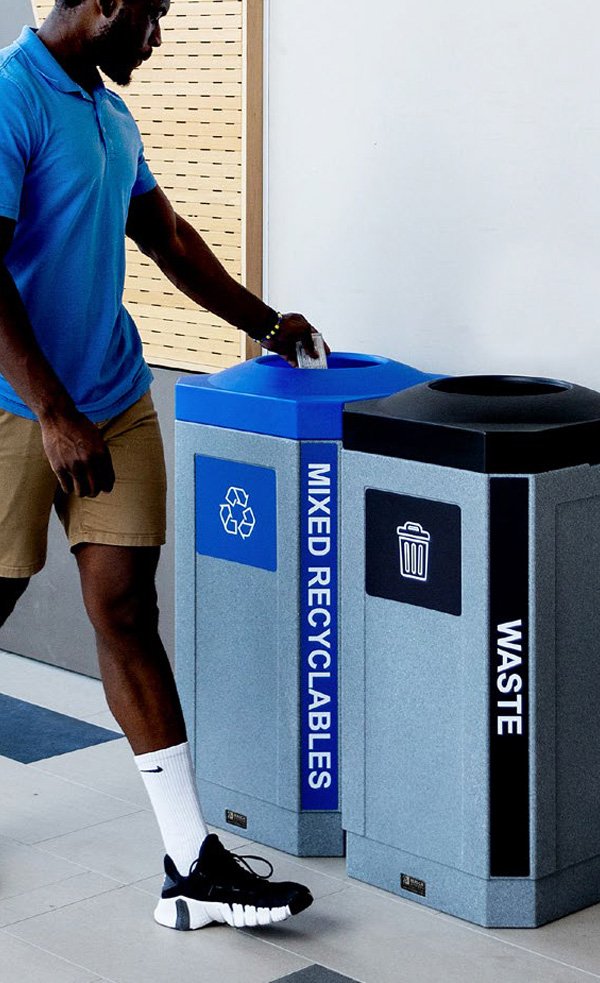
Contamination is another hidden cost driver. When recycling containers contain too much trash, recycling loads may be rejected or charged additional processing fees. This is why clear signage and intuitive container openings are essential components of an effective recycling system.
Recycle Away’s process helps address this challenge by providing container systems designed specifically for waste separation. Multi-stream stations with labeled openings, color-coded signage panels, and consistent container design help users quickly identify the correct disposal option.
These design choices significantly reduce contamination and improve overall recycling performance.
The Role of Infrastructure in Waste Reduction
Many businesses focus heavily on recycling policies but overlook the infrastructure that supports those policies. The containers themselves, the lid openings, the signage, and the placement of bins throughout a facility often determine whether a recycling program succeeds or fails.
We offer solutions for a wide range of environments including offices, manufacturing facilities, warehouses, hospitality spaces, educational campuses, parks, and public areas.
We guide organizations to select containers based on waste stream, location, and operational needs. Options include two-stream and three-stream recycling stations, compost collection containers, bottle and can recycling bins, cardboard collection systems, and customizable signage panels that reinforce proper sorting behavior.
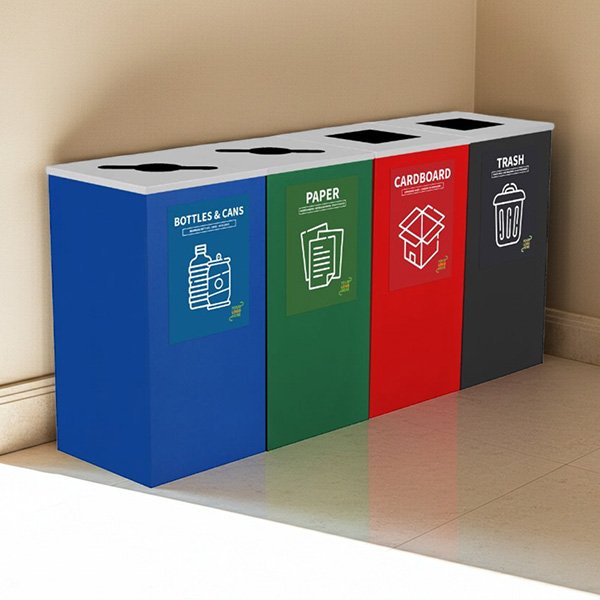
When these systems are implemented consistently across a facility, they create a clear and intuitive waste management process that employees and visitors can follow easily.
A Practical Framework for Businesses
Organizations that successfully reduce waste and control disposal costs typically follow a similar process.
They begin by evaluating their current waste streams and identifying what materials are being discarded. From there they determine which materials could be recycled or diverted more effectively.
Next they design a collection system using appropriate containers, signage, and stream configurations that match how waste is generated in their facility.
Once the system is in place they track waste volumes, diversion rates, and hauling costs to ensure the program is delivering measurable results.
Over time these improvements can reduce landfill waste, recover valuable materials, and support broader sustainability goals.
Conclusion
Waste management is often treated as a necessary expense, but with the right strategy it can become an operational advantage.
Businesses that understand their waste streams, separate recyclable materials effectively, and implement well-designed container systems can reduce disposal costs while improving sustainability performance.
Infrastructure plays a major role in making this possible. The right bins, lids, and signage help employees make the correct disposal choice quickly and consistently.
The Recycle Away’s solutions provide a comprehensive set of containers and signage solutions designed to help organizations build effective waste and recycling systems.
Learn more here:
Waste Diversion Calculator, Janitorial Feedback Audit, Sustainability Priorities Assessment
By combining strong operational practices with the right infrastructure, businesses can reduce waste, control costs, and create recycling programs that deliver measurable results.
Additional Resources:


