

Waste and People: Why Waste Systems Shape Behavior, Health, and Brand
Waste is often treated as an operational detail, but in reality it is one of the most powerful user-facing systems in any environment. Every person in a building interacts with waste daily, whether they are an employee, visitor, tenant, or guest. That makes waste management one of the most immediate and visible expressions of an organization’s commitment to sustainability.
For architects, property managers, and workplace strategists, waste is not just about where materials go. It is about how people behave, how spaces feel, how operations function, and how a brand is perceived.
This is where waste management behavior change becomes critical. The way a waste system is designed directly influences how people act, how clean a space remains, and how credible a sustainability strategy appears.
Waste as a User Facing System
Most sustainability initiatives operate in the background. Energy systems are hidden. Water infrastructure is invisible. Carbon strategies are abstract.
Waste is different.
Waste is:
- Visible
- Interactive
- Immediate
Every time someone throws something away, they are making a decision. That decision is not driven by policy. It is driven by design.
If the system is confusing, people guess.
If the system is inconvenient, people opt out.
If the system is clear, people participate correctly.
This is why waste is one of the most important opportunities to influence behavior at scale.
How Bin Design Influences Behavior
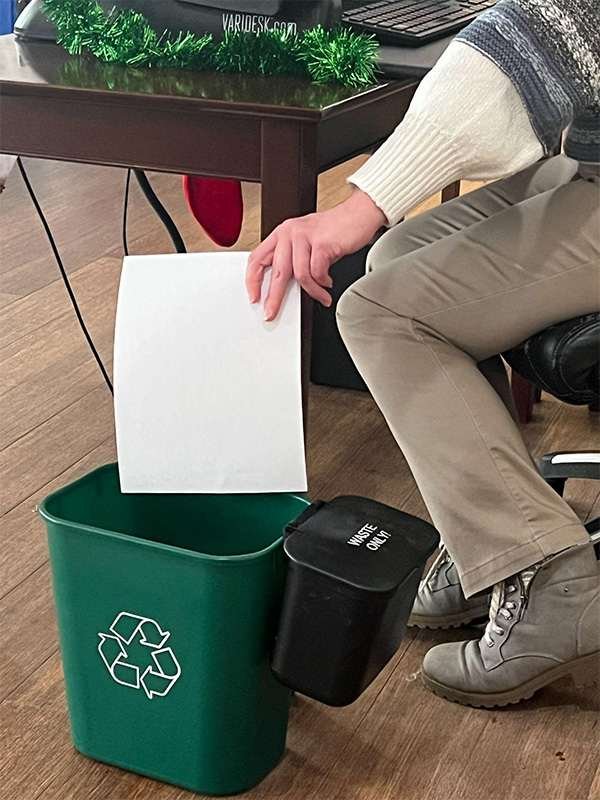
Bin design is one of the most underestimated drivers of behavior.
People do not read manuals before throwing something away. They rely on visual cues and instinct. The design of a bin determines whether someone pauses to think or simply makes a quick, often incorrect choice.
Effective bin design considers:
Openings and shapes
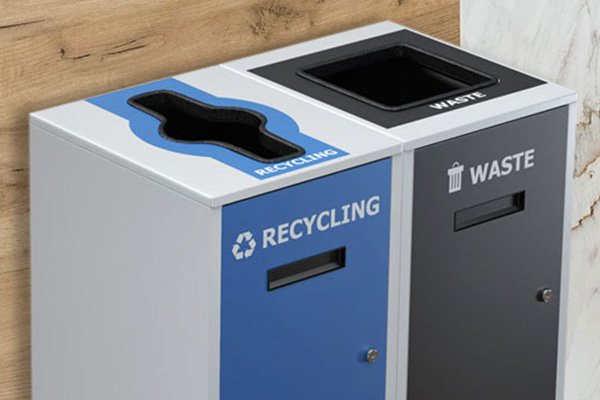
Slot openings suggest paper. Round openings suggest bottles. Large openings invite trash. These subtle cues guide behavior without requiring explanation.
Color coding
Consistent color systems reduce decision fatigue and reinforce habits across spaces.
Material and form
High quality, well designed bins signal importance. Poorly maintained or mismatched bins signal that the system does not matter.
Consistency across a facility
When bins change from one area to another, confusion increases and contamination rises.
The goal is to reduce friction. When the right choice is the easiest choice, behavior follows.
The Importance of Signage and Clarity
Even the best bin design fails without clear communication.
Signage is not decoration. It is a critical part of the system.
Effective signage should:
- Use clear, simple language
- Include visual examples of materials
- Be placed directly at the point of decision
- Be consistent across the entire facility
One of the biggest failures in waste systems is overcomplication. When signage includes too much text or conflicting instructions, users disengage.
Clarity drives participation. Confusion drives contamination.
Waste management behavior change depends on making decisions effortless, not educational.
Public Health and Cleanliness
Waste systems have a direct impact on the health and cleanliness of a space.
Poorly designed systems lead to:
- Overflowing bins
- Cross contamination
- Odors
- Pest issues
These issues are not just operational problems. They affect how people experience a space.
Clean, well maintained waste systems:
- Improve indoor environmental quality
- Reduce health risks
- Support occupant satisfaction
- Reinforce a sense of care and professionalism
In high traffic environments such as offices, campuses, healthcare facilities, and public spaces, waste systems are a frontline component of hygiene.
Custodial Staff and Operational Realities
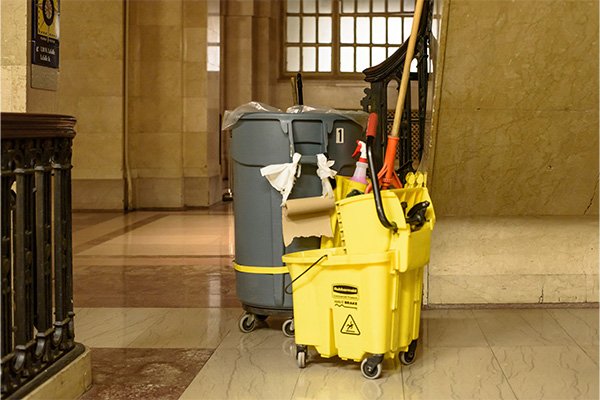
Waste systems are often designed without considering the people who manage them every day.
Custodial teams are the backbone of any waste program. If the system does not work for them, it will not work at all.
Poorly designed systems create:
- Inefficient collection routes
- Heavy or awkward lifting
- Increased exposure to contamination
- Time consuming sorting processes
Effective systems support operations by:
- Aligning bin types with back of house processes
- Reducing the need for manual sorting
- Creating logical collection flows
- Minimizing touchpoints and handling
Designing for behavior must include designing for operations. Front of house and back of house must work together as a single system.
Waste as a Brand Experience
Waste is one of the most visible indicators of whether an organization is serious about sustainability.
People notice:
- Whether bins are labeled clearly
- Whether recycling actually seems to work
- Whether systems are clean and maintained
- Whether sustainability messaging matches reality
A poorly executed waste system undermines credibility. It signals that sustainability is performative rather than operational.
A well designed system does the opposite. It demonstrates:
- Attention to detail
- Operational excellence
- Authentic commitment to sustainability
For workplaces, commercial buildings, campuses, and public environments, waste is part of the brand experience. It is often the most frequent and tangible interaction people have with sustainability.
How to Design for Participation
Designing an effective waste system requires a shift in thinking. The goal is not to install bins. The goal is to design behavior.
To achieve waste management behavior change, focus on the following principles:
Make it intuitive
Users should not have to think. The system should guide them naturally through visual and physical cues.
Standardize the system
Consistency across spaces reduces confusion and builds habits over time.
Design the full journey
Consider where waste is generated, how it is collected, and how it moves through the building.
Align with real infrastructure
Ensure that what is collected can actually be processed by local haulers and facilities.
Prioritize clarity over complexity
Simple systems outperform complex ones every time.
Support operations.
Design with custodial teams in mind to ensure long term success.
Reinforce with communication.
Use signage, training, and ongoing messaging to support the system.
When these elements come together, participation increases, contamination decreases, and the system becomes self reinforcing.
Final Takeaway
Waste is not just an operational necessity. It is a behavioral system, a health system, and a brand system.
For architects, property managers, and workplace strategists, waste is one of the most powerful tools available to shape how people interact with sustainability in real time.
When designed correctly, waste systems do more than manage materials. They influence behavior, improve environments, and demonstrate credibility.
Waste management behavior change does not happen through policy alone. It happens through design.


