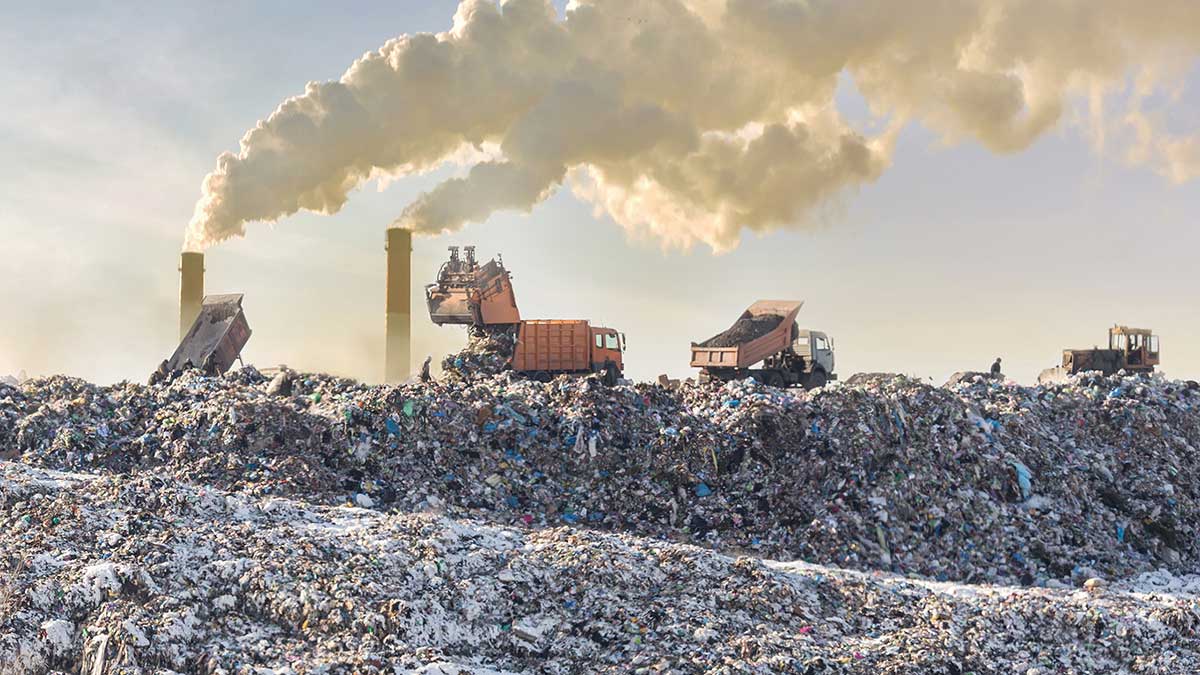
Imagine if every time the world made $100, it threw away $31 of it. Not lost. Not saved. Just wasted — in food that rotted before anyone ate it, in phones and washing machines that broke way too soon, and in heat that escaped from factories and power plants. That’s roughly what the global economy does every year, according to a new report from the research group Circle Economy and the consulting firm Deloitte.
The Circularity Gap Report 2026, released this month, puts a price tag on all that waste: €25.4 trillion, or about $29 trillion at today’s exchange rate. That is almost 31% of the entire world economy, which is valued at around $96 trillion. The researchers call it the Value Gap — the gap between the value the economy creates and the value it lets slip away.
For several years, the Circularity Gap Report has tracked one number: the share of materials that are reused or recycled rather than thrown out. That number has been dropping. It fell from 9.1% in 2018 to just 7.2% in 2023, meaning more than 92% of everything we use is extracted from nature, used once or not used at all, and tossed in the trash.
This year, the researchers tried something different. Instead of measuring waste in pounds of metal or plastic, they measured the cost of waste in euros, which we’ve converted to dollars. The report explains that it is easier to get governments and big companies to care about waste when you can show them what it costs.
Where the money disappears
The $29 trillion in yearly losses comes from five main places:
- End-of-life waste — about $11.6 trillion. This is the biggest chunk. It is the value of all the stuff thrown out before it should have been, such as clothes that are still wearable, appliances that could be fixed, and electronics that were upgraded before they were obsolete.
- Energy losses — about $10.1 trillion. Every time energy turns from one form into another — gasoline into motion, coal into electricity — a lot of it escapes as heat. For example, most cars waste more than half the energy in their fuel.
- Worn-out buildings and infrastructure — about $6.0 trillion. Roads, bridges, schools, and factories that fall apart faster than they should because they are not maintained or were not built to last.
- Processing losses — about $1.05 trillion. Material that gets wasted between the mine or farm and the finished product. Everything from mine tailings to the leftover textiles generated during clothing production.
- Food waste — about $755 billion. Food that’s grown, shipped, and stocked but never eaten.
One of the most interesting findings is where the waste actually happens. About 40% of the total, roughly $12 trillion happens after products are in consumers’ hands. That is more than the value lost in mining, manufacturing, or recycling combined.
What does that mean in plain terms? When a $1,200 phone gets cracked and replaced after 18 months, when a refrigerator quits and goes unrepaired after seven years instead of fifteen, when a car gets junked because one expensive part broke. That is the “use phase” in a product lifecycle, and it is where the biggest pool of avoidable waste hides.
Why things break too soon
The report points to the culprit behind our take-make-waste economy: premature obsolescence. Stuff is designed to die, not endure, not deliver full value. About $7.5 trillion a year is lost because long-lasting things — buildings, machines, electronics — are retired before their expected useful life ends.
Sometimes this happens because companies make products that are hard to fix. Sometimes a single part fails and the rest gets thrown out with it. Sometimes a phone software update slows the device down, forcing owners to buy a new one.
Governments are starting to push back. The European Union’s Right to Repair law takes effect across Europe in July 2026. In the United States, more than a quarter of Americans now live in states that require companies to make repair manuals and spare parts available.
What this means for companies and shoppers
For companies, Circularity Gap Report is a warning shot. Trillions of dollars of value can be unlocked with better design, longer-lasting products, and smarter material use. The businesses that figure out how to capture some of that value will have an edge. Some are already trying. Startups are recycling solar panels, blended fabrics, and rare metals that were once considered impossible to recover. Brands that make their products easy to repair or, better, provide maintenance services that reduce the need for repairs, can earn customers’ loyalty over the long haul.
For shoppers, the report makes a point that might be uncomfortable: recycling alone won’t fix this. The biggest savings come from using less stuff in the first place and keeping the stuff we have for longer. Repair beats recycling. Buying nothing beats both.
This is the first time the world’s waste has been measured this way, and the researchers admit the numbers are rough. The $29 trillion total comes with a margin of error of roughly $5 trillion either way. The exact figure will likely change in future reports as the method improves.
Why this matters now
Earlier versions of this report told us the world was using its resources less efficiently every year. This edition tells us what that inefficiency costs: nearly a third of everything the global economy produces. That is a big enough number to get the attention of finance ministries, investors, and corporate boards — the people who actually move money around. Whether they act on it is the question that the next few years will answer. But the number is on the table now, and it is hard to look away from.
The case for a circular economy as a climate solution was already strong. Now there is an economic argument sitting right next to it, measured in trillions. For an economy that runs on take, make, waste, that is a hard bill to keep ignoring.
Related reading
- The 9 Rs of Circular Economy Explained
- How the Circular Economy Can Help Solve Climate Change
- Circular Economy Startups to Watch in 2026
- What the EU’s Right to Repair Means for American Consumers
The post The World Is Wasting About $29 Trillion a Year. Here’s Where It Goes. appeared first on Earth911.
- Source: https://earth911.com/how-and-buy/the-world-is-wasting-about-29-trillion-a-year-heres-where-it-goes/