
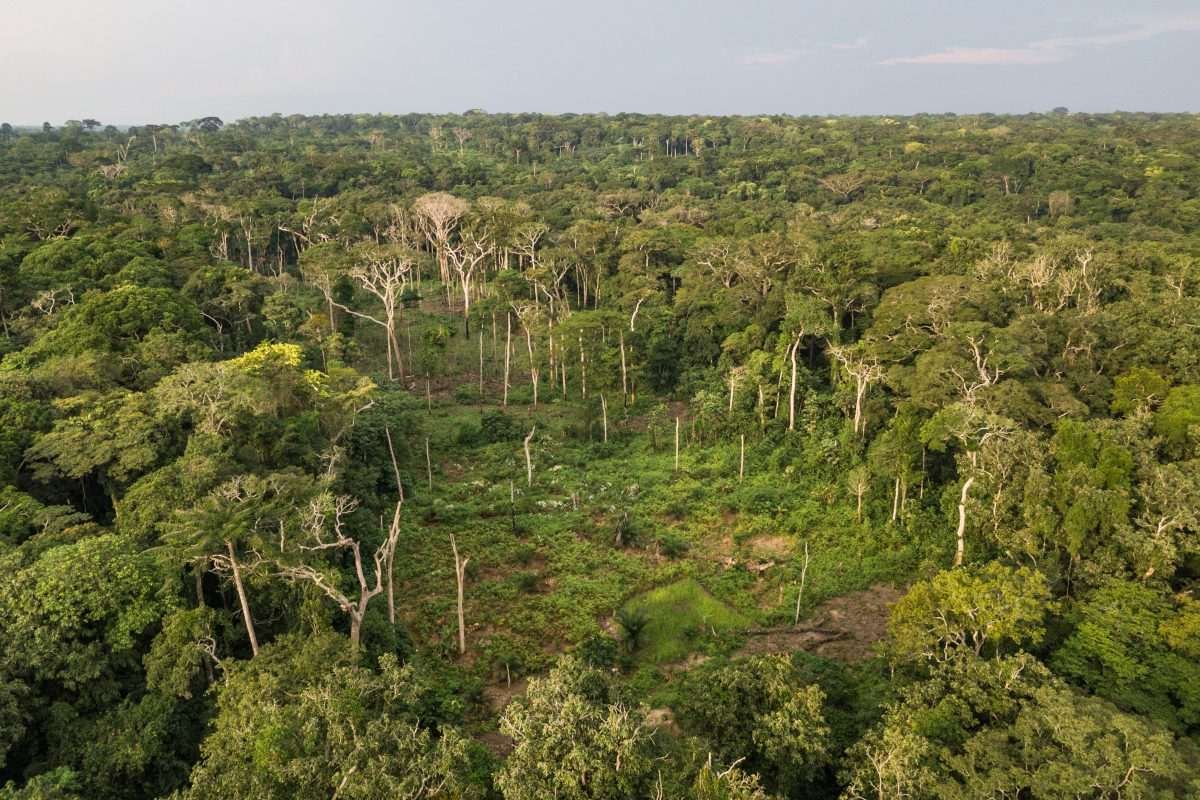
A landmark scientific assessment of the Congo Basin has warned that the next decade will be critical in determining the future of the world’s largest tropical forest carbon sink, amid mounting pressures from climate change, unsustainable resource use and governance failures.
The 2025 Congo Basin Assessment Report – Congo Basin Resilience and Sustainability: From the Past to the Future – was officially presented in Brazzaville, Republic of Congo, during the 61st Annual Meeting of the African Development Bank.
Produced by the Science Panel for the Congo Basin (SPCB), convened by the UN Sustainable Development Solutions Network (SDSN), the report is described as the most comprehensive scientific assessment yet undertaken of the Congo Basin region. Developed by more than 180 scientists, primarily from Congo Basin countries, the study spans 40 chapters examining the Basin’s ecological, social and economic importance, alongside the pressures threatening its long-term resilience.
Covering more than 3.46 million square kilometres, the Congo Basin is regarded as one of the world’s most important ecosystems, acting as the planet’s largest tropical carbon sink while supporting biodiversity, rainfall regulation and the livelihoods of millions of people across Africa.
The assessment identifies the Congo Basin as a “green engine” for Africa, with its forests helping to regulate regional rainfall, cool land surfaces through evapotranspiration and sustain livelihoods across the continent. Covering more than 3.46 million sq km, the Basin is described as the world’s largest tropical forest carbon sink and one of the planet’s most important biodiversity reservoirs.
The report warns, however, that this resilience is under growing strain. Pressures from climate change, deforestation, unsustainable resource extraction and governance gaps are weakening the Basin’s capacity to continue delivering climate, ecological and economic benefits. Its central warning is that carbon absorption is already falling, making the next decade decisive for the region’s long-term future.
Researchers also argue that solutions remain within reach if governments, investors and international partners act quickly. The report calls for stronger regional science, better governance, long-term finance and development pathways that protect natural capital while improving livelihoods. Its authors present the Basin not only as a conservation priority, but as a foundation for sustainable development across Central Africa.
The report warns that the Basin’s ability to absorb carbon is declining, placing increasing urgency on efforts to strengthen conservation, governance and sustainable development policies across the region.
Professor Lee White, Special Envoy of the Science Panel for the Congo Basin, said: “The Congo Basin is not just the Green Heart of Africa, it is a planetary asset. The chapters now being released show, in detail, how the Basin supports climate stability and rainfall systems, and why the world cannot afford to treat it as an afterthought. The science is clear: the Basin’s carbon absorption is falling, and the next decade is decisive.”
According to the report, the Basin faces growing threats linked to deforestation, resource extraction, climate pressures and institutional weaknesses, although researchers say pathways toward long-term resilience remain achievable with coordinated international action and investment.
Emma Torres, Vice President of the Americas & Strategic Partnerships at SDSN and Strategic Coordinator of the SPCB, said: “The Congo Basin is central to Africa’s future and to global climate stability. This report provides a scientific foundation for decision-making and shows that sustainable pathways are within reach, but they require coordinated action, long-term investment, and strong institutions. The Congo Basin is at a crossroads with the potential to advance a transformative sustainable development for tropical forests”.
The Science Panel for the Congo Basin was established to address longstanding gaps in scientific research and investment relating to the region. The initiative aims to provide evidence-based analysis to inform policymaking and support sustainable development strategies across the Basin.
As the flagship publication of the SPCB, the report is intended to guide policy dialogue, international cooperation and future investment decisions affecting the region. Researchers said it also highlights the need for stronger scientific capacity and long-term support for environmental monitoring in the Congo Basin.
Professor Bonaventure Sonké, Co-Chair of the Science Panel for the Congo Basin, said: “For the first time we have managed to unite the majority of scientists from the Congo Basin along with their international colleagues to provide an in-depth analysis of the origins, past, present and future of the critical Congo Basin ecosystems. It is important that this report generates international attention and support for scientific research in the Congo Basin – the Earth’s most important but least studied tropical rain forest.”
Lydie-Stella Koutika, fellow Co-Chair of the Science Panel for the Congo Basin, said: “The chapters set out what the Congo Basin contributes to people, economies and ecosystems, and what is at stake if degradation continues. We want journalists to scrutinise the findings and help bring sustained attention to the solutions, the governance needs and the financing required for a just, durable transition.”
The report has been published online through the SPCB website and Springer Nature, with the full report currently available in English and an Executive Summary released in French.
Explore and download the report (English): https://www.spcongobasin.org/
Access the Executive Summary (French): https://bit.ly/resexefr


