

WELL certification is often associated with air quality, lighting, and occupant comfort. But one of the most consistent, visible, and behavior-shaping systems in any building is waste management. Every person in a space interacts with it. Every day.
If WELL is about human health and experience, then waste is not peripheral. It is central.
This guide breaks down how waste and recycling systems directly support WELL certification, how to design them correctly, and how to turn waste into a measurable, visible driver of wellness, performance, and credibility.
What WELL Certification Requires from an Operational Perspective
WELL certification, developed by the International WELL Building Institute, is not just about design. It requires ongoing operational performance.
This is where waste becomes critical.
WELL looks for environments that are:
- Clean and hygienic
- Easy to navigate and use
- Supportive of healthy behaviors
- Transparent and measurable
Waste systems influence all of these outcomes in real, daily ways.
Why Waste Management Is Foundational to WELL
Waste systems sit at the intersection of multiple WELL concepts, especially Materials, Air, Mind, and Community.
A well designed system contributes to:
- Cleaner indoor environments
- Reduced exposure to harmful substances
- Lower stress and friction for users
- Clear reinforcement of positive behaviors
A poorly designed system does the opposite. It creates confusion, odors, contamination, and visual disorder.
In a WELL building, that gap matters.
Mapping Waste Management to WELL Concepts
Materials
WELL emphasizes transparency and safety in material selection.
Waste systems support this by:
- Using durable, non toxic, and low emission materials
- Preventing contamination between waste streams
- Supporting proper handling of recyclables and sensitive materials
The bins themselves matter. The system they support matters more.
Air
Air quality is one of the most critical WELL categories.
Waste impacts air through:
- Odors from organic waste
- Improper storage of materials
- Infrequent servicing
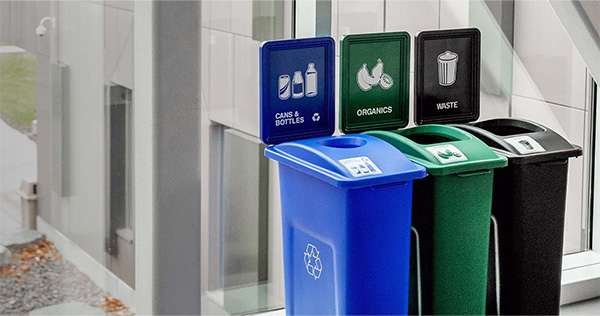
A WELL aligned system includes sealed containers, compost controls, and operational protocols that prevent air quality degradation.
Mind
WELL recognizes the importance of mental well being and cognitive ease.
Waste systems affect this through:
- Clarity of signage
- Ease of decision making
- Cleanliness and organization
When users know exactly what to do, stress is reduced and participation increases.
Community
WELL promotes shared responsibility and engagement.
Waste systems create a daily opportunity to:
- Encourage sustainable behavior
- Build a culture of accountability
- Visibly demonstrate participation in environmental goals
The Four Pillars of a WELL Aligned Waste System
1. User Experience Design
Waste systems must be intuitive.
This means:
- Clear labeling with consistent language
- Standardized colors and iconography
- Logical placement in high traffic areas
- Minimized decision complexity
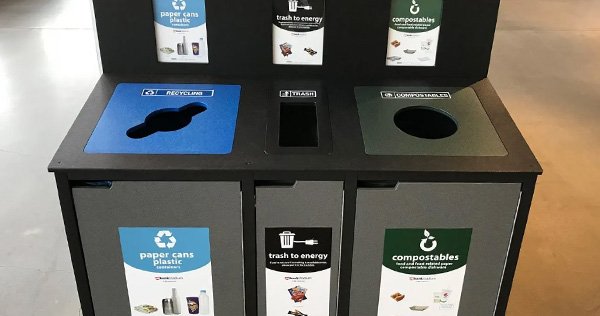
If a user has to stop and think, the system is already failing.
2. Operational Excellence
Back of house systems must support front of house success.
This includes:
- Defined collection processes
- Clean and organized waste rooms
- Proper sizing and capacity planning
- Alignment with hauler capabilities
A WELL building cannot rely on a system that breaks behind the scenes.
3. Material Health and Durability
Bins and infrastructure must align with WELL material goals.
Best practices include:
- Non porous surfaces that resist bacteria and odors
- Materials that are easy to clean and maintain
- Long lifecycle products that reduce replacement waste
This is where product selection directly supports certification outcomes.
4. Data and Performance Tracking
WELL is performance based.
Waste systems should track:
- Diversion rates
- Contamination levels
- Waste generation by area
- Operational efficiency
This data transforms waste from a static system into a continuous improvement tool.
Designing Waste Systems for WELL from Day One
The most successful WELL projects integrate waste early in the design process.
Step 1: Conduct a Waste Audit
Understand what materials are being generated and where.
This includes:
- Waste stream identification
- Volume estimates
- Behavior patterns
Without this baseline, design decisions are guesswork.
Step 2: Define Waste Streams
Keep systems simple and aligned with local infrastructure. Common streams include:
- Landfill
- Recycling
- Compost
Additional streams should only be added if they are operationally supported.
Step 3: Design the Front of House System
Focus on the user experience.
Ensure:
- Consistency across all floors and spaces
- Accessibility for all users
- Clear differentiation between streams
Step 4: Build the Back of House Flow
Map the journey of waste after disposal.
Include:
- Janitorial workflows
- Storage and staging areas
- Hauler pickup points
Efficiency here directly impacts cleanliness and air quality.
Step 5: Select the Right Infrastructure
Choose bins and systems that support WELL goals.
Look for:
- Durability
- Ease of cleaning
- Compatibility with signage systems
- Design that reinforces correct behavior
Step 6: Implement Training and Communication
Even the best system fails without engagement.
Provide:
- Clear onboarding for staff
- Ongoing education
- Visible reinforcement through signage and messaging
Step 7: Track and Improve
Use data to refine the system over time
.
Regular audits and reporting ensure:
- Continuous improvement
- Alignment with WELL performance expectations
- Accountability across stakeholders
Waste as a Visible Signal of WELL Performance
WELL is unique because it is experienced in real time by occupants.
Waste systems are one of the most tangible expressions of that experience.
Every interaction answers a question:
- Does this building feel organized
- Does it feel clean
- Does it feel intentional
If the waste system is confusing or poorly maintained, it undermines every other investment in wellness.
If it is clear, clean, and intuitive, it reinforces the entire WELL strategy.
Common Gaps in WELL Projects Related to Waste
Even high performing buildings often miss key opportunities.
Inconsistent Systems Across Spaces
Different bin types and signage create confusion and reduce participation.
Overdesigned Systems
Too many streams or unclear distinctions increase contamination.
Lack of Integration with Operations
Design decisions that ignore janitorial workflows lead to breakdowns.
No Measurement Strategy
Without data, there is no way to validate or improve performance.
Turning Waste into a WELL Strategy Advantage
When approached strategically, waste management can:
- Improve occupant satisfaction
- Support air and material health goals
- Reinforce brand credibility
- Provide measurable ESG data
- Create a culture of participation
This shifts waste from a compliance requirement to a competitive advantage.
Recommended KPIs for WELL Aligned Waste Systems
To support certification and ongoing performance, track:
- Diversion rate percentage
- Contamination rate by stream
- Waste generated per occupant
- Frequency of service issues
- User participation indicators
These metrics provide both operational insight and a story you can share.
Final Takeaway
WELL certification is about creating spaces that actively support human health and well being. Waste management plays a direct and daily role in that mission.
When waste systems are designed with intention, they improve air quality, reduce exposure to harmful materials, simplify user behavior, and reinforce a culture of care and responsibility.
In a WELL certified building, waste is not just something you manage.
It is something people experience.


