
Ontario corn, soybean and wheat prices collapsed. Now what?
Ontario farmers may be checking prices for the first time in several weeks, during a window between corn and soybean planting and wheat harvest.
What they find may be shocking.
Cash bids for corn, soybeans and soft red winter wheat have declined sharply from spring highs. What follows is a review of the latest price action based on June 19 charts and thoughts on what may lie ahead.
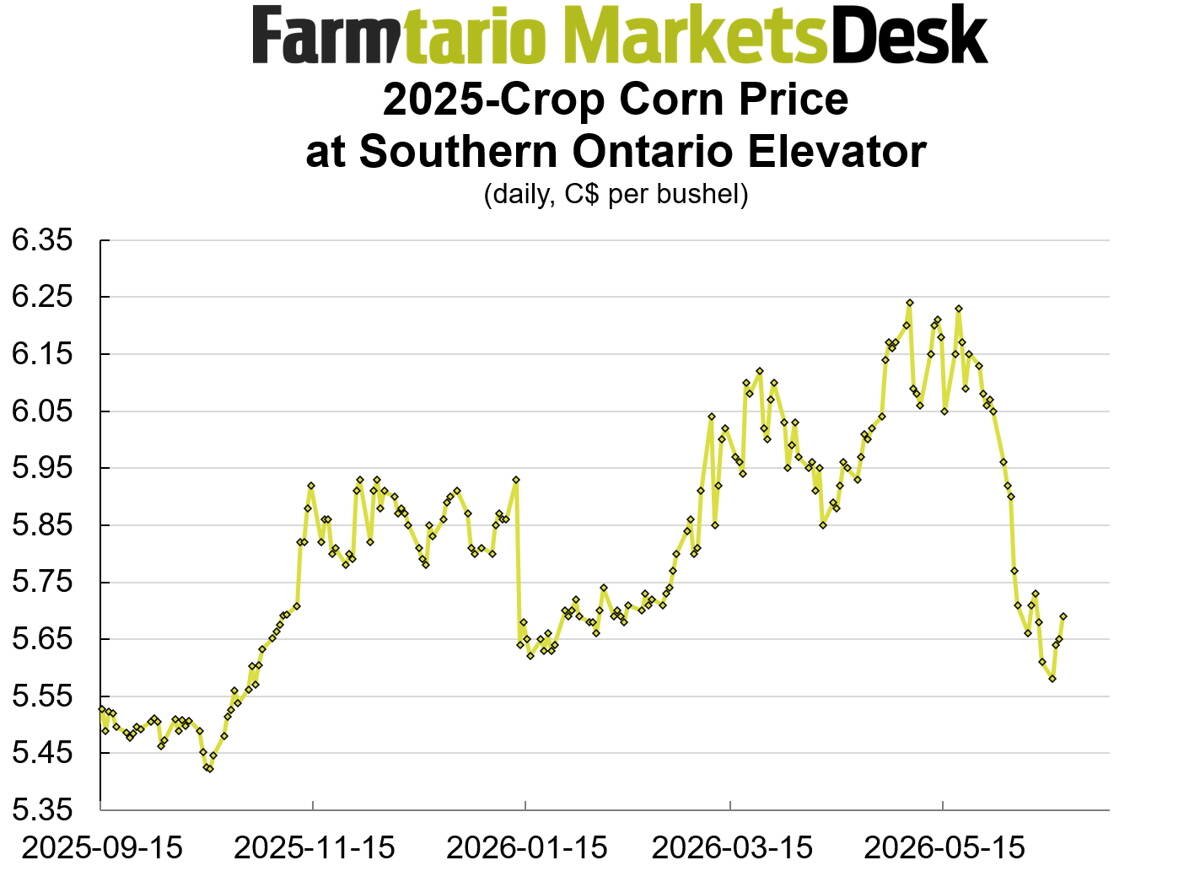
| 2025-crop corn | Down ~70¢/bu in three weeks — the 2026 rally is erased |
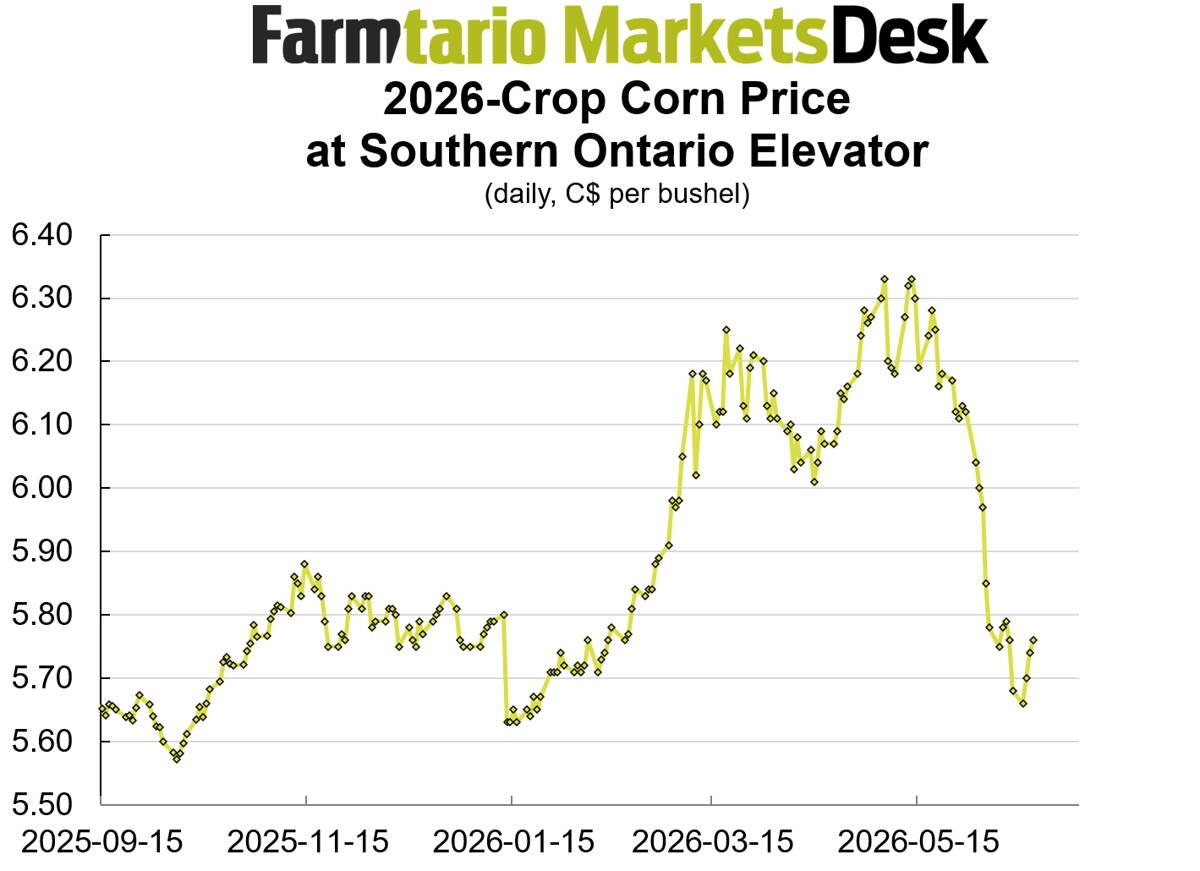
| New-crop (2026) corn | Down ~60¢/bu from a mid-May high near $6.30 |
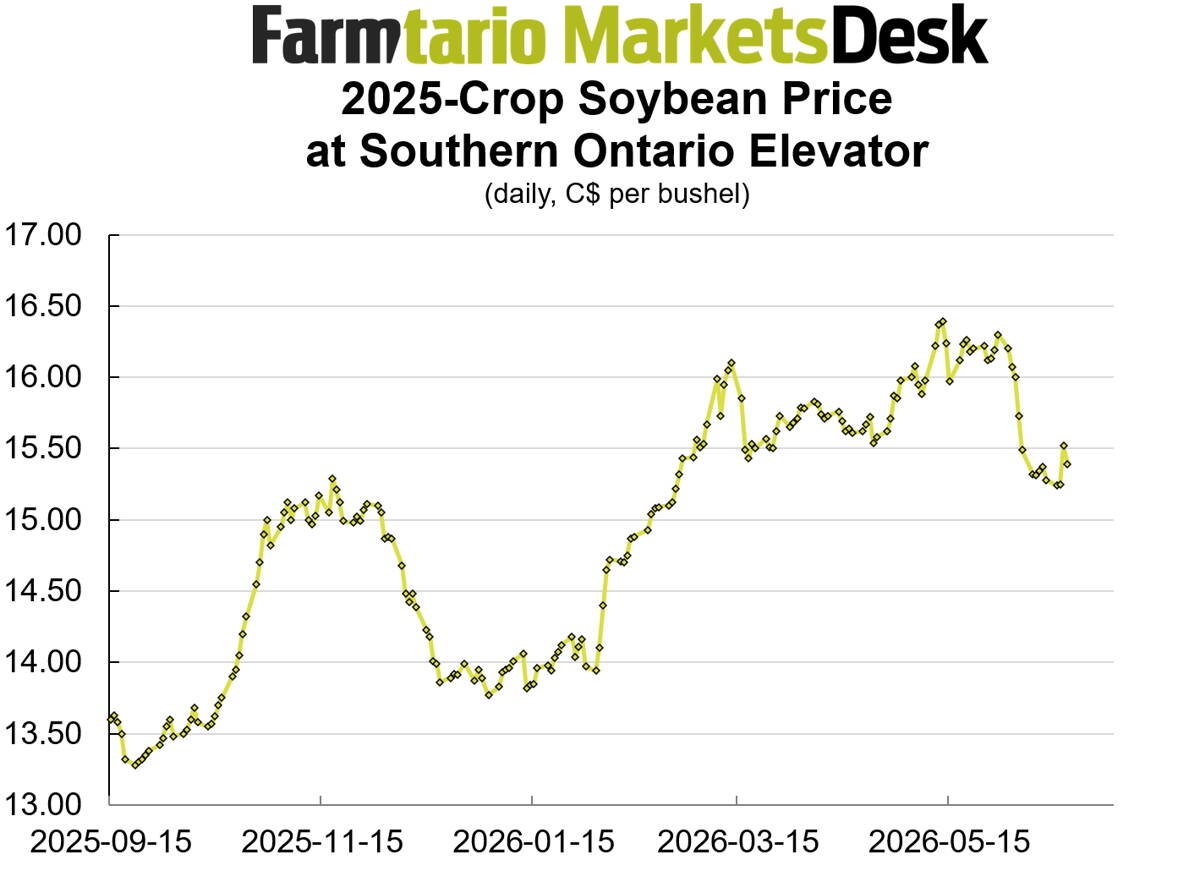
| 2025-crop soybeans | Down ~$1/bu since late May; a weak loonie is cushioning the basis |
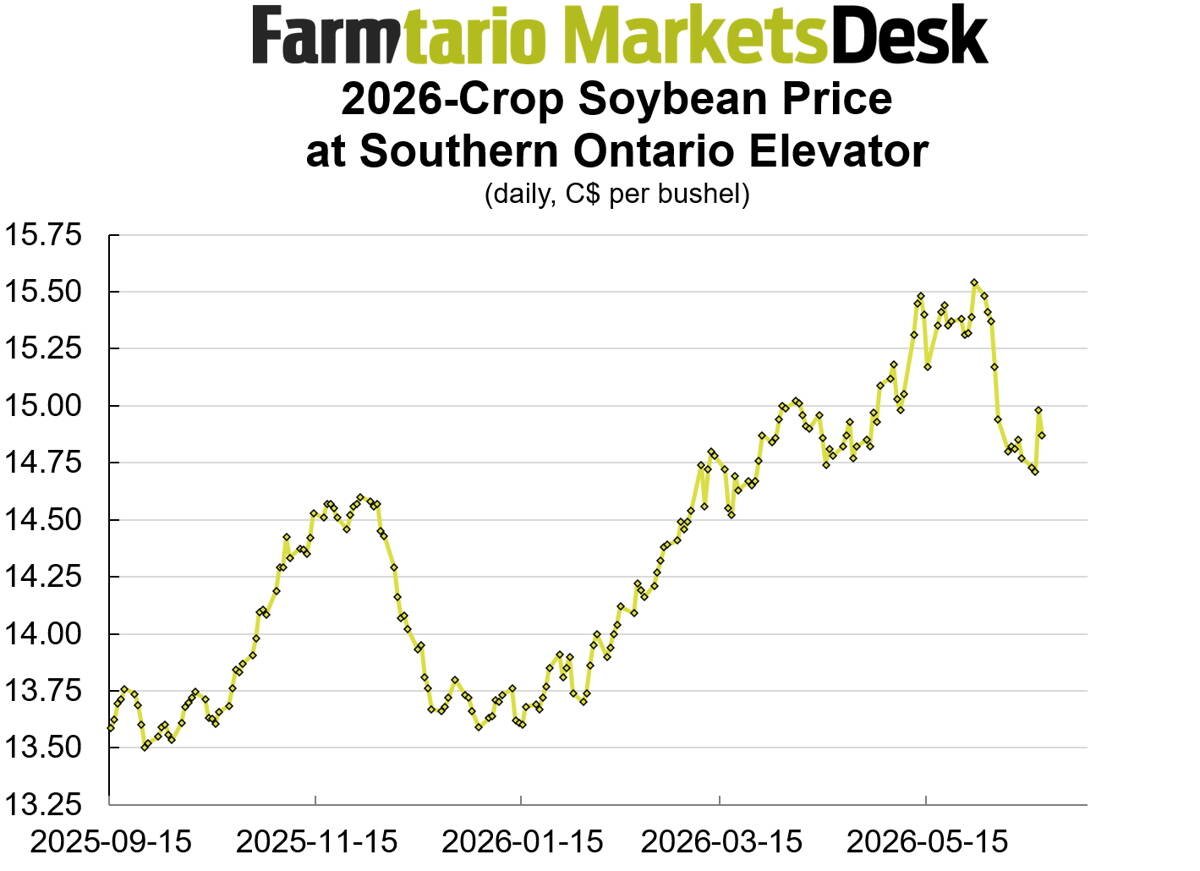
| New-crop (2026) soybeans | Down ~75¢/bu, but still well above winter lows |
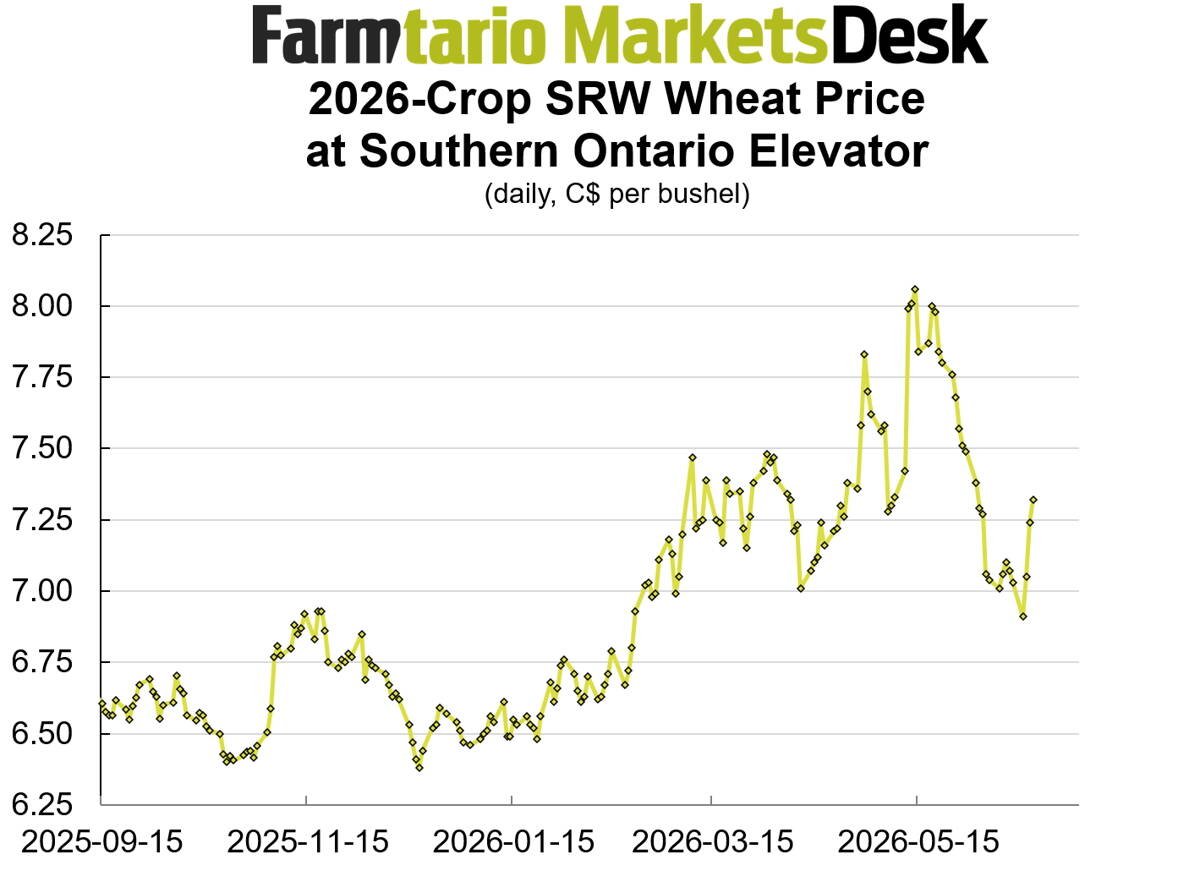
| 2026-crop SRW wheat | Down ~$1/bu from a mid-May high, heading into harvest |
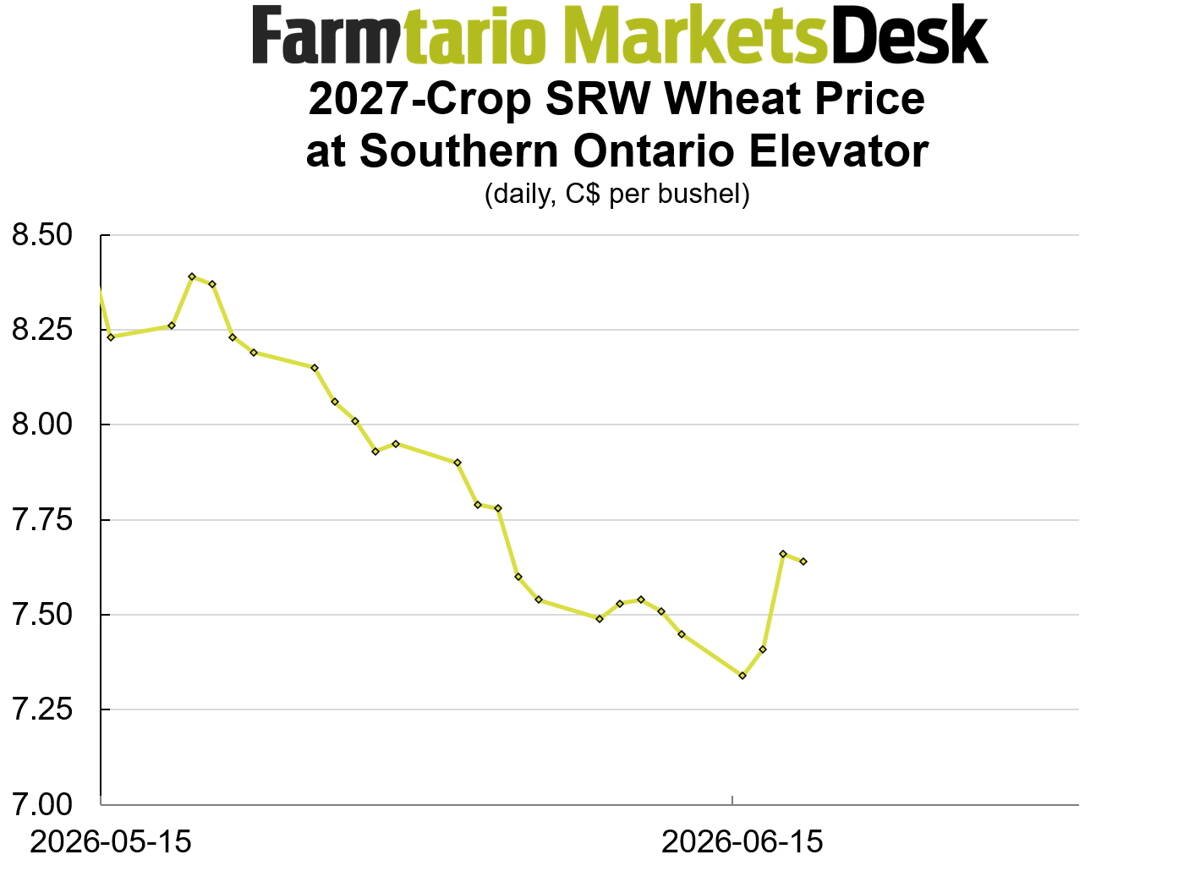
| New-crop (2027) SRW wheat | Down ~$1/bu, then a modest rebound |
Corn prices fell hard
The corn chart tells the story. Southern Ontario elevator bids have fallen roughly 70 Canadian cents per bushel over the past three weeks, erasing the entire 2026 rally.
The decline reflects pressure from United States corn futures, a downturn in global energy markets and a fast start for the much larger U.S. crop.
There are some bright spots for Ontario growers. Parrish and Heimbecker’s new $50-million bulk agricultural marine terminal in Picton should give Eastern Ontario farmers faster access to export markets and reduce grain-hauling time.
However, that alone is not nearly enough to support prices against the broader North American crop outlook.
New crop corn prices are under pressure as well. The 2026-crop corn chart shows prices have dropped 60 cents/bu. from the highs of $6.30/bu. in mid-May.
Soybeans retreated, too
Soybean prices have not escaped the selloff. Southern Ontario 2025-crop cash soybean prices have declined roughly $1/bu. since late May, pressured by a positive start for the U.S. soybean crop.
Ontario bids have received some protection from the Canadian dollar, which has weakened over the past several weeks to 71 U.S. cents from 74 cents at the start of May. That has supported the basis, protecting Ontario prices from the full impact of declining Chicago Board of Trade soybean futures.
Unfortunately, that currency support may not last. RBC expects the loonie to strengthen into 2027, a move that could trim what Ontario farmers net on soybeans and other crops if U.S. futures do not offset the change.
New crop soybean prices have also fallen sharply, dropping about 75 cents/bu. Farmers can take some comfort in the fact that, unlike corn, soybean prices remain well above where they were during the winter.
Wheat is sliding into harvest
Turning to wheat, there is little good news for prices heading into harvest.
Soft red winter wheat makes up the bulk of Ontario wheat production, and prices have fallen sharply. Southern Ontario elevator bids are down about $1/bu. from the highs notched in mid-May.
That is in line with steep declines in global wheat prices. Despite drought concerns in parts of the U.S. Southern Plains, the winter wheat harvest is underway. That is refilling the supply pipeline, at least temporarily, pressuring futures and weighing on Ontario prices as local harvest approaches.
There is still a case to be made that wheat markets could be volatile over the next few months as traders assess Russian crop conditions, and weather risk in Russia could still matter. For now, however, current price action is weak.
The 2027-crop soft red winter wheat crop won’t be planted until fall. As a result, that price series doesn’t have much history. Even so, prices cratered $1/bu. between mid-May and mid-June before rebounding modestly.
Fortunately, most Ontario farmers won’t think seriously about forward contracting 2027-crop wheat until it’s planted. For now, the focus should be on getting the 2026 crop out of the field and harvested in the weeks ahead rather than on selling new-crop wheat into a price break.
A long season remains
Current price action is poor, and there is no point pretending otherwise. The recent declines have been broad-based and severe.
At the same time, late May and June selloffs are common in years when U.S. spring-seeded crops get off to a strong start. There have been many years when markets sold off sharply during that window, only to reassess in July and August.
There is no guarantee prices will rebound this summer. However, the critical weather window for U.S. corn yields is still ahead in the first half of July. Soybean yields will not be determined until the first part of August in the U.S. and even later in parts of Ontario.
For now, Ontario farmers should acknowledge the damage already done to prices while remembering that a long growing season still lies ahead.
Ranulf Glanville is Editorial lead, news and markets at Glacier FarmMedia and publisher of Farmtario. He was an Ontario-based farm market analyst for 20 years.
Farmtario subscribers can keep on top of developments through the biweekly Farmtario Market Desk Report, an email included with a Farmtario subscription.
To subscribe to or request the biweekly markets email, call 1-800-665-1362 or email customerservice@farmmedia.com.
The post Ontario corn, soybean and wheat prices collapsed. Now what? appeared first on Farmtario.


