

Case Study: Turning Waste into Measurable Environmental Leadership
Across Texas, organizations are redefining what sustainability looks like in practice. From municipalities to higher education campuses, leaders are proving that waste diversion is more than recycling bins and signage. It is operational efficiency, environmental stewardship, community engagement, and measurable impact.
Two standout examples are the City of Leon Valley and Lone Star College. While very different in size and mission, both organizations have demonstrated how intentional waste management systems can improve sustainability outcomes, reduce contamination, increase diversion rates, and build stronger community participation.
These initiatives highlight a growing reality across Texas: sustainability leadership increasingly begins with waste.
Campus Collective: How Universities and Colleges Are Leading The Charge In Recycling
The Growing Importance of Waste Diversion in Texas
Texas communities and institutions face mounting pressure to:
- Reduce landfill dependency
- Demonstrate ESG and sustainability progress
- Lower operational costs
- Improve public participation
- Reduce contamination in recycling streams
- Meet stakeholder expectations for environmental responsibility
Waste is often one of the most visible indicators of whether sustainability commitments are real and measurable.
Organizations that successfully improve diversion rates are also discovering operational benefits including:
- Reduced hauling costs
- Lower contamination fees
- Cleaner facilities
- Reduced janitorial labor
- Better material recovery revenue
- Improved reporting capabilities
The City of Leon Valley and Lone Star College both approached waste not simply as a disposal issue, but as an opportunity to create behavioral change and measurable environmental improvement.
City of Leon Valley, Texas
Building a Community Centered Sustainability Program
Leon Valley has become an example of how municipalities can use waste diversion programs to engage residents while improving sustainability outcomes.
The city recognized that traditional recycling programs often struggle because of contamination, inconsistent participation, and unclear communication. Rather than relying solely on infrastructure, Leon Valley focused on creating a more intentional and educational approach to waste separation and diversion.
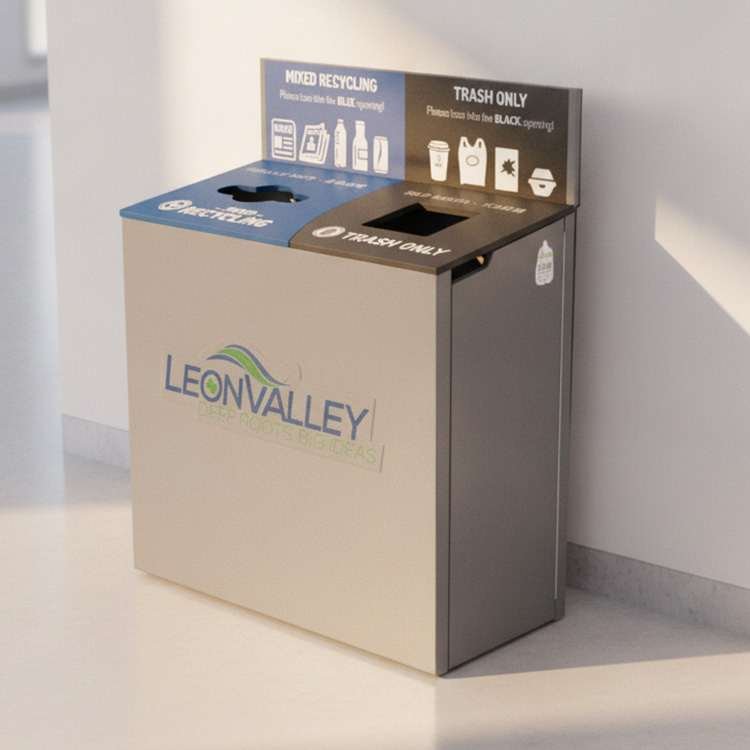
Working alongside the Recycle Away design team, the city emphasized clarity throughout the entire system, not only through strategically selected waste and recycling bins, but also through large format signage that visibly communicated the city’s sustainability commitment to residents and visitors alike. The combination of highly visible infrastructure and consistent messaging helped reinforce participation and create a stronger public understanding of proper waste separation.
Key Sustainability Goals
Leon Valley’s waste initiatives focused on:
- Increasing recycling participation
- Reducing contamination
- Encouraging proper source separation
- Improving resident education
- Demonstrating environmental leadership
- Supporting long term landfill diversion goals
The city understood that success begins upstream at the point of disposal. When residents can clearly identify where materials belong, contamination decreases and recyclable materials retain more value.
Operational Impact
By improving how waste is separated at the source, communities can reduce:
- Overflow and contamination events
- Labor associated with resorting waste
- Recycling rejection rates
- Landfill hauling volumes
- Public confusion around recycling
Programs that emphasize clear communication and standardized waste streams also help municipalities collect cleaner diversion data, which is increasingly important for sustainability reporting and grant opportunities.
Community Engagement as a Driver of Success
One of the most important lessons from Leon Valley’s approach is that sustainability programs succeed when they are visible, understandable, and easy for the public to participate in.
Effective municipal waste programs rely on:
- Consistent signage
- Public education
- Accessible collection infrastructure
- Standardized waste streams
- Ongoing engagement
The city’s efforts demonstrate how local governments can create meaningful environmental progress through practical operational improvements.
3-Stream Recycling Stations AND Custom Signage
Lone Star College
Advancing Campus Sustainability Through Waste Diversion
Lone Star College has emerged as another strong example of sustainability leadership through waste management.
Higher education campuses function like small cities, producing large volumes of waste across:
- Dining facilities
- Academic buildings
- Residence areas
- Event spaces
- Athletics
- Administrative operations
Managing these waste streams effectively requires both infrastructure and behavioral alignment.
Expanding Recycling at Colleges and Athletic Facilities
Creating a Sustainable Campus Culture – Frequently Asked Questions for Sustainable Campuses & College Dining Halls
Lone Star College’s sustainability efforts demonstrate how waste diversion can become part of campus culture rather than simply a facilities operation.
Key priorities included:
- Increasing diversion rates
- Reducing landfill dependency
- Improving recycling participation
- Supporting student sustainability engagement
- Creating measurable environmental outcomes
- Aligning operational practices with institutional sustainability goals
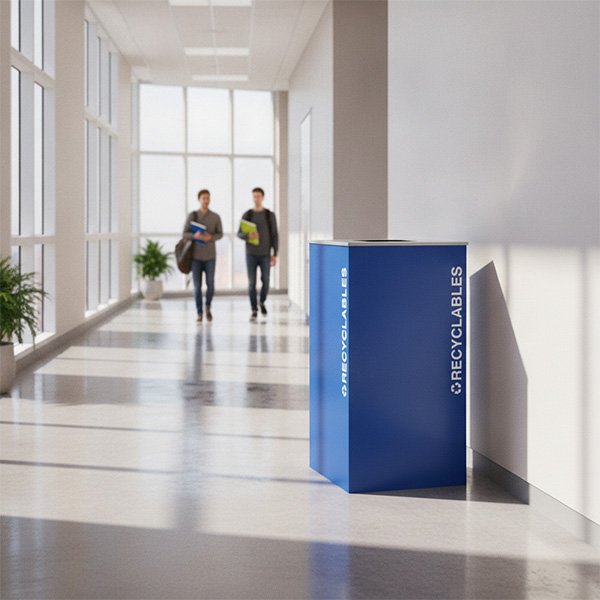
A major component of the initiative was the creation of consistency across the college system. Recycle Away supported Lone Star College throughout the process of identifying and implementing the right waste and recycling bins to meet the needs of a large and diverse campus environment. Standardized bins and consistent visual systems helped create familiarity and trust among students, faculty, staff, and visitors.
That consistency also reinforced the credibility of the college’s sustainability commitment. When waste systems look intentional, coordinated, and professionally implemented across multiple campuses and facilities, they communicate that sustainability is being treated as a long term operational priority rather than a temporary initiative.
Colleges and universities increasingly recognize that students, alumni, faculty, and donors expect institutions to demonstrate authentic environmental leadership.
Waste systems become highly visible proof points of institutional commitment.
Why Waste Matters on Campus
Campus sustainability programs succeed when waste systems are intuitive and standardized.
Common barriers include:
- Inconsistent signage
- Confusing bin systems
- Cross contamination
- Lack of education
- Event waste overflow
- High janitorial burdens
By improving waste sorting at the point of disposal, campuses can dramatically improve diversion performance while reducing operational inefficiencies.
The Role of Data and Reporting
Modern sustainability programs increasingly depend on measurable outcomes.
Waste diversion data helps institutions:
- Track landfill reduction progress
- Support ESG reporting
- Demonstrate carbon reduction initiatives
- Contribute to STARS and LEED goals
- Communicate sustainability achievements to stakeholders
- Strengthen student and alumni engagement
Reliable diversion reporting also helps organizations identify opportunities for continuous improvement.
https://www.recycleaway.com/leed-toolkit.html AND https://www.recycleaway.com/assets/images/tools/RA-tool_waste_management_guide.pdf
Shared Lessons from Leon Valley and Lone Star College
Although one is a municipality and the other a higher education institution, both organizations demonstrate several common sustainability principles.
1. Waste Diversion Starts Upstream
The most effective waste programs focus on source separation.
When disposal systems are designed clearly and intentionally:
- Contamination decreases
- Recycling quality improves
- Operational costs decline
- Diversion rates increase
2. Education Drives Participation
Infrastructure alone does not create successful sustainability outcomes.
Programs succeed when users understand:
- What belongs where
- Why diversion matters
- How their participation creates impact
How Green is Your Campus – Do Students Care?
3. Standardization Reduces Confusion
Consistent bin systems, signage, and waste streams improve participation and reduce contamination.
This simplifies operations for:
- Residents
- Students
- Staff
- Visitors
- Janitorial teams
4. Waste Is a Visible Sustainability Metric
Waste programs are one of the most public facing aspects of sustainability.
Stakeholders increasingly judge environmental commitment through:
- Recycling accessibility
- Waste reduction efforts
- Diversion reporting
- Operational transparency
https://www.recycleaway.com/waste-diversion-calculator.html
5. Data Creates Accountability
Organizations cannot improve what they do not measure.
Tracking diversion rates, contamination, and material recovery creates actionable insights that support:
- ESG initiatives
- Sustainability reporting
- Cost reduction strategies
- Long term environmental planning
The Future of Sustainability Leadership in Texas
Texas organizations are increasingly recognizing that waste diversion is no longer optional. It is foundational to sustainability strategy.
The City of Leon Valley and Lone Star College demonstrate that meaningful progress does not require perfection. It requires intentional systems, community participation, operational consistency, and measurable goals.
Their initiatives show how waste management can evolve from a basic operational necessity into a visible demonstration of environmental leadership.
As municipalities, campuses, and businesses continue pursuing ESG goals and sustainability commitments, waste diversion will remain one of the clearest and most measurable ways to demonstrate real environmental impact.


