
Stay up to date with all Nonwovens Industry content by subscribing to our newsletter.
.mobile-only {
display: none;
}
.scroll_to_continue:after {
content: ‘F282’;
position: absolute;
content: ‘F282’;
top: 21px;
transform: translateY(-50%);
right: 16px;
width: 10px;
height: 15px;
background-repeat: no-repeat;
background-size: 10px 15px;
background-position: center center;
font-family: “Bootstrap-icons”;
opacity: 1;
font-size: 16px;
right: 100px;
}
@media only screen and (max-width: 768px) {
.mobile-only {
display: block;
}
}
var labelText = “SCROLL TO CONTINUE”; //set custom “advertisment” awareness text label
var clickMacro = “/users/signupnewsletter/5” //set clickURL destination
var linkTarget = “_blank” //set link target attribute, by default “blank”
var hei = document.documentElement.clientHeight * 0.65;
/* == generator code == */
var container = document.getElementById(“inscroll-banner”);
//container.setAttribute(“style”,”height: 121vh; position: relative; margin: 55px 0;”);
var adlabel = document.createElement(“div”);
adlabel.classList.add(“scroll_to_continue”);
var lt = document.createTextNode(labelText)
adlabel.appendChild(lt);
//adlabel.setAttribute(“style”,”position:absolute; z-index:9; margin-top:-26px; color:#FFFFFF; background-color:#603577; text-align:center; width:100%; left:0;font-size:14px; padding:3px 0; height:26px”);
adlabel.setAttribute(“style”,”position: relative; z-index: 9; top: 21px; color: #FFFFFF; background-color: #603577; text-align: center; width: 200px; left: 0;font-size: 14px; padding: 0;line-height: 50px; margin: 0 auto;”);
var inner = document.getElementById(“banner-core”);
//inner.setAttribute(“id”,”banner-core”);
//inner.setAttribute(“style”,”width: 100%; top:49px; left: 0; clip: rect(0,100vw,100vh,0); overflow-x: hidden; overflow-y: auto; position: fixed; -webkit-transform: translateZ(0); -moz-transform: translateZ(0); transform: translateZ(0);”);
//var art = document.createElement(“img”);
//art.setAttribute(“src”,imagePath);
//art.setAttribute(“style”,”width:100%”);
//inner.appendChild(art);
//inner.appendChild(cm);
container.appendChild(adlabel);
//container.appendChild(inner);
window.onscroll = function(){
var pos = container.getBoundingClientRect();
inner.style.clip = “rect(“+pos.top+”px,100vw,”+pos.bottom+”px,0)”;
}
window.onscroll();
Major hygiene manufacturer Ontex has spent the last several years focused on reducing the use of virgin plastic and increasing recycled content in its packaging, while ensuring that it continues to protect the product and meet the company’s safety and quality requirements.
The results have been stellar. At the end of 2025, 40% of the company’s primary plastic packaging contained recycled content. This included post-industrial recycled material, chemically recycled post-consumer material and mechanically recycled post-consumer material. Ontex has also stopped using laminated bags, and 100% of its product packaging was designed to be recyclable.
“Several developments are shaping our packaging concepts. Regulations are becoming more demanding, particularly regarding recyclability, recycled content and the evidence required to substantiate packaging claims,” says Catherine Weyne, senior marketing specialist, Ontex. “Customers and retailers are also asking for increasingly detailed information about what packaging contains, how it supports regulatory requirements and whether the necessary documentation is available. This makes transparency and reliable packaging data almost as important as the packaging material itself.”
For mechanically recycled post-consumer plastic, or mPCR, Ontex integrates recycled polyethylene into flexible packaging films while maintaining pack integrity and compatibility with existing production lines. The recycled materials undergo compliance and traceability checks to ensure they meet the necessary requirements.
At the same time, packaging plays an important role in helping women navigate the product offerings. Clear product information and a consistent pack architecture can make it easier to understand the differences between products and choose the appropriate type and level of protection.
“Packaging must continue to fulfill its essential functions: protecting hygiene products, performing reliably on production lines, remaining cost-effective and communicating clear, accurate information to consumers,” Weyne adds.
Drylock Technologies, a maker of absorbent hygiene products, considers hygiene packaging its products’ first safeguard for quality and consumer safety. It prevents contamination, keeps products intact and shapes how consumers perceive the brand. Its latest breakthrough in packaging is a patented nonwoven solution that showcases a product’s exceptional softness before the packaging is even open. The packaging, which was developed in partnership with the major Belgian retail chain Colruyt, is able to visually and physically reflect the softness of the product inside, creating an instant connection with consumers right there on the shelf. In-store, it received highly positive feedback from both retail teams and end consumers.
“Our new nonwoven packaging is made from a single recyclable material that contains recycled content, which means it is fully recyclable without losing durability,” says Werner Van Ingelgem, vice president, procurement. “At the same time, it reflects the softness of the product inside, creating an immediate sensory connection.”
During in-store trials, consumers shared that the pack gave them confidence in the quality of the diaper even before opening it, and in consumer testing both the concept and the bag itself scored high. In this way, packaging evolves from being purely functional to also carrying an emotional parameter, perfectly fitting the consumer trend of soft and premium products.
“For us, it perfectly embodies our company’s promise to innovate to protect. Packaging has always been part of that journey,” Van Ingelgem says. “Over the years we have continuously innovated in this area, with one of the best examples being the introduction of paper bags for diapers and across our full hygiene range. These steps show that innovation in packaging is as central to our DNA as innovation in the products themselves.”
Much of the inspiration for Drylock’s packaging concepts comes from industries beyond hygiene. Drylock’s paper pouch for light incontinence products was based on the coffee filter. It delivers the same level of protection as traditional packaging but is completely plastic free, recyclable, compostable and glue-free. The nonwoven pack follows a similar line of thinking.
“We asked ourselves how packaging could represent the key benefit of the product even before purchase. For diapers that key benefit is softness,” Van Ingelgem says. “By creating packaging that feels soft to the touch, we allow consumers to experience the quality instantly, before they open the pack. Collaboration with packaging experts and retail partners was essential in bringing this concept to life, and it shows how innovation can translate functional protection into a premium and emotional consumer experience.”
From a company-wide standpoint, Drylock continues to focus on sustainability in all of its packaging. In 2022, the company became the first in its industry to completely eliminate 100% virgin oil-based plastic bags from its European portfolio. Since then, all of its European packaging has contained at least 15% recycled material, and today Drylock has a significant share of packs made with much higher percentages, including some with 100% recycled polyethylene.
Drylock has also introduced paper packaging across its entire range, from baby to feminine and adult care, including paper bags produced entirely from recycled fibers. Another area of focus is bio-based plastics, which can significantly reduce carbon emissions compared to conventional plastics.
On top of these material changes, Drylock has reduced plastic use in its bag portfolio by 30% through eco-design, without compromising protection or quality, and is working on packaging solutions that optimize logistics, meaning improved palletization, greater efficiency and ultimately a better carbon footprint.
“These are meaningful shifts that demonstrate how packaging innovation is happening across our full hygiene line,” Van Ingelgem adds. “Today 100% of our packaging is recyclable, reusable, or compostable. We also work with suppliers to reuse our own production waste, such as plastic cut-offs, to create new packaging materials. In 2024, close to 90% of our primary packaging contained recycled content and almost a third came from renewable sources. These results show that our sustainability commitments are not abstract goals. They directly shape how we design and produce packaging, ensuring that every solution combines performance, responsibility and innovation.”
Unicharm is also focused in reducing plastic without compromising product functionality. In South Korea, LG Unicharm has reduced the thickness of MamyPoko packaging film from 60 to 55 micrometers, which is expected to reduce plastic consumption by approximately 16% and save about a one ton of plastic per year. The adjustment is being introduced alongside renewed products, with the reduction also communicated on new and updated packaging.
Additionally, diaper compression has reduced packaging size and plastic consumption by approximately 14% for its MamyPoko Diaper-Pants Day&Night range and 6% for its MamyPoko Diaper-Pants range.
Replacing virgin plastic with recycled materials has also been a key strategy to reduce the impact of Unicharm’s hygiene packaging. In Australia and New Zealand, Unicharm Australasia began using linear low-density polyethylene (LLDPE) containing approximately 15% post-consumer recycled plastic in packaging for newborn and S-size baby diapers in November 2024. In Thailand, Unicharm is switching to paper-based packaging and incorporating post-consumer recycled and post-industrial recycled materials. For example, the Sofy TanomPew Natural Love combines packaging made from recycled materials with a 35% reduction in plastic use.
The reported reductions in plastic consumption demonstrate the potential impact of relatively small technical changes. Thinner packaging films, more compact diaper packs and redesigned handles can reduce material requirements, while recycled plastics and alternative fiber sources offer opportunities to reduce dependence on virgin resources.
Pampers Upgrades Wipes Dispensers
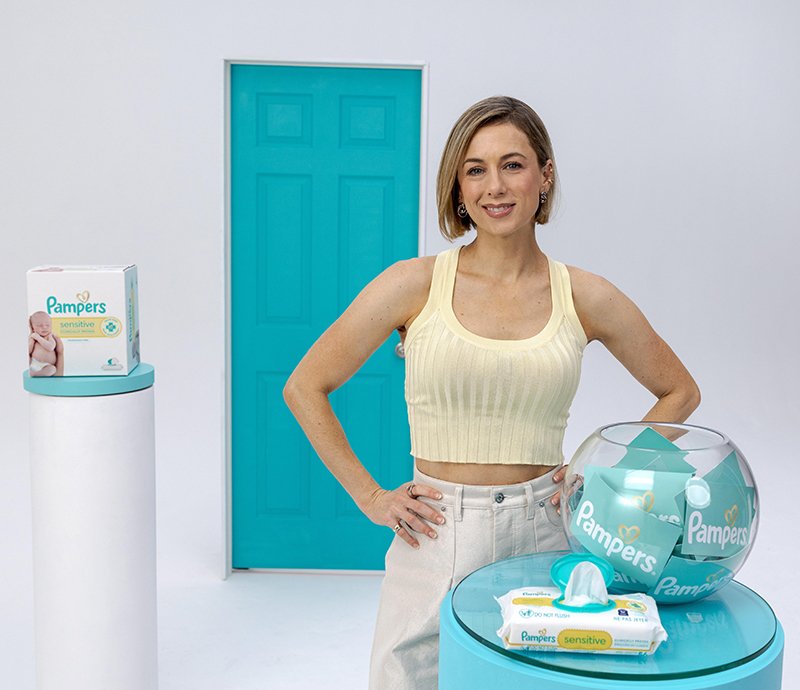
Within the wipes market, convenience has emerged as an important concern in packaging design. Procter & Gamble’s latest baby wipes packaging concept, available across all of its baby care brands, offers an improved dispensing experience, allowing parents to grab a wipe with one hand while holding their baby with the other.
“Pampers redesigned how its wipes dispense to make it easier for parents to pull one wipe at a time, helping reduce the familiar experience of reaching for one wipe and pulling several,” says Caroline Sanchez, senior brand director, Pampers.
The upgrade is the result of consumer input across multiple feedback channels that showed that parents consistently shared frustration with how baby wipes are dispensed. Using information gleaned from real consumer commentary across social platforms, review sites and other feedback channels, Pampers improved the dispensing experience to make it easier to pull one wipe at a time.
“Parents and babies are at the center of everything we do, and their feedback helps us identify meaningful ways to improve their everyday experiences,” says Sanchez. “We have been acting on that feedback across the Pampers portfolio, from redesigning how Pampers Wipes dispense to removing fragrance from Swaddlers.”
Nelipak Awarded for Green Efforts
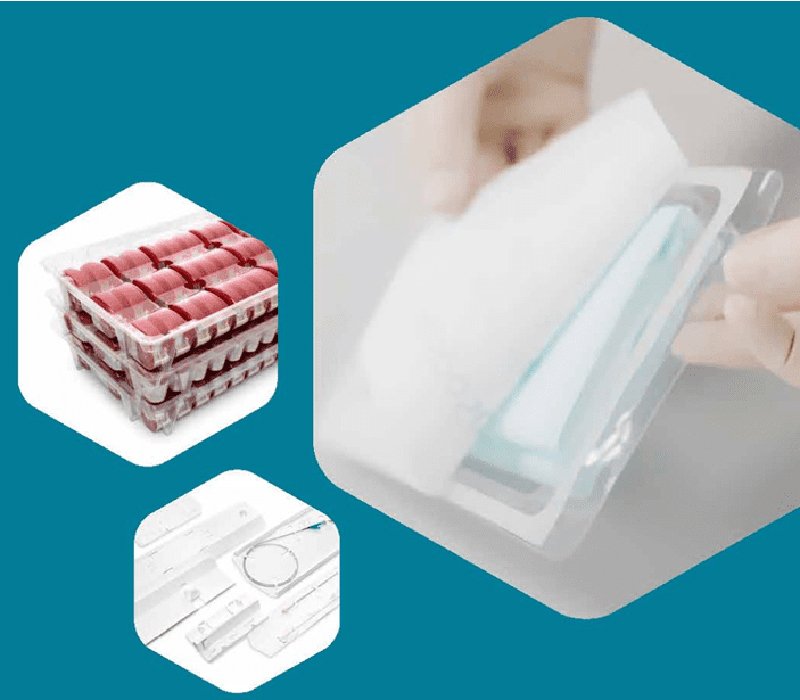
Nelipak Corporation, a global provider of healthcare packaging solutions, has received a DuPont Tyvek Sustainable Healthcare Packaging Award in the Sustainability In-Use category for its Ecovate header bag product platform.
Nelipak’s Ecovate header bag product platform is a recyclable, mono-material alternative to traditional mixed-material structures used in medical device and pharma drug delivery applications, including ready-to-fill/use (RTF/U) systems.
“The judges for the Tyvek Sustainable Healthcare Packaging Awards found that Nelipak’s Ecovate header bag demonstrates how innovative packaging design can help advance greater circularity in healthcare packaging,” says Lesley Aulick, global business director, DuPont Tyvek. “We are honored Tyvek has a role in Nelipak’s Ecovate solution that shows packaging can be redesigned to reduce material waste and carbon emissions while maintaining performance and meeting regulatory requirements essential to healthcare applications.”
Nelipak’s Ecovate product line features healthcare packaging products designed to support circularity by incorporating recycle-ready certification and/or recycled material content. The Ecovate header bag product combines mono-axially oriented PE (MOPE), blown co-extruded PE, and Tyvek with Renewable Attribution. The structure is engineered to maintain the mechanical performance, pinhole resistance and sterile barrier protection required for automated filling while enabling improved end-of-life recyclability.
“Healthcare packaging must meet demanding performance and regulatory requirements, and sustainability can no longer be treated as an afterthought,” says Nic Hunt, head of global sustainability at Nelipak. “The Ecovate header bag was developed to address that challenge by rethinking the material structure of a widely used packaging format. This recognition from DuPont validates the potential of mono-material packaging to deliver sustainability in healthcare packaging without compromising product performance or regulatory compliance.”
The post More than a Wrapper appeared first on Nonwovens Industry.


