
By Vanessa Hunt, ASA Director of Publications & Visuals
The American Soybean Association has a long history, trusted reputation, and deep relationships across the agriculture industry and Washington, D.C. But when it comes to influencing agricultural policy, one of the most effective voices on Capitol Hill is still that of the farmer. That’s why farmer leaders on ASA’s Board of Directors are committed to ensuring the next generation of soybean farmers are prepared to carry that advocacy forward. With the support of industry partners, ASA provides opportunities through programs like Young Leaders and Leadership At Its Best for soybean farmers to grow their advocacy skills and learn how to engage with both lawmakers and media to make their voices heard.
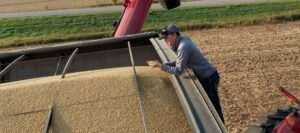
South Dakota farmer and ASA Secretary Jordan Scott says that simply showing up can help leaders make important connections, build vital relationships, and have a lasting impact on the industry.
Several current ASA directors say participating in ASA leadership programs helped launch their paths to advocacy. ASA Director and North Dakota soybean farmer Brent Kohls joined the North Dakota Soybean Growers Association as a member in 2009 and then began participating in leadership programs like Young Leaders, Leadership At Its Best, and Soybean Leadership Academy. In December 2025, Kohls joined the ASA Board of Directors.
“I chose to get involved on the national level as an American Soybean Association director to help tell our story to ensure the sustainability and financial success of farming. Many of us as farmers want nothing more than to be able to pass along a successful farm operation to the next generation one day. I want to do my part to make that happen,” Kohls said.
Jamie Beyer, a soybean farmer from Minnesota and an at-large member of the ASA Executive Committee, said she understood the importance of preparing to become a farmer leader and took advantage of the programs offered to receive the training needed to be a strong voice for the industry.
“I have learned that you have to prepare yourself now for the opportunities that will be offered in the future,” she said. “You can’t learn how to give a solid radio interview the day of the interview, so making time now to participate in programs such as Leadership At Its Best and Young Leaders allows you to gain the skills you will need for your next level of leadership. Once you have had some solid training, using your skills becomes fun.”
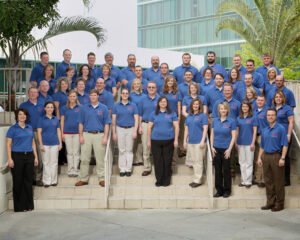
The 2010 class of Young Leaders, which included current ASA Director Brent Kohls (ND).
ASA Director of Industry Relations Erin Glarner leads the ASA Corteva Young Leaders program and said she sees firsthand the growth and confidence-building among farmers training to become leaders. “It is very rewarding to see aspiring farmer leaders discover their voice and realize the impact they can have in the agriculture industry,” Glarner said. “They come into the Young Leader program eager to learn, and they leave with greater confidence in their ability to represent agriculture and make a difference.”
Another important step to becoming an advocate for the industry is joining your state association, which also gives you membership to ASA.
“Because of farming demands, we know most growers can’t take the time to travel to meet with policymakers themselves. That’s why your membership is so important,” said Kohls. “Strong membership gives strength to our messages. Lawmakers know that when we speak to them, we’re not just speaking for ourselves, but for the thousands of our fellow farmers who are relying on us to speak on their behalf.”
While getting involved at the national level may be intimidating, the feeling of success and knowing that you’re making a difference for your fellow farmers is great motivation to become an engaged member.
“I think specifically serving on ASA becomes addicting. It is an effective organization, so there is a great deal of personal satisfaction when you can see the results of your efforts,” Beyer said. “Just start by saying yes and quieting that part of your brain that wants to make excuses. You’ll make friends along the way, and you will be surprised where you end up.”
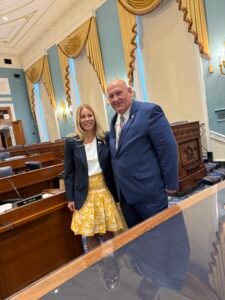
ASA Director Jamie Beyer (MN) greeted House Ag Committee Chairman Glenn Thompson (R-PA) at a hearing on USMCA.
ASA directors are eager to help the younger generation of farmers feel confident in their leadership skills and to mentor those who will be the next representatives for the soybean industry. Kansas soybean farmer and ASA Director Teresa Brandenburg said, “One of the biggest things I’ve learned is that leadership is a skill we develop. We shouldn’t expect someone to walk into a boardroom already knowing how to govern, advocate, or confidently use their voice. Someone created opportunities for me to learn those things, and now I believe part of my responsibility as an established leader is helping create those opportunities for the people coming behind me.”
The ASA Executive Committee and Board of Directors consist of farmer leaders who range from seasoned veterans to those who are just beginning their leadership journey, providing the perfect situation to form relationships that help you learn and grow.
“I have learned that our industry is packed with strong agricultural leaders and that when you volunteer to serve in the same circles as experienced advocates, there is no limit to what you can learn or where you can go,” Beyer said.
Brandenburg agreed and added that ASA involvement gives young farmers access to information, experienced leaders, policymakers, and “a network of people they can call when they need another perspective.”
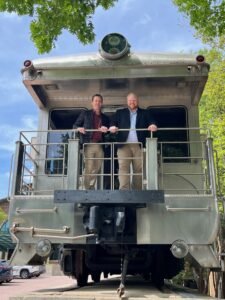
Many of the farmers who join their state and national soybean associations find that they make lifelong friends. These connections may be the most valuable part of getting involved.
“Some of my closest friends are from the connections I have made from being involved with this board,” said South Dakota soybean farmer and ASA Secretary Jordan Scott. “I have also learned the importance of showing up. If you are not there, you can’t make an impact or important connections and build vital relationships.”
Beyer said it’s becoming increasingly important for the next generation of farmers to get involved in advocacy and understand they aren’t fighting for their futures alone.
“Although my husband has been farming since 1997, it wasn’t until 2013 that I realized if I didn’t get involved in our farm, our three young daughters wouldn’t either,” Beyer said. “Around that time, my husband and I were fighting an expansive statewide buffer law that would have devastating consequences for Minnesota farmers and were feeling alone in our efforts. Then we discovered grower advocacy groups and have been hooked ever since.”
Decisions that impact agriculture are constantly being debated and made in Washington, D.C. Lawmakers on Capitol Hill won’t know what farmers need unless those doing the work are providing that perspective.
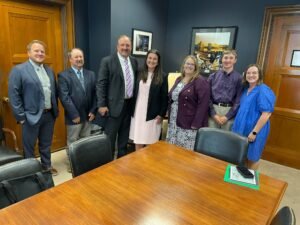
ASA Director Teresa Brandenburg (KS) joined other members of the Kansas Soybean Association on a Hill visit. Photo courtesy of Kansas Soybean Association.
“Farmers should get involved in advocacy and ASA because we need voices in the room that represent the depth and breadth of soybean farmers across the country,” Brandenburg said. “Policy will be made whether farmers participate in the conversation or not. If we aren’t at the tables where those conversations are happening, the people making decisions don’t have the benefit of hearing directly from those who will live with the consequences.”
Scott added that if farmers aren’t sharing their stories and experiences, someone else will be part of the conversation and “will tell them how we farm. There are plenty of flat-out wrong stories about farming and the practices we utilize.”
For those who feel they don’t have the time to get involved right now as a leader, ASA provides a number of opportunities for farmers to advocate for what they need. “You don’t have to start by serving on a national board. Advocacy can mean responding to an action alert, making a phone call, telling your story to a legislator, or attending a meeting. You don’t have to do everything to do something, and individual farmer voices really do matter,” Brandenburg said.
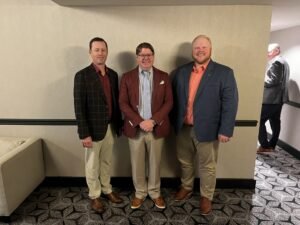
ASA Secretary Jordan Scott (SD) and ASA Treasurer Tanner Johnson (WI) met with USDA Deputy Secretary Stephen Vaden.
Farmer voices carry weight in Washington, D.C., particularly when growers are prepared to clearly explain how policy decisions affect their farms and communities.
“Legislators and buyers of soybeans around the world trust the farmer voice and hold it in high regard,” Scott added.
The next generation of farmer leaders must prepare now to become the leaders of tomorrow. If policy is going to be enacted to benefit farmers, farmer voices must be represented at the table.
“We can’t wait until today’s leaders are ready to step away before we start preparing the next generation,” Brandenburg said. “Leadership development happens when we invite someone into the room, help them understand what is happening, answer their questions, and then give them meaningful opportunities to contribute.”
Scott also offered advice to farmers considering whether to step into leadership. “Show up, get involved, push your boundaries, and get uncomfortable; otherwise, you will never grow,” he said. “Being involved on the ASA board will help you be a better farmer at home and teach you things that you never even knew went on.”
The next generation of soybean leaders won’t be built overnight. They will be developed the same way today’s leaders were – by showing up, learning from those who came before them, and taking opportunities to use their voices. For farmers wondering whether they are ready to take that first step, the message from ASA’s current leaders is simple: you don’t have to know everything, you just have to start.
The post A Message To The Younger Generation appeared first on American Soybean Association.


